

More news on this day
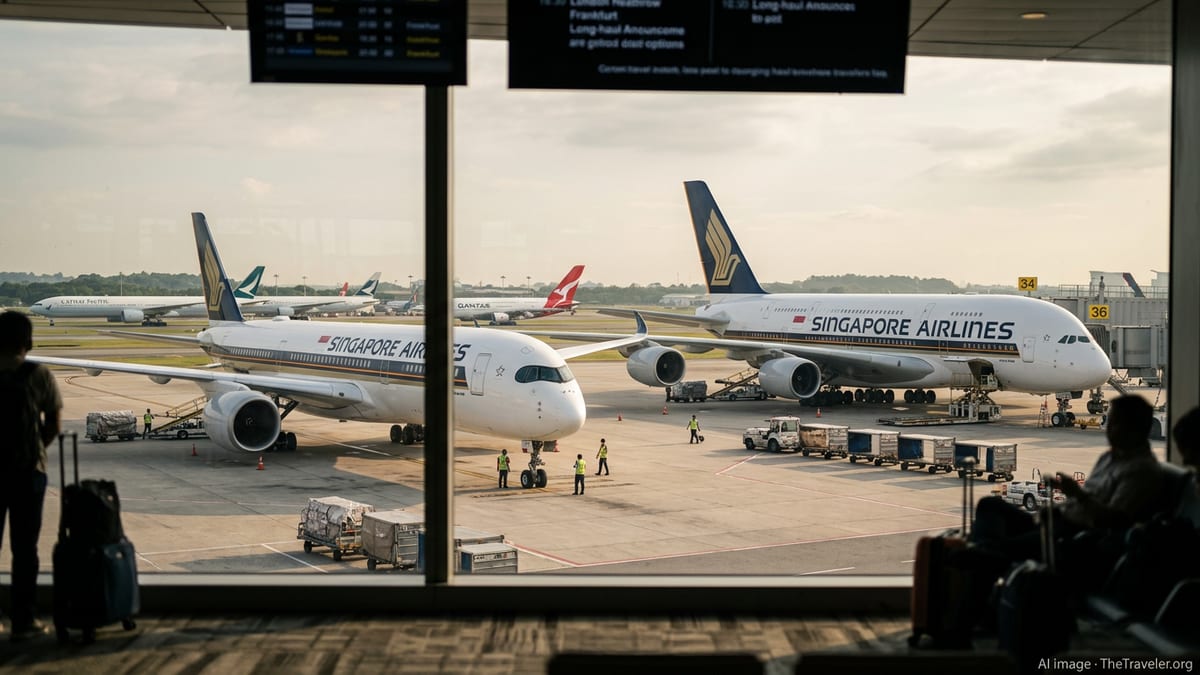
Escalating conflict and airspace closures across the Middle East are reshaping how passengers travel between Europe and Asia, with Singapore Airlines emerging as a key alternative carrier on nonstop routes to London and Frankfurt as demand spikes and fares soar.
Get the latest news straight to your inbox!
Middle East Conflict Disrupts Traditional Europe–Asia Corridors
Recent escalations in the Middle East have led to widespread airspace restrictions affecting key corridors over Iran, Iraq, Israel, Jordan and several Gulf states. Publicly available aviation briefings and industry reports indicate that large portions of this airspace have been closed or heavily constrained to civilian traffic, forcing airlines to divert or cancel long-haul services between Europe and Asia. Flights that once relied on fast, direct routings through Gulf hubs now face lengthy detours, extended block times and mounting operational costs.
Coverage from aviation analysts shows that routes previously funneled through major hubs such as Dubai, Doha and Abu Dhabi have been particularly disrupted, with many services suspended or sharply reduced. Passengers who had traditionally connected through the Gulf are now seeking point-to-point options that bypass the affected region entirely. As a result, nonstop services linking Southeast Asia to major European cities have become especially attractive, even at significantly higher prices.
These disruptions are reverberating through global aviation networks, with airlines rebalancing capacity away from vulnerable corridors and toward safer, more predictable routings. For travelers in Europe and Asia, the practical effect is a rapid reshaping of available options, where direct flights that avoid the Middle East are suddenly at a premium.
Singapore Airlines Sees Surging Demand for London and Frankfurt
Singapore Airlines, which already operates one of the most extensive non-Gulf networks between Europe and Asia, has been a key beneficiary of this shift. Public fare data and media coverage show that prices on core routes such as London to Singapore have jumped dramatically in recent weeks, reflecting a surge in last-minute bookings from passengers seeking to avoid Middle Eastern transit points. Some one-way economy fares on London–Singapore itineraries have been reported at levels many times higher than typical off-peak prices, underscoring the intensity of demand.
Unlike carriers that depend on Gulf stopovers, Singapore Airlines links its Changi hub directly with multiple European gateways, including London and Frankfurt. With conflict-linked disruptions making transit through the Middle East less attractive, these nonstop services have become a natural fallback for travelers from Europe heading to Southeast Asia, Australia and beyond. Online discussions among passengers, along with schedule data, indicate that flights to London and Frankfurt have remained in operation even as services to certain Middle Eastern destinations were temporarily suspended or rerouted.
The airline had already been building out its London presence prior to the current crisis, adding London Gatwick alongside its longstanding Heathrow services from 2024 and planning further increases for upcoming seasons. Frankfurt, meanwhile, has continued to function as a major European gateway in the carrier’s network, with additional frequencies publicized to travel trade partners for the first quarter of 2026. Together, these factors have positioned Singapore Airlines to capture a disproportionate share of displaced traffic.
Added Frequencies and Capacity to Meet Short-Term Demand
In response to the spike in bookings, Singapore Airlines has been adding short-term capacity on selected European routes, with industry documentation for agents in the German-speaking markets highlighting an additional near-daily Singapore–Frankfurt round-trip operating in early 2026. This supplementary service, using Airbus A350-900 aircraft, broadens options for both origin-and-destination passengers and those connecting beyond Changi to popular points across Asia-Pacific.
On the London side, previously announced growth plans are coming into sharper focus as travelers re-evaluate their routing choices. Seasonal schedules published for northern summer periods show increased utilization of London Heathrow and Gatwick slots, supported by widebody aircraft capable of absorbing higher passenger numbers. While some individual frequencies have seen adjustments at various points due to fleet and maintenance constraints, the overall pattern points to London remaining one of the airline’s highest-priority long-haul markets.
Publicly available advisories from the airline also confirm that capacity has been reallocated away from some Middle Eastern routes during the most acute phases of the conflict-linked disruptions. By consolidating resources on stronger, more stable sectors such as London and Frankfurt, Singapore Airlines is seeking to maintain network connectivity while tapping into demand from travelers looking for predictable, one-stop journeys that avoid conflict-affected regions.
Operational Challenges: Longer Flight Times and Higher Costs
Even for carriers that do not transit the Gulf, the broader closure of Middle Eastern airspace has operational consequences. Aviation bulletins describe how Europe–Asia flights are now being rerouted along more northerly paths via the Caucasus and Central Asia or southerly tracks skirting Egypt, Saudi Arabia and Oman. These deviations can add several hours to block times, increasing fuel burn and placing pressure on crew scheduling and aircraft utilization.
For Singapore Airlines, whose long-haul services to London and Frankfurt already operate near the edge of ultra-long-haul range, these extended routings require careful planning. Industry analysis notes that airlines facing similar detours have had to incorporate additional fuel reserves, adjust departure times and occasionally implement payload restrictions to maintain safety margins. While such measures are largely invisible to passengers beyond possible schedule tweaks, they contribute to the higher operating costs now reflected in published fares.
Global energy market coverage also points to rising jet fuel prices in the wake of the regional crisis, compounding the financial impact of longer routings. For travelers, the immediate effect is a combination of higher ticket prices and reduced availability on the most desirable non-stop and one-stop itineraries. Despite this, publicly available booking data suggest that many passengers remain willing to pay a premium to avoid uncertainty around Gulf transit hubs, further supporting the case for added capacity on Singapore Airlines’ European trunk routes.
Travelers Pivot Away From Gulf Hubs Toward Alternative Gateways
The Middle East conflict has highlighted how quickly traveler preferences can shift when safety perceptions and operational reliability come under pressure. Reports from travel advisors and passenger forums describe a measurable pivot away from Gulf-based carriers and hubs, as customers seek routings that bypass the most heavily affected airspace. For Europe–Asia journeys, that has translated into renewed interest in carriers operating via hubs such as Singapore, Hong Kong and Istanbul, alongside certain European and North Asian gateways.
Singapore’s position as a politically stable, highly rated aviation hub has played into this recalibration. Changi Airport offers extensive onward connections throughout Southeast Asia, Australia and New Zealand, while maintaining a reputation for operational resilience. Singapore Airlines’ ability to offer direct links from London and Frankfurt into this hub allows it to serve both point-to-point and connecting travelers who previously might have opted for Gulf itineraries.
While aviation experts caution that traffic patterns could rebalance again if Middle East tensions ease and airspace restrictions are lifted, current booking trends show how geopolitical events can quickly reshape global route networks. For now, publicly available information indicates that Singapore Airlines is leaning into its strengths on the London and Frankfurt sectors, adding flights and seats where possible to capture a surge in demand from travelers determined to keep moving between Europe and Asia, even in a time of heightened uncertainty.