

More news on this day
Escalating conflict and transport disruption in the Middle East are triggering fresh turbulence for global tourism, with new analysis showing Southeast Asian beach destinations and the Maldives facing softer holiday demand and a rapid redrawing of long-haul airline networks.
Get the latest news straight to your inbox!
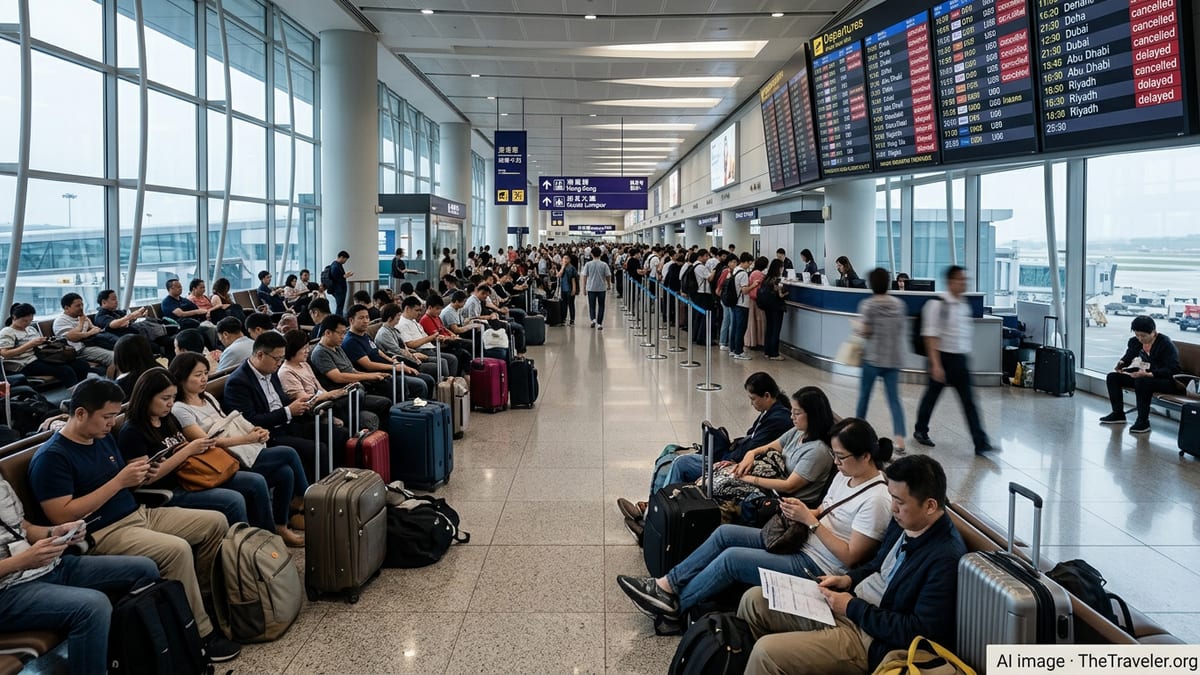
War, chokepoints and a fragile global tourism rebound
After several years of post-pandemic recovery, the latest flare-ups across the Middle East are emerging as a new drag on international travel. Industry and economic assessments released in recent weeks highlight how military tensions around the Red Sea and the Strait of Hormuz are rippling through energy markets, shipping lanes and key aviation corridors that connect Europe and the Americas with Asia.
The Middle East has been one of the fastest-growing aviation regions in recent years, accounting for close to a tenth of global passenger traffic by 2025, according to sector analysis cited in recent media coverage. With major maritime chokepoints such as the Red Sea and Hormuz now subject to repeated attacks and temporary closures, airlines and cruise lines are facing an uncertain operating environment just as demand was approaching or exceeding 2019 levels in many parts of Asia.
Forecasts compiled by regional tourism bodies before the latest escalation suggested that visitor arrivals to Southeast Asia could reach or slightly surpass pre-pandemic volumes by 2025 under most scenarios. Updated risk outlooks now flag geopolitical shocks and higher energy prices as key downside threats, particularly for long-haul markets that depend on Middle Eastern hubs and stable fuel costs.
Travel economists note that the combination of security fears and cost inflation is similar in some respects to previous crises, including the Gulf War, when global tourism growth slowed sharply despite otherwise solid underlying demand. The concern among analysts is that another protracted conflict could again push travellers to shorten trips, stay closer to home or trade long-haul beach holidays for regional breaks.
Airlines reroute, capacity shrinks and fares climb
Airspace closures and perceived risks over parts of the Middle East are forcing airlines to redraw flight paths on a scale not seen in years. Aviation trackers and specialist travel outlets report that hundreds of weekly services between Europe, the Middle East and Asia have been grounded or rerouted in recent weeks, with some Gulf carriers temporarily suspending routes and others shifting traffic via longer detours over Central Asia, North Africa or the southern Indian Ocean.
One recent industry report estimated that capacity operated by Middle Eastern airlines fell by more than half in March 2026 compared with a year earlier as carriers avoided conflict zones and key air corridors. Long-haul flights between Europe and destinations such as Bangkok, Singapore and Bali that previously relied on ultra-efficient routings across the region are now burning 20 to 30 percent more fuel on extended tracks and adding several hours to journey times.
Higher fuel consumption is feeding directly into airfares. Analysts point out that fuel typically represents between one quarter and two fifths of an airline’s operating cost base, meaning sustained spikes in oil prices and the need for detours can quickly translate into increased ticket prices and additional surcharges. Airlines that hedged fuel earlier are temporarily cushioned, but those contracts are finite, and several large European and Asian groups have warned investors in recent public comments that higher prices and schedule adjustments are likely to filter through to passengers over the coming peak seasons.
These dynamics are being felt most acutely on long-haul leisure routes, where price-sensitive travellers are more likely to postpone or downscale trips if fares rise sharply. Routes to Indian Ocean and Southeast Asian resorts that depended on competitive connections via Gulf hubs are especially exposed to long-term shifts in network planning.
Southeast Asia counts the cost of softer long-haul demand
Across Thailand, Indonesia, Malaysia and Vietnam, tourism officials had entered 2026 with cautious optimism. Visitor numbers were broadly tracking higher than in 2024, supported by strong demand from Asia-Pacific markets and ongoing efforts to streamline visas. However, recent data and modelling shared by regional tourism and economic institutes indicate that the Middle East conflict is starting to weigh on performance, particularly from Europe and parts of the Middle East itself.
Reports released in March showed that Thailand, one of the region’s flagship destinations, recorded just over 7 million foreign arrivals between January and early March, slightly below the same period a year earlier despite Bangkok retaining a place among the world’s most visited cities. Analysts attribute part of the shortfall to weaker long-haul bookings as higher fares and complex routings make trips less attractive for European holidaymakers.
Similar patterns are emerging in other coastal destinations that depend heavily on seasonal inflows from Europe and the Gulf. Travel consultancies and local media note that some tour operators are trimming capacity or consolidating departures for late 2026, citing slower booking curves and uncertainty around flight schedules. At the same time, Southeast Asian carriers and tourism boards are stepping up campaigns in nearer markets such as China, India, South Korea and within ASEAN, promoting shorter, non-stop itineraries that avoid sensitive airspace.
Business travel across South and Southeast Asia continues to recover, according to corporate travel platforms, but the leisure segment remains more volatile. Some industry observers warn that if the conflict endures into 2027, the region could see a more pronounced shift in its visitor mix toward intra-Asian markets, reducing reliance on high-spending but distant customers from Europe and the Middle East.
Maldives faces slower growth and heightened economic risk
The Maldives, where tourism accounts for a large share of gross domestic product and foreign currency earnings, appears particularly exposed to the latest geopolitical shock. The Asian Development Bank’s April 2026 economic outlook projected that the archipelago’s growth rate could drop sharply in 2026 as global uncertainties, led by the Middle East conflict, weigh on arrivals, energy costs and public finances.
Tourist numbers to the Maldives have continued to rise in absolute terms, supported by increased airport capacity and strong demand from core markets in Europe, India, China and Russia. However, recent bulletins from the Maldives Monetary Authority and the Ministry of Finance highlight that growth in arrivals is expected to moderate, and that the composition of visitors is shifting as some long-haul tourists delay bookings or opt for closer alternatives.
Higher fuel and import bills linked to disrupted shipping through Middle Eastern waters are also feeding into local inflation and government spending. The ADB has cautioned that a prolonged conflict could further strain the Maldives’ already fragile fiscal position, given its dependence on imported fuel and on tourism receipts to service debt and fund infrastructure.
Resort operators and airlines serving the Maldives are reportedly monitoring booking trends closely for the northern winter 2026 and early 2027 peak, a period traditionally reliant on travellers from Europe and the Gulf. Any sustained decline from those markets would likely require more aggressive promotion in Asia and potentially greater discounts, challenging profitability in a sector that has invested heavily in new capacity.
New travel patterns and resilience strategies emerge
While the immediate focus is on risk and disruption, the evolving crisis is also accelerating structural changes in how travellers move between continents. Travel trend reports from global payment networks and regional industry associations indicate that Asia-Pacific destinations were already growing in popularity before the latest escalation, with cities such as Tokyo and Osaka topping global rankings for trending summer trips. The current turmoil may reinforce that shift by encouraging more multi-stop itineraries within Asia rather than single long-haul journeys via the Middle East.
European carriers are adjusting their portfolios in response. According to recent aviation coverage, some airlines are adding frequencies to leisure destinations in the Caribbean and parts of Southeast Asia that can be reached on routes avoiding contested airspace, while delaying or limiting growth on paths that would require extensive detours. New or reinstated links to hubs such as Kuala Lumpur and Singapore are being positioned as alternative gateways into the wider region.
Destination marketers in Southeast Asia and the Maldives are, in turn, refining their strategies to emphasise safety, accessibility and flexibility. Industry updates point to a greater focus on transparent cancellation policies, expanded travel insurance options and closer coordination with airlines to ensure more resilient schedules. Some tourism boards are also highlighting overland and short-haul options for regional visitors who may be wary of transiting conflict-adjacent skies.
For now, the trajectory of global tourism hinges largely on developments far beyond the beaches of Phuket or the atolls of the Maldives. If tensions in the Middle East ease and energy and insurance costs stabilise, analysts expect pent-up demand for once-in-a-lifetime trips to return quickly. If the conflict proves prolonged, however, Southeast Asia and the Maldives may find themselves navigating a longer period of uneven demand, higher operating costs and a permanently reshaped map of global air travel.