

More news on this day
Thousands of air travelers across the Middle East are facing severe disruption as security tensions, shifting airspace restrictions, and operational challenges trigger a new wave of cancellations and delays at key hubs from Jeddah and Cairo to Istanbul and Dubai.
Get the latest news straight to your inbox!
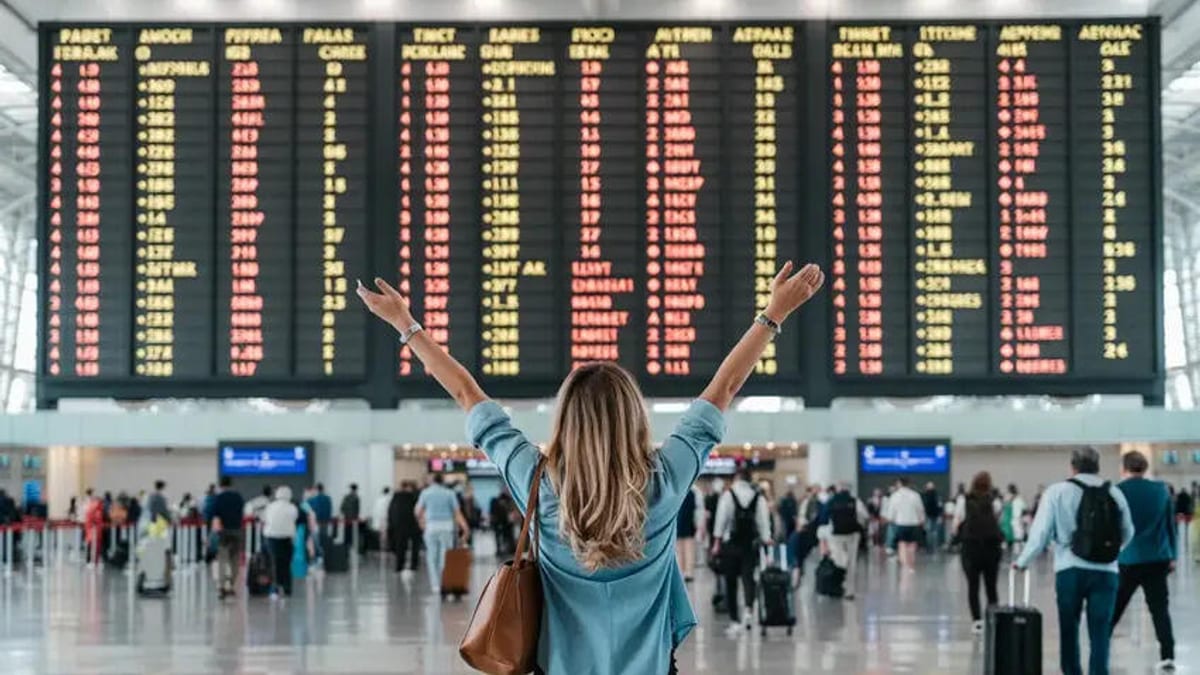
Image by Latest International / Global Travel News, Breaking World Travel News
Regional Airspace Tensions Push Airlines to Cut Schedules
Publicly available aviation data and recent media coverage indicate that carriers across Saudi Arabia, Turkey, the United Arab Emirates, Qatar, Egypt, and neighboring states have sharply trimmed their flight programs in recent weeks. Industry trackers show hundreds of cancellations layered on top of heavy delays as airlines respond to evolving security risks, rerouted corridors, and bottlenecks at busy Gulf and Levant gateways.
Observers describe the disruption as one of the most severe shocks to Middle Eastern aviation since the pandemic, with the region’s role as a bridge between Europe, Asia, and Africa magnifying the impact. Even when airports remain technically open, shifting no-fly zones over parts of Iran, Iraq, Syria, and surrounding areas have forced longer routings, crew scheduling complications, and last-minute changes that cascade into missed connections and overnight strandings.
Reports from regional economic and aviation analyses suggest that, at the height of the recent crisis, thousands of flights per day were affected across the wider Middle East and North Africa, with losses for airlines mounting into the tens of billions of dollars. While some closures have eased, the continued pattern of short-notice restrictions and partial resumptions is keeping schedules unstable and passengers uncertain.
Within this broader turmoil, aggregated flight-status snapshots over recent days point to at least 227 outright cancellations and more than 1,900 delays affecting services touching key airports such as Jeddah, Cairo, Istanbul, and Dubai, along with secondary hubs around the Gulf. Those figures capture only a slice of a much larger regional shock but underscore how rapidly conditions can deteriorate when major air corridors are constricted.
Hubs in Jeddah, Cairo, Istanbul, and Dubai Under Strain
The Middle East’s big connecting airports are bearing the brunt of the turmoil. Data compiled from airline and airport information feeds show waves of cancellations and rolling delays at Jeddah’s main commercial gateway, where Saudi carriers and foreign airlines have been forced to juggle departure slots, adjust routings, and in some cases suspend particular city pairs when overflight options narrow.
Cairo, which has emerged as a critical alternative bridge between Europe and Asia, is experiencing heavy knock-on congestion. Coverage from regional outlets notes that Egyptian airspace has stayed largely open even as neighboring countries restricted overflights, turning Egypt into a key detour corridor. That status has brought extra traffic, but it has also created pressure on ground operations when delayed long-haul arrivals and retimed departures stack up outside normal banks.
In Istanbul, Turkish carriers are contending with a complex mix of constraints. Announcements referenced in traveler forums and local reports describe extended suspensions or reductions on some routes to Gulf destinations while flights to other Middle Eastern and Asian cities are redirected along more northerly tracks. That patchwork approach keeps Istanbul functioning as a global hub but at the cost of schedule reliability and longer flying times, particularly on services linking Europe with South and Southeast Asia.
Dubai and other airports in the United Arab Emirates have experienced some of the most visible disruption, ranging from temporary suspensions of departures and arrivals to heavily restricted operations. Travel industry coverage notes that Dubai International, which typically handles more than a thousand flights a day, has periodically seen large parts of its schedule wiped out as local authorities and airlines respond to missile and drone threats in the wider region. When traffic resumes, it often does so gradually, leaving passengers competing for limited seats out of the hub.
Gulf Air, Saudia, Pegasus, Flynas and Others Forced to Adapt
The evolving situation has left airlines headquartered across the Middle East and neighboring regions scrambling to adapt. Public updates and independent tracking indicate that Gulf Air has faced multiple rounds of cancellations on routes that depend on overflying contested airspace or transiting through constrained Gulf corridors, disrupting connections between Bahrain, the wider Gulf, South Asia, and Europe.
Saudi carriers including Saudia and low-cost operator Flynas have adjusted schedules at short notice on select regional routes, particularly where routings intersect with temporarily closed skies. While core domestic and pilgrimage-focused links into cities such as Jeddah and Medina have largely continued, passengers have reported short-notice changes, lengthened journey times, and aircraft swaps as airlines try to maintain basic connectivity within the constraints of changing air traffic control directives.
Turkey-based low-cost carrier Pegasus has also appeared frequently in traveler reports about the current disruption. The airline has, at various points in recent crises, suspended or curtailed flights to certain Gulf and Levant destinations, reflecting both regulatory restrictions and commercial caution. Similar patterns are visible among other regional and European carriers that normally rely on Middle Eastern overflight rights, with some opting to avoid particular corridors even when technically allowed, in order to align with internal safety assessments.
Alongside these regional players, major global airlines from Europe, Asia, and North America have either rerouted flights around the affected region or temporarily halted services to some Middle Eastern destinations. This further constrains options for passengers who might otherwise switch from a regional carrier to a long-haul operator to complete their trips.
Passengers Face Long Delays, Missed Trips and Costly Workarounds
For travelers, the human impact of 227 cancellations and nearly 2,000 delays is significant. Social media posts and online travel communities feature accounts of overnight stays on terminal floors, long check-in lines, and departure boards filled with “delayed” or “cancelled” markers at airports across the region. Many affected passengers are connecting travelers who find themselves stranded far from their origin or destination as tight connection windows evaporate.
Rebooking has proven challenging in many cases because spare capacity is limited when schedules are already trimmed and aircraft are operating on extended routings. Travelers report being shifted onto flights one or more days later, sometimes via entirely different routings that add many hours to the journey. Those who must reach their destinations urgently are resorting to complex multi-stop itineraries that piece together whatever services are still operating around restricted airspace.
The financial implications are also mounting. While some passengers are able to claim assistance under airline policies or local regulations, others are bearing out-of-pocket costs for additional hotel nights, food, and replacement tickets. Travel insurance providers are fielding claims related to both cancellations and missed connections, though coverage terms vary widely depending on whether the disruption is classified as a security event, force majeure, or operational issue.
Consumer advocates and industry commentators are urging travelers with upcoming itineraries touching Jeddah, Cairo, Istanbul, Dubai, Doha, and other regional hubs to verify their flight status repeatedly in the 24 hours before departure, build extra buffer time into connections, and monitor airline advisories closely. With airspace conditions and schedules still in flux, many analysts expect intermittent waves of disruption to continue even as airlines gradually restore more of their planned capacity.
Uncertain Outlook for a Critical Global Aviation Corridor
The longer-term outlook for Middle Eastern air travel remains uncertain, tied closely to the trajectory of regional tensions and the sustainability of ad hoc routing solutions now being used by many airlines. Aviation experts quoted in recent analyses suggest that if restrictions persist, carriers could be forced to make more permanent adjustments to schedules, potentially reshaping traditional Europe-to-Asia traffic flows that have long relied on Gulf and Turkish hubs.
There are early signs of adaptation. Some airlines are building more generous ground times into their timetables to accommodate reroutes and possible holding patterns, while others are selectively prioritizing higher-yield long-haul routes at the expense of shorter regional sectors. Airport operators in countries such as Egypt are positioning their facilities as reliable alternatives when surrounding airspace is constrained, seeking to capture a larger share of through-traffic even after the immediate crisis fades.
Yet for now, the combination of partial airspace closures, volatile security assessments, and stretched airline resources means passengers can expect conditions to remain unpredictable. The current tally of 227 cancellations and 1,939 delays linked to the latest phase of turmoil is likely to shift daily as airlines refresh schedules and new restrictions emerge, reinforcing the Middle East’s status as both a vital and highly vulnerable node in global aviation.