

More news on this day
Air travel across the Middle East faced another day of disruption on April 5, 2026, with publicly available flight data indicating 254 delays and 17 cancellations centered on major hubs in Turkey, the United Arab Emirates, Egypt, and Kuwait.
Get the latest news straight to your inbox!
Key Hubs From Istanbul to Dubai Struggle to Maintain Schedules
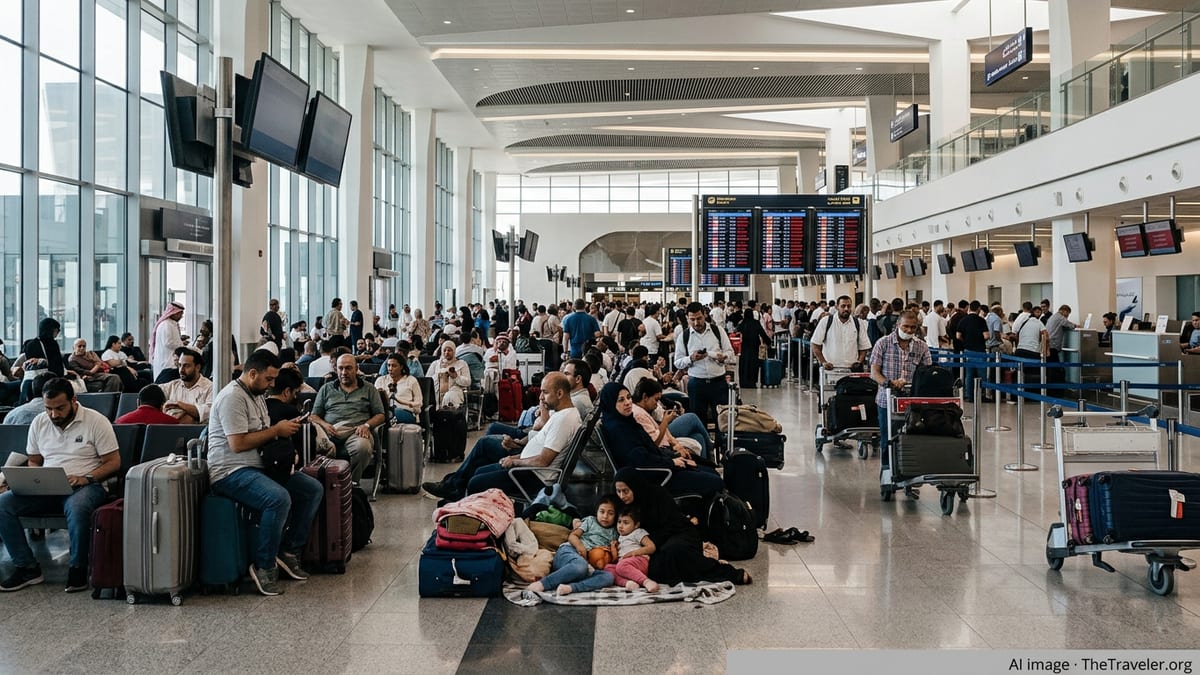
Flight boards at major airports including Istanbul, Dubai, Cairo, and Kuwait City showed long strings of delayed departures on Sunday, alongside a smaller but highly disruptive cluster of outright cancellations. The latest figures point to 254 delayed services and 17 cancellations affecting a mix of regional and long haul routes, underscoring how fragile air connectivity remains amid the wider Middle East security crisis.
In Istanbul, operational challenges reportedly combined with airspace restrictions along eastbound corridors, forcing aircraft to depart late or wait for rerouting clearances. Turkish carriers have been reshuffling aircraft and crews as they navigate closures over parts of Iran, Iraq, and neighboring states, adding complexity to already busy schedules.
Dubai International Airport, typically one of the world’s most reliable connecting hubs, continued to operate on a reduced and uneven schedule. Publicly available information shows clusters of late departures to South Asia, Africa, and Europe, as airlines seek alternative routings around closed or constrained airspace. Even when flights operate, extended block times and missed connections are common.
Kuwait International Airport, which has seen periods of full or partial suspension in recent weeks, contributed a smaller number of affected flights by volume but a higher proportion of cancellations. With limited alternative routes and heightened military activity in the Gulf, even minor timetable adjustments have knock on effects for both regional and onward intercontinental journeys.
Emirates, Saudia, Air Arabia and Others Forced to Reroute or Ground
The disruptions are rippling across a broad range of carriers. Emirates continues to adjust schedules out of Dubai, with some routes operating on modified flight paths and others still paused or reduced. According to recent operational updates, the airline has focused on maintaining trunk routes while trimming frequencies and consolidating lightly booked services.
Saudi national carrier Saudia has been contending with a fluid operating environment as airports in Riyadh, Jeddah, and Dammam manage knock on effects from regional airspace closures. Publicly available advisories describe “limited” operations on certain corridors, and schedule data shows a concentration of delays on services linking Saudi Arabia with Egypt, Turkey, and the Gulf.
From Sharjah, low cost carrier Air Arabia has seen a mix of delays and selective cancellations on routes to Egypt, India, Pakistan, and other Middle Eastern destinations. Industry trackers indicate that smaller carriers, which rely on tight aircraft rotations and thinner schedules, are particularly vulnerable when airspace restrictions force extended detours or longer ground times.
Other regional and international airlines, including EgyptAir, Pegasus Airlines, and a range of Gulf and European carriers, have also been caught up in the latest wave of disruption. Some have opted to reroute flights through alternative hubs such as Jeddah, Dammam, or airports on the fringes of the conflict zone, while others have suspended specific routes until conditions stabilize.
Conflict, Airspace Closures and Operational Constraints Drive Turmoil
The current pattern of delays and cancellations is closely tied to the broader conflict that has escalated across the region since late February. Missile and drone strikes, along with precautionary airspace closures by several governments, have constrained the main corridors that traditionally connect Europe and Asia via the Gulf and Anatolia.
Advisories from aviation risk consultancies and travel security firms describe a patchwork of closed, partially open, and limited airspaces affecting Iran, Iraq, Syria, parts of the Gulf, and adjacent territories. Carriers that continue to fly in the region are often required to adopt longer, more northerly or southerly routings, increasing fuel burn, flight times, and crew duty hours.
Operational challenges extend beyond route planning. Ground handling and airport staffing are under pressure as airlines repeatedly rework schedules, sometimes with only a few hours’ notice. This contributes to late arriving aircraft, missed crew connections, and knock on delays that cascade throughout the day, even on routes far from the immediate conflict zone.
Industry analysts note that the cumulative impact of these disruptions is substantial. Over recent weeks, tens of thousands of passengers across the Middle East and connecting regions have faced missed connections, unplanned overnight stays, and the need to rebook via secondary hubs or even travel overland to reach functioning airports.
Passengers Confront Long Queues, Confusing Updates and Limited Options
For travelers, the statistics translate into hours spent in terminals and uncertainty about when, or even if, they will reach their destinations. Reports from Dubai, Istanbul, Cairo, and Kuwait City describe long queues at airline service counters as passengers seek rebooking, refunds, or hotel accommodation.
Publicly available coverage from regional media and travel platforms highlights inconsistencies between airport departure boards, airline websites, and mobile apps. In some cases, flights continued to appear as scheduled on one system while showing as delayed or canceled on another, complicating passengers’ decisions about when to head to the airport.
With many routes heavily subscribed and aircraft already redeployed, same day rebooking options are often limited. Travelers connecting through major hubs in the Middle East have been advised in multiple advisories to anticipate extended layovers, and in some cases to consider entirely different routings that bypass the region.
Travel rights organizations have also begun to remind passengers that compensation and care obligations may vary depending on the airline, the point of origin, and the applicable legal framework. Where the disruptions are directly tied to security events or airspace closures, carriers frequently classify them as extraordinary circumstances, limiting entitlement to cash compensation while still requiring basic assistance such as meals and accommodation.
Outlook: Gradual Restarts but No Quick Return to Normal
Despite the severity of the current disruptions, there are tentative signs of adjustment rather than complete paralysis. Some Gulf and Turkish carriers have announced incremental increases in frequencies on selected routes, and several airports in the region are operating on what industry bulletins describe as “open but limited” status.
However, aviation planners warn that as long as significant portions of regional airspace remain closed or constrained, day to day irregular operations are likely to continue. Even modest escalations in the conflict can trigger additional closures, forcing airlines to redraw flight paths and reissue schedules at short notice.
For travelers planning journeys through the Middle East in the coming days, publicly available advisories consistently recommend checking flight status repeatedly in the 24 hours before departure, allowing extra time at the airport, and being prepared for rerouting via alternative hubs. Flexible tickets and travel insurance that explicitly addresses disruption in conflict zones are also being framed as increasingly prudent choices.
With 254 delays and 17 cancellations recorded across key Middle Eastern hubs on April 5 alone, the region’s aviation sector is navigating one of its most complex operational environments in years, and a swift return to pre crisis reliability appears unlikely.