

More news on this day
The war centred on Iran is rippling through the global aviation system, triggering sweeping airspace closures, longer routes and a sharp downturn in long-haul travel demand to and from Australia.
Get the latest news straight to your inbox!
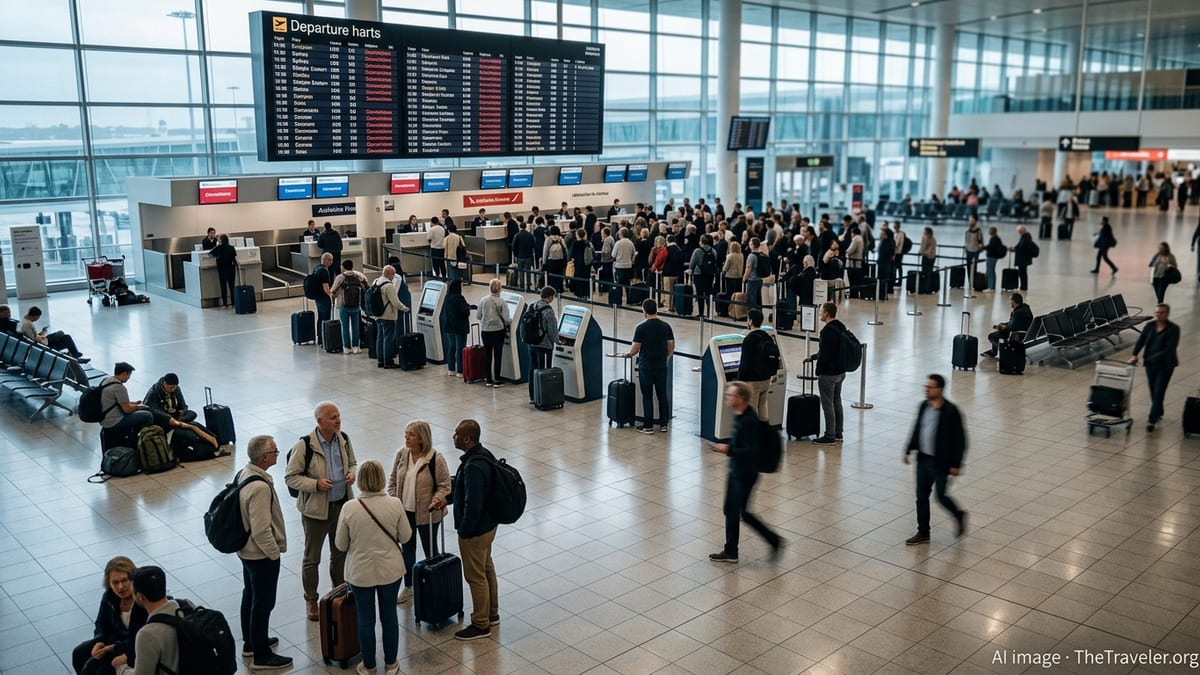
Middle East Airspace Closures Reshape Global Flight Paths
The latest phase of conflict involving Iran, the United States and Israel has led to widespread closures and restrictions of Middle Eastern airspace, removing one of the world’s most important aviation corridors virtually overnight. Publicly available flight-tracking data and published coverage show that air routes over Iran, Iraq and several Gulf states have thinned dramatically since the first major strikes on 28 February 2026, with hubs such as Dubai and Doha experiencing waves of cancellations and temporary suspensions of operations.
Analysts note that Middle Eastern airports collectively handled a substantial share of global connecting traffic before the war, particularly on flows linking Europe with Asia, Africa and Oceania. With sections of this airspace now off limits or heavily restricted, airlines have been forced to redesign long-haul networks at short notice, diverting traffic via alternative hubs or dropping certain city pairs altogether.
Industry briefings indicate that rerouting long-haul flights around the Middle East can add one to three hours to some journeys, depending on the origin and destination. The longer flying times increase fuel burn, disrupt crew scheduling and tighten aircraft availability, creating a cascading effect that has quickly translated into higher fares, thinner schedules and more frequent last-minute changes for passengers.
Australia’s Long-Haul Demand Drops as Routes Lengthen
Australia is among the markets most exposed to the loss of efficient Middle Eastern corridors. For more than a decade, airlines based in the Gulf have offered Australians one-stop access to Europe, North Africa and parts of the Americas, using their hubs as waypoints between the Southern Hemisphere and the Northern Hemisphere. With those hubs now constrained, many of the most popular itineraries have become longer, more complex and more expensive.
Travel industry data cited in recent media reports point to a clear weakening of forward bookings on some of Australia’s longest sectors, particularly to Europe. The combination of extended flight times, uncertainty over connections and rising ticket prices appears to be deterring discretionary travellers, especially those planning holidays rather than essential trips. Corporate travel demand is proving more resilient but is also being reshaped, with some firms redirecting traffic away from the traditional Gulf stopovers.
Australian-based agents report that some travellers are shelving or shortening Europe trips for the coming northern summer, opting instead for regional holidays in Asia or the Pacific. Others are delaying bookings in the hope that airspace restrictions will ease and schedules will stabilise. For airlines, this softening of demand on marathon routes such as Perth–London and east-coast Australia to Western Europe is emerging just as operational costs are rising sharply.
Rising Fuel Costs and Rerouting Drive Up Fares
The conflict has collided with the energy market at a sensitive moment. Economic analysis of the Iran war indicates that disruptions around the Strait of Hormuz and reduced output from several producers have pushed global oil benchmarks sharply higher, with Brent crude jumping from around 70 to well above 110 US dollars per barrel in a short period. Jet fuel prices, which typically move in tandem with crude, have climbed even faster due to refinery bottlenecks and the specific grades of oil affected.
For airlines, the simultaneous hit from longer flight paths and higher fuel prices is proving particularly painful. Aviation-focused research notes that rerouting a single long-haul flight to avoid restricted Middle Eastern airspace can add substantial extra fuel burn and crew costs, losses that are often measured in tens of thousands of dollars per rotation. Many carriers are attempting to recoup at least part of those costs through fuel surcharges and higher base fares.
Australian travellers are already seeing these pressures reflected in ticket prices on some intercontinental routes. Reports indicate that airlines serving Australia–Europe and Australia–Africa markets have adjusted fares upward while also trimming marginal frequencies to conserve capacity. Discount economy seats have become harder to find on key departure dates, particularly during school holidays, as airlines prioritise revenue on the services they continue to operate.
New Detours and Transit Hubs Emerge for Australians
As Middle Eastern hubs lose their central role, new transit patterns are emerging for passengers starting or ending their journeys in Australia. Data shared in recent travel industry commentary suggest that major airports in East and Southeast Asia, including those in Singapore, Hong Kong and mainland China, are absorbing a growing share of Europe-bound and North Asia–bound Australian traffic. Some carriers are ramping up capacity via these hubs, positioning them as safer and more reliable alternatives while the conflict continues.
For many travellers, the new routings mean at least one extra connection or a noticeable increase in total journey time. A trip that once involved a single stop in the Gulf may now require a connection in East Asia and a secondary European hub, adding complexity to itineraries and increasing the risk of missed flights if delays occur. Airlines are tweaking schedules and minimum connection times, but operational buffers remain tight due to aircraft and crew constraints.
Direct ultra-long-haul services are also under renewed scrutiny. Routes such as Perth–London, which already rank among the world’s longest nonstop flights, face additional operational challenges when alternative routings to avoid conflict zones are required. In some cases, airlines may need to impose payload restrictions, such as limiting the number of seats sold or reducing cargo loads, to keep within fuel and performance limits. These measures can further reduce profitability and push prices higher for the remaining seats.
What Travellers Need to Know Before Flying Long-Haul
For Australians planning long-haul trips in the coming months, especially to Europe, North Africa or parts of the Middle East and Central Asia, the environment is likely to remain volatile. Aviation forecasts referenced in recent economic assessments suggest that meaningful disruption to global air travel could persist at least into late autumn in the Southern Hemisphere, even if the intensity of the conflict eases. Airlines are adjusting networks in short cycles, and schedules published months in advance should be treated as indicative rather than guaranteed.
Travel advisories from governments and insurers highlight that conflict-related disruptions can affect itineraries even when the final destination is far from the war zone. Flights may be diverted, delayed or cancelled at short notice due to evolving risk assessments, shifting no-fly zones or operational bottlenecks at alternative hubs. Some insurance policies also contain exclusions for war-related events, limiting coverage for additional expenses or cancellations linked directly to the conflict.
Passengers are being encouraged by consumer advocates to build more flexibility into their plans. That can include choosing tickets that allow date or routing changes at reasonable cost, allowing longer connection windows, and avoiding tight same-day links with critical events such as cruises or major tours. Keeping a close watch on airline apps and travel alerts in the days before departure is also increasingly important, as notifications of schedule changes may arrive with limited lead time.
Despite the current turbulence, the underlying appetite for international travel from Australia remains strong compared with the immediate post-pandemic period. However, until Middle Eastern airspace stabilises and fuel markets cool, long-haul journeys are likely to remain more expensive, less predictable and more time-consuming than many travellers have grown used to in recent years.