

More news on this day
Escalating conflict across the Gulf is shredding Easter travel plans for thousands of holidaymakers, as families abandon sun‑seeking breaks in the Middle East amid missile strikes, airspace closures and mounting insurance concerns.
Get the latest news straight to your inbox!
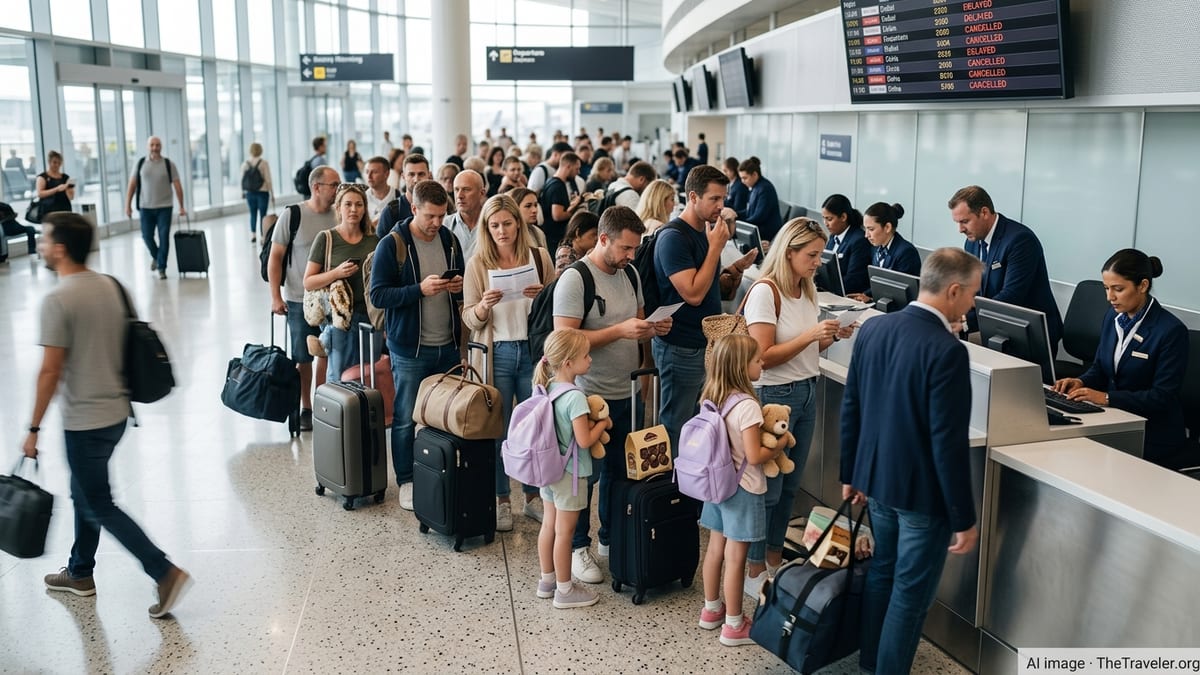
War Overshadows Peak Holiday Season
The latest phase of the Iran war, which has seen missile and drone attacks on multiple Gulf states since late February 2026, is colliding directly with the busy Easter travel period. Publicly available information shows that Iran has launched strikes against several Arab countries, including the United Arab Emirates, Qatar, Bahrain, Kuwait and Saudi Arabia, with some projectiles falling near airports, hotels and urban areas.
In the UAE, reports indicate repeated drone and missile incidents around Dubai and Abu Dhabi since 28 February, including debris near Dubai International Airport and damage to civilian buildings. A number of people have been killed or injured, and local authorities have periodically warned residents about missile threats. While air defences have intercepted many incoming projectiles, the optics of smoke plumes near runways and fires in residential districts are undermining the country’s reputation as a safe, insulated tourism hub.
Parallel tensions at sea are intensifying the sense of regional crisis. The ongoing Strait of Hormuz emergency has halted or sharply reduced commercial traffic through one of the Gulf’s main maritime corridors, with reports of tankers hit by missiles and major shipping lines suspending transits. Cruise operators have curtailed Gulf itineraries, leaving passengers re‑routed or reconsidering future voyages as insurers raise premiums and some policies narrow their coverage.
For prospective Easter visitors who booked months ago on the assumption of stability, the acceleration of events since late February has transformed a long‑anticipated break into a source of worry, with many now scrambling to exit or change plans before the peak school‑holiday period begins.
Flight Disruptions, Waivers and Nervous Travelers
As airspace restrictions ripple across the region, airlines and passengers are contending with a complex and fast‑moving operating environment. Published aviation notices and media coverage show that several regional states, including Bahrain, Israel, Kuwait, Qatar and the UAE, have periodically closed or constrained sections of their airspace following major barrages, forcing long‑haul carriers to reroute or cancel services.
Some global airlines have responded by issuing unrest travel waivers covering departures to or via the Middle East from late February into March, allowing customers to rebook, change routings or claim credit rather than fly through perceived hotspots. Online travel forums are filled with posts from passengers weighing whether to transit key hubs such as Dubai and Doha in April, with many stating that they are actively hunting for alternatives via Europe or South Asia even at higher cost.
Operational data and first‑hand accounts point to a patchwork of disruption rather than a full shutdown. Several carriers serving Dubai and other Gulf hubs have resumed limited schedules after brief suspensions, while airports in countries less directly affected by the strikes, such as Oman and parts of Saudi Arabia away from the Gulf coast, are reported to be operating largely normally. However, the risk of sudden closures, diversions and extended flight times remains elevated, particularly for routes passing close to contested airspace or maritime zones.
For families with children or elderly relatives, that uncertainty often proves decisive. Travel agents and online booking platforms report increased demand for routings that entirely bypass the Gulf, even where official advisories stop short of urging citizens to avoid the region outright. The combination of volatile airspace, dramatic images on social media and granular news coverage of each new incident is pushing many undecided travellers to err on the side of caution.
Tourism Hotspots See Cancellations and Empty Rooms
The Gulf’s flagship leisure destinations are feeling the impact in real time. Publicly available reporting on the Iranian strikes against the UAE notes that vacancy rates in Dubai’s hotels have risen as visitors cut short stays or cancel trips, prompting properties to reduce prices and roll out aggressive offers to attract regional residents for last‑minute staycations.
Industry commentary suggests a broader softening in bookings across Middle Eastern city‑break and resort staples that traditionally draw European and Asian visitors over Easter, from Gulf beach complexes to Red Sea hubs already affected by previous missile and drone incidents. Tour operators specialising in combination itineraries that link the Gulf with Jordan, Egypt or Turkey report heightened client anxiety about multi‑country trips, even when the secondary destinations remain physically distant from the main theatres of conflict.
Data circulated by travel analysts and consultancies in recent weeks indicates that forward bookings to several Middle Eastern destinations were already under pressure before the latest escalation, reflecting the accumulated impact of Red Sea attacks, earlier strikes on Israeli resort cities and high‑profile incidents near major airports. The fresh wave of Gulf‑focused attacks appears to have deepened that trend, with some observers highlighting a marked drop in new reservations for April and May compared with 2025.
Local tourism stakeholders, from hoteliers to excursion providers, now face the prospect of an unseasonably subdued Easter, a period that normally delivers some of the highest room rates and occupancy levels of the year. Discounts, flexible cancellation policies and upgraded packages are being deployed to shore up demand, but many suppliers acknowledge that fear of escalation is not easily countered by marketing alone.
Families Shift to “Safe Haven” Alternatives
As confidence in Gulf and near‑warzone itineraries erodes, many travellers are pivoting toward destinations perceived as stable, accessible and culturally proximate without being caught inside the immediate arc of conflict. Travel industry commentary and consumer discussions highlight a surge of interest in southern European sun belts, North African coastal cities far from the Gulf and classic Western city breaks as replacement options for Easter.
Morocco, for example, has been cited in recent travel analysis as a relative bright spot, with booking platforms noting that demand for its Atlantic and Mediterranean resorts has held up or even strengthened as some holidaymakers switch from Middle Eastern packages. Mediterranean EU members such as Spain, Portugal, Greece and southern Italy are also reported to be benefiting from late swings in demand from travellers who originally aimed for warmer Gulf waters but no longer feel comfortable with the associated flight paths and perceived risks.
Within the region, destinations seen as somewhat insulated from the direct line of fire, including parts of Egypt and inland Jordan, are trying to strike a delicate balance. Public messaging from tourism boards and private operators emphasises that major attractions and resort corridors continue to function, while also acknowledging that travellers should stay abreast of evolving advisories. For risk‑averse families, though, even marginal proximity to a widening war often tilts decisions toward locations with no current missile or drone activity.
Agents report that flexible work arrangements are enabling some travellers to push back Easter trips to late spring or autumn, in the hope that the regional picture will have stabilised. Others are splitting holidays, opting for shorter, closer‑to‑home stays now while retaining a long‑haul Middle East trip as a future aspiration rather than an immediate plan.
Outlook: Prolonged Uncertainty for Gulf Tourism
Economic and geopolitical analysts caution that the tourism fallout from the current Middle East conflict is unlikely to dissipate quickly, even if the intensity of the fighting diminishes. Commentaries on the Iran war’s wider impact argue that the combination of direct attacks on or near civilian infrastructure, heightened perceptions of risk and disrupted air and sea corridors may weigh on the region’s travel sector well beyond the current Easter window.
In the Gulf itself, the competitive advantage of major hubs that marketed themselves as safe, well‑connected stopovers between Europe, Asia and Africa is under scrutiny. Repeated missile and drone alerts near airports, even when successfully intercepted, challenge the narrative of invulnerability that has underpinned decades of rapid tourism growth. Insurance premiums, airline routing decisions and corporate travel policies are all being reassessed in light of the new threat environment.
For travellers, the immediate pattern is already clear: in the face of headline‑grabbing strikes and evolving advisories, many are choosing to sacrifice long‑planned Easter escapes rather than expose families to perceived warzone conditions. As long as the regional conflict and Strait of Hormuz crisis remain unresolved, Middle Eastern tourism is likely to struggle with sudden shifts in demand, strained logistics and a lingering trust deficit among cautious holidaymakers.