

More news on this day
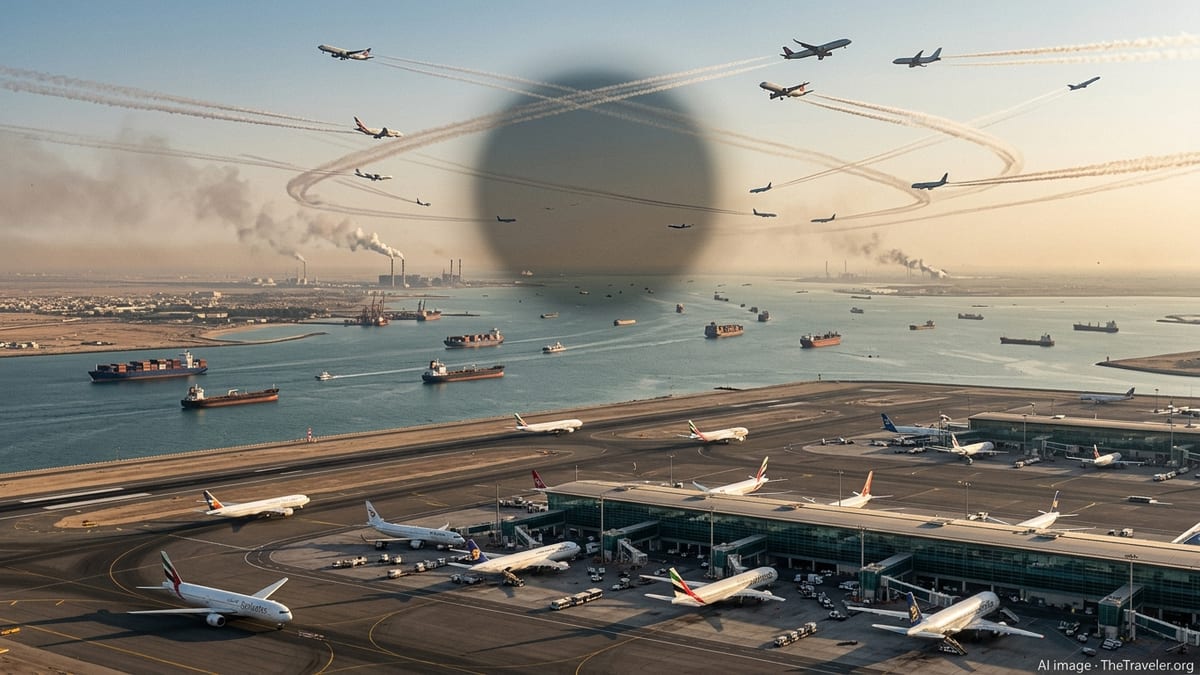
Escalating conflict centered on Iran is rippling through global aviation, with jet fuel prices spiking, key Middle East airspace tightening and airlines across the United States, Europe and Asia scrambling to redraw routes on the fly.
Get the latest news straight to your inbox!
Jet Fuel Costs Spike as Energy Infrastructure Comes Under Fire
Publicly available data from energy and aviation agencies indicates that jet fuel prices have jumped dramatically since the Iran war erupted on February 28, 2026. Benchmarks that hovered around 85 to 90 dollars per barrel before the conflict are now reported in some analyses to be pushing toward the 150 to 200 dollar range, a surge that is reverberating through airline balance sheets and ticket prices worldwide.
The price shock is closely tied to a sharp disruption in Gulf oil and gas flows. Reports from international outlets describe a chain of missile and drone strikes on refineries and export terminals in Iran, Saudi Arabia, Qatar and the United Arab Emirates, including facilities that help feed aviation fuel markets. With a significant share of global crude and refined products normally moving through or near the Strait of Hormuz, even partial interruptions are enough to send fuel markets into turmoil.
Industry assessments suggest that jet fuel, which typically accounts for about a quarter of an airline’s operating costs, is now the single largest variable clouding carriers’ financial outlooks for 2026. Some analysts are warning that if elevated energy prices persist, airlines may be forced into additional fuel surcharges, aggressive capacity cuts or both, particularly on long-haul routes that burn the most fuel.
Saudi Arabia Joins Wider Regional Airspace Squeeze
The war’s aviation fallout has been most acute across the Gulf, where a patchwork of closures and restrictions has reshaped the map of commercial flying. Shortly after hostilities escalated, Bahrain, Iraq, Israel, Kuwait, Qatar, Syria and the United Arab Emirates imposed sweeping airspace shutdowns or severe limitations, according to regional aviation advisories. Those moves severed or constricted corridors linking Europe, Africa and Asia.
Saudi Arabia initially kept its skies open but moved quickly to restrict operations as Iranian strikes and missile interceptions multiplied around its territory. Notices to airmen and regional port and travel advisories show that Riyadh has suspended or curtailed flights to neighboring states whose airspace is effectively closed, including Qatar, Bahrain, Kuwait and the UAE, while maintaining domestic networks and selected international links through alternative routings.
At the same time, Saudi oil and refining sites have come under repeated attack, deepening the pressure on fuel supply. Publicly available information on the conflict points to strikes near major Aramco facilities and other energy infrastructure, leaving the kingdom straddling a dual role as both a critical alternative export route via the Red Sea and a frontline target in the energy war. That combination has made Saudi Arabia an increasingly central, if fragile, node in the struggle to keep aviation fuel and air connectivity flowing.
Gulf Super-Connectors Cut Back as Flights Scramble for New Paths
The Middle East’s giant hub carriers, long marketed as seamless connectors between continents, are now at the heart of the disruption. Published coverage and passenger accounts describe thousands of cancellations and suspensions affecting flights to and from Doha, Dubai and Abu Dhabi, as Qatar Airways, Emirates and Etihad reorganize operations around closed or high-risk corridors.
With Iranian, Iraqi and Israeli skies effectively off limits and parts of the Gulf ringed by military activity, airlines have been forced to choose between long detours or temporary pullbacks. Many long-haul flights that once transited the Gulf are now being routed north over Turkey and the Caucasus or well south over the Arabian Sea. Some carriers from Europe and Asia have opted to suspend Middle East services altogether and redeploy aircraft to more stable markets.
The knock-on effects reach far beyond the region. Travelers trying to move between Australia and Europe, South Asia and North America, or Africa and Asia are encountering sold-out alternatives, piecemeal rebookings and unexpected overnight stays in secondary hubs. Aviation data platforms show aircraft bunching on a handful of remaining safe corridors, extending flight times and straining airport capacity in cities that were never designed to absorb Gulf-level transfer volumes.
US, European and Asian Airlines Face Higher Costs and Longer Trips
Major airlines in the United States and Europe report that strong demand is still filling planes, but publicly available investor updates highlight a rapid climb in fuel expenses since late February. Domestic networks are largely insulated from the direct airspace closures, yet they are exposed to the same jet fuel spike that is coursing through global markets.
Carriers operating transatlantic and transpacific routes are encountering a different set of challenges. Flights from North America and Europe to destinations in South Asia, Southeast Asia and Oceania often relied on Middle Eastern hubs or overflight rights across Iran and neighboring states. With those pathways constrained, schedules are being rewritten to emphasize northern routes via Turkey and Central Asia or southern arcs that skirt the Arabian Peninsula, adding hours to some journeys and pushing fuel burn even higher.
Airlines in Asia are also recalibrating. Public timetables and route updates show that several Indian and East Asian carriers have suspended services to Gulf destinations while retaining connections through alternative westbound gateways such as Istanbul or emerging Central Asian hubs. For passengers, that can translate into more complex itineraries, longer layovers and fewer nonstop options on routes that only weeks ago seemed routine.
Travellers Confront Rising Fares, Uncertainty and Patchwork Advisories
For travellers, the most visible effects of the crisis are mounting delays, abrupt cancellations and rising prices. Aviation and consumer reports indicate that airlines have begun to pass a portion of higher fuel costs on to passengers, particularly on long-haul and premium-heavy routes. At the same time, carriers are trimming frequencies on some services to contain expenses, further tightening capacity in already busy markets.
Travel advisories from governments and risk consultancies now consistently flag the Middle East as a high-uncertainty region for air travel, citing the potential for sudden airspace closures, missile or drone activity near airports, and degraded navigation systems. Even where flights are still operating, travellers are being urged in public guidance to build in extra time, monitor itineraries closely and be prepared for rerouting at short notice.
Booking and search data released by industry analysts suggest that some leisure travellers are postponing or redirecting trips away from the eastern Mediterranean and Gulf region, while business travel continues but with greater reliance on virtual meetings and flexible planning. As the conflict shows little sign of imminent resolution, aviation experts warn that the combination of elevated jet fuel prices, fragmented airspace and volatile demand could reshape key global air routes well beyond the current crisis window.