

More news on this day
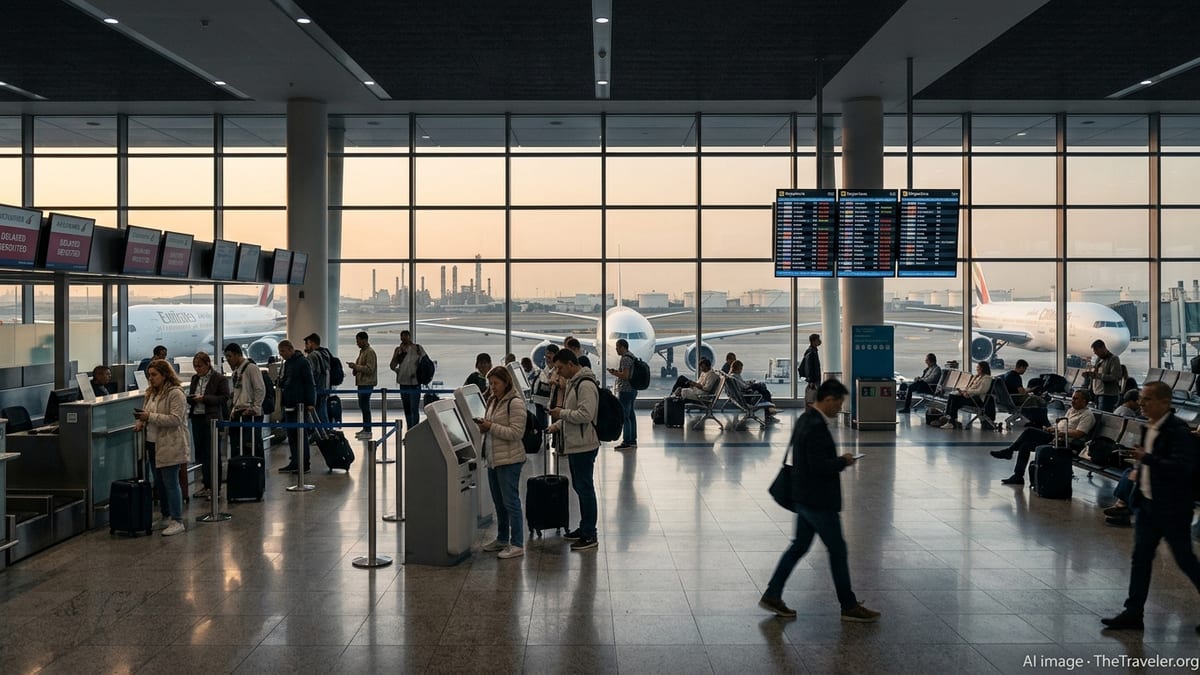
Global air travelers are bracing for higher fares as the war involving Iran upends oil supplies, pushes jet fuel prices sharply higher, and forces airlines into costly detours around a growing swath of closed Middle East airspace.
Get the latest news straight to your inbox!
Oil Shock Reverberates Through Global Aviation
The latest escalation in the Middle East, including attacks on key energy infrastructure and threats to shipping routes, has rapidly tightened global oil supplies and driven benchmark prices sharply higher. Brent crude recently surged past 100 dollars per barrel and has traded near multi year highs after strikes on Iran’s South Pars gas field and Saudi facilities, combined with heightened risk in the Strait of Hormuz, a vital chokepoint for seaborne oil.
Economic analyses of the Iran war indicate that production losses across major Gulf exporters have removed several million barrels per day from the market in a matter of weeks. Market commentary describes the current price spike as faster and more extreme than during earlier conflicts, reflecting both the scale of the supply interruption and fears that further infrastructure could be drawn into the fighting.
The impact is already visible across the energy complex. Home heating oil and gasoline prices have climbed steeply in major consuming regions, while traders report intense volatility in refined products used by transport industries. Aviation, which relies heavily on kerosene based jet fuel, is particularly exposed because fuel typically accounts for around a quarter or more of airline operating costs in normal conditions and far more when crude prices surge.
Jet Fuel Costs Surge as Airlines Lose Hedging Cushion
Jet fuel prices have jumped in tandem with crude, with specialist price reporting agencies noting sharp upward revisions to forecasts for 2026. The United States Energy Information Administration recently lifted its jet fuel outlook, citing the Iran conflict and disruptions to supply chains that feed refineries around the world. In parallel, regional reports from Europe and Asia show spot jet prices hitting their highest levels since at least 2024.
Industry data compiled on the economic impact of the war suggest that prices for kerosene based products, including jet fuel and diesel, have more than doubled in a short period as refineries struggle to replace the specific grades of crude traditionally sourced from the Gulf. Analysts note that while some airlines hedge a portion of their fuel needs, those protections are limited both in duration and volume, meaning a sustained spike in prices will feed directly into carriers’ cost bases as existing hedges roll off.
Early responses from individual airlines illustrate the pressure. In South Africa, a major low cost carrier recently introduced a temporary fuel surcharge after reporting that Jet A1 prices at coastal airports had risen by around 70 percent in a single week. In Asia and Europe, several airlines have publicly acknowledged that they are revising fares and reintroducing or increasing fuel surcharges in response to the latest bout of oil volatility linked to the conflict.
Airspace Closures and Rerouting Deepen the Cost Squeeze
Beyond fuel prices, the war has triggered significant disruption to regional and long haul flight paths. Publicly available air traffic assessments describe extensive closures of Middle Eastern airspace and intermittent shutdowns of major hubs that together handle a substantial share of global passenger and cargo flows. International airlines have been rerouting services to avoid conflict zones, adding hundreds or even thousands of kilometers to some journeys.
Research on the economic impact of the conflict estimates that longer flight paths around the Middle East are adding notable time and cost to operations. Aviation analysts cited in trade publications calculate that each additional hour of flying on a narrowbody or widebody aircraft can add several thousand dollars in operating costs, once fuel burn, crew duty limits, maintenance, and aircraft utilization are taken into account.
These detours are also eroding the efficiency advantages of traditional hub and spoke networks centered in the Gulf. With some airports operating at reduced capacity and others temporarily closed, carriers have cut frequencies, shifted connections to secondary hubs, or suspended certain routes altogether. This combination of longer routings, thinner schedules, and higher fuel bills is narrowing profit margins and making it harder to absorb rising costs without adjusting ticket prices.
Passenger Demand Meets Shrinking Capacity
The timing of the conflict adds further strain to a sector that was counting on robust demand growth in 2026. Forecasts from international aviation bodies published before the latest escalation projected steady increases in global passenger numbers and a modest improvement in airline profitability. Those outlooks already flagged geopolitical risk, including potential conflicts in the Middle East, as a key threat to both capacity planning and financial performance.
Now, as war related disruptions ripple through the network, capacity is tightening just as leisure and business travel remain resilient in many markets. Regional coverage from Europe and Asia highlights that some airlines have trimmed schedules or temporarily halted services to affected destinations, while others are constrained by aircraft and crew availability as they re plan routes around closed airspace.
Economists and airline analysts warn that when strong demand collides with reduced capacity and structurally higher operating costs, fares typically rise. Even if headline ticket prices do not jump immediately on every route, the widespread use of dynamic pricing and ancillary fees means travelers are likely to face higher overall trip costs, especially on long haul flights that are most exposed to fuel and routing changes.
Outlook: Persistent Risk of Higher Fares for Global Travelers
While energy markets remain highly volatile, most published assessments suggest that the risk of a quick return to pre war oil prices is low. Damage to key facilities, shipping risks in the Strait of Hormuz, and uncertainty over future supply decisions by major producers all point to a period of elevated prices and fragile confidence. Some commodity research houses have begun to discuss the possibility of extreme price scenarios if the conflict deepens or spreads.
For airlines, this environment compounds other challenges identified by industry groups, including thin profit margins, supply chain bottlenecks for new aircraft and parts, and continued economic uncertainty in several regions. Aviation trade bodies have repeatedly noted that conflict and airspace fragmentation impose direct costs on carriers and often lead to higher ticket prices when sustained over time.
For travelers, the practical effect is likely to be felt in the coming months as airlines adjust summer and autumn schedules and update fare structures. Consumer advocates advise that passengers booking complex itineraries or travel through regions near the Middle East should be prepared for potential schedule changes, longer travel times, and fewer low fare options. Unless there is a rapid de escalation in the region and a clear easing in oil markets, the era of relatively stable post pandemic airfares appears to be giving way to a new period of price volatility driven by geopolitics.