

More news on this day
Escalating war in the Middle East and sweeping airspace closures are rippling through global aviation, triggering mass cancellations, longer routes and a sharp demand slump on key long haul markets for Australian travellers.
Get the latest news straight to your inbox!
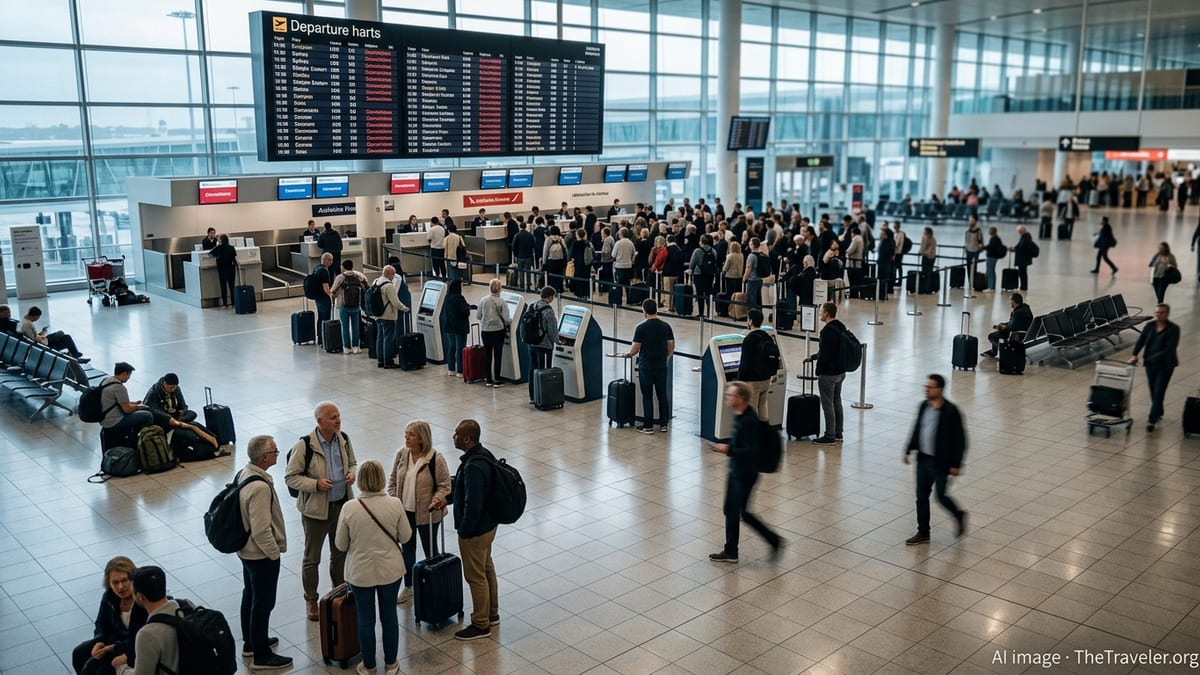
Airspace Closures Push Global Network to Breaking Point
Since late February, hostilities involving Iran, the United States and Israel have led to the closure or severe restriction of airspace over Iran, Iraq, Israel, parts of the Gulf and surrounding corridors. Publicly available aviation tracking and government advisories indicate that normal civilian overflights across much of the central Middle East have either stopped or been sharply curtailed, forcing airlines to redraw some of the world’s busiest long haul routes almost overnight.
Major hubs that once stitched together Europe, Africa and Asia, including airports in the United Arab Emirates and Qatar, have faced temporary shutdowns, limited operations and rolling disruptions. Reports indicate thousands of flights across the region have been cancelled or diverted since the first strikes, with several Gulf airports operating only restricted repatriation and cargo services for extended periods.
Industry analysis comparing the current situation with previous crises suggests the disruption is among the most severe shocks to global aviation since the pandemic, with the impact concentrated on routes that traditionally depend on Middle Eastern hubs as connecting gateways. Europe to Asia and Europe to Oceania flows have been particularly exposed, as aircraft are forced to route around both closed airspace and a conflict zone that stretches from the eastern Mediterranean to the Gulf.
Australia’s Long Haul Links to Europe and Beyond Squeezed
For Australian travellers, the fallout is most acute on long haul journeys to Europe, the Middle East and parts of Africa. Capacity that once flowed through high frequency Gulf hubs on carriers such as Emirates, Qatar Airways and Etihad has shrunk, and many of the one stop options via Doha, Dubai or Abu Dhabi have either disappeared for now or are restricted to limited relief services.
According to airline schedule data and travel industry commentary, Qantas and its partners are reworking flight paths between Australia and Europe to avoid the conflict zone, sending aircraft south over the Indian Ocean or further north via alternative corridors over Central Asia and Eastern Europe. These detours can add several hours to travel times from Sydney, Melbourne or Perth to cities such as London, Rome or Paris, increasing fuel burn and reducing the number of rotations airlines can operate each day.
Travel trade publications in Australia report that the sudden loss of large volumes of Gulf hub capacity, combined with longer routings and higher operating costs, is already feeding through to a pronounced slump in demand for discretionary long haul travel. Corporate travel managers and leisure agents are reporting clients postponing or cancelling non essential trips to Europe, while some passengers opt for closer destinations in Asia or the Pacific until conditions stabilise.
Higher Fares, Longer Journeys and Tighter Seat Supply
One immediate effect of the conflict has been a spike in jet fuel prices, driven by concerns over energy supply routes through the Strait of Hormuz and the wider Gulf region. Public financial filings and airline statements show carriers passing at least part of these higher costs on to passengers, particularly on long haul services where fuel represents a large share of operating expenses.
For Australian travellers, this translates into higher base fares and surcharges on routes to Europe, the Middle East and parts of Africa, just as flying times are increasing. Analysts note that ultra long haul nonstop services, such as those linking Perth with European cities, are especially sensitive to fuel prices and headwinds. Some of these flights are reportedly adding fuel stops or adjusting payloads, which can further affect schedules and seat availability.
At the same time, rerouting around the Middle East has created bottlenecks on alternative corridors over Central Asia, the Caucasus and southern Africa. Airlines that previously relied on short, direct tracks across the Gulf now compete for more northerly or southerly paths, tightening capacity on the remaining viable routes. Travel agency feedback suggests that economy class seats to Europe from Australian gateways are becoming harder to find at short notice, even as overall long haul demand softens, because so much capacity has been withdrawn or redeployed.
What Travellers From Australia Need to Know Right Now
For anyone in Australia holding tickets or planning trips over the next few months, the most significant change is uncertainty. Airline advisories show that schedules are being revised frequently as airspace restrictions evolve, meaning departure times, routings and even operating carriers can change with limited notice. Travellers are being urged by airlines and airports to monitor booking platforms and departure boards closely in the days leading up to departure.
Public information from carriers indicates that most major airlines are offering varying degrees of flexibility, including the option to rebook onto later dates, change routings away from the Middle East or, in some cases, request refunds when flights are cancelled. However, the extent of these options depends on fare type and the airline’s specific policy. Travel industry groups in Australia caution that alternative routings not involving Gulf hubs may already be close to fully booked across peak periods, leaving fewer choices on preferred dates.
Safety remains a central concern. Aviation regulators and airline safety departments continue to publish guidance on conflict zone overflights, and most carriers are now avoiding airspace assessed as high risk. While this reduces direct exposure to the fighting itself, it reduces routing flexibility and contributes to the longer flight times and higher prices now facing passengers originating in Australia.
Planning Ahead: Routes, Insurance and Timing
Travel experts advising the Australian market currently recommend building more time and redundancy into long haul itineraries. Passengers connecting onwards in Europe or Asia may wish to allow longer layovers than usual to buffer against delays or missed connections caused by rerouting and congestion. Where possible, booking through a single ticket or carrier alliance can also make it easier to secure reaccommodation if disruptions occur.
Travel insurance has become a more critical part of trip planning, but policies vary widely in how they treat war related disruptions and government travel advisories. Consumer organisations encourage travellers to review policy wording carefully, paying particular attention to exclusions related to armed conflict, known events and changes in advice from foreign ministries. Products that include coverage for missed connections, extended delays and additional accommodation costs may provide more protection in the current environment.
Finally, timing matters. With energy markets volatile and airspace restrictions subject to diplomatic negotiations and military developments, demand and pricing for long haul travel from Australia could remain unstable for months. Leisure travellers with flexible dates may find it prudent to defer complex multi stop European itineraries, focusing instead on regional trips within Asia Pacific, while those with essential travel needs should book as early as possible and remain prepared for schedule changes up to the day of departure.