

More news on this day
Air travel across the Middle East lurched into crisis on March 1 as war-related airspace closures and missile strikes on key Gulf hubs forced the shutdown of major airports, stranding hundreds of thousands of travelers and severing vital links between Europe, Africa and Asia.
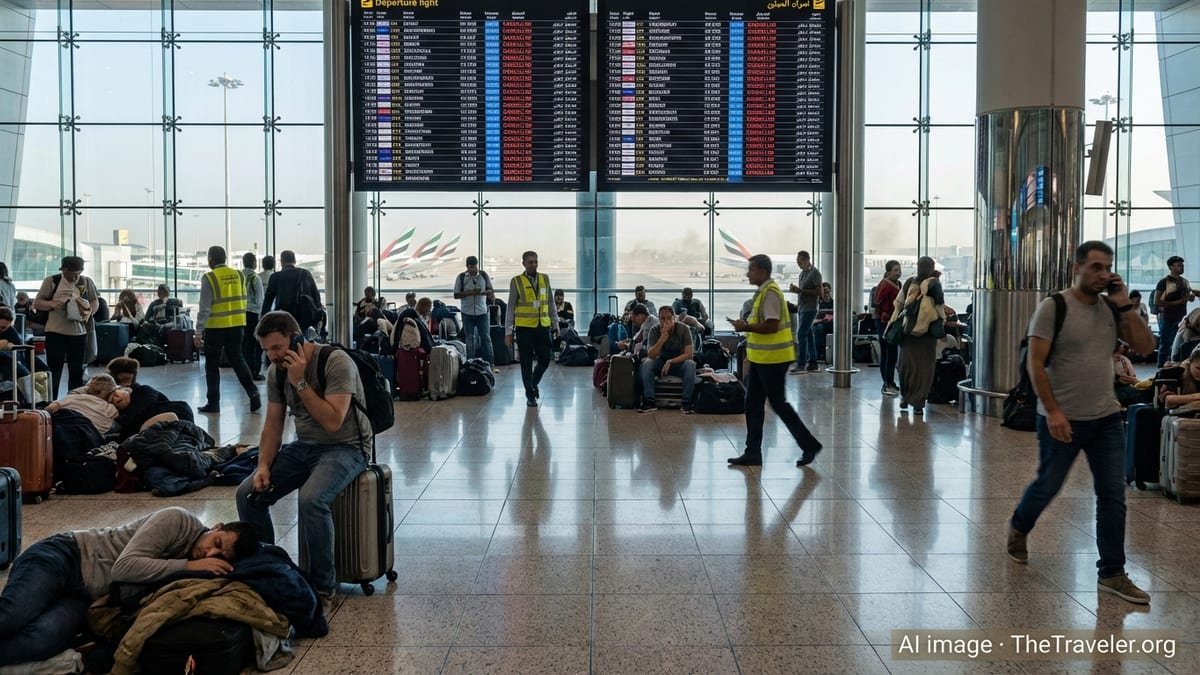
Key Gulf Gateways Go Dark After Regional Strikes
Authorities across the region moved swiftly to close skies after coordinated U.S. and Israeli strikes on Iran, followed by Iranian missile and drone attacks that rattled some of the world’s busiest aviation hubs. Governments in Israel, Iran, Iraq, Kuwait, Qatar and Bahrain shut their airspace, while the United Arab Emirates halted most civilian traffic, effectively turning off the main corridors that carry long-haul passengers between continents.
Dubai International Airport, Abu Dhabi’s Zayed International Airport and Doha’s Hamad International Airport suspended operations as strikes and debris were reported in and around key facilities. Dubai, normally the world’s busiest airport for international traffic, saw operations grind to a halt after authorities confirmed injuries from missile fragments. In Abu Dhabi, officials reported one fatality and several injuries linked to a drone attack near airport infrastructure.
Flight-tracking services reported that more than 3,000 flights were cancelled or severely disrupted in a matter of hours across at least seven major Middle Eastern airports. Airlines that rely on these hubs for complex global connections warned that the closures could ripple through schedules for days, even if airspace were to reopen quickly.
Regional carriers Emirates, Qatar Airways and Etihad, which collectively move around 90,000 connecting passengers a day through their Gulf hubs, grounded large portions of their fleets. Many aircraft already en route were forced to divert to secondary airports across South Asia, Africa and southern Europe, overwhelming terminals that were never designed to handle such volumes.
Scenes of Chaos and Uncertainty for Stranded Passengers
Inside shuttered terminals from Dubai to Doha, exhausted travelers spent the night slumped on luggage and stretched across departure hall floors as public address systems cycled through a litany of cancellations. Many passengers reported being unable to reach airline call centers or to rebook online, with customer-service systems buckling under the sudden surge in demand.
Families returning from school holidays, migrant workers in transit and tourists connecting between continents all found themselves in the same limbo. Some were directed to makeshift waiting areas as airport hotels quickly sold out, while others were handed food vouchers that failed to cover soaring prices for the limited meals still available inside the terminals.
In several hubs, long queues formed at transfer desks where ground staff struggled to provide clear information about when flights might resume. With governments warning that airspace closures could remain in place as long as missile and drone threats persisted, many travelers began to look for overland alternatives, investigating routes by bus or car to neighboring Saudi Arabia and Oman, where airspace remained more accessible.
Social media feeds filled with images of crowded departure halls, darkened flight-information boards and security queues that led nowhere. For some travelers, the danger felt immediate, with reports of debris striking nearby buildings and sirens sounding during heightened alert periods. For others, the crisis was measured in missed business meetings, broken family plans and the financial strain of unexpected days abroad.
Global Flight Networks Scramble to Reroute
The closure of Gulf airspace has forced airlines far beyond the region to redraw flight plans in real time. Carriers in Europe, Asia and North America scrambled to reroute services that would typically overfly Iran, Iraq or the Arabian Gulf, instead threading aircraft along more southerly tracks over the Red Sea or deeper into Central Asia, adding hours to already long journeys.
Major international airlines, including British, European and Indian carriers, announced widespread cancellations to destinations that could no longer be reached without traversing closed skies. Others opted to operate limited services on extended routings, warning passengers to brace for lengthy delays, in-flight fuel stops and last-minute changes to destinations.
Aviation analysts cautioned that the logistical shocks go beyond detours. Longer routes mean more fuel burn, tighter crew duty limits and aircraft that return late to their home bases, creating bottlenecks that may snarl operations for days even after the immediate security threat eases. Airlines already grappling with high fuel costs and stretched fleets now face the prospect of further schedule cuts and higher operating expenses.
Cargo and logistics networks have also been hit hard, as many of the same Gulf airports serve as vital freight hubs linking manufacturers in Asia with markets in Europe, Africa and the Americas. Freight forwarders reported containers stuck on the ground and warned of delays for time-sensitive shipments, from medical supplies to consumer electronics.
Government Responses and Limited Pathways Home
Governments whose citizens are stranded in the Gulf and wider region have begun organizing contingency plans, with some European nations preparing emergency flights as soon as conditions and airspace reopen. Diplomatic missions in the United Arab Emirates, Qatar and neighboring countries have issued travel advisories urging nationals to remain in contact, register their locations and follow security instructions from local authorities.
Some Gulf states have coordinated with airlines to prioritize humanitarian and evacuation flights when safe corridors can be established. However, officials stressed that civilian safety remains paramount and that no large-scale movement will be authorized while missile and drone alerts continue. The complexity of the regional airspace, where military and civilian traffic often share narrow corridors, has further complicated planning.
For now, most travelers are being told to stay put and conserve resources. Airlines are offering flexible rebooking, waivers and, in some cases, refunds, but the sheer volume of passengers has left many waiting hours just to speak with an agent. Those with travel insurance have been urged to keep detailed records of expenses and communications, as policies vary widely on coverage in cases of war and armed conflict.
Consular officials on the ground are working with airport authorities to identify vulnerable travelers, including unaccompanied minors, elderly passengers and those with medical needs. In some hubs, local volunteers and community groups have stepped in to distribute water, snacks and basic supplies to those stuck in transit areas with limited access to amenities.
What Travelers Should Do Next
With the situation fluid and subject to rapid change, aviation experts advise travelers to avoid making assumptions based on historic flight patterns or generic search-engine results. Instead, passengers are urged to monitor official airline communications, airport notices and government travel advisories, which will be the first channels to reflect any partial reopening of airspace or launch of special recovery flights.
Travelers currently abroad are encouraged to remain as flexible as possible, considering alternative routings that bypass the Gulf altogether, such as connections through southern Europe, East Africa or Central Asia where available. Those who have not yet started their journeys are being advised to postpone nonessential travel to and through the affected region until conditions stabilize.
While many hope that closures will be short-lived, industry veterans warn that the psychological impact on route planning and consumer confidence could last much longer. Airlines may take time to restore full schedules through airports that have proved vulnerable to attack, and some passengers may choose to avoid certain connections even after official assurances that skies are safe.
For now, the Gulf’s gleaming mega-hubs, long marketed as secure and seamless crossroads of global travel, sit eerily quiet. Their departure boards tell the story in stark terms: row after row of cancelled flights, and millions of onward journeys suddenly put on hold.