

More news on this day
Global airline stocks have suffered a fresh and severe blow as the escalating war in the Middle East wipes out almost $53 billion in market value across more than twenty publicly listed carriers, adding a new layer of instability to already strained long-haul air travel networks.
Get the latest news straight to your inbox!
Market Rout Hits Major Carriers Across Three Continents
Publicly available market data and recent financial coverage indicate that a broad basket of major airlines in North America, Europe and Asia has collectively lost close to $53 billion in equity value since the latest phase of the Middle East crisis intensified in late February 2026. The sharpest moves have been recorded during a series of volatile trading sessions in early March, when war-related headlines, oil price spikes and airspace closures converged.
Reports tracking a representative group of nearly 30 airlines and large travel firms across Europe, Asia and North America show that roughly $22 billion to $23 billion in value was wiped out in a single session as fighting escalated and flights were grounded across key Middle Eastern hubs. Subsequent trading days saw additional losses as investors reassessed earnings prospects for the rest of 2026, pushing the cumulative decline toward the $53 billion mark.
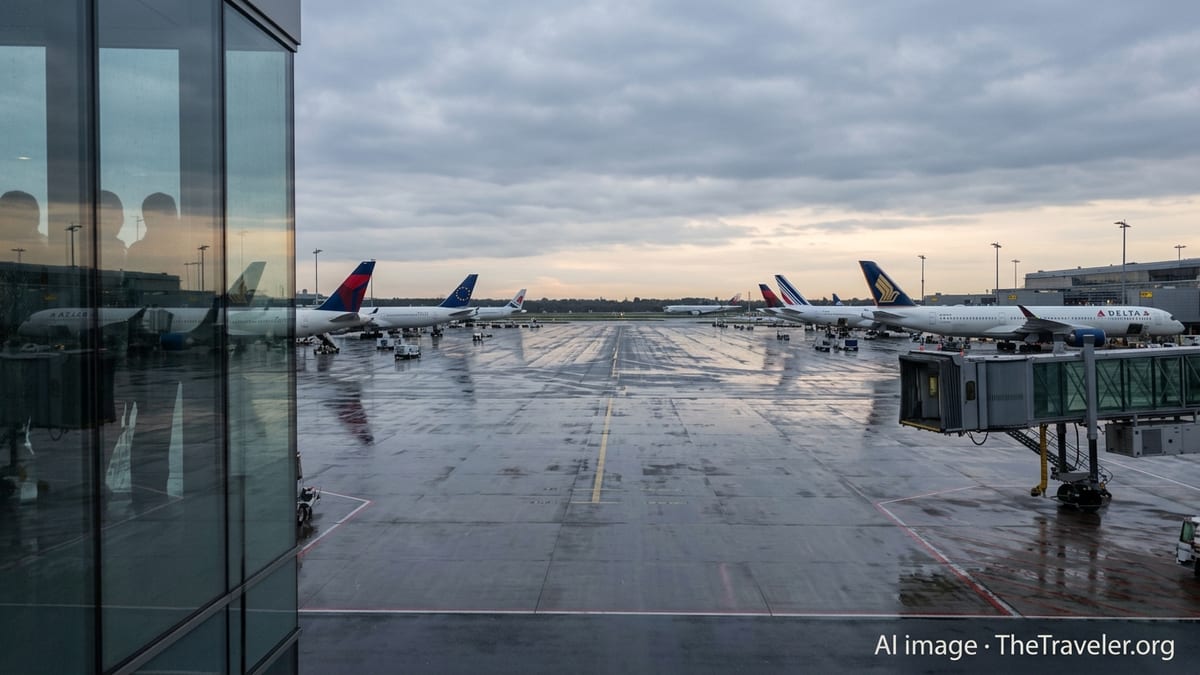
Within that global basket are many of the world’s most prominent long-haul operators. Delta Air Lines in the United States and pan-European groups Air France KLM, Lufthansa Group and International Airlines Group, parent of British Airways, have all seen their share prices slide in step with the worsening security situation. In Asia, Hong Kong’s Cathay Pacific and Singapore Airlines have registered similar declines, reflecting their heavy exposure to intercontinental routes that rely on Middle Eastern corridors.
Equity analysts cited in recent market commentary point to a rapid swing in sentiment. After a relatively optimistic outlook heading into 2026, driven by robust passenger demand and still-solid balance sheets, the sudden regional conflict has reintroduced pandemic-style volatility into airline valuations, though for very different reasons.
Oil Price Shock Revives Old Fears Over Airline Profitability
The latest downturn in airline stocks is closely tied to a sharp rise in crude and jet fuel prices following strikes and counterstrikes involving Iran, Israel and the United States. Recent market reports describe a double-digit percentage jump in benchmark crude in a matter of days, with some trading sessions seeing oil spike more than 10 percent as investors reacted to potential disruptions around the Strait of Hormuz, a vital chokepoint for global energy flows.
Coverage from business media indicates that jet fuel prices have climbed by more than a dollar per gallon in recent weeks, a move that significantly alters cost projections for large network carriers. For the biggest U.S. airlines alone, analysts estimate quarterly fuel bills could rise by billions of dollars if current prices persist through the summer schedule. European and Asian airlines with large long-haul fleets face similar pressure, as fuel typically accounts for between one-fifth and one-third of operating costs.
These fuel cost shocks land at a time when many airlines were only just rebuilding financial reserves after years of disruption. While several groups, including Delta, Lufthansa and Air France KLM, recently reported strong revenues and solid profitability, the new conflict has quickly forced investors to question whether 2026 earnings targets remain realistic. Forecasts that once assumed stable or mildly rising fuel prices now have to factor in a sustained period of elevated energy costs and the possibility of further spikes if the conflict widens.
Market commentary suggests that airlines with greater hedging in place or diversified revenue streams may be somewhat cushioned, but the sector as a whole remains highly sensitive to fuel price volatility. That sensitivity is clearly reflected in the synchronized selloff spanning U.S., European and Asian airline indices since late February.
Closed Skies and Rerouted Flights Undermine Long-Haul Networks
Beyond the financial market reaction, the war’s most immediate aviation impact has been felt in the skies over and around the Middle East. Publicly available flight-tracking and airport operations data show large-scale suspensions and diversions at major hubs including Dubai International and Hamad International in Doha, both essential connectors between Europe, Asia, Africa and Oceania.
Industry reports describe thousands of flights cancelled or rerouted as airspace restrictions widened and military activity intensified. Middle Eastern carriers such as Emirates, Etihad and Qatar Airways have curtailed operations, while a long list of international airlines, including Air India, British Airways, Cathay Pacific, Lufthansa, Singapore Airlines and others, have suspended or limited services into the region. Many have introduced waivers for rebooking and refunds on affected routes, contributing to short-term revenue hits.
For long-haul travelers, especially those journeying between Europe and Asia or between North America and destinations in the Indian Ocean and Australasia, these disruptions have translated into longer flight times, more connections and less predictable itineraries. Reroutings around unsafe airspace add hours to some journeys and raise fuel burn, compounding the cost squeeze. The knock-on effects are particularly acute because Middle Eastern hubs became even more critical after airlines were forced to avoid large portions of Russian airspace in the wake of the Ukraine conflict.
Analysts specializing in global network planning note that airlines with flexible fleets and multiple alliance partners may be better positioned to stitch together alternative routings, but there are practical limits when so much airspace is constrained at once. The result is a fragile long-haul ecosystem in which a single new airspace closure or attack can ripple quickly across continents.
Investors Reprice Risk in a Sector Already on Edge
The renewed instability is prompting investors to reassess how they value airline risk in a world marked by overlapping crises. Over the past four years, the sector has weathered the COVID-19 pandemic, rapid interest rate hikes, the war in Ukraine and shifting travel demand patterns. The Iran-centered conflict adds a fresh geopolitical shock at a time when balance sheets and passenger demand were finally converging in a more favorable direction.
Recent equity research and commentary highlight several themes driving the latest repricing. First, airlines with the greatest exposure to long-haul and premium markets, such as Lufthansa, Air France KLM, British Airways’ parent IAG, Cathay Pacific and Singapore Airlines, are widely seen as more vulnerable to disruptions along the Europe–Asia corridor. Second, carriers that depend on overflying or serving the Middle East as a core part of their network now face elevated and persistent route risk, which could affect valuations long after the immediate hostilities end.
Third, the conflict has heightened concerns about demand elasticity in the face of rising fares. With fuel and insurance costs climbing, many airlines are expected to attempt fare increases on select long-haul routes. Analysts warn that business travel, which had only partially recovered, may be especially sensitive to renewed price hikes and safety concerns, potentially undermining the premium cabins that underpin profitability on intercontinental services.
Some market observers also point to the role of exchange-traded funds and algorithmic strategies that amplify sector-wide moves once volatility thresholds are breached. Outflows from travel and leisure funds this month have contributed to the rapid loss of value in flagship carriers like Delta, Lufthansa and Singapore Airlines, even where underlying demand has not yet fallen sharply.
Travelers Face Higher Fares and Uncertain Summer Schedules
For travelers, the market turmoil and operational disruptions are coalescing into a more uncertain outlook for the upcoming peak seasons. Consumer-focused financial coverage notes that higher jet fuel prices are likely to feed through into ticket prices, particularly on long-haul routes where no easy alternative exists to avoid conflict-related detours.
Industry analysts suggest that routes connecting North America and Europe to South and Southeast Asia, as well as to parts of Africa and Oceania, could see the steepest increases. Airlines such as Delta, Air France KLM, Lufthansa, British Airways, Cathay Pacific and Singapore Airlines play central roles on these corridors and are already recalibrating capacity plans and fare structures in response to the conflict and cost environment.
Uncertainty around schedules is also increasing. Travelers booking for late spring and summer 2026 are being advised by consumer advocates and travel agencies, according to published reports, to allow extra connection time, remain flexible on routings and monitor airline communications closely. Rapidly changing security assessments can lead to last-minute cancellations or reroutings, particularly for flights transiting the wider Middle East region.
While demand for leisure travel remains relatively resilient, the combination of higher fares, longer flight times and heightened security concerns could dampen some discretionary long-haul trips if the conflict drags on. For now, the nearly $53 billion in lost market value across Delta, Air France KLM, Lufthansa, British Airways’ parent IAG, Cathay Pacific, Singapore Airlines and more than a dozen other major carriers underscores how quickly geopolitical risk can reshape the global map of air travel.