

More news on this day
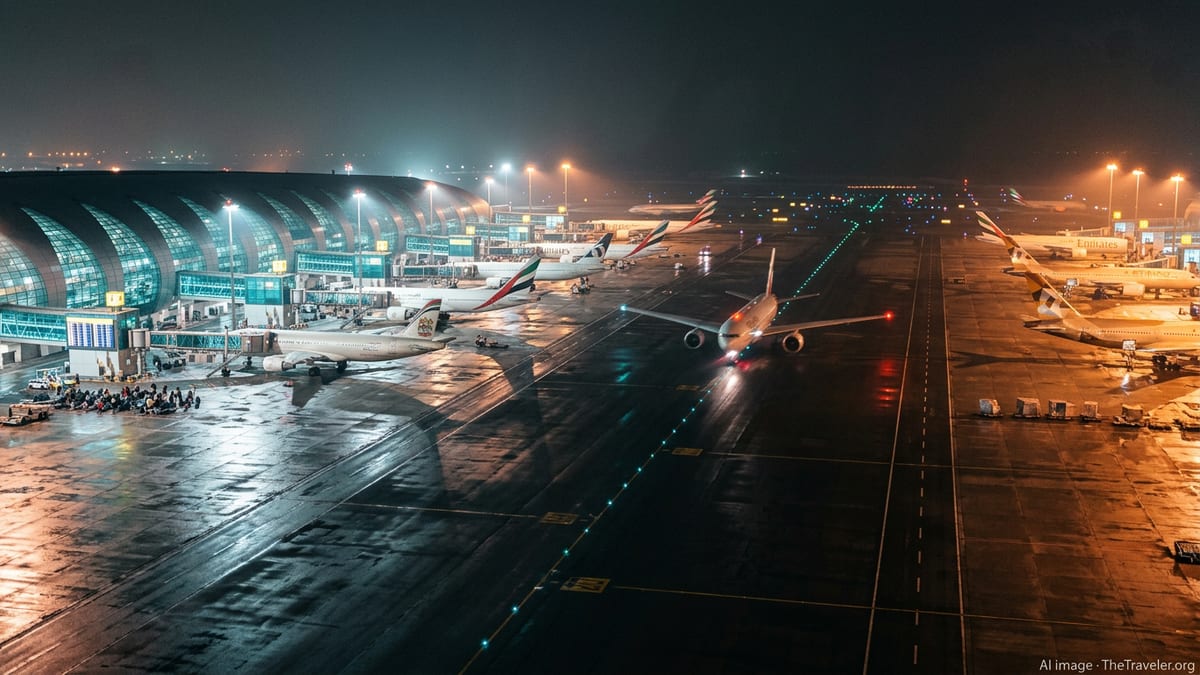
Under the glare of floodlights and the echo of urgent boarding calls, Dubai and Abu Dhabi airports have become the stage for dramatic midnight departures, as emergency flights ferry stranded travelers out of a Middle East gripped by unprecedented aviation chaos.
Emergency Corridors Open as War Closes the Skies
United Arab Emirates aviation authorities have activated tightly controlled emergency air corridors from Dubai and Abu Dhabi, allowing a limited number of overnight evacuation flights to operate while much of the surrounding region remains effectively sealed off to commercial traffic. The measures follow days of missile and drone attacks linked to the widening conflict between the United States, Israel and Iran that triggered sweeping airspace closures across the Gulf.
Dubai International Airport, normally one of the world’s busiest hubs, and Abu Dhabi International Airport have pivoted from mass transit platforms to crisis gateways, prioritising repatriation and government-coordinated departures over regular schedules. Airlines are operating ad hoc nighttime services to key destinations in Europe, Asia and North America, often announced to confirmed passengers only hours before departure.
Officials describe the current phase as a restricted recovery, with safety and insurance constraints limiting the number of flights allowed to cross contested airspace. For thousands of travelers who have spent days sleeping in terminals or nearby hotels, the sudden appearance of a seat on a midnight emergency flight has become the only realistic chance to leave the region in the short term.
Despite the gradual uptick in movements, regional analysts warn that flight patterns remain highly volatile. Routes are being redrawn in near real time to avoid active military zones, adding hours to journey times and placing additional strain on pilots, aircraft and air traffic control systems already operating at the edge of their contingency plans.
Stranded Passengers Juggle Alerts, Cancellations and Costs
The shift to late-night evacuation and special services has left passengers in a constant state of uncertainty. Many travelers in Dubai and Abu Dhabi report waking to middle-of-the-night text messages from airlines instructing them to head immediately to the airport for hastily assembled departures. Others say they have watched their names move on and off standby lists as aircraft assignments and clearances change with little warning.
For those without confirmed seats, the scramble has been costly. Travel agents in Dubai say demand for private charters has surged, with some affluent travelers paying tens of thousands of dollars to secure last-minute flights to secondary hubs seen as safer, such as Muscat or select European cities. At the same time, budget-conscious passengers have turned to overland routes toward Oman or Saudi Arabia, hoping to connect from there to the shrinking number of commercial flights still operating.
Airlines have relaxed change and refund rules, offering fee-free rebooking or vouchers in an attempt to manage passenger frustration and staggering backlogs. Yet for many stranded families and migrant workers, the main concern is not compensation but clarity: finding out whether they should be packing for an imminent midnight call or preparing for another night on an airport floor.
Inside the terminals, departure boards continue to alternate between red lines of cancellations and sporadic green flashes of flights that have secured authorization. Airport staff have been redeployed to crowd management and information desks, while makeshift rest zones, phone charging banks and food distribution points have become fixtures of the disrupted hubs.
Governments Race to Extract Citizens on Overnight Lifts
Foreign governments have seized on the new emergency corridors from the UAE to launch their own late-night repatriation efforts. Diplomatic missions in Abu Dhabi and Dubai have been working with Emirates, Etihad Airways and partner carriers to block seats on special flights, often departing in the early hours, for citizens seeking to leave the region amid mounting security advisories.
In recent days, European, North American and Asian consular officials have issued urgent messages urging nationals to register with embassies and remain on standby for short-notice departures. Many of the flights are configured as one-way lifts to major home hubs, bypassing usual intermediate stops to minimize time in contested airspace and to simplify crew and insurance arrangements.
Airport observers say these coordinated repatriation flights often depart in clusters around midnight and before dawn, when military activity is more predictable and traffic volumes lower. Security has been visibly tightened around boarding gates used for such services, with additional identity checks and access controls as governments seek to maintain tight manifests and reduce the risk of overcrowding.
While these efforts have enabled thousands to leave, capacity remains far below demand. Embassies acknowledge that seats are being allocated on a triage basis, with priority for vulnerable travelers, families with children and those on time-critical visas, leaving many others facing an anxious wait for possible space on subsequent rotations.
Airlines Rebuild Networks on a War Footing
For carriers based in the UAE, the crisis has effectively forced a compressed redesign of global route networks. Emirates and Etihad have both suspended most scheduled operations at various points this week, instead stitching together skeletal overnight services designed around whatever airspace is open and what insurance underwriters will cover at any given hour.
Industry sources say operations teams are working through the night in Dubai and Abu Dhabi control centers, running continuous risk assessments, weather checks and geopolitical briefings before authorizing each departure. Flight paths that once cut directly over Iran or Iraq have been abandoned in favour of lengthy detours that loop south over the Arabian Sea or north over Turkey, significantly increasing fuel burn and operating costs.
International airlines have also pared back services to the UAE, with many European and Asian carriers extending suspensions of flights to Dubai and Abu Dhabi or converting some routes into dedicated evacuation rotations. Flexible ticket policies, including free rebooking windows running into late March, are being advertised as airlines try to buy time for a clearer picture of regional stability to emerge.
Aviation analysts note that the dense web of sixth-freedom connections that made Dubai and Abu Dhabi central to global travel has become a liability in the current environment. With transit traffic largely frozen, carriers are leaning on origin and destination passengers, plus government contracts, to justify the handful of midnight and early-morning flights they can still safely operate.
Long-Term Questions for Gulf Hub Dominance
Beyond the immediate drama of overnight evacuations, the crisis is prompting difficult questions about the long-term resilience of Gulf aviation hubs. The shock disruption of more than ten thousand flights across the region in a matter of days underscores how exposed global travel remains to geopolitical shocks concentrated in a relatively small but strategically vital airspace corridor.
Travel industry analysts say some corporate clients are already revisiting routing preferences for key markets, considering more itineraries through alternative hubs in Europe and Asia that avoid the Gulf entirely. Cruise operators, tour companies and conference organizers have likewise begun contingency planning, wary of committing to itineraries that rely on tight connections through Dubai or Abu Dhabi until stability returns.
For now, however, the focus inside the UAE remains squarely on getting people home. Each successful midnight departure is greeted with visible relief by passengers and airport staff alike, even as new waves of arrivals from elsewhere in the region arrive seeking their own way out. The coming nights are expected to bring more of the same scenes as authorities, airlines and travelers navigate a crisis that has upended one of the world’s most important crossroads of air travel.