

More news on this day
In 2026, Milan is stepping onto the global stage as both fashion capital and Winter Olympic host city, transforming into a high-energy playground where couture, culture and competition converge and driving a rush to secure flights and hotel rooms before availability tightens further.
Get the latest news straight to your inbox!
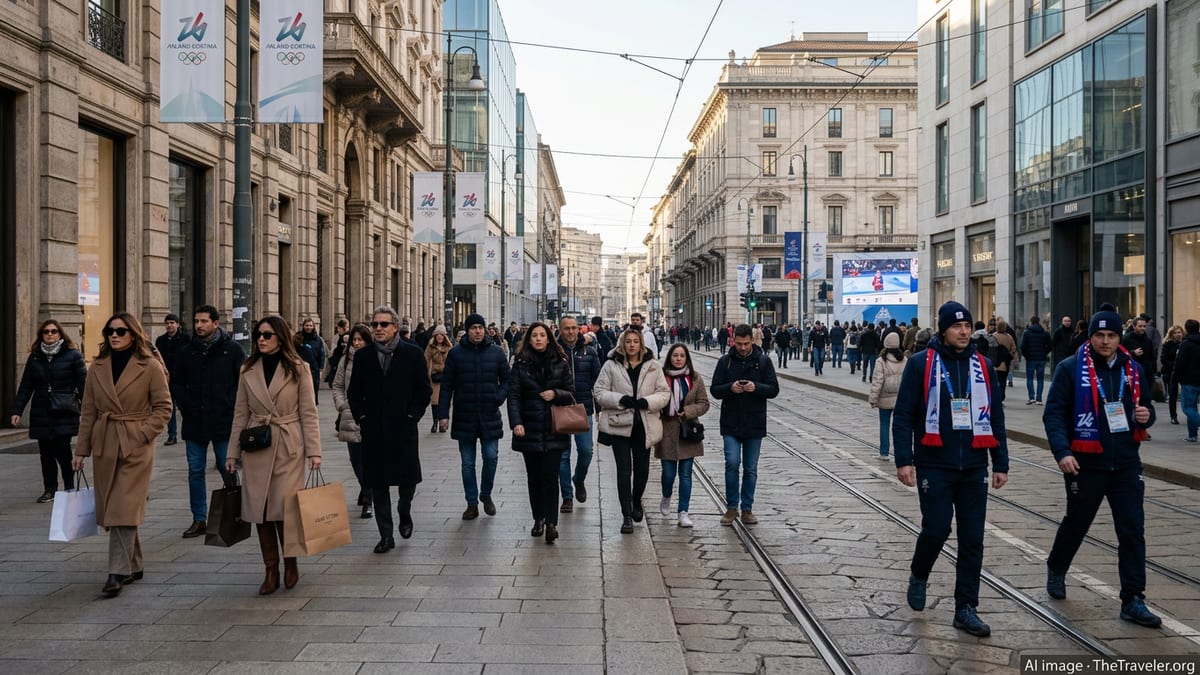
A Winter Olympics Staged in a Global Fashion Capital
The Milano Cortina 2026 Winter Olympics are reshaping Milan’s profile from style hub to full-scale event metropolis, with competitions, ceremonies and fan zones spread between the city and the Alpine resorts of Lombardy and Veneto. Publicly available information shows that planners have leaned on existing arenas and storied mountain venues, while concentrating media operations, hospitality and spectator services in Milan’s dense urban core.
Key events and celebrations are tying directly into the city’s fashion identity. Reports indicate that central districts such as the Quadrilatero della Moda, Brera and Porta Nuova are preparing extended shopping hours, limited-edition capsule collections and branded installations that connect luxury retail with the Olympic look and feel. The result is a rare overlap where visitors can spend the morning at a medal event and the afternoon in showrooms, galleries and flagship boutiques.
Travel data and tourism forecasts suggest that Milan, already drawing more than nine million visitors annually in recent years, is set for a further surge in 2026 as the Games amplify its international visibility. Analysts highlight that this moment builds on two decades of transformation, from the post-Expo 2015 redevelopment of entire districts to a skyline now defined by contemporary towers, mixed-use quarters and cultural venues that complement the city’s historic core.
New Olympic Village, Arenas and Urban Districts Taking Shape
A centerpiece of Milan’s Olympic makeover is the new Olympic Village in Porta Romana, developed with a dual post-Games life in mind. According to architectural and planning coverage, the complex of mid-rise blocks, public spaces and energy-efficient systems has been built to house around 1,400 athletes and team officials during the Olympics and Paralympics, before it is converted into student and affordable housing for the city’s universities.
Elsewhere in the city, venue projects are redefining underused industrial and fairground areas. A new multi-purpose arena designed to host ice hockey and large-scale events is part of a broader push to bring contemporary sports and entertainment infrastructure closer to central neighborhoods. International design publications describe the building as a modern reinterpretation of a Roman amphitheater, integrating flexible seating, improved accessibility and a façade that responds to its surrounding streetscape rather than standing as an isolated mega-structure.
Beyond headline venues, a distributed network of smaller upgrades is under way. Architectural and infrastructure reports point to refurbishments of existing sports halls, training rinks and community facilities designed to ensure that investment serves residents long after the Olympic flame is extinguished. This approach aligns with broader sustainability guidelines that emphasize reuse, adaptation and long-term legacy over one-off showpieces.
Transport, Accessibility and the Race for Rooms
The Games are also accelerating improvements to how visitors move around Milan and reach the mountain clusters. Transport briefings outline investments across metro stations, regional rail and airport connections, with particular attention to accessibility. Publicly available planning documents describe large-scale programs to install or replace elevators and stairlifts at remaining metro stops so that major lines are fully step-free in time for 2026, supporting both spectators and residents with reduced mobility.
On a regional scale, rail corridors linking Milan to key hubs in Lombardy and Veneto are being upgraded, with new services and capacity increases scheduled for the Olympic period. Although some flagship high-speed projects are expected to extend beyond 2026, interim improvements are being prioritized to handle peak visitor flows to and from competition sites. For travelers, this means more frequent trains to gateway cities and better integration between long-distance services, shuttle buses and local transit.
Hospitality data released in early 2026 shows that demand has intensified far ahead of the opening ceremony. Industry analyses indicate that hotels in central Milan and in the core Alpine resorts were heavily booked or sold out already in 2025, pushing visitors to consider alternative accommodation in secondary neighborhoods and nearby cities connected by rail. Short-term rental listings have expanded, with hosts adjusting minimum stays and pricing to match Olympic-period demand.
Travel advisers are therefore urging would-be visitors to secure rooms and transport as early as possible, particularly if they plan to combine event tickets with stays over major fashion, design and shopping dates in February and March. Late planners are likely to face higher prices or longer daily commutes from satellite towns into central Milan and the venues.
Fashion Weeks, Design Fairs and Olympic Fan Experiences Converge
Milan’s established event calendar is adding another layer of urgency for travelers considering a 2026 trip. According to fashion and trade press, local organizers are timing shows, presentations and in-store events to ride the wave of Olympic attention, especially in the weeks encompassing the Winter Games and the Paralympic competitions that follow. This clustering is expected to create a festival-like atmosphere on the streets, from Duomo and Galleria Vittorio Emanuele II to the regenerated canals of the Navigli district.
Retail and luxury industry analysis suggests that global brands are using the Olympics as a platform to test new experiential formats. These range from winter-sport themed pop-ups to capsule collections that reference Alpine landscapes, the Olympic color palette and Milan’s own architectural landmarks. For visitors, it translates into limited-time offerings that may not be repeated once the Games move on to the next host city.
Alongside fashion and shopping, the city is planning fan zones, live sites and cultural programs in parks and piazzas where spectators can follow events on large screens, participate in ice-related activities and explore regional food and wine. Media reports describe Sempione Park, around the Castello Sforzesco and Arco della Pace, as a focal point for evening gatherings, lighting installations and celebrations linked to the Olympic flame and medal results.
Why Travelers Are Urged to Book Milan 2026 Trips Now
Economic and tourism studies published in advance of the Games forecast a sharp rise in international arrivals to Italy in 2026, with Milan and the northern regions capturing a significant share of that growth. Analysts project that the combined pull of the Olympics, established city-break demand and renewed interest in mountain resorts will push occupancy rates higher and keep them there beyond the closing ceremony.
Several trends underpin the call to book early. First, the stock of centrally located hotel rooms and high-demand short-term rentals is fixed, even as new buildings open in redevelopment districts close to the Olympic Village and train hubs. Second, major airlines and rail operators are already adjusting capacity and fare structures to reflect peak dates, which typically means more competition for the most convenient schedules.
Third, Milan’s evolution over the past decade into a diversified cultural destination means that visitors are not coming solely for sports. Reports indicate that many travelers are planning itineraries that combine days at alpine events with time in the city for museums, contemporary architecture, dining and shopping. This blended behavior places additional pressure on both urban and mountain accommodation during the Olympic period.
For travelers considering a 2026 European trip, publicly available booking and demand data point in the same direction: those who secure flights, tickets and rooms earliest will have the widest choice of neighborhoods, price points and experiences. With Milan simultaneously showcasing its fashion heritage and its new status as an Olympic hub, the window to plan a visit on preferred terms is narrowing fast.