

More news on this day
Dozens of easyJet passengers expecting to fly from Milan Linate to Manchester on Sunday report being left stranded in the terminal after long passport control queues meant their aircraft departed without them, adding fresh frustration to a week of heavy disruption across Italy’s already stretched airports.
Get the latest news straight to your inbox!
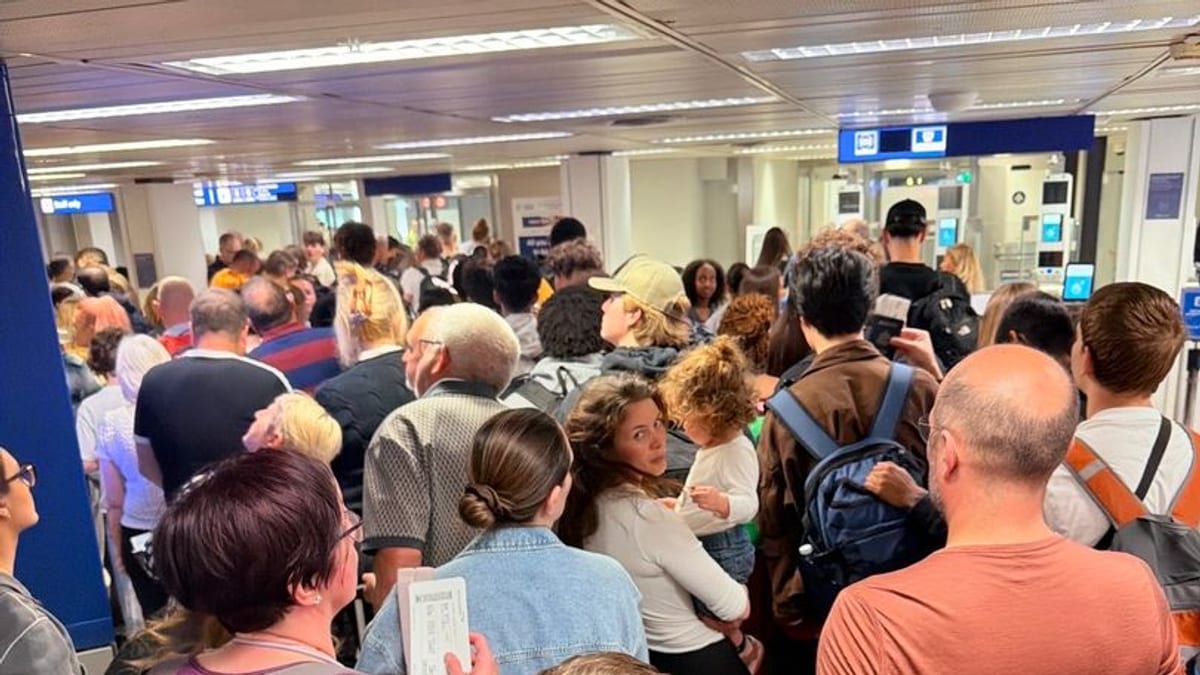
Long queues and a missed flight spark anger in Milan
Accounts shared on social media and travel forums on 12 April indicate that around 100 travellers were due to board an easyJet service from Milan Linate to Manchester when they became stuck in lengthy border-control queues. Passengers described waiting for up to three hours as lines for passport checks stretched through the terminal, leaving many unable to reach the gate before it closed.
By the time some travellers cleared the checks and reached the departure area, reports suggest the aircraft had already left the stand with their bags still in the hold. Images posted online show groups of passengers gathered in the terminal, with some describing themselves as “stuck” in Milan with limited information on alternative travel options.
The incident unfolded against a backdrop of mounting congestion at Italian airports in early April, with a combination of strikes, staffing constraints and the run-up to new border procedures contributing to longer queues. Linate, which serves as Milan’s close-in city airport, has seen strong traffic growth in recent years and is increasingly operating near capacity during peak periods.
Publicly available data shows that easyJet operates multiple services each week between Milan and Manchester, reflecting strong demand on the route. The disruption to a single rotation can therefore have knock-on effects for subsequent flights if aircraft and crew are pushed off schedule.
Broader disruption hits Italian air travel
The episode at Linate comes amid a wider spell of travel disruption affecting passengers across Italy’s major airports. Travel industry bulletins over the past two weeks highlight repeated waves of delays and cancellations at hubs including Milan Malpensa, Rome Fiumicino and Venice, driven in part by air traffic control and ground-handling industrial action.
Recent operational statistics compiled by air-travel analysts point to hundreds of delayed flights and dozens of cancellations on key days in early April, with easyJet among the carriers impacted. Milan’s airports have featured prominently in these tallies, underlining the pressure on ground operations and the potential for minor issues to escalate into severe bottlenecks.
Consumer-rights organisations note that when disruption coincides with peak travel periods, queues at security and border control can lengthen significantly, especially where staffing levels or infrastructure are already stretched. In such conditions, even passengers who arrive at the airport well in advance of departure can face difficulty reaching the gate before boarding closes.
Observers add that the current turbulence in Italy follows several years of rapid demand recovery, with leisure and business travel rebounding strongly. As airlines restore or expand schedules, ground systems are at times struggling to keep pace, and short-haul point-to-point carriers can be particularly exposed to cascading delays.
What passengers say happened at Linate
Travellers who shared their experiences online describe being checked in for the Manchester flight, only to become trapped in slow-moving passport-control lines as departure time approached. Some accounts state that passengers raised concerns with airport staff about the imminent closing of the gate, but progress through the queue reportedly remained extremely slow.
Several posts claim that the aircraft doors were closed and the plane pushed back while a substantial number of ticketed passengers were still held up at border checks. Passengers reported confusion over whether the airline or airport authorities would take responsibility for rebooking and accommodation, with some stating they were instructed to arrange hotels at their own expense.
Other travellers recount difficulties obtaining clear information about their luggage after the aircraft left. While aviation-safety rules require that checked bags generally do not travel without their owners, the timing of any baggage offload can add further delay and complexity, particularly at busy airports where ground crews are already working under pressure.
The reports have prompted debate among frequent flyers and consumer advocates about how airlines and airports should respond when long queues prevent large numbers of passengers from reaching the gate on time, especially in cases where most travellers appear to have arrived at the airport well within normal check-in and security guidelines.
Passenger rights and responsibility in missed-flight cases
Under European air passenger rights rules, travellers whose flights are cancelled or heavily delayed may be entitled to compensation and care such as meals or accommodation, depending on the cause of the disruption. However, the framework is less clear-cut when a flight departs more or less on schedule but some passengers do not make it to the gate in time.
Legal and consumer guidance generally indicates that airlines are not obliged to delay departure for individual passengers held up in queues, unless they have explicitly called travellers forward and then failed to board them. In practice, this leaves a grey area when significant numbers of passengers miss a flight due to airport bottlenecks rather than late arrival at the terminal.
Specialist claims firms and travel-law experts often advise passengers in such situations to document queue times, keep boarding passes and receipts, and submit complaints both to the airline and, where relevant, airport operators. While reimbursement is not guaranteed, some carriers may offer rebooking options or vouchers as a gesture of goodwill, particularly when large groups are affected.
Advocates also argue that incidents where dozens of checked‑in passengers are left behind highlight the need for clearer communication in terminals, including more frequent announcements about gate closure times and additional staff on hand to prioritise travellers whose flights are imminent.
Growing scrutiny of border-control queues in Europe
The Milan incident is adding to broader scrutiny of border-control processing times across Europe ahead of new entry-exit systems for non-EU nationals. Travel bodies have repeatedly warned that without sufficient staffing and infrastructure, passport queues could become a persistent pinch point, especially at popular hubs used by low-cost carriers.
In Italy, data from recent days shows that both Malpensa and Linate have experienced waves of delays tied to staffing issues and strike action, contributing to longer lines at checkpoints. Industry groups state that when such pressures coincide with peak weekend departures, the margin for error narrows and the risk of passengers missing flights increases.
Airline and airport analysts suggest that operators may need to revisit recommended arrival times, queuing systems and real-time information tools to help passengers better navigate busy terminals. They also point to the importance of coordinated planning between carriers, airport managers and border agencies, so that large backlogs can be anticipated and mitigated more quickly.
For now, the travellers left behind in Milan illustrate how quickly a routine city-hop between Italy and the United Kingdom can unravel when on-the-ground processes falter, leaving passengers “stuck” despite holding valid tickets and doing little more than joining the back of an unexpectedly long queue.