

More news on this day
Milan Bergamo Airport is on track for a significantly busier Summer 2026 season, as new routes, added frequencies and updated traffic policies point to sustained growth for the Lombardy gateway and its low-cost carrier partners.
Get the latest news straight to your inbox!
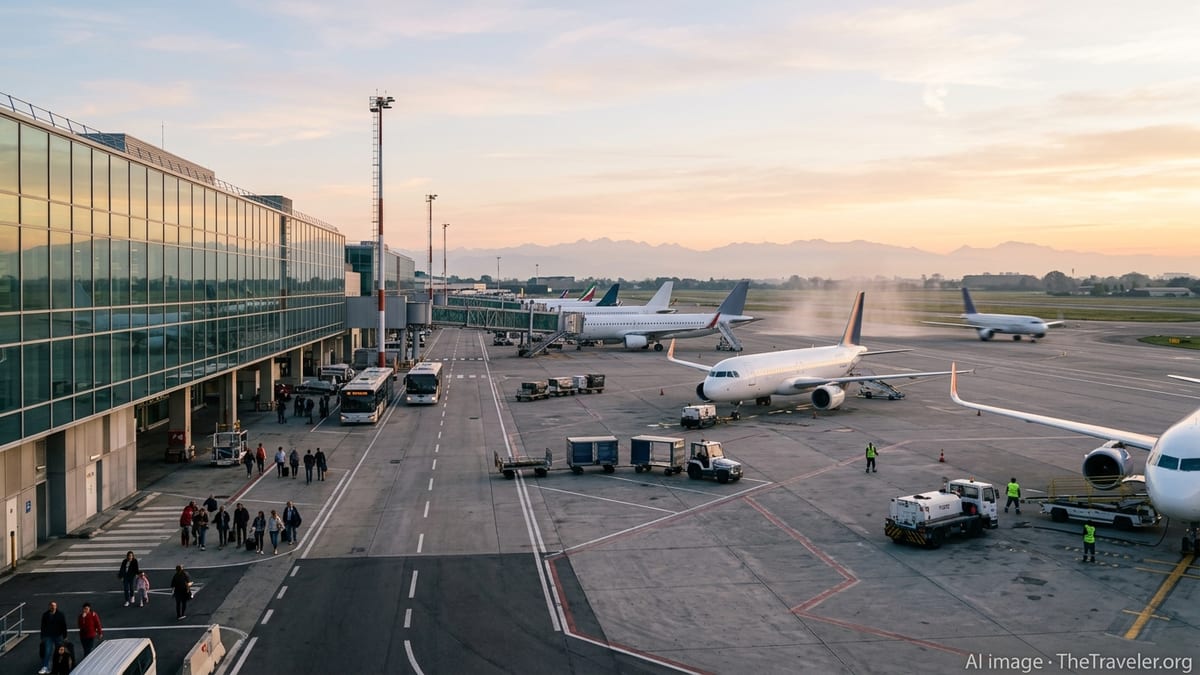
Airport positions for sustained post‑pandemic growth
Publicly available information from Milan Bergamo Airport and its operator indicates that the airport is consolidating a strong rebound in passenger traffic and positioning for another year of expansion in 2026. The current winter season through March 2026 already features more than 100 destinations, reflecting the largest cold‑season network ever offered from the airport.
Traffic development documentation released in late 2025 outlines a strategy focused on broadening the network while maintaining the airport’s role as a leading low‑cost hub in Northern Italy. The policy highlights incentives for airlines that commit additional capacity, new point‑to‑point routes and higher frequencies on existing services, particularly where they add inbound tourism or support regional business demand.
Industry analyses of Italian aviation trends suggest that secondary airports around major cities are attracting a growing share of traffic thanks to competitive airport charges and the presence of large low‑cost carriers. Milan Bergamo is cited as a prime example of this shift, with its catchment extending across Lombardy, parts of Piedmont and the Alpine regions, feeding both leisure and visiting‑friends‑and‑relatives traffic.
As schedules for Summer 2026 are progressively filed, timetable and tour‑operator data show Milan Bergamo retaining its dense European network while welcoming new seasonal destinations in the Balkans and Eastern Mediterranean, alongside niche routes designed to connect smaller regional markets directly with Northern Italy.
New routes strengthen connectivity to the Balkans and Central Europe
Timetables for Summer 2026 published by regional tourism boards and charter operators show a new link between Milan Bergamo and Mostar, serving the Herzegovina region. The route is scheduled as a weekly summer operation between late May and late September 2026, aligning closely with peak pilgrimage and diaspora travel periods, and reinforcing Northern Italy’s air connections with the Western Balkans.
The Milan Bergamo–Mostar service is positioned to capture demand from both religious tourism and the large Bosnian and Herzegovinian community in Italy, while also offering Italian travelers access to lesser‑known heritage destinations inland from the Adriatic coast. Flight timings in the published schedule are designed to allow convenient weekend breaks and short stays.
Beyond the Balkans, network overviews from European regional airports show Milan Bergamo maintained or added as a key Italian destination in summer schedules from smaller markets. Examples include flights from German and Benelux regional airports that list the Lombardy gateway as part of their seasonal portfolio, underlining the airport’s role as an alternative to Milan Malpensa for cost‑sensitive leisure traffic.
Industry observers note that these additions fit a broader pattern in which carriers are pairing Milan Bergamo with mid‑sized cities that lack direct access to Northern Italy. For travelers, the result is a wider choice of point‑to‑point routes that reduce the need for connections via major hubs.
Low‑cost carriers anchor capacity growth
Low‑cost carriers continue to underpin Milan Bergamo’s expansion into the 2026 summer season. Ryanair remains the dominant airline at the airport, with corporate communications detailing a record investment in Milan’s airport system and a growing fleet based in the Lombardy region. Recent announcements for the Winter 2025 schedule included the deployment of additional aircraft at Bergamo, raising the number of locally based jets and creating a platform for further summer growth.
Ryanair’s wider European strategy points to continued emphasis on Italian airports that offer competitive fees and route support, and Milan Bergamo is frequently referenced among the carrier’s top performers. For Summer 2025, the airline publicised a combined total of more than 150 routes from its Milan operations, and Italian aviation commentary suggests this breadth of service will be largely maintained or modestly expanded into Summer 2026 as aircraft deliveries progress.
Other low‑cost and leisure operators also contribute to the capacity build‑up. Network summaries from tour operators and regional airports list Milan Bergamo among their Italian destinations for Summer 2026, often in connection with package holidays to Lombardy, Lake Garda and the Dolomites. These services tend to operate at lower weekly frequencies than the core Ryanair network but add meaningful seasonal seat capacity.
Aviation market reports note that while some carriers have trimmed or suspended individual routes where demand has softened, Milan Bergamo’s overall seat offer is expected to rise again in 2026. Growth is concentrated on routes with strong leisure demand and on markets where Northern Italy’s manufacturing and services sectors generate steady year‑round traffic.
Strategic focus on tourism, lakes and alpine gateways
Tourism bodies in Lombardy and neighboring regions increasingly position Milan Bergamo Airport as a practical entry point for major Italian and cross‑border destinations, and this strategy is shaping the airport’s route profile for Summer 2026. Marketing material distributed by local tourism organizations highlights the airport’s role as a gateway to Lake Como, Lake Garda and the Dolomites, as well as routes onward to Switzerland and Austria.
In this context, new and existing summer routes are being aligned with peak holiday flows to resorts and mountain areas. Services from Central and Northern Europe to Milan Bergamo are timed to support week‑long and long‑weekend stays, while charter programs combine the airport with coach and rail transfers to lakeside towns and alpine villages. Feedback shared on travel forums underscores strong demand for such combinations, even as passengers navigate ongoing infrastructure works on some regional rail lines.
The airport’s traffic development policy places particular emphasis on routes that enhance inbound tourism. Incentive structures described in publicly available documents encourage airlines to open or expand services that bring visitors into Lombardy rather than solely serving outbound demand. Analysts view this as an attempt to balance the airport’s role as a low‑fare gateway for Italian travelers with broader regional economic objectives.
With Italy preparing for high‑profile events in 2026, including major sporting fixtures and cultural programs, industry commentary suggests that Milan Bergamo’s enhanced summer schedule will also support increased visitor flows to the wider Milan metropolitan area. Additional point‑to‑point services are expected to relieve pressure on Malpensa and Linate at peak times, distributing traffic more evenly across the region’s three main airports.
Implications for travelers planning Summer 2026 itineraries
For travelers, the evolving Summer 2026 schedule at Milan Bergamo translates into more non‑stop options, particularly from smaller regional airports in Central and Eastern Europe. The addition of routes such as Mostar gives niche destinations a direct link to Northern Italy, while reinforcing Milan Bergamo’s appeal for travelers who prefer avoiding connections through large hubs.
Published timetables and booking patterns indicate that many of the new or boosted routes are concentrated in the late spring to early autumn period, roughly from late March to late October 2026. Peak frequencies are typically scheduled for June to September, matching school holidays in key source markets and the height of the Italian summer tourism season.
Industry observers advise passengers to pay close attention to day‑of‑week patterns on newly introduced routes, as several of them operate only once or twice weekly. This can influence minimum stay requirements and onward connection options, especially for those combining air travel with rail or ferry services within Italy and across nearby borders.
As airlines continue to refine their Summer 2026 offerings over the coming months, further adjustments to routes and frequencies remain possible. However, the overall direction of published information points to Milan Bergamo consolidating its status as one of Europe’s busiest low‑cost gateways, with a broader network and higher seat capacity than in previous summers.