

More news on this day
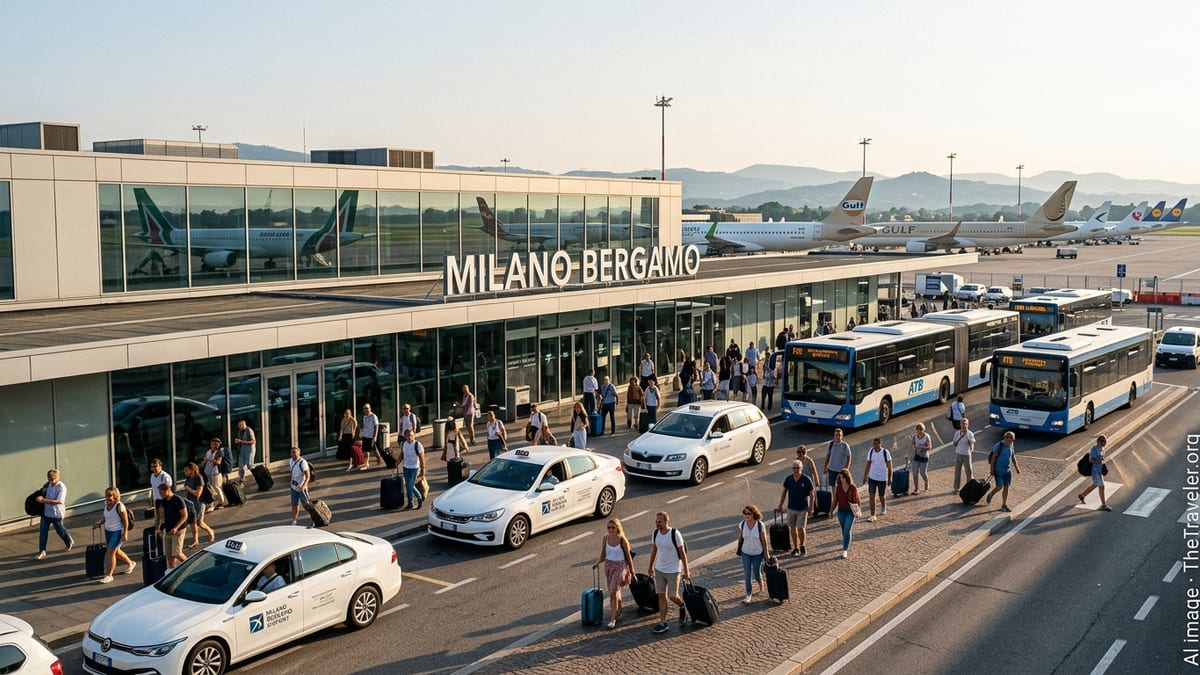
Milan Bergamo Airport is positioning itself for a high‑intensity Summer 2026 season, unveiling an expanded network of routes across Europe, North Africa and the Middle East supported by recent terminal and access upgrades.
Get the latest news straight to your inbox!
New Long-Haul and Regional Links Broaden the Network
Publicly available information from the airport operator indicates that Milan Bergamo is adding further reach into the Middle East for Summer 2026, anchored by a new connection to Kuwait City scheduled to begin in May 2026. The three-times-weekly route is set to operate year-round, but is expected to play a particularly visible role in the peak summer period by providing a direct bridge between northern Italy and the Gulf region.
The new Kuwait service joins existing links from Milan Bergamo to key destinations in North Africa and the broader Middle East operated by carriers such as flydubai and Pegasus Airlines, which have been gradually consolidating the airport’s role as an alternative gateway to these markets. Schedules for the 2025 to 2026 winter season already highlight year-round connectivity to leisure destinations such as Sharm el Sheikh, paving the way for strong summer demand.
On the European side, the airport’s network documents and industry coverage describe a dense schedule of short- and medium-haul routes across the continent, many of them operated by low-cost carriers. While individual airline schedules for Summer 2026 are still being finalised, the pattern from the 2025 summer and 2025 to 2026 winter seasons suggests continued growth in links to Central and Eastern Europe, the Balkans and popular holiday destinations on the Mediterranean.
The net result is that by mid-2026 Milan Bergamo is expected to serve well over one hundred destinations, maintaining its position among Italy’s busiest airports for point-to-point traffic and reinforcing its role as a major low-cost hub for the wider Milan catchment area.
Terminal Expansion Sets the Stage for Higher Volumes
The route expansion for Summer 2026 is underpinned by recent investment in the airport’s infrastructure. Industry reports detail the completion of a multi-million-euro enlargement of the departures terminal, including additional boarding gates, upgraded security checkpoints and an expanded commercial area designed to accommodate rising passenger flows.
The latest works follow a broader, multi-year development plan that has gradually reconfigured the airport to handle more origin-and-destination traffic with improved comfort and faster processing times. Architectural updates, redesigned circulation areas and new retail and food-service spaces are intended to ease traditional congestion pinch points during peak seasons.
Technology has also become more prominent in the upgraded terminal. The operator has highlighted the introduction of systems that monitor passenger movements and queue lengths in real time, helping to allocate staff more efficiently and reduce waiting times at security and check-in during the busy summer months. For airlines planning new routes and additional frequencies in 2026, these enhancements are presented as a key enabler of more reliable operations.
Combined, the physical and digital improvements are positioning Milan Bergamo to manage the sharp peaks that characterise Mediterranean summer travel, especially on leisure-heavy routes to coastal resorts, islands and secondary European cities that are typically concentrated into narrow time bands each day.
Rail Link and Ground Access Transform the Airport’s Reach
Alongside terminal works, the biggest structural change surrounding Milan Bergamo Airport in the lead-up to Summer 2026 is the rollout of a new rail connection. Transport sector coverage in Italy describes plans for a dedicated railway link that will connect the airport with both Bergamo and central Milan, targeted for completion by the end of 2026.
Once operational, the rail link is expected to cut travel times between Milan’s main rail hub and the airport to under an hour, with multiple daily services planned via different routes. This would significantly improve the airport’s accessibility for both local residents and international visitors arriving by train from other parts of Italy or bordering countries.
Although the rail service is projected to come fully online after the peak of Summer 2026, construction progress and phased openings are already influencing how airlines and the airport position future growth. Marketing material and policy documents point to the enhanced connectivity as a strategic tool to attract additional carriers and to compete more directly with Milan’s other airports for both inbound tourism and outbound Italian demand.
Improved ground access also has implications for the airport’s environmental footprint and its appeal to travellers who prefer rail-to-air combinations. A more seamless link between Milan’s city centre and Bergamo’s terminals may encourage some passengers to select flights from the airport specifically because of smoother surface transport, especially for early-morning and late-evening departures that are common in low-cost scheduling.
Low-Cost Carriers Drive Capacity and Frequencies
While Milan Bergamo hosts a mix of airlines, low-cost carriers remain the dominant force in shaping its Summer 2026 outlook. Public flight schedules and airline announcements for the 2025 and 2025 to 2026 seasons show a substantial presence by Ryanair, which bases a large number of aircraft at the airport and offers dozens of routes across Europe and nearby regions.
Recent expansions in connecting-flight options via Milan Bergamo have started to change how the airport functions within the Ryanair network. Industry coverage notes that passengers can now book through itineraries on many routes, effectively turning the airport into a transfer node as well as a point-to-point base. This model is being applied to connections across Europe and to some destinations that link into long-haul services from partner airlines at other hubs.
Other carriers, including regional and leisure-focused airlines, complement this capacity with seasonal services to specific Mediterranean, Balkan and North African destinations. The combination creates a thick web of frequencies in peak months, giving travellers multiple weekly or often daily options to reach secondary cities and resorts that may not be served from Milan’s other airports.
As airlines finalise their Summer 2026 timetables, analysts expect Milan Bergamo to continue courting additional capacity by highlighting competitive operating costs, the enhanced terminal and its growing catchment thanks to the forthcoming rail link. This interplay between infrastructure and airline strategy is likely to determine how aggressively the airport can expand frequencies on routes to North Africa and the Middle East in particular.
Passenger Experience and Competitive Position in Northern Italy
The flurry of route announcements and infrastructure projects is reshaping the passenger experience at Milan Bergamo ahead of Summer 2026. Airport communications emphasise shorter processing times, more space in departure lounges and an expanded range of retail and dining options designed around the needs of value-conscious leisure travellers and weekend city-break visitors.
At the same time, the airport faces growing competition within the Milan system and from other northern Italian gateways that are also investing in terminals and rail access. Malpensa and Linate continue to develop their own route portfolios, targeting both full-service and low-cost segments. The challenge for Bergamo is to leverage its strengths as a focused low-cost and leisure hub while avoiding congestion and service bottlenecks as volumes rise.
Observers note that the combination of an enlarged departures terminal, new rail connectivity and a diversified network reaching into Europe, North Africa and the Middle East gives Milan Bergamo a distinctive market position for Summer 2026. Travellers seeking direct, often low-fare connections to secondary destinations may find the airport increasingly attractive, particularly if they can reach it quickly by train from central Milan.
With the critical pieces of infrastructure nearing completion and several new routes confirmed or anticipated, Summer 2026 is shaping up as a pivotal season that will test Milan Bergamo Airport’s ability to manage growth while preserving the efficiency that has underpinned its rise as one of Italy’s busiest low-cost gateways.