

More news on this day
Heightened concern over theft and street crime in Milan is beginning to ripple across the Alps, as Swiss travelers, outlet centers and luxury retailers reassess the risks and rising costs associated with cross-border shopping trips to Italy’s financial capital.
Get the latest news straight to your inbox!
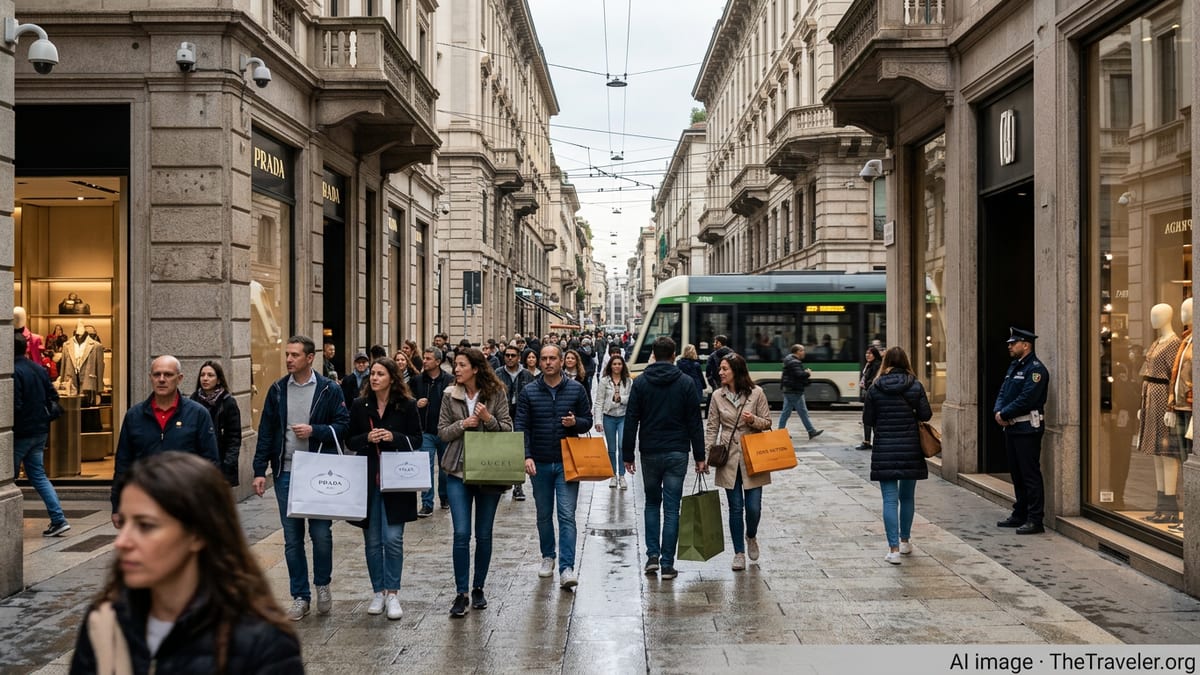
Milan’s Status as a Crime Hotspot Draws New Scrutiny
Recent national crime rankings and local reporting continue to place Milan among Italy’s most affected cities for reported offences, particularly theft and pickpocketing. Publicly available data from the 2024 Italian Crime Index highlight Milan at the top of the national table for overall reported crime per inhabitant, with property offences dominating the statistics. Analysts note that dense urban crowds, major rail hubs and a constant flow of visitors create conditions that are attractive for opportunistic thieves targeting bags, wallets and high-value merchandise.
While broader national figures suggest a modest softening in some categories in early 2025, Milan’s image remains closely associated with petty crime and street theft. Travel forums, consumer associations and local media continue to publish accounts of pickpocketing around central railway stations, metro stops and high-end shopping streets. These stories, widely shared on social media, reinforce a perception of risk that can weigh heavily on tourism choices, regardless of small shifts in year-on-year statistics.
Security reports also point to an evolving pattern in the types of offences most frequently recorded in large Italian cities. Theft and robbery remain the most common categories, with a notable concentration in commercial districts and tourist corridors. Observers note that Milan’s role as both a business hub and a gateway to popular destinations such as Lake Como and the Italian Lakes further amplifies its exposure to transient criminal activity.
For city officials and business groups, the challenge lies in addressing the gap between data suggesting some recent improvements and the lived experience of visitors who continue to encounter, or fear, street-level crime. That perception gap is increasingly important as Milan competes with other European cities for high-spending tourists and regional shoppers.
Swiss Cross-Border Shoppers Weigh Safety Against Savings
For many residents of high-price Switzerland, cross-border shopping trips to Italy have long been a way to stretch household budgets, with Milan and nearby Lombardy outlets offering lower prices on fashion, food and household goods. Studies on Swiss consumer behavior and coverage in Swiss and Italian media describe a steady flow of “shopping tourism” to Italian cities, supported by close rail links and motorway connections. Traditionally, the main concern for these travelers has been currency swings and tax rules rather than personal safety.
That calculus is starting to shift. Commentaries in Swiss outlets and cross-border business forums indicate that some travelers are now factoring crime concerns into destination choices, especially for evening visits or overnight stays in Milan. Families and older travelers in particular appear more inclined to favor tightly managed outlet villages near the border or smaller Italian towns perceived as calmer and easier to navigate than the metropolis.
Regulatory changes are also altering the underlying economics of shopping tourism. The Swiss government’s decision to reduce the tax-free allowance on goods brought back from abroad as of January 2025 has made cross-border spending less advantageous for low- and mid-range purchases. Retail analysts in Switzerland note that this fiscal shift, combined with heightened awareness of petty crime in large Italian cities, may dampen spontaneous trips and concentrate demand on higher-value items where savings remain substantial even after duties.
Travel agencies and consumer advisers are responding by placing greater emphasis on safety information in guidance aimed at Swiss visitors heading to Italian cities. Recommendations typically stress familiar measures such as avoiding crowded public transport with visible valuables, using hotel safes and favoring secure parking near major retail destinations. Although these steps are not new, their prominence in current advice reflects growing concern about urban crime among cross-border shoppers.
Retailers Tighten Security in Milan’s Shopping Districts
Luxury boutiques in Milan’s Quadrilatero della Moda and large shopping centers on the city’s outskirts are quietly investing in additional security to reassure international guests, including Swiss visitors arriving by train or coach. Trade press and local business coverage describe a mix of visible and discreet measures: more uniformed guards at entrances, expanded use of plainclothes loss-prevention staff and upgraded camera systems inside and outside stores.
For high-end fashion houses and jewelry retailers, these investments are driven as much by reputation as by direct financial loss. A single widely shared incident of bag snatching at a flagship store entrance or a theft in a crowded boutique can quickly circulate among affluent clientele and tour operators. In response, some stores in central Milan are reported to be coordinating with neighboring businesses to monitor suspicious behavior along key streets and to share information on recurrent patterns of theft.
Large outlet complexes popular with Swiss customers, including those within a short drive of the border, are adopting similar strategies. Management teams are expanding surveillance coverage in car parks, increasing lighting and revisiting emergency procedures for dealing with theft or disorder. Operators emphasize, in public statements and marketing materials, that these centers are controlled environments with visible security presence, positioning them as safer alternatives to busy, open urban shopping streets.
These measures aim not only to reduce incidents but also to shape visitor perception. Retail consultants point out that travelers’ sense of security often depends on clear visual cues such as staff patrols and monitored access points. By reinforcing these elements, Milan’s retail sector hopes to sustain spending by Swiss and other international visitors even as citywide crime concerns make headlines.
Rising Security Costs and Economic Ripple Effects
The reinforcement of security in Milan’s shopping areas carries substantial financial implications. Extra personnel, technology upgrades and insurance adjustments all feed into operating costs for retailers already contending with rent pressures and shifting consumer demand. Business associations warn that for smaller shops, especially outside prime luxury corridors, the rising price of deterring theft can erode already thin margins.
Economists studying cross-border commerce between Switzerland and Italy note that higher security-related expenditure may ultimately filter through to consumers in the form of marginally higher prices or reduced promotional activity. When combined with less generous Swiss tax-free thresholds for imported purchases and fluctuating exchange rates, these costs complicate the value proposition that has sustained frequent shopping trips from border regions such as Ticino and Graubünden.
There are also concerns about potential knock-on effects for employment in Milan’s retail and hospitality sectors. If Swiss visitors trim the length or frequency of their trips because of perceived safety risks and reduced savings, demand for services from hotels, restaurants, transport providers and guides could soften. Industry observers stress that even a modest decline among higher-spending foreign shoppers can have a visible impact on jobs in a city where tourism and fashion retail are tightly intertwined.
At the same time, some analysts suggest that investments in security can yield long-term benefits by modernizing infrastructure and improving the overall visitor experience. Enhanced lighting, better-managed public spaces and coordinated surveillance are seen as measures that may reduce not only theft but also disorder and vandalism, making central Milan more attractive to both locals and visitors from Switzerland and beyond.
Balancing Urban Vitality with Traveler Confidence
As Milan prepares for upcoming international events and continues to market itself as a design and fashion capital, the city faces a delicate balancing act. On one side is the need to maintain the open, vibrant atmosphere that draws tourists and shoppers; on the other is mounting pressure to demonstrate tangible improvements in safety around transport hubs, historic squares and premium retail zones. Publicly available information suggests that authorities are experimenting with targeted patrols, smarter surveillance and closer cooperation with transport operators, although outcomes are still being assessed.
For Swiss travelers, the immediate question is how these trends affect practical decisions about where and how to shop. Travel experts recommend that visitors planning day trips to Milan schedule most shopping and sightseeing during daylight hours, favor well-known retail districts with visible security and stay alert on public transport and in crowded public spaces. Many also highlight the value of travel insurance that covers theft of personal items, especially for those carrying high-end goods or large amounts of cash.
Despite the concerns, cross-border flows remain considerable, supported by cultural ties, shared language regions and the enduring appeal of Italian fashion and cuisine. Observers note that for many Swiss residents, especially those living near the border, Milan is viewed less as a distant metropolis and more as an extension of their regular consumer landscape. The city’s ability to reassure these repeat visitors through effective safety measures and clear communication may prove critical in sustaining tourism and retail revenues in the coming seasons.
How Milan manages its crime narrative and on-the-ground realities in the next few years is likely to influence not only tourist choices but also regional economic integration across the Alps. For now, Swiss shoppers and retailers are watching developments closely, weighing the promise of Italian bargains and style against a growing focus on security and the true cost of a day’s shopping in one of Europe’s most dynamic, and scrutinized, cities.