

More news on this day
Milan’s hotel sector has emerged as one of the standout economic winners of the Milano Cortina 2026 Winter Olympics, with occupancy levels and room rates climbing to record highs as hundreds of thousands of visitors converged on the city.
Get the latest news straight to your inbox!
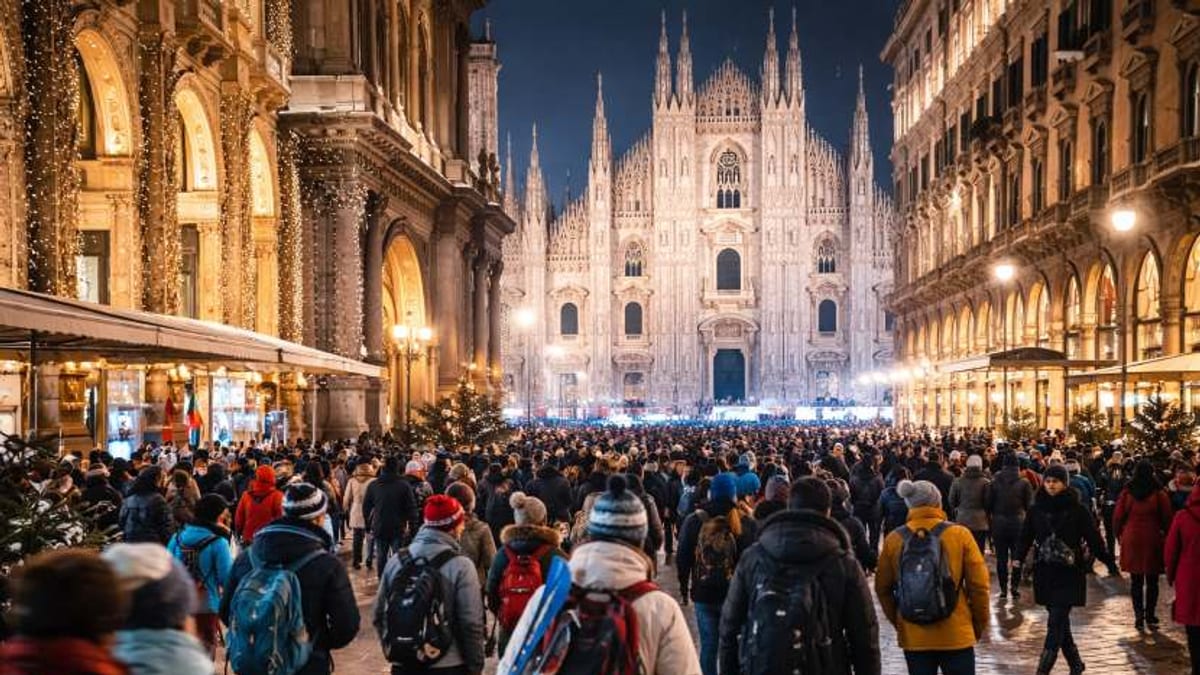
Image by International Hotels News, Hotel Industry & Hospitality News
Occupancy Nears Capacity Across Central Milan
Publicly available market data indicate that Milan’s hotels operated at near-capacity through the Olympic period, with forward bookings for February reaching the mid-80 percent range for the city as a whole and surpassing 80 percent for three to five star properties within a short radius of the historic center. Industry benchmarking services report that, for key Olympic nights, occupancy pushed into territory rarely seen outside the city’s busiest trade fairs and fashion weeks.
A survey released by local business associations for the area within roughly four and a half kilometers of the Duomo pointed to average occupancy close to 81 percent for upper-tier hotels, highlighting how central districts absorbed the bulk of demand. Budget and midscale properties also reported high load factors, from hostels with multi-bed dormitories to family-run hotels in transit-friendly neighborhoods.
These figures sit well above typical winter performance for the Lombard capital, which usually experiences its softest months between January and March. Analysts note that the Games effectively shifted Milan’s seasonal curve, turning what is often a quieter shoulder period into one of the busiest booking windows of the year.
In addition to the Olympic competition schedule, an overlapping calendar of cultural programming, live sites and fan zones helped sustain strong occupancy on non-competition days. This allowed hotels to maintain relatively even performance across the entire Olympic fortnight rather than relying only on opening and closing weekends.
Room Rates Climb to Historic Highs
The surge in demand translated into unprecedented pricing power for Milan’s hotels. Data released by hospitality analytics firms show that average daily rates across the city jumped by around 50 percent year over year for the core Olympic weeks, with some analyses citing triple-digit percentage growth on specific peak nights compared with February 2025.
According to industry reports, the city’s average room price climbed into the low to mid 300 euro range per night between early and late February, significantly above normal winter levels. Federalberghi Milano data shared in recent coverage pointed to an average of roughly 319 euros per night during the Games period, up from around 225 euros a year earlier, confirming the sharp repricing across segments.
Luxury properties led the charge. Five star hotels, particularly those around the Quadrilatero della Moda and Porta Nuova, introduced rate increases far above the citywide average, frequently selling out despite nightly prices running several times higher than typical midwinter tariffs. Boutique design hotels and lifestyle brands followed closely behind, capitalizing on demand from international spectators, sponsors and media.
Newer supply, including properties that opened in the run-up to the Olympics, entered the market at elevated rate levels, supporting an overall uplift in revenue per available room. Analysts of global hotel performance note that Milan’s rate trajectory during Milano Cortina 2026 compares favorably with previous Winter Games, placing the city among the strongest Olympic hosts of the past two decades in pricing terms.
Event Tourism, Fashion and Business Travel Converge
The Olympics did not operate in a vacuum for Milan’s tourism economy. The Games coincided with an already robust visitor trend in the city, where municipal tourism statistics showed arrivals climbing to around 9.6 million in 2025, up from just over 9 million the previous year. The event effectively layered a mega-sporting influx on top of a mature mix of business, design and fashion travel.
In February 2026, Olympic guests shared the city with buyers and exhibitors connected to fashion and design events, a combination that reinforced demand for centrally located hotels and pushed many properties to prioritize higher-yield bookings. Travel trade publications report that Milan’s hotel revenues during the Olympic and Paralympic window rose by roughly 30 percent compared with the same period in 2025, reflecting both fuller properties and significantly higher pricing.
Market commentators point to Milan’s experience hosting global events such as Expo 2015 and the annual Salone del Mobile as key factors in its ability to manage the Olympic surge. The city’s existing infrastructure for large-scale fairs and conferences, alongside a relatively dense inventory of hotels and short-term rentals, allowed it to absorb spectator flows that were more geographically dispersed than at past Winter Games.
At the same time, the broader Milano Cortina concept, with events spread between Milan, Cortina d’Ampezzo, Valtellina, Val di Fiemme and Verona, meant that some demand was distributed to mountain and regional destinations. Nevertheless, Milan’s role as the primary air gateway and media hub ensured consistently high room occupancy close to competition venues and Olympic live sites.
Short-Term Rentals and Hostels Feel the Pressure
The intense focus on hotel performance has been mirrored in the city’s alternative accommodation sector. Data compiled by travel analytics companies for the Milan and Lombardy markets indicate that short-term rentals also saw substantial gains in revenue per available unit during the Games, driven more by rising nightly rates than by absolute occupancy.
Some analyses describe a pattern in which hosts added significant new supply ahead of the Olympics, moderating occupancy percentages but still achieving record income on the back of strong pricing. In central neighborhoods and areas with direct transport to Olympic venues, entire apartments and high-rated studios commanded premiums similar to midscale hotel rooms.
Hostels, meanwhile, emerged as an important pressure valve for budget-conscious spectators. Reports on accommodation conditions during the opening week highlight dormitory beds in central hostels trading at several dozen euros per night, an accessible price point relative to hotel options. These properties largely reported full or near-full occupancy, with reservations often made months in advance.
The performance of non-hotel accommodation attracted close attention from local tourism stakeholders, who see the sector as both an economic asset and a regulatory challenge. The Olympics served as a live test of how Milan’s mixed hospitality ecosystem can respond to extreme, time-limited demand without overwhelming residential neighborhoods.
Legacy Prospects for Milan’s Hospitality Sector
With the Olympic flame now extinguished, attention in Milan is turning to what the record occupancy figures might mean for the city’s longer-term tourism trajectory. Press kits and promotional material from the city’s destination marketing organizations position the Games as a springboard for continued growth, highlighting new transport links, upgraded public spaces and the repurposed Olympic Village as assets that will support future visitor arrivals.
Urban regeneration projects tied to the Games, particularly around the Porta Romana rail yard and the Santa Giulia district, have added hotel-ready neighborhoods to Milan’s map, creating fresh opportunities for investors and operators. Several properties that served accredited Olympic guests are expected to transition into student housing and mixed-use developments, reinforcing the city’s broader strategy of using mega-events to catalyze lasting change.
Travel and hospitality analysts caution that sustaining Olympic-era room rates is unlikely once demand normalizes, but many expect a structural uplift compared with pre-2026 winters. The global media exposure generated by the Milano Cortina Games, combined with Milan’s established draw as a fashion, design and business capital, is widely seen as a factor that could support higher base occupancy across future off-peak seasons.
For now, the 2026 Winter Olympics stand as a clear inflection point for Milan’s hotel market. Record occupancy, rate growth and revenue performance during the Games have underscored the city’s evolution into a year-round international destination and provided a new benchmark for how large-scale events can reshape urban hospitality dynamics.