

More news on this day
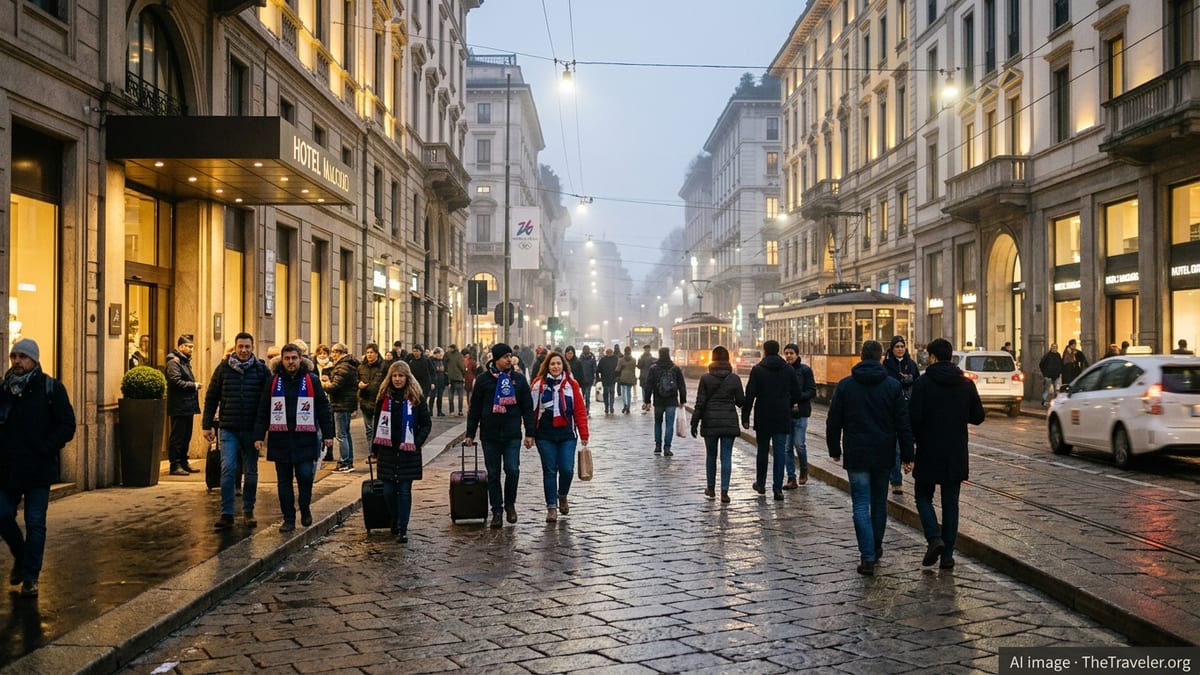
Milan’s hotel market has reached its highest Winter Olympic occupancy levels since 2010, with new data around the Milano Cortina 2026 Games showing unprecedented demand for rooms, sharply higher prices and a spillover of guests into surrounding cities across northern Italy.
Get the latest news straight to your inbox!
Occupancy Peaks as Milano Cortina 2026 Brings Surge of Visitors
Publicly available booking data compiled in early February 2026 shows Milan’s hotels with occupancy on the books above 85 percent for the core Winter Olympic period, a level analysts describe as the strongest Games-related performance for the city since at least Vancouver 2010. Industry benchmarking from CoStar’s STR division indicates that for several nights around the opening ceremony on 6 February, effective occupancy in central districts approached sold-out conditions once last-minute bookings and walk-ins are factored in.
Local trade associations report that three to five star properties within a short radius of the Duomo and main rail hubs have sustained occupancy levels around or above 80 percent across the wider Games window. A survey cited by Confcommercio Milan, Lodi and Monza-Brianza highlighted an average occupancy close to that threshold even before late bookings, underscoring how quickly remaining inventory has been absorbed as global attention turned to northern Italy.
Compared with typical February patterns, when Milan relies heavily on business travel and fairs, the 2026 spike marks a structural break. Tourism analysts note that the city is functioning not only as a competition venue but also as the primary international entry point for spectators heading to alpine sites, concentrating demand into a relatively limited hotel supply that has grown only modestly over the past decade.
Room Rates Climb as Supply Struggles to Keep Pace
Alongside record occupancy, Milan’s hotel sector is seeing a pronounced jump in average daily rates. According to coverage of data from the Federalberghi Milan association, the average price of a hotel room in the city during the Olympics period from 3 to 23 February reached roughly 319 euros per night, compared with about 225 euros in the same period a year earlier. That gain of more than 40 percent year on year comes on top of already elevated post-pandemic rate levels.
Analytics firms tracking Olympic travel patterns, including The Data Appeal Company and Mabrian, have highlighted that accommodation rates across Milan and other host destinations more than doubled on some core days of the Games. Their joint reporting pointed to a forecast single-day rate increase of around 146 percent on 13 February compared with 2025 levels, reflecting a mix of limited supply, strong international interest and a willingness by visitors to accept premium pricing for peak-event dates.
Revenue per available room, a key industry metric, has consequently reached historic highs for many operators. Sector briefings suggest that for upscale and luxury hotels in particular, rate strength has offset the limited ability to expand room capacity in the short term. Analysts say the combination of record occupancy and elevated pricing has produced some of the strongest trading conditions Milan’s hoteliers have experienced for any major event in more than a decade.
Spillover Demand Reaches Secondary Cities and Alternative Rentals
With central Milan close to capacity, demand has spilled into surrounding areas and alternative forms of accommodation. Real estate and tourism firms tracking the Milano Cortina 2026 impact note that visitors are increasingly booking in cities such as Como, Bergamo and Monza, all within one to two hours of Milan, as well as in Verona and Venice, which also host selected Olympic and cultural events.
Short term rental platforms have reported rapid increases in prices and booking levels in neighborhoods close to venues such as San Siro, where the opening ceremony took place. According to analysis published by Italian lifestyle and business media, advertised prices for entire apartments in some central and stadium-adjacent areas have doubled on average compared with usual winter rates, while occupancy on key weekends has climbed toward 70 to 80 percent for listings that remain active.
Industry commentators point out that the proliferation of private rentals has helped absorb a portion of the excess demand that traditional hotels could not accommodate. At the same time, the rapid expansion of these rentals has created a more complex picture, with some host-driven price swings and a growing disparity between early bookers who secured moderate rates and late-arriving guests facing steep premiums.
Gateway Role and Transport Links Reinforce Milan’s Appeal
Milan’s status as an international gateway has been central to the current hotel performance. Data released by the Almawave Group, summarizing trends from Visa Consulting & Analytics and airline capacity providers, shows that total flight capacity into Milan’s three main airports increased significantly for the Games period, with medium haul services up by double digits and long haul routes expanding close to 20 percent compared with the previous year.
Visa’s transaction and travel data also point to an estimated 160 percent increase in arrivals from abroad to northern Italy during the core Olympic dates, much of it channelled through Milan’s airports before spectators dispersed to alpine resorts. Tourism economists say that this concentration of arrivals has effectively locked in high base occupancy for the city’s hotels, even among visitors whose primary interest lies in events taking place hours away in the Dolomites.
Improved rail and road connectivity between Milan, Cortina d’Ampezzo and other mountain venues, together with expanded shuttle services laid out in the Milano Cortina 2026 transport plan, have allowed many guests to base themselves in the city and commute to competitions. This pattern has proved especially attractive for international tour groups and corporate hospitality programs, which often prefer Milan’s larger hotel and conference inventory.
Legacy Prospects for Milan’s Hospitality and Real Estate Sectors
The record Winter Olympic occupancy has also fed into a broader upswing in northern Italy’s real estate and hospitality investment climate. Reports from property consultancies such as Trevi Elite highlight increased interest from international investors in hotel, serviced apartment and mixed use projects in and around Milan, driven by expectations that heightened global visibility and upgraded infrastructure will sustain higher tourism flows beyond 2026.
The newly completed Olympic Village in the Scalo Romana redevelopment zone, delivered in late 2025, is expected to be converted into student and residential housing after the Games. Urban planners argue that this injection of modern, energy efficient stock, along with improvements to local public transport, should support the long term attractiveness of nearby districts to both residents and visitors.
Hoteliers and analysts alike are watching whether the current peak in occupancy and pricing will reset market benchmarks for future trade fairs, fashion weeks and major sports events hosted in Milan. While few expect Olympic level demand to persist throughout the calendar, many observers believe that the experience of handling near-capacity conditions, coupled with stronger global brand recognition, will leave the city’s hospitality sector in a more competitive position compared with other European urban gateways.