

More news on this day
Passengers at Milwaukee Mitchell International Airport faced mounting frustration on March 11 as SkyWest and Southwest Airlines scrubbed seven departures and arrivals and delayed dozens more, snarling major routes to Nashville, Boston, Charlotte, Dallas, Newark and other key hubs just as evening travel crowds built.
Get the latest news straight to your inbox!
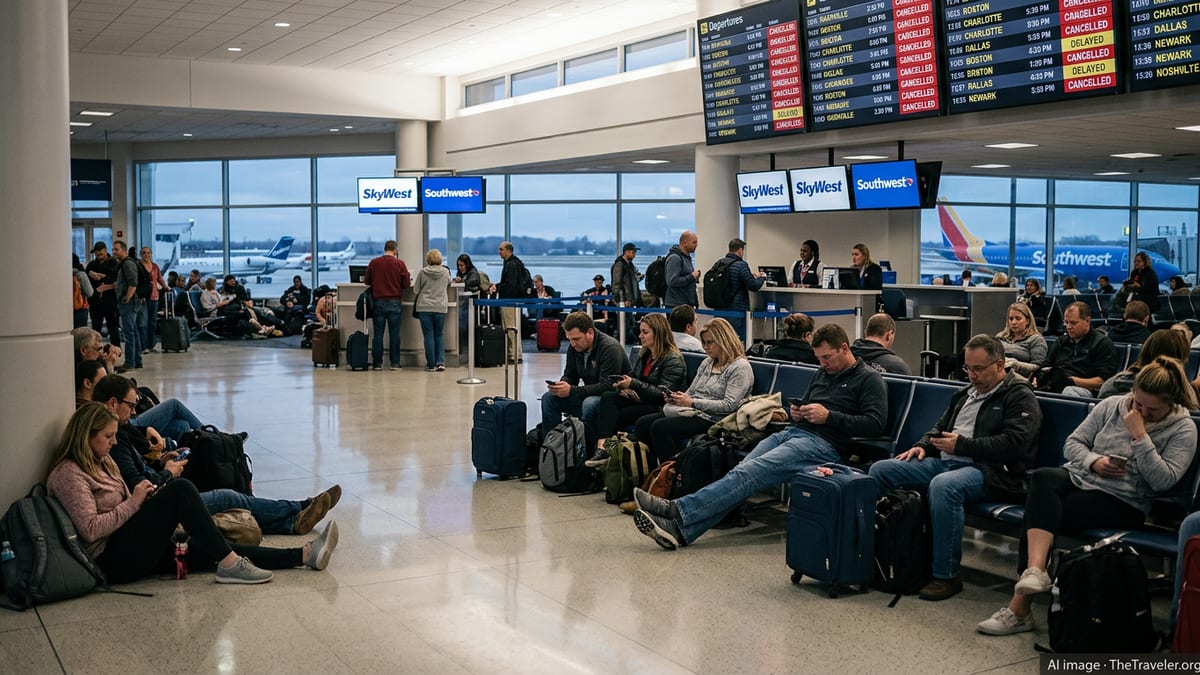
Wave of Cancellations Hits Key Midwest Gateway
The disruptions began early Wednesday, with regional carrier SkyWest and Southwest Airlines pulling multiple flights from the schedule as operational issues and weather-related constraints on the national network converged. By late afternoon, seven Milwaukee departures and arrivals on the two carriers had been cancelled, while a string of other services showed rolling delays that stretched from 45 minutes to more than three hours.
The affected flights included services linking Milwaukee to Nashville, Boston, Charlotte, Dallas and Newark, routes that serve as vital connections for both leisure and business travelers heading to the Southeast, East Coast and Texas. Several passengers reported learning of their cancellations only after arriving at the terminal, compounding long lines at airline counters as travelers sought rebooking options and hotel vouchers.
Airport officials said overall operations at Milwaukee Mitchell remained stable, but acknowledged that the concentrated disruption on SkyWest and Southwest created pockets of congestion at specific gates and check-in areas. Travelers were urged to rely on airline apps and text alerts for the most up-to-date gate and departure information, as overhead boards struggled to keep pace with rapid schedule changes.
The problems in Milwaukee came as a fresh round of nationwide delays and cancellations rippled through major hubs including Chicago, New York, Boston, Orlando and Dallas, where earlier storms and air traffic flow restrictions limited available aircraft and crews. That wider strain left airlines with fewer options to move spare planes or pilots into Milwaukee to cover late-running or cancelled segments.
Travelers Face Long Lines, Missed Connections and Uncertain Plans
For many travelers, the disruption meant missed connections and abruptly upended itineraries. A group of college students bound for Nashville for a spring music festival spent the afternoon camped on the floor near a Milwaukee gate after their flight first showed a series of creeping delays before being cancelled outright. Several said they were rebooked for departures a full day later, while others opted for overnight drives to Tennessee.
Business travelers heading to Boston and Charlotte for midweek meetings described scrambling to rearrange schedules as evening flights disappeared from the boards. With seats scarce on remaining departures to East Coast hubs, some passengers were offered circuitous routings through secondary airports, often adding six hours or more to their journeys.
Families connecting through Dallas and Newark also found themselves caught in the cascading disruption. Parents with young children reported difficulty securing nearby hotel rooms as airlines worked through backlogs of displaced customers. Others declined overnight accommodations and chose to remain in the terminal, wary of further schedule shifts and hoping for standby seats on early morning flights.
In social media posts and interviews, passengers expressed frustration at what they described as limited on-the-ground communication once delays mounted. Several travelers said gate agents were simultaneously fielding questions for multiple late-running flights, leaving long periods with little information on expected departure times or alternative options.
Airlines Cite Network Strain and Operational Constraints
While SkyWest and Southwest had not issued detailed public breakdowns of the causes behind each individual cancellation in Milwaukee, the disruptions appeared closely tied to mounting strain across the broader U.S. air travel system this week. Airlines have been juggling residual weather impacts, aircraft routing challenges and crew availability issues at several major hubs, including Boston Logan, Newark Liberty, Dallas-Fort Worth and Chicago O’Hare.
For SkyWest, which operates many regional flights under the banners of larger network carriers, even modest disruptions at a hub can quickly ripple to spoke cities such as Milwaukee. When inbound aircraft or crews are delayed or grounded elsewhere, subsequent legs to mid-sized markets often bear the brunt of cancellations as airlines prioritize long-haul and high-demand trunk routes.
Southwest, which relies on a highly utilized, point-to-point network, has also been grappling with tight turn times and aircraft positioning as storms and air traffic constraints flare in different parts of the country. On Wednesday, the carrier reported elevated delays systemwide as it worked to reposition planes out of congested and weather-affected airports, limiting flexibility to protect its full slate of departures from Milwaukee.
Industry analysts note that while airlines have added capacity back to many leisure markets, their margins for error remain thinner than before the pandemic-era downturn. With spare aircraft and reserve crews constrained, even a modest series of weather cells or airspace restrictions can trigger cancellation clusters like those seen in Milwaukee on Wednesday.
Impact on Major Routes to Nashville, Boston, Charlotte, Dallas and Newark
The disruption’s most visible impact fell on Milwaukee’s links to a handful of strategically important destinations. Flights to Nashville, a key leisure and business market with strong tourism and convention traffic, saw multiple delays as crews and aircraft failed to arrive on time from earlier segments. Travelers connecting onward to cities throughout the Southeast and Mid-South faced missed connections and overnight stays.
Services to Boston and Newark were similarly affected, straining connections to New England and the New York metropolitan area. These routes are particularly important for corporate travelers and students commuting between campuses and home, and Wednesday’s cancellations left many scrambling for seats on already busy flights later in the week.
Charlotte and Dallas, both significant airline hubs, play an outsized role in linking Milwaukee passengers to destinations across the South and West. Disruptions on those routes translated into a domino effect of missed long-haul and regional connections, from Florida beaches to mountain gateways in the Rockies and desert Southwest.
Travel agents reported a spike in last-minute inquiries from Milwaukee-area customers seeking alternatives, including driving to Chicago airports for additional nonstop options or shifting to other carriers less affected by Wednesday’s operational snags. Some travelers opted to postpone trips altogether rather than navigate extended layovers and unpredictable rebooking timelines.
What Stranded Passengers Can Do Now
With evening cancellations already in place and delays likely to persist into the overnight hours, travel experts advised Milwaukee passengers to move quickly and methodically to salvage disrupted plans. The first recommendation is to confirm flight status directly through airline apps, which often update more quickly than terminal departure boards, and to accept viable rebooking options as soon as they appear, even if they involve less-than-ideal connection times.
Stranded passengers were also urged to document expenses for meals, hotels and ground transportation in case of potential reimbursement. While compensation policies vary by airline and the cause of disruption, receipts are typically required for any post-travel claims. Those who purchased travel insurance were encouraged to review coverage for weather and operational delays, which may provide additional support for extended disruptions.
For travelers departing in the next 24 hours, experts suggested considering flexible backup plans, including alternate routings through other Midwest airports or adjusting trip dates if commitments allow. Given ongoing strain at major hubs nationwide, last-seat availability may be limited, making early-morning and late-night departures more attractive for those determined to reach their destinations quickly.
Airport officials reiterated that operations staff, airline agents and customer service teams would remain on duty through the night to assist passengers as Wednesday’s cancellations and delays continue to ripple through Thursday’s schedule. Still, with national conditions remaining volatile, Milwaukee travelers were advised to brace for lingering disruption and to build extra time and contingency plans into any near-term air journeys.