

The American Great Lakes are dotted with working cities that have quietly reinvented themselves as character-filled urban getaways. Milwaukee and Cleveland sit squarely in that category: waterfront skylines, deep industrial roots, strong food and beer cultures, and passionate sports fans. Both are compact and affordable compared with coastal hubs, yet they offer very different travel vibes. If you are deciding where to spend a long weekend or which city to use as a base for a wider Midwest trip, understanding those differences will help you pick the place that truly matches your travel style.
First Impressions: Atmosphere and Urban Personality
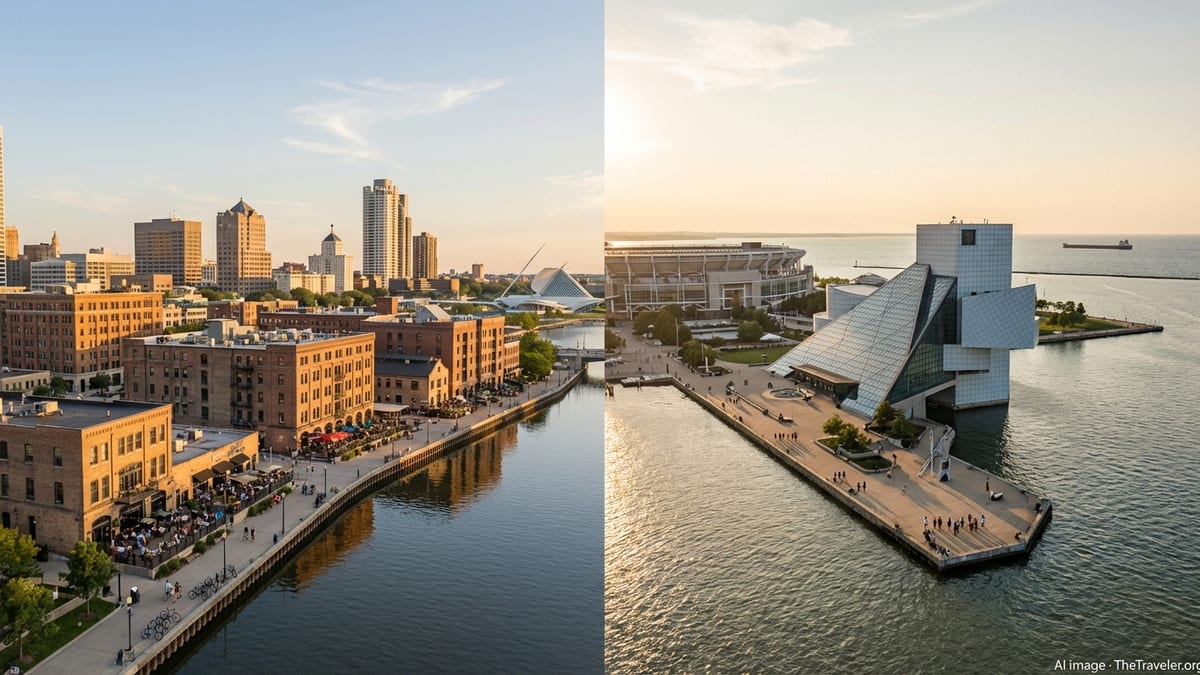
Milwaukee and Cleveland share a blue-collar backbone, but the feeling on the street is not identical. Milwaukee leans a bit more polished at first glance, with a tidy lakefront, compact downtown anchored by the Milwaukee River, and historic brick warehouses turned into lofts, markets, and galleries. It often brands itself as a big small town, where neighborhoods feel distinct and many venues are locally owned rather than national chains.
Cleveland, fronting Lake Erie, carries a slightly grittier, more industrial aesthetic, especially around the Flats and older warehouse districts. That grit comes with creative energy. Former factory blocks now house design studios, concert venues, breweries, and murals, especially in Ohio City and the Waterloo Arts District. Travelers who like cities that still feel a bit raw and in-progress often warm quickly to Cleveland’s edges and authenticity.
Scale is another differentiator. Milwaukee is larger by population and has a somewhat busier downtown core, while Cleveland’s central business district can feel quieter outside major events. Both are easy to navigate for visitors, but Milwaukee may suit travelers who want a bit more urban bustle, whereas Cleveland is ideal if you prefer a looser, more laid-back downtown scene with activity concentrated around waterfront attractions and nightlife pockets.
For a quick, intuitive sense of each city, imagine Milwaukee as a tighter, river- and lake-focused patchwork of walkable districts with a strong beer and dining identity, and Cleveland as a cultural heavyweight on the lakefront, with big-ticket museums and music history layered over a working port city.
Waterfronts, Neighborhoods, and Getting Around
Both cities are defined by their Great Lakes waterfronts, but they showcase them differently. Milwaukee’s relationship with Lake Michigan feels highly accessible: a continuous lakefront park system, beaches, and a paved trail make it easy to walk or bike along the shore. The Milwaukee Riverwalk extends for several miles through downtown, connecting restaurants, bars, public art, and historic neighborhoods along a boardwalk-style path. For visitors who like to discover a city on foot beside the water, Milwaukee is particularly friendly.
Cleveland’s lakefront is more segmented, shaped by rail lines, highways, and port facilities. The most visitor-friendly stretch is North Coast Harbor, home to the Rock & Roll Hall of Fame, the Great Lakes Science Center, and the football stadium, plus lawns and promenades where you can see massive lake freighters glide by. A short drive or rideshare connects you to more relaxed shoreline parks and beaches east and west of downtown. Travelers who do not mind using transit or cars to hop between districts will find the lake still very much present in the city experience.
Neighborhood character plays a big role in choosing your base. In Milwaukee, the Historic Third Ward offers converted warehouses, boutiques, galleries, and the lively Milwaukee Public Market, while the adjacent downtown and East Town areas give easy access to the Riverwalk, theaters, and major hotels. Bay View, a few miles south, is more residential and hip, mixing live music venues and corner bars with lake views. In Cleveland, Ohio City is a standout, anchored by the West Side Market, taprooms, and restaurants, while the Flats East Bank combines riverfront dining and nightlife. Downtown Cleveland is compact enough to walk from hotels to the harbor attractions.
In practical terms, both cities have modest but usable transit networks, supplemented heavily by rideshares and walkable cores. Neither requires a car if you mainly stay downtown and in one or two nearby neighborhoods, but a vehicle expands your reach to outlying parks, breweries, and suburban food pockets. If walking along the water from neighborhood to neighborhood is your priority, Milwaukee has the edge. If you prefer to concentrate on a few cultural districts and hop between them by car, Cleveland will feel manageable.
Weather, Seasons, and Best Time to Visit
Weather can make or break a short city break, and Great Lakes climates are notoriously changeable. Both Milwaukee and Cleveland have four distinct seasons, with cold, snowy winters and warm summers influenced by the nearby lakes. Milwaukee, on Lake Michigan, tends to have slightly cooler summers along the shore because of lake breezes, while Cleveland, on Lake Erie, can feel more humid and has its own form of lake-effect weather, especially in winter.
Winters in both cities are cold and often snowy, but Cleveland is known for strong lake-effect snow bands that can dump heavy snowfall on certain neighborhoods, especially east of downtown. Milwaukee also sees lake-effect snow, though patterns are a bit different along Lake Michigan. For most travelers, deep winter is best if you specifically enjoy snow, brewery taprooms, indoor concerts, and possibly a sports-focused trip. Be prepared for icy sidewalks, wind off the lake, and short daylight hours in either destination.
Spring can be variable, with some glorious mild days interspersed with chilly rain. Because of the lakes, both cities may remain cooler than inland areas into May. By late spring and summer, conditions usually settle into comfortable territory for festivals, patio dining, and waterfront walks. Daytime highs often land in the 70s or low 80s Fahrenheit in midsummer in both cities, warm enough for beach visits without the persistent, high-heat humidity common farther south.
Autumn is arguably the sweet spot if your travel style leans toward crisp air, changing leaves, and lighter crowds. Both Milwaukee and Cleveland are surrounded by tree-filled neighborhoods and parks that turn vibrant shades of orange and red. Temperatures are usually cool but pleasant through much of October. If you can time your trip for early fall, you will likely enjoy ideal conditions for walking tours, bike rides, and brewery hopping without peak-summer congestion.
Costs, Value, and Trip Length
For most travelers, budget sits right behind weather when choosing a destination. The good news is that both Milwaukee and Cleveland remain relatively affordable by U.S. big-city standards. They are not as cheap as small Midwestern towns, but prices for hotels, dining, and entertainment are generally lower than what you would see in Chicago or major coastal hubs.
Broad cost-of-living indices place Cleveland a bit below Milwaukee overall, driven largely by housing costs. For visitors, that typically translates to slightly lower average room rates and a bit more value in certain categories like casual dining and neighborhood bars. Travel budget estimates suggest that daily costs for accommodation, meals, local transportation, and attractions tend to run lower in Cleveland for a typical traveler than in Milwaukee, all else equal. Actual spending can vary widely based on your choices, but if you are counting every dollar, Cleveland often comes out ahead.
Milwaukee’s prices, while still moderate, can feel a notch higher, especially during major events, popular festival weekends, and high-demand summer dates. On the upside, the city offers a dense cluster of free or low-cost experiences, including waterfront parks, public art along the Riverwalk, and self-guided architecture walks. If you are willing to seek out neighborhood diners and local bars instead of headline restaurants, you can keep daily costs reasonable.
In terms of trip length, both destinations work well for a two- or three-night stay, giving you time to sample the core attractions and one or two neighborhoods. Milwaukee’s compact lakefront and Riverwalk corridor make it especially suited to a long weekend focused on walking, dining, and brewery tours. Cleveland, with its set of marquee museums and music sites, can easily fill a similar timeframe, especially if you build in a half-day each for the Rock & Roll Hall of Fame, a neighborhood food crawl, and a sporting event or concert.
Culture, Museums, and Music
If your travel style is anchored in culture, both cities offer strong but distinct draws. Cleveland is famously home to the Rock & Roll Hall of Fame on its lakefront, a major pilgrimage site for music fans that can easily occupy several hours. It pairs naturally with the nearby Great Lakes Science Center and other waterfront institutions. Just east of downtown, University Circle concentrates several of the city’s top cultural assets in one walkable district, including an art museum, history museum, and botanical and park spaces.
Milwaukee answers with its own waterfront cultural set pieces. The sail-like architecture of its lakefront art museum has become a symbol of the city, and the surrounding parkland provides room for sculpture, lakeside walking paths, and views back toward the skyline. Smaller museums highlight regional history, motorcycles, and industrial heritage, while neighborhood galleries and arts incubators add grassroots texture. For many visitors, the city’s culture is experienced as much in music venues, local festivals, and brewery tours as in traditional galleries.
Music lovers will find deep roots in both places. Cleveland’s identity as a rock city is built into its branding and events calendar, from downtown concerts to summer festivals. Milwaukee’s music scene, while perhaps less globally branded, is quietly broad, spanning indie clubs, jazz bars, neighborhood festivals, and major touring shows that pass through arena and amphitheater stages. If your perfect trip includes a night out listening to live bands after a day of museum-hopping, either city can deliver, with Cleveland offering the more iconic music museum draw and Milwaukee providing a more diffuse, scene-based experience.
Ultimately, choose Cleveland if a bucket-list visit to the Rock & Roll Hall of Fame and a museum-rich cultural district top your priorities. Opt for Milwaukee if you want a blend of striking architecture, lakefront art, and a culture that seeps into everyday venues like markets, taprooms, and community events rather than being concentrated in a few big institutions.
Food, Beer, and Nightlife Vibes
For many travelers, the real measure of a city is what you can eat and drink there. Both Milwaukee and Cleveland have robust food scenes shaped by immigration, working-class traditions, and recent waves of chef-driven restaurants. Neither is a formal-tasting-menu-only kind of place. Expect hearty plates, generous portions, and a mix of unpretentious joints and modern dining rooms.
Milwaukee’s reputation as a beer city is well deserved. Historic brewing giants left a powerful legacy, and small craft breweries have flourished in recent years. Taprooms line the Milwaukee River and surrounding districts, many with patios and views of passing boats. Traditional staples like bratwurst, cheese curds, and fish fries remain widely available, often updated by contemporary kitchens. The Milwaukee Public Market and the neighborhoods along the Riverwalk showcase a concentrated selection of local vendors and global flavors, making it easy to sample widely within a day or two.
Cleveland’s food identity leans into Eastern European, Mediterranean, and regional American comfort dishes, with pierogi, corned beef, and creative twists on familiar bar fare appearing on many menus. Neighborhoods such as Ohio City and Tremont are packed with restaurants and breweries, where you can move from casual coffee shops and bakeries to craft cocktail bars and gastropubs within a few blocks. The city’s long-running farmers markets and specialty grocers also speak to a strong local food culture.
Nightlife in both destinations tends to be energetic but approachable. Milwaukee’s downtown and Third Ward draw a mix of locals and visitors for cocktails, live music, and late-night bites, while Bay View offers a more laid-back, neighborhood-bar feel. Cleveland’s Flats East Bank and Warehouse District provide a waterfront party atmosphere on busy weekends, balanced by more low-key taverns and music venues in surrounding neighborhoods. If your travel style is bar-hopping along a river or lake after sunset, both cities qualify, with Milwaukee feeling a bit more compact and walkable between stops and Cleveland spreading its nightlife across several pockets.
Sports, Festivals, and Local Spirit
Sports and festivals are central to the identity of both Milwaukee and Cleveland, and they can shape the atmosphere you encounter on a given weekend. Milwaukee’s calendar is filled with lakefront festivals, neighborhood celebrations, and events celebrating everything from local music to cultural heritage. On game days, the city’s basketball and baseball teams draw enthusiastic crowds, and nearby bars fill with fans before and after events. The scale of the city means that major games and festivals are noticeable but not overwhelming, and they add a sense of shared energy rather than crowding every street.
Cleveland’s sports culture is famously intense. Football, basketball, and baseball each have deep roots, and the local mood can rise and fall with team fortunes. The lakefront stadium and downtown arenas are close to central hotels, so even casual visitors will feel the buzz on game days as fans stream through downtown and into nearby bars and restaurants. This can be a plus if you love big-game energy, but it may mean higher room rates and busier streets around major matchups.
Festival-wise, both cities shine in warmer months. Milwaukee, often called a city of festivals, fills its lakefront with multi-day events that mix music, food, and fireworks. Cleveland hosts its own roster of summer happenings, including food-focused events, neighborhood street festivals, and waterfront activities centered around its harbor and river. If you like your city breaks to double as event trips, it is worth scanning each city’s festival calendar before you commit; you might find a favorite band, food festival, or cultural celebration that tips the balance.
In terms of local spirit, both Milwaukeeans and Clevelanders tend to be proud of their cities’ resilience and often eager to share recommendations with visitors. Interactions at markets, breweries, and small shops can be a highlight, especially if you strike up conversations with staff and regulars. Whichever city you choose, build in unstructured time for those chance encounters; they often reveal the layers of civic pride that do not show up in any brochure.
The Takeaway
Choosing between Milwaukee and Cleveland is less about finding a clear winner and more about matching a city’s personality to your own travel style. Both are Great Lakes hubs with waterfront skylines, four distinct seasons, and a mix of historic grit and contemporary creativity. Each offers walkable neighborhoods, strong food and drink scenes, and a level of affordability that is increasingly rare among U.S. urban destinations.
Milwaukee will likely appeal most to travelers who prioritize a tightly woven lakefront and river experience, a deep-rooted beer culture, and the ability to explore multiple neighborhoods on foot along continuous waterfront paths. It suits visitors who want a city that feels cohesive, compact, and a bit more polished, but still grounded in working-class history and local pride.
Cleveland, by contrast, is an excellent fit if you are drawn to marquee cultural institutions and music history, and if you do not mind a little grit around the edges. Its lakefront is more segmented, but the payoff is a set of singular attractions clustered by the water, supported by character-filled food and nightlife districts a short distance away. For travelers who enjoy cities that feel in the midst of reinvention, Cleveland’s mix of industrial heritage and creative re-use can be especially satisfying.
If your ideal city break involves long walks along an urban riverwalk, brewery-hopping, and a unified waterfront skyline, lean toward Milwaukee. If you picture yourself standing on a lakefront plaza in front of an iconic music museum before heading into neighborhoods alive with art, food, and sports fandom, Cleveland may be your match. Either way, you will discover that the Great Lakes region offers urban experiences that are as memorable and nuanced as those found on any coast.
FAQ
Q1. Which city is better for a first-time Great Lakes trip, Milwaukee or Cleveland?
For a first-time Great Lakes city break, Milwaukee is often easier to grasp quickly because of its compact lakefront, walkable Riverwalk, and clearly defined downtown and neighborhood core. Cleveland, however, offers a unique combination of major cultural institutions and music history that can be compelling if you are drawn to iconic attractions like the Rock & Roll Hall of Fame.
Q2. Is Milwaukee or Cleveland cheaper for travelers?
Both cities are affordable compared with larger coastal hubs, but Cleveland generally comes out slightly cheaper on average for accommodation and some daily expenses. Milwaukee can feel a bit pricier during peak summer events and festivals, though careful choices of where to stay and eat can keep costs modest in either city.
Q3. Which city is more walkable for visitors without a car?
Milwaukee has an advantage in continuous waterfront paths and a long Riverwalk that links several neighborhoods, making it particularly pleasant for car-free exploration. Cleveland’s downtown and harbor area are walkable, but you may rely more on rideshares or transit to reach certain districts, so it rewards travelers comfortable mixing walking with short rides.
Q4. Where will I find better museums and cultural institutions?
Cleveland has a stronger concentration of headline museums and cultural sites, including its famous music museum and a cluster of institutions in its primary cultural district. Milwaukee offers notable museums and distinctive architecture, but its cultural experience is more evenly spread across lakefront institutions, neighborhood galleries, and event spaces rather than dominated by a few flagship venues.
Q5. Which city has the stronger food and beer scene?
Both cities have vibrant food and beer cultures, but in different ways. Milwaukee is closely associated with brewing and offers a dense network of taprooms, beer halls, and classic comfort foods such as brats and cheese curds. Cleveland balances a notable craft beer presence with strong neighborhood restaurant clusters and Eastern European influences, so your preference may depend on whether you prioritize brewery tours or diverse neighborhood dining.
Q6. How do winters compare between Milwaukee and Cleveland?
Winters in both cities are cold and snowy, shaped by lake-effect patterns. Cleveland often sees more pronounced lake-effect snow, especially east of downtown, which can lead to heavier local snowfall. Milwaukee also experiences lake-effect conditions but tends to feel slightly more moderated by Lake Michigan along the immediate shore. In either city, winter visits require warm clothing, boots, and flexibility for weather-related changes.
Q7. Which destination is better for summer festivals and outdoor events?
Milwaukee is particularly known for its extensive summer festival calendar, with many events staged along the lakefront and in central parks. Cleveland also hosts a variety of summer happenings and waterfront events, but if your main goal is to build a trip around multiple festivals in a single weekend or week, Milwaukee usually offers a denser lineup in one place.
Q8. Is one city better suited for families with children?
Both cities work well for families, with science museums, waterfront parks, and kid-friendly attractions. Cleveland’s cluster of educational institutions near its cultural district and its lakefront science center can make planning easier for families who want to minimize logistics. Milwaukee counters with beaches, lakeside trails, and interactive markets that can keep children engaged while adults enjoy the scenery and food.
Q9. Which city has the more relaxed, neighborhood-focused feel?
While both have laid-back districts, Cleveland’s residential neighborhoods like Tremont and parts of Ohio City often feel especially relaxed, with tree-lined streets, independent cafes, and small bars. Milwaukee’s Bay View and other non-downtown areas also deliver a neighborhood vibe, but the city’s Riverwalk and lakefront can feel more like active urban corridors, especially in peak seasons.
Q10. If I can only visit one, which should I choose?
If you value a cohesive waterfront, extensive riverfront walking, and a strong beer culture, Milwaukee is likely to align best with your travel style. If your priorities center on major museums, music history, and an evolving arts and food scene in a city with a bit of industrial edge, then Cleveland is the better single-choice destination. Both reward repeat visits, so consider starting with the one that most sharply matches your top interests and saving the other for a future Great Lakes adventure.