

More news on this day
A distant magnitude 4.1 earthquake recorded near Antigua and Barbuda in the northern Lesser Antilles produced no immediate reports of damage or injuries, but the event is renewing attention on the Caribbean nation’s underlying seismic risk and the vulnerability of its tourism-driven economy.
Get the latest news straight to your inbox!
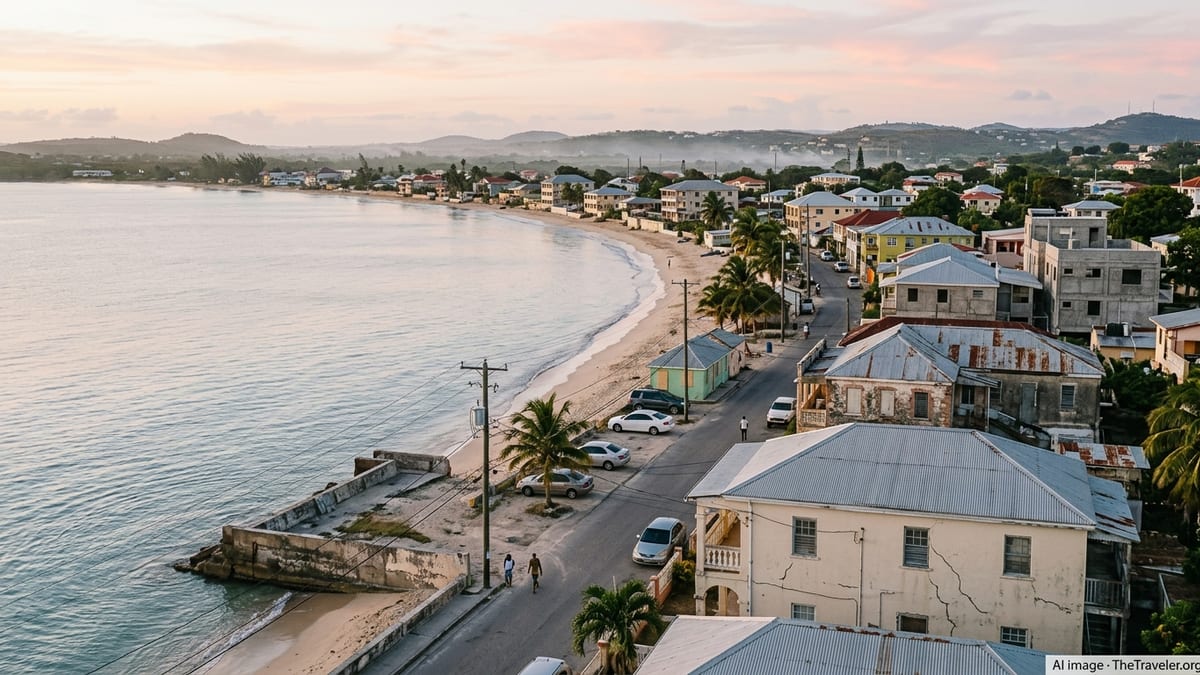
Light Offshore Tremor, No Immediate Impact on Islands
Preliminary regional monitoring data indicate that the magnitude 4.1 earthquake originated offshore in the Leeward Islands sector of the eastern Caribbean, at a depth typical of events linked to the plate boundary that runs east of Antigua and Barbuda. The epicenter was reported well away from major population centers, resulting in only weak to light shaking levels across the islands, if felt at all.
Reports circulating through regional seismic bulletins and community alert networks describe the event as minor, with no associated tsunami advisory and no confirmed disruptions to services, transport, or critical infrastructure. In contrast to stronger shocks occasionally recorded in the wider Lesser Antilles, this tremor appears to have passed largely unnoticed by many residents and visitors.
Publicly available information from recent Caribbean earthquakes shows a pattern in which moderate offshore events, often in the magnitude 4 to 5 range, are felt across several islands but rarely cause structural damage. The latest 4.1 tremor is consistent with that trend, yet it forms part of a longer sequence of quakes that scientists regard as a reminder of persistent tectonic activity in the region.
Local tourism businesses, cruise operators, and resort properties continued operations as scheduled following the event, reflecting the minimal impact from a shock of this size. However, the same business community is increasingly attentive to how even minor seismic headlines can influence traveler perception of safety in small-island destinations.
Antigua and Barbuda on a Restless Plate Boundary
Antigua and Barbuda lie along the Lesser Antilles subduction zone, where the North American Plate descends beneath the Caribbean Plate. Recent scientific work on seismotectonic zoning in the arc describes a complex system of downgoing slabs, fracture zones, and crustal faults that collectively accommodate regional plate motion. Although the strongest megathrust earthquakes have historically occurred further south, the northern arc that includes Antigua and Barbuda remains classified as a significant hazard area.
Regional hazard assessments and vulnerability studies commissioned for Caribbean states characterize Antigua and Barbuda as a high seismic risk zone within the Organization of Eastern Caribbean States. Historical records, including damaging twentieth-century events in the wider Lesser Antilles, show that the arc is capable of earthquakes far larger than the routine magnitude 4 events that dominate day-to-day seismic bulletins.
Researchers note that the frequent occurrence of small to moderate earthquakes, such as the latest 4.1 event, reflects ongoing strain release along the plate interface and associated faults. While these earthquakes may ease stress in some zones, they do not eliminate the possibility of larger, less frequent shocks. For planners and insurers, the key concern is not individual minor tremors but the cumulative probability of strong shaking that could test older buildings and lifeline systems.
The tourism and service sectors that anchor Antigua and Barbuda’s economy add another dimension to seismic risk. High-occupancy hotels, waterfront resorts, marinas, and cruise berths concentrate people and investment along low-lying coastal areas, some of which are also exposed to tsunami and storm surge hazards. This geographic pattern means that a severe offshore earthquake, even if rare, could have outsized social and economic consequences.
Hidden Vulnerabilities in Buildings and Infrastructure
Technical evaluations of infrastructure in Antigua and Barbuda, including regional disaster risk management notes and vulnerability assessments, highlight a mix of building practices on the islands. Newer projects increasingly reference regional standards such as the Caribbean Uniform Building Code and various Organization of Eastern Caribbean States guidelines, which incorporate seismic loading into structural design. However, many existing homes, small businesses, and public facilities predate modern codes or were constructed with limited enforcement.
Engineering studies for Caribbean countries point to recurring issues such as inadequate reinforcement, poor detailing at beam-column joints, and non-ductile masonry walls. These deficiencies may be of little consequence in minor earthquakes like the recent 4.1 event, but they can greatly increase the risk of serious damage or collapse when stronger ground motions occur. Soft-story configurations, hillside developments, and infilled ground floors used for parking are among the building types that have drawn concern in regional surveys.
Infrastructure lifelines present a similar picture of mixed resilience. Ports, power plants, fuel depots, and water supply systems are critical for both residents and visitors, yet many assets were originally designed for wind and flood hazards rather than seismic shaking. Retrofitting programs and new investment guidelines have begun to factor in earthquake risk, but coverage remains uneven, especially outside the main tourism corridors.
Experts in disaster risk reduction frequently warn of a “risk perception gap” in the Caribbean, where decades without a locally devastating quake can create a false sense of security. The absence of visible damage from small events, including the latest tremor near Antigua and Barbuda, may reinforce the idea that earthquakes are a distant threat, even as scientific assessments continue to rate seismic hazard as high.
Tourism, Preparedness and Traveler Confidence
For a destination that depends heavily on air arrivals, cruise calls, and resort stays, Antigua and Barbuda’s approach to earthquake preparedness is closely tied to traveler confidence. Regional disaster management frameworks encourage hotels, marinas, and tour operators to maintain evacuation plans, conduct regular drills, and coordinate with national agencies on early-warning messages for earthquakes and tsunamis.
Publicly available guidance from Caribbean disaster agencies emphasizes simple protective actions such as “Drop, Cover, and Hold On” during shaking, as well as clear procedures for moving away from low-lying coasts after strong or prolonged tremors. While the recent 4.1 quake did not trigger such measures, safety information campaigns often reference these smaller events to keep awareness from fading between major disasters.
Travel industry analysts observe that global visitors increasingly research destination safety before booking, looking not only at crime statistics but also at natural hazards and resilience. In this context, transparent communication about earthquake risk, building standards, and emergency planning can help reassure guests that local institutions take seismic threats seriously, even when minor tremors cause no disruption.
Several Caribbean-focused resilience initiatives encourage resorts and tourism businesses to exceed basic code requirements, adopt voluntary seismic audits, and integrate structural strengthening into routine renovations. Over time, such efforts can reduce the likelihood that a future strong earthquake will translate into prolonged downtime, large-scale evacuations, or reputational damage for the destination.
Regional Science Points to Long-Term Seismic Exposure
Recent peer-reviewed research on the Lesser Antilles subduction system has refined understanding of how strain accumulates and is released along the arc, from the Virgin Islands and Antigua in the north to the Windward Islands in the south. These studies combine instrumental seismicity, GPS measurements, and historical records to build a more detailed picture of where great earthquakes may occur and how shaking could propagate across island chains.
In the vicinity of Antigua and Barbuda, seismotectonic models depict a forearc region with relatively low onshore deformation but ongoing seismicity offshore, consistent with the location of the latest 4.1 quake. Although there is still scientific debate about the maximum magnitudes possible on various segments of the megathrust, most published hazard scenarios for the eastern Caribbean include events large enough to pose serious challenges to lightly reinforced structures and critical facilities.
Regional vulnerability assessments commissioned for governments and development partners repeatedly characterize Antigua and Barbuda as high on earthquake risk indices, ranking the country near the top tier of small island states exposed to seismic damage. These documents note that while hurricane preparedness has advanced significantly, investment in seismic retrofitting, detailed microzonation studies, and public education on earthquakes has often lagged behind.
Against this backdrop, the recent 4.1 event functions more as a subtle reminder than a crisis. With no apparent impact on daily life, it nonetheless underscores that the ground beneath Antigua and Barbuda is far from static. For planners, engineers, and the tourism industry, the challenge is to treat such minor tremors as opportunities to strengthen long-term resilience before a truly damaging earthquake tests the islands’ readiness.