

More news on this day
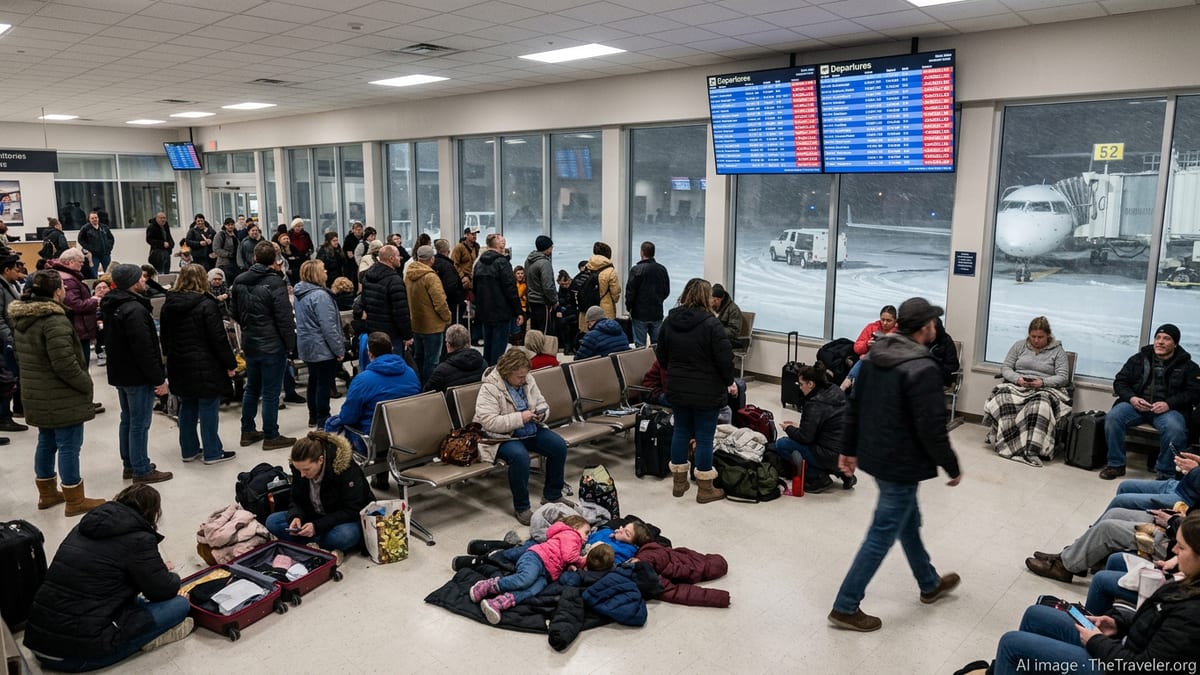
A fresh burst of weather-driven flight cancellations at Minot International Airport in North Dakota has stranded scores of passengers, cut off key regional links, and highlighted how quickly disruption at a small Midwestern airport can ripple across the wider US air network.
Get the latest news straight to your inbox!
Blizzard Conditions Turn a Regional Hub into a Dead End
The latest disruption has unfolded as a powerful March storm system sweeps across the northern United States, bringing whiteout conditions, gusty crosswinds, and dangerously low visibility across the northern Plains. Publicly available aviation and weather data show that snow and blowing snow have periodically pushed Minot’s operational limits, triggering ground delays and a mounting list of cancellations for both arrivals and departures.
While the worst of the storm has focused on a broad band stretching from the Rockies through the Upper Midwest, regional airports like Minot have been especially exposed. With only a limited number of daily commercial flights and few alternative ground transport options over long winter highways, a handful of scrubbed services can quickly turn what looks like a localized weather issue into a full-fledged travel crisis for those on the ground.
Minot International functions as a vital connector for north-central North Dakota, linking local travelers to major hubs such as Denver, Minneapolis, and Phoenix through a mix of legacy and low-cost carriers. When those links evaporate in a matter of hours, onward itineraries across the United States can collapse, leaving passengers unable to reach weddings, medical appointments, work commitments, or international connections.
Wave of Cancellations Compounds a National Pattern
The turbulence at Minot is aligning with a broader pattern of instability in US aviation during the 2025–26 winter season. In recent weeks, severe winter storms, atmospheric river events, and powerful wind systems have repeatedly triggered hundreds of cancellations and thousands of delays at major hubs from Chicago and Denver to Atlanta and New York. Those large-scale shocks filter rapidly into regional nodes such as Minot, where airlines rely on tight aircraft and crew rotations.
When storms or equipment constraints force large carriers to slow operations at their busiest hubs, regional spokes are often the first to be sacrificed in order to protect higher-volume routes. In practical terms, this means Minot-bound flights may be preemptively canceled or heavily delayed even before conditions deteriorate locally, because crews and aircraft are trapped elsewhere in the network or reassigned to more critical sectors.
This cascading effect can strand passengers at both ends of a journey. Travelers already in Minot may find that the day’s final outbound flight has been canceled with limited rebooking options for the following day, while passengers attempting to reach the city from larger hubs suddenly discover that the regional leg of their itinerary has disappeared, forcing unexpected overnight stays or complete itinerary changes.
Limited Backup Options Leave Passengers With Few Choices
For stranded passengers, Minot’s geographic isolation and lean route map make recovery especially challenging. Unlike travelers at large hubs, who may be able to shift between multiple airlines and nearby airports, those affected in Minot have only a small number of daily departures and a narrow range of destinations to work with. When several consecutive flights are canceled, the backlog of displaced travelers can take days to clear.
Publicly available information from North Dakota aviation authorities underscores the crucial role that winter resilience plays for airports in the state. Recent infrastructure projects at Minot have focused on drainage improvements and deicing capacity to help keep operations moving in harsh conditions, but even upgraded systems can be overwhelmed when storms combine heavy snow, low temperatures, and strong winds. On days like this, the practical limit is not only the runway but also available crews, aircraft positioning, and airspace constraints across the region.
Ground transport alternatives are also constrained. Long-distance driving is often hazardous or discouraged during blizzard warnings across the northern Plains, with intercity buses running curtailed schedules or being canceled outright. As a result, travelers whose flights are scrapped may be faced with waiting out the storm in airport seating areas or nearby hotels rather than attempting risky road journeys across rural North Dakota.
Knock-On Effects for Airlines and the Local Economy
The operational challenges extend beyond inconvenienced travelers. A cluster of cancellations at Minot can undercut airport revenues from parking, concessions, and rental cars, while also disrupting staffing patterns for ground handlers, security, and support services. For airlines, the costs include repositioning aircraft, paying overtime to crews, arranging hotels for some stranded passengers, and managing customer service bottlenecks as rebooking queues lengthen.
Economic assessments from North Dakota agencies in recent years have warned that extended periods of disruption at commercial service airports such as Minot, Fargo, and Grand Forks can lead to measurable declines in passenger counts and associated business activity. When travelers grow wary of the reliability of regional air links, some shift trips to larger airports hours away by road, or avoid discretionary travel altogether, squeezing smaller markets already working hard to retain and expand air service.
For Minot, which has invested in attracting and sustaining additional routes, the optics of a highly visible meltdown are troubling. Each wave of stranded passengers and missed connections risks damaging consumer confidence just as local leaders are seeking more flights, new airline entrants, and long-term commitments from existing carriers.
What Travelers Can Do When the System Breaks Down
For those caught up in the current disruption at Minot, the options are imperfect but not hopeless. Travelers can benefit from monitoring their flight status through airline apps and flight-tracking platforms, since information posted on-terminal screens sometimes lags behind operational decisions made at headquarters. When cancellations cluster, same-day rebooking onto another carrier is rare in small markets, making it crucial to secure a seat on the next available departure quickly, even if that entails longer layovers or circuitous routings.
Passenger rights and compensation rules vary depending on the airline and the nature of the disruption. In many cases, weather-related cancellations do not trigger cash compensation, but carriers may provide meal vouchers, hotel discounts, or fee-free itinerary changes. Travelers with flexible tickets or travel insurance policies that cover weather events may be better positioned to recoup costs for missed connections, extra nights in hotels, or alternative transport home.
For future trips involving Minot and other regional airports, analysts often recommend building in longer connection times at major hubs during peak winter months, avoiding last departures of the day where possible, and considering the value of refundable or changeable fares. While such strategies cannot prevent a blizzard from closing a runway or a storm from snarling a hub, they can provide more room to maneuver when the next wave of travel chaos rolls across the US aviation system.