

More news on this day
A powerful March storm system sweeping across the northern United States has plunged Minot International Airport in North Dakota into operational turmoil, with waves of flight cancellations and missed connections leaving stranded passengers facing long waits, unexpected overnight stays and mounting uncertainty about when they will finally reach their destinations.
Get the latest news straight to your inbox!
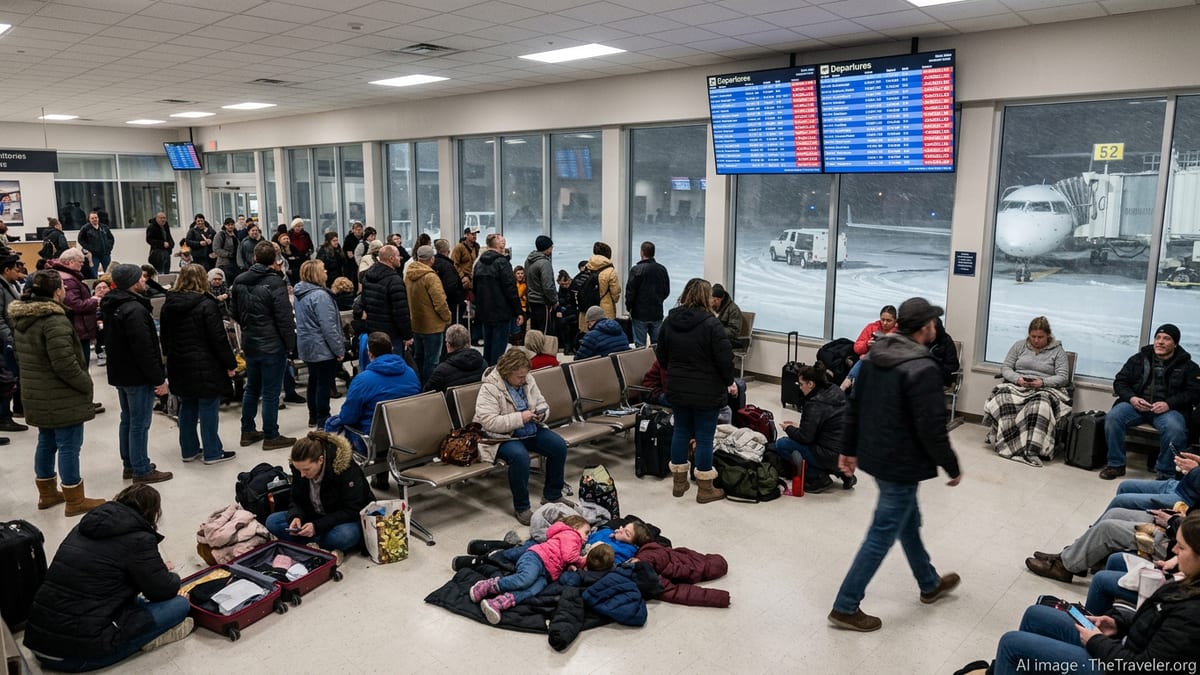
Storm System Turns Minot Into a Bottleneck
The latest round of travel chaos at Minot International Airport coincides with a sprawling March 13 to 16 storm complex that has hammered large stretches of the northern tier with heavy snow, strong winds and rapidly deteriorating visibility. While the worst of the weather has focused on states to the west and south, the system has disrupted the regional flight networks that link Minot to major hubs across the country.
Regional routes into Minneapolis and Denver, which serve as primary connection points for Minot travelers, have experienced rolling delays and cancellations as airlines trim schedules, reposition aircraft and concentrate limited capacity on long haul and higher priority routes. As a result, even when local conditions in Minot temporarily improve enough to keep the runway open, passengers still face canceled inbound aircraft or crews unable to reach the city.
Publicly available flight tracking and airline status pages show a pattern familiar to many small city travelers. Once a handful of early departures are scrubbed due to weather or crew constraints elsewhere, the tightly timed daily schedule quickly unravels. With only a small number of flights operating each day, losing even one or two departures can leave entire planeloads of passengers with no same day alternatives.
Limited Service Magnifies the Impact on Passengers
The operational strain at Minot underscores the vulnerability of small regional airports that depend on a short list of routes and carriers. Minot’s commercial terminal is served primarily by connections to large hubs rather than a broad network of point to point flights, which amplifies the effect of any disruption upstream.
When a snow band or strong crosswinds strike Minneapolis, Denver or other major connecting airports, the ripple effects quickly reach Minot. A canceled or heavily delayed inbound aircraft can mean that the corresponding outbound flight from Minot never appears on the ramp, leaving passengers in the terminal with rebooking options that may stretch into the following day or beyond, especially during peak travel periods.
Reports from recent nationwide disruptions indicate that airlines have been prioritizing transcontinental and international operations when capacity is constrained. In this environment, smaller regional jets and low frequency markets like Minot find themselves particularly exposed. A single aircraft assigned to multiple small city routes may be reassigned or grounded when schedules are compressed, extending the wait for travelers who rely on that limited service.
Travel Chaos Spills Across the US Network
The problems in Minot are part of a broader pattern of weather driven aviation turmoil across the United States in early 2026. Major storms in January and February already produced some of the largest single day cancellation totals in recent years, with thousands of flights scrubbed across multiple hubs and smaller airports alike. Each new system has arrived before airlines and passengers fully recover from the last, compounding the strain on schedules and staffing.
Recent coverage of disruptions at large airports such as Minneapolis Saint Paul highlights just how quickly conditions can deteriorate. On some days, wide swaths of regional departures have disappeared from departure boards while a skeleton schedule of long haul services continues to operate, leaving connecting passengers in small markets without viable onward options. As airlines work through backlogs, travelers from cities like Minot often find themselves rebooked on more circuitous routings or facing multiday delays.
Past assessments of weather events and even federal funding disruptions in North Dakota have noted that cities including Minot can experience outsized impacts from cancellations, with lost passenger traffic translating into reduced airport revenue and strained local businesses that depend on steady visitor flows. The current storm has revived those concerns, as another wave of interrupted trips drives up costs for both travelers and the wider regional economy.
Economic and Operational Pressures Raise Long Term Questions
Minot International Airport has in recent years been highlighted as one of North Dakota’s success stories, with a modern terminal and recognition for its role in supporting regional commerce and connectivity. Yet the latest spate of cancellations has renewed debate over how sustainable and resilient small city air service can be in the face of increasingly volatile weather and tight airline resources.
Industry data and recent analyses of small airport performance point to a concentration of disruption risk at certain regional facilities, where a combination of limited daily flights, reliance on a single primary hub and aging regional aircraft fleets creates frequent pinch points. For Minot, maintaining reliable links to national and international networks depends heavily on decisions made by major carriers about where to deploy finite planes and crews during irregular operations.
Local stakeholders have pursued strategies such as federal grant applications and route development efforts to preserve and enhance connectivity. However, the latest storm related chaos demonstrates that even well run regional airports remain subject to external forces over which they have limited control. As extreme weather events become more common, questions are mounting about whether current service models can consistently meet the needs of both leisure and business travelers in smaller communities.
Travelers Confront Hard Choices and Thin Backup Plans
For passengers caught in the latest wave of cancellations at Minot, the immediate challenge is more personal than structural. With aircraft out of position and subsequent flights quickly filling, many travelers face the choice of waiting for a rebooked seat days later, driving several hours to a larger airport or abandoning trips altogether. Hotel availability can tighten rapidly when multiple flights are canceled, and winter road conditions often make overland detours risky or impractical.
Travel forums, social media posts and airline status updates over recent weeks reflect growing frustration among travelers connecting through the northern tier, where storms have repeatedly disrupted plans. Some passengers describe proactively routing through larger hubs when possible or building in long layovers to protect against missed connections, but these workarounds add time and cost to journeys that once appeared straightforward.
As the current storm system gradually weakens and airlines work to restore full schedules, Minot’s terminal is expected to clear out and operations to normalize. Yet for many of the travelers sleeping in nearby hotels or reworking itineraries at kitchen tables across the region, the episode will reinforce a hard lesson. In an era of tightly optimized airline networks and increasingly volatile weather, flying from a smaller US city like Minot can turn suddenly from a routine hop into an extended and unpredictable ordeal.