

More news on this day
A Miss South Africa runner-up is charting a new course in the United States, turning pageant acclaim into professional momentum with a growing cabin-crew career at a private airline and shining a spotlight on the widening pathways between beauty contests and global aviation.
Get the latest news straight to your inbox!
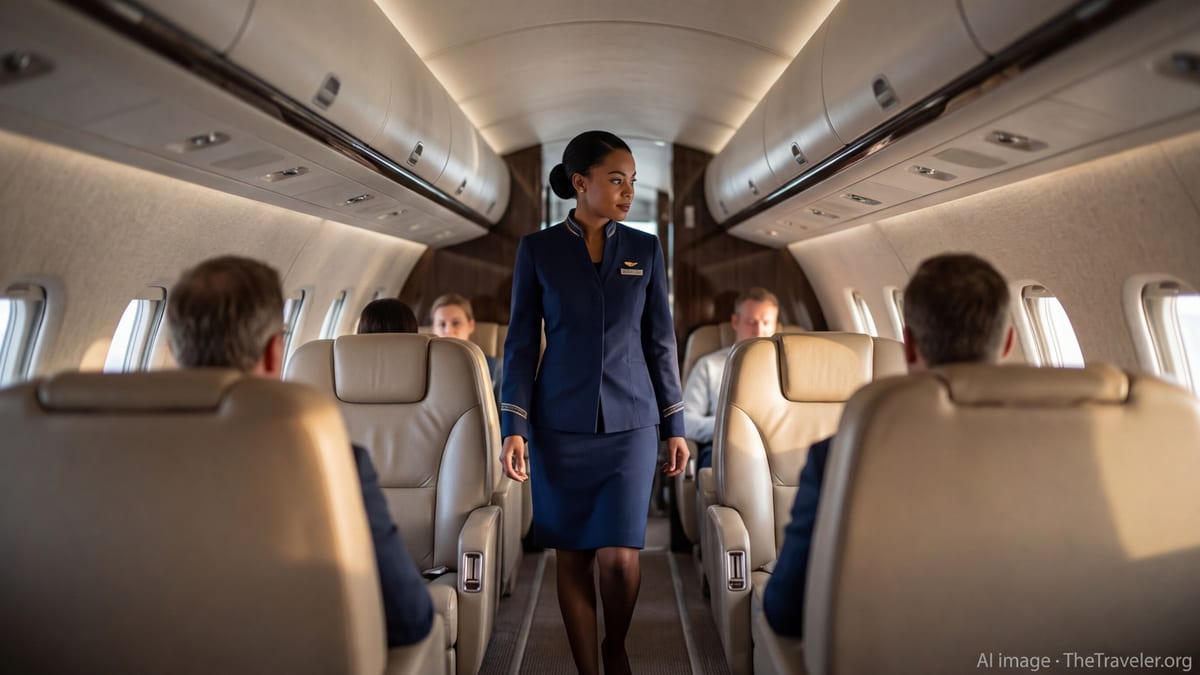
From pageant spotlight to passenger cabin
The latest chapter in South Africa’s pageant-to-aviation story involves a former Miss South Africa runner-up who has joined the cabin crew of a private airline in the United States, according to recent media and social media coverage. Publicly available information shows that the one-time finalist, celebrated at home for her stage presence and advocacy work, is now based in the US and flying as part of a premium service operation for high-end travelers.
Reports indicate that the move follows a pattern seen among several South African beauty queen alumnae who have used pageant visibility as a springboard into aviation, hospitality, and international service roles. In this case, the runner-up’s new role with a private US carrier places her at the intersection of luxury travel and personal branding, with her pageant profile helping her stand out in a crowded labor market.
While pageants and commercial aviation may seem worlds apart, both sectors prize poise under pressure, strong communication skills, and a polished public image. Industry observers note that this blend of attributes has made former titleholders attractive candidates for airlines that emphasize high-touch, personalized service, especially in business and private aviation.
The shift from runway to runway-adjacent work also highlights how South African contestants increasingly view major pageants as platforms that can unlock global careers, rather than as endpoints in themselves. The runner-up’s trajectory into a US-based cabin-crew role fits this broader trend of leveraging national recognition into international mobility.
Aviation pathways widen for South African women
The story of a Miss South Africa runner-up joining a private US airline is unfolding against a backdrop of growing female visibility in aviation. South African women have taken on roles across the sector, from cabin crew to airline transport pilots and even flight captains at the country’s flag carrier. Public profiles of South African aviators show a steady increase in women qualifying on complex aircraft and moving into senior cockpit positions.
Published coverage on South African aviation careers points to a pattern: many women begin in customer-facing roles before transitioning into technical or leadership posts. Cabin crew experience often becomes a first step toward advanced training, management or safety-focused positions, suggesting that the runner-up’s new job could be an entry point into a longer aviation journey should she choose that path.
Industry commentary also notes that private and business aviation in the United States has been expanding its talent pipelines, particularly in the wake of post-pandemic demand for flexible, point-to-point travel. For South African professionals already comfortable in international environments, this creates opportunities to combine existing hospitality skills with globally recognized cabin-crew training.
In this context, the runner-up’s relocation to a US-based private carrier illustrates both the pull of overseas opportunities and the export of South African service expertise. Her move echoes the decisions of other young professionals who have left traditional career tracks at home in search of niche roles abroad.
Private US airlines court global talent
Private aviation brands in the United States have stepped up recruitment of international cabin-crew talent as they compete on service standards and client experience. Publicly available company materials and industry reporting show that these operators seek multilingual staff with cross-cultural awareness and an ease in high-net-worth environments, traits often honed by pageant competitors on the global circuit.
Analysts of the business aviation market point out that many US private carriers now operate quasi-scheduled services and membership models that blur the lines between traditional charter flights and first-class commercial cabins. Cabin-crew hires in this space are expected to deliver the intimacy of private flight while maintaining the rigor of corporate aviation safety procedures.
For a former Miss South Africa runner-up, the ability to move seamlessly between formal events, public engagements and diverse audiences translates directly into the day-to-day reality of managing demanding itineraries and discerning passengers. Her transition suggests that private airlines view pageant experience as valuable evidence of composure and adaptability, not merely of public recognition.
The recruitment of high-profile or high-visibility figures into cabin-crew roles can also serve as subtle brand positioning, signaling a commitment to style, polish and internationalism. While the airline involved has not promoted her role as a formal ambassadorial appointment, travel-industry watchers observe that such hires often generate organic interest across social platforms and lifestyle media.
Pageant platforms as launchpads for mobility
Miss South Africa and similar contests have long marketed themselves as platforms for education, entrepreneurship and social impact. Recent years have added another dimension: mobility. Contestants increasingly speak about using pageant exposure to access scholarships, fellowships, and cross-border job offers in industries that value communication skills and public-facing confidence.
Coverage of South African titleholders’ post-pageant careers shows them branching into media, law, tech startups and international NGOs, as well as sectors like aviation where customer experience is central. The runner-up now working with a private US airline embodies this new understanding of pageant success as the beginning of a wider search for global opportunity.
Commentary around these shifts suggests that pageant alumni networks have become informal support systems, sharing information about visas, training programs and overseas employers. In aviation specifically, this can mean guidance on specialized cabin-crew courses, safety certifications and lifestyle expectations tied to irregular hours and extensive travel.
For young South Africans watching her journey from a national stage to a US flight cabin, the message is that visibility and advocacy work can translate into concrete international roles. The combination of a pageant résumé and aviation training appears to be opening doors that might previously have remained closed to candidates from outside traditional pilot or hospitality pipelines.
Impact back home and in the skies
The Miss South Africa runner-up’s move into private aviation is already resonating beyond the confines of her aircraft cabin. On social media, South African commentators have highlighted her career as an example of how local talent can secure specialist roles abroad while still retaining strong ties to home. Observers note that she regularly references her roots and continues to align her personal brand with themes of empowerment and opportunity.
Within South Africa, her story feeds into a larger national conversation about youth unemployment and the search for unconventional career paths. Public discussions often emphasize the need to look beyond traditional office-based roles, and aviation is increasingly cited as a sector where determined candidates can carve out international careers, even if they begin far from the cockpit.
In the skies, her daily work unfolds in a setting where subtle cultural diplomacy takes place: interacting with American clients and international passengers, she represents not only her airline but also a contemporary, globally mobile South Africa. Travel-industry observers suggest that such individual stories can quietly reshape perceptions of the country’s professional talent abroad.
As private aviation in the United States continues to evolve, the presence of a Miss South Africa runner-up among its cabin-crew ranks captures a moment where pageantry, air travel and cross-border ambition intersect. Her journey from national runner-up to US-based flight attendant underscores how modern travel careers are increasingly built at the crossroads of personal branding, specialized training and global mobility.