

More news on this day
From the desert city of Dimona in Israel’s Negev to glittering Gulf hubs like Dubai and Doha, a widening missile and drone threat is rippling through some of the Middle East’s most popular emerging tourism destinations, forcing last-minute itinerary changes, flight disruptions and new security calculations for religious pilgrims and leisure travelers alike.
Get the latest news straight to your inbox!
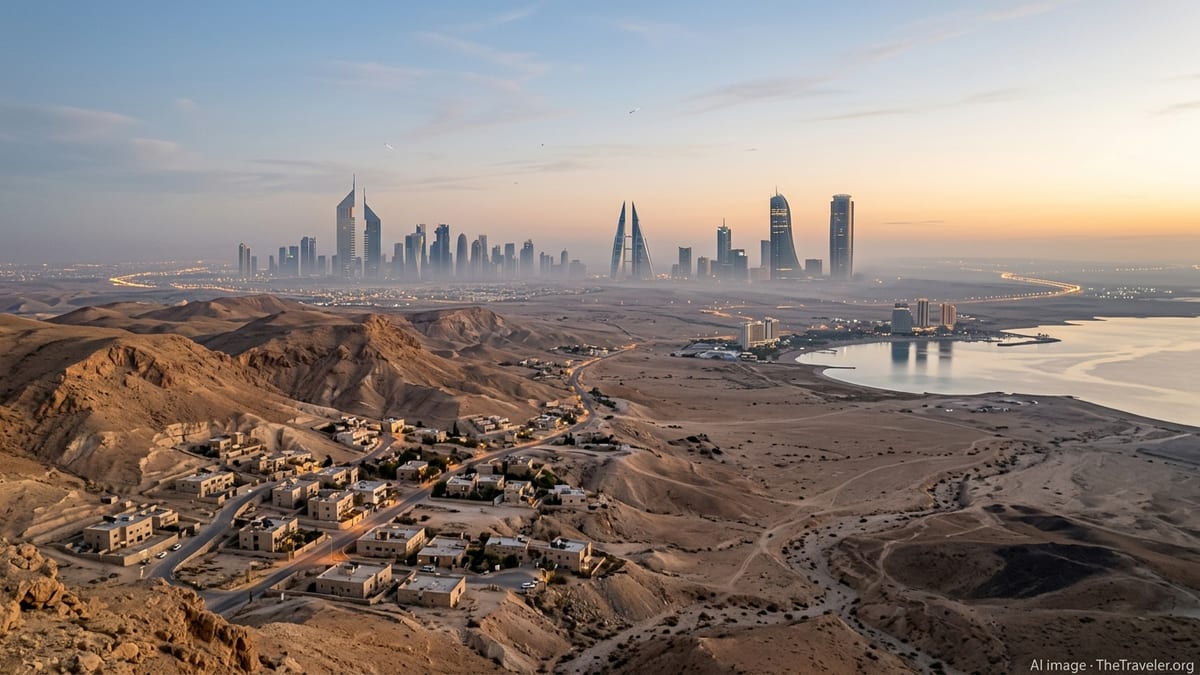
New Frontlines: Tourism Towns in the Crosshairs
Desert communities once marketed as tranquil escapes are now appearing in security briefings. Dimona, Arad, Beersheba, Mitzpe Ramon and Eilat in southern Israel all sit within a web of air raid alerts connected to the broader conflict involving Iran and regional militias. Travel forums and social media posts describe near-daily sirens in parts of the country and sporadic long-range strikes reaching toward the Negev, shifting perceived risk away from traditional flashpoints and toward once-sleepy desert towns.
Eilat, long sold as Israel’s Red Sea playground, has already experienced multiple drone incidents in recent years, including strikes that hit near Ramon Airport and resort areas. Publicly available information points to renewed attempts to target the region as regional tensions spike, even as many Israelis continue to flock south for holidays. Nearby Mitzpe Ramon and the crater landscapes around it, prized for stargazing and hiking, now feature in travel advisories that stress the importance of monitoring local instructions and shelter locations.
Further north in Beersheba and Arad, both important gateways to the Negev and the Dead Sea, travelers report a more austere security atmosphere, with civil defense procedures and siren protocols forming part of basic visitor briefings. While tourism infrastructure remains intact, the psychological impact of being under a potential flight path for missiles or drones is changing how tour operators market these cities and what insurance companies are willing to cover.
Dimona, better known internationally for its nuclear-related secrecy than for tourism, had started to position itself as a base for desert exploration and niche religious and heritage tourism. The current climate risks stalling that effort, as its name becomes more closely associated with regional escalation than with off-the-beaten-track travel.
Gulf Icons Under Fire: Dubai, Riyadh, Doha, Manama and Kuwait City
Across the Gulf, marquee cities that invested heavily in branding themselves as safe, high-end gateways are grappling with the optics and reality of direct strikes. Recent Iranian missile and drone barrages have hit sites in the United Arab Emirates, Saudi Arabia, Qatar, Kuwait and Bahrain, according to open-source monitoring and regional media coverage. These campaigns have included incidents near Dubai’s financial district, fuel facilities connected to Dubai International Airport and urban areas in Riyadh and Manama.
Reports indicate that air defense systems have intercepted the overwhelming majority of incoming projectiles, but the exceptions are highly visible: a fuel tank fire forcing temporary suspensions at Dubai’s main airport, debris damaging high-rise offices, and hotel complexes in Bahrain’s capital exposed to incoming fire. Kuwait and Qatar have also reported impacts or attempted attacks on industrial and urban areas, prompting wider security cordons and periodic disruption to normal city life.
These are not remote border zones. Dubai, Doha and Kuwait City are primary entry points for international visitors, particularly long-haul travelers from Europe, Asia and North America. Flight suspensions, reroutings and crowding at alternative hubs have been documented in airline statements and traveler accounts. Even short-lived closures can reverberate through global networks, leaving tourists stranded or facing lengthy diversions at a time when demand for Gulf stopovers and winter sun breaks remains high.
Riyadh and Manama, both working to accelerate tourism as part of wider economic diversification plans, now face the challenge of maintaining investor and visitor confidence while featuring regularly in conflict maps. The contrast is stark: promotional imagery of new museums, desert resorts and waterfront districts competing with footage of night skies lit by interceptors.
Religious Tourism: Pilgrimage Itineraries Under Strain
The Middle East’s layered religious heritage means that many of the affected areas are stepping stones for pilgrimage. In Israel and the Palestinian territories, Christian pilgrims often combine Jerusalem and Bethlehem with excursions to the Negev, the Dead Sea and occasionally Eilat or Mitzpe Ramon. Jewish religious tourism follows similar arcs, linking holy sites with heritage trips to southern communities and desert landscapes. Heightened rocket and drone activity has led operators to trim or reroute such itineraries, concentrating more time in central areas when security conditions allow, or postponing nonessential excursions altogether.
In the Gulf, Saudi Arabia’s role as host of the Hajj and Umrah is central to global Muslim mobility. While the primary pilgrimage sites in Mecca and Medina lie away from some of the directly targeted industrial facilities, Saudi cities including Riyadh and key energy hubs have reported incoming fire during the current escalation. Travel industry analysts note that any perception of sustained risk to domestic transport corridors or large gatherings could affect the pacing and logistics of pilgrimage seasons, even if core rituals continue under tight security.
Kuwait and Qatar host major mosques and Islamic learning centers that attract regional visitors, especially around Ramadan and Eid. Publicly available statements from Gulf officials in recent days have referenced restrictions on large outdoor holiday gatherings and temporary closures at some major mosques in response to the regional security situation. For visitors, this means traditional festival atmospheres may be muted, crowd management stricter and last-minute changes more likely.
Christian and interfaith tourism to Gulf states, still relatively niche but growing in cities like Dubai, Doha and Manama, is also affected indirectly. Conference organizers, church groups and cultural delegations are re-examining risk assessments for events that rely on smooth air links and a perception of insulation from front-line conflict.
How Governments and the Industry Are Responding
Publicly available information shows that regional governments are leaning heavily on layered air defense systems, hardened infrastructure and crisis communication to reassure residents and visitors. Gulf states have released aggregate figures highlighting the large share of incoming threats intercepted over major cities and strategic facilities. In parallel, Israel continues to rely on its established multi-tiered missile defense architecture, which has long been a selling point in its tourism messaging during periods of unrest.
Tourism boards and airlines are adjusting in real time. Some Gulf carriers have temporarily suspended or rescheduled flights during peak attack windows, then moved quickly to restore service. Hotel groups in affected cities are emphasizing internal shelter procedures, reinforced structures and coordination with local guidance, while also promoting flexible booking policies to limit cancellations. In southern Israel, smaller guesthouses and desert lodges have introduced clearer information about nearby shelters, siren apps and contingency plans for guests unused to such environments.
Insurance companies and corporate travel managers are updating risk ratings across the region, sometimes differentiating between front-line border areas, major capitals and interior desert destinations. This more granular approach can preserve certain forms of travel, such as tightly managed pilgrimage or business visits to financial districts, while still acknowledging elevated risk in specific corridors or at certain times.
At the same time, global travel demand patterns are shifting. Analysts tracking booking data note softening interest in discretionary leisure trips to parts of the Middle East that feature heavily in conflict coverage, balanced by resilient or redirected flows to countries viewed as more insulated from the immediate confrontation.
What Travelers Should Watch Right Now
For would-be visitors, the new reality across Israel and the Gulf is less about blanket closures and more about volatility. Flight status, local restrictions and the safety profile of specific cities can change quickly in response to overnight developments. Travel experts recommend monitoring government advisories from both home countries and destinations, as well as airline and airport announcements, in the days and hours before departure.
Travelers considering itineraries that include desert hubs such as Dimona, Arad, Beersheba, Mitzpe Ramon or Eilat, alongside Gulf metropolises like Dubai, Riyadh, Doha, Kuwait City and Manama, may find that packaged tours and group programs are narrowed to core urban centers or postponed entirely. Solo travelers are increasingly relying on real-time information from local media and online communities to understand which neighborhoods are experiencing alerts, how public transport is operating and whether cultural or religious sites remain open.
Religious tourism organizers, particularly those coordinating large pilgrim groups, are urged by industry bodies to build in greater flexibility: backup routing through alternative hubs, contingency dates, and clear communication plans for participants if itineraries must be altered on short notice. Smaller, more agile groups may have an easier time adapting, but they are equally exposed to sudden disruptions in airspace or urban security postures.
Despite the heightened risk, regional travel has not stopped. Many residents continue to move for work, family visits and worship, adapting to sirens and interceptions as an unwelcome but incorporated part of daily life. For international visitors, the key question in the coming weeks is whether the evolving conflict remains a backdrop that can be managed with careful planning, or whether further escalation around these desert and religious tourism hubs pushes them off the map for all but essential travel.