

More news on this day
As tourist arrivals in Mizoram climb at one of the fastest rates in India’s Northeast, local institutions and planners are racing to ensure the expected 2026 wave strengthens rather than dilutes the state’s distinctive Mizo identity.
Get the latest news straight to your inbox!
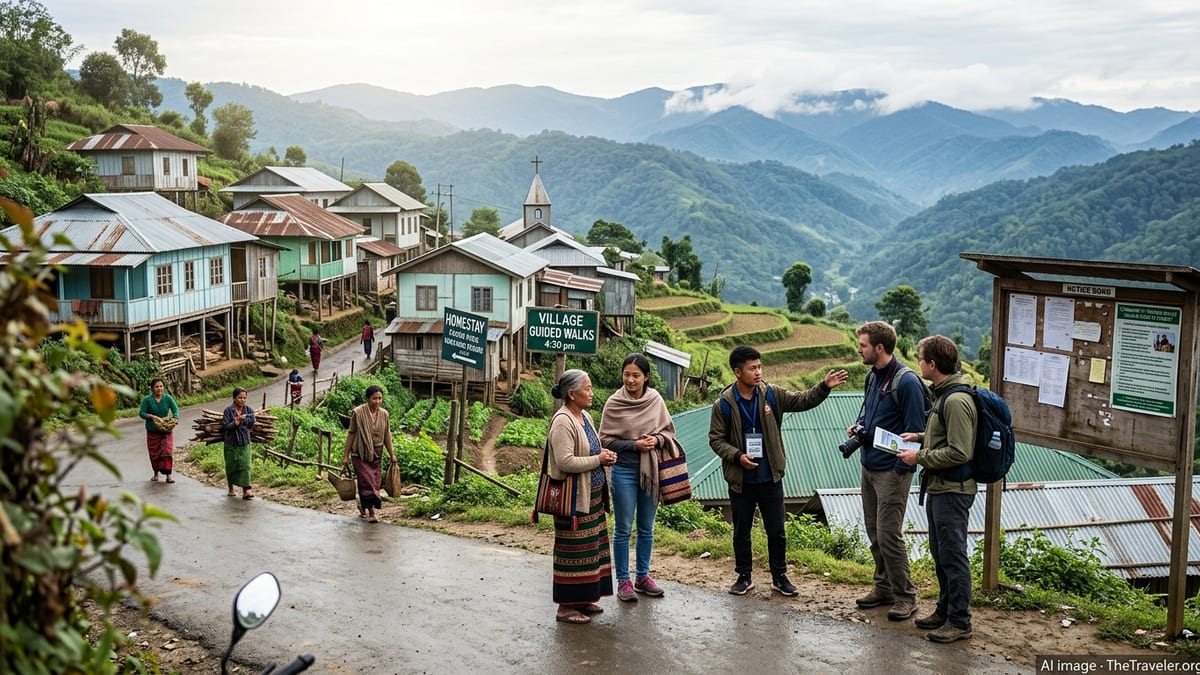
Tourism surge puts spotlight on cultural resilience
Recent visitor data and sectoral surveys indicate that Mizoram has moved from a relatively niche destination to one of the region’s fastest-growing tourism markets, with arrivals more than doubling between 2023 and 2025. Forward-looking projections for 2026 point to sustained growth, driven by improved connectivity, word-of-mouth interest in the state’s forested landscapes and cultural festivals, and national campaigns promoting the Northeast as a high-value travel corridor.
This acceleration has prompted growing public debate within Mizoram about how to balance exposure with protection of language, customs and social norms. Commentaries in regional media and expert analyses from tourism researchers highlight concerns that unregulated mass visitation could strain small hill towns, disrupt traditional community life and trigger a wave of superficial cultural performances tailored mainly to outside expectations.
Against this backdrop, planners and local organisations are positioning the tourism surge as a test case for whether a small state can leverage growth while keeping control of its own narrative. Emerging strategies place cultural authenticity and community consent at the centre of destination planning for 2026 and beyond.
Community, Authenticity, Nature: A de facto CAN framework
Policy documents, master plans and recent tourism events in Mizoram point to a de facto CAN framework built around Community, Authenticity and Nature as guiding pillars for the sector’s next phase. Community refers to local ownership of tourism decisions and benefits; Authenticity stresses that experiences should reflect lived Mizo culture rather than staged replicas; and Nature foregrounds low-impact travel in fragile mountain and forest ecosystems.
Government planning papers and sectoral surveys emphasise community-based tourism, homestays and village-level circuits as key vehicles for this approach. Training programmes for village councils, youth groups and small entrepreneurs are being framed as a way to anchor tourism in local hands, from guiding and accommodation to crafts, food and transport services.
On the authenticity front, cultural and heritage tourism proposals call for strengthening existing village festivals, indigenous games and handloom traditions instead of creating entirely new attractions. Draft master plans for areas around Aizawl and award-winning tourism villages stress that visitor infrastructure should showcase vernacular architecture, local cuisine and everyday practices rather than imported themes.
The nature component of the framework is visible in eco-resort concepts, hiking and birding trails, and efforts to coordinate with environment and forest agencies. Publicly available information on recent travel festivals and tourism conclaves shows that Mizoram is increasingly branding itself as an “eco and nature retreat,” signaling that carrying capacity and conservation will be central to how 2026 demand is managed.
Grassroots codes of conduct and cultural safeguards
Beyond formal policy, civil society groups in Mizoram are taking visible steps to codify what respectful tourism should look like on the ground. In March 2026, a detailed advisory circulated by a prominent student organisation set out expectations for visitor behaviour, outlining dress norms in certain public spaces, guidelines around photography, and reminders about the importance of Sunday observance and community quiet hours in many localities.
The advisory, shared widely on local forums, frames these expectations not as barriers to tourism but as safeguards meant to prevent misrepresentation of Mizo culture. It stresses that hospitality should not be confused with permissiveness and calls for visitors to engage with communities on their own terms rather than treating the state as an exotic backdrop.
These bottom-up initiatives appear to complement official messaging about responsible tourism, reinforcing the idea that cultural identity is a shared asset rather than a commodity. Analysts of Northeast India’s social movements note that the assertiveness of student unions, women’s groups and church-based organisations has historically played a major role in shaping how outside influences are negotiated in Mizoram.
The emergence of locally drafted codes of conduct ahead of the peak 2026 season suggests that social consensus is forming around clearer boundaries, at a time when digital platforms are rapidly amplifying images and stories from the state to wider audiences.
Sustainable initiatives embed tourism in local economies
Parallel to cultural safeguards, a range of sustainable initiatives is being rolled out to ensure tourism growth feeds into local livelihoods. State economic surveys and sectoral focus papers describe schemes that link tourism with agriculture, handloom and small-scale manufacturing, under programmes designed to provide “handholding” for rural producers and youth entrepreneurs.
Homestay promotion, village-based guiding services and community-run facilities in scenic areas are being encouraged as relatively low-capital ways for households to participate in the visitor economy. In several flagship villages recognised at national level, tourism plans emphasise renovation of traditional houses, conservation of sacred groves and support for artisans, aligning income generation with heritage protection.
Academic work from tourism departments within Mizoram has also highlighted the long-term importance of community-based ecotourism models that share decision-making power and set participatory rules for resource use. These studies argue that such approaches are better suited to hill states where land, forest and water are intimately tied to local identities, and where rapid external investment could otherwise marginalise residents.
Recent national schemes supporting sustainable tourism in rural India, along with state-level awards for eco and nature retreats, are further embedding Mizoram within a national conversation about climate-sensitive development. For 2026, this means proposed projects are increasingly assessed not only for visitor potential but for their contribution to resilience, employment and social cohesion.
Positioning Mizoram in India’s evolving tourism landscape
Across India, central initiatives to identify model rural tourism clusters, develop iconic destinations and promote digital discovery of lesser-known regions are reshaping travel flows. Mizoram’s current trajectory positions it as a test case within this wider shift, especially for how smaller states can use tourism to project cultural confidence rather than vulnerability.
Sector observers point out that Mizoram’s relatively compact size, strong community institutions and high literacy rates can be advantages when coordinating tourism growth. At the same time, financial constraints and the fragility of hill infrastructure mean that unmanaged surges in visitor numbers could quickly overwhelm roads, waste systems and public services.
The emerging CAN framework, combined with new cultural advisories and sustainability-linked schemes, is therefore being watched as a potential blueprint for other destinations facing similar pressures. If the 2026 season confirms that visitor satisfaction can rise alongside community approval and environmental indicators, Mizoram could strengthen its reputation as both a distinctive place to visit and a reference point for responsible tourism policy.
For now, the state enters the new travel year with high expectations and clear stakes: harnessing momentum in a way that keeps the Mizo sense of place at the centre of every itinerary, from hilltop capital views to remote village stays.