

More news on this day
Bi-Courtney Aviation Services Limited, operator of Lagos’ Murtala Muhammed Airport Terminal 2, has introduced a new autism support training programme for frontline staff, positioning the busy domestic hub as a test case for more inclusive air travel in Nigeria.
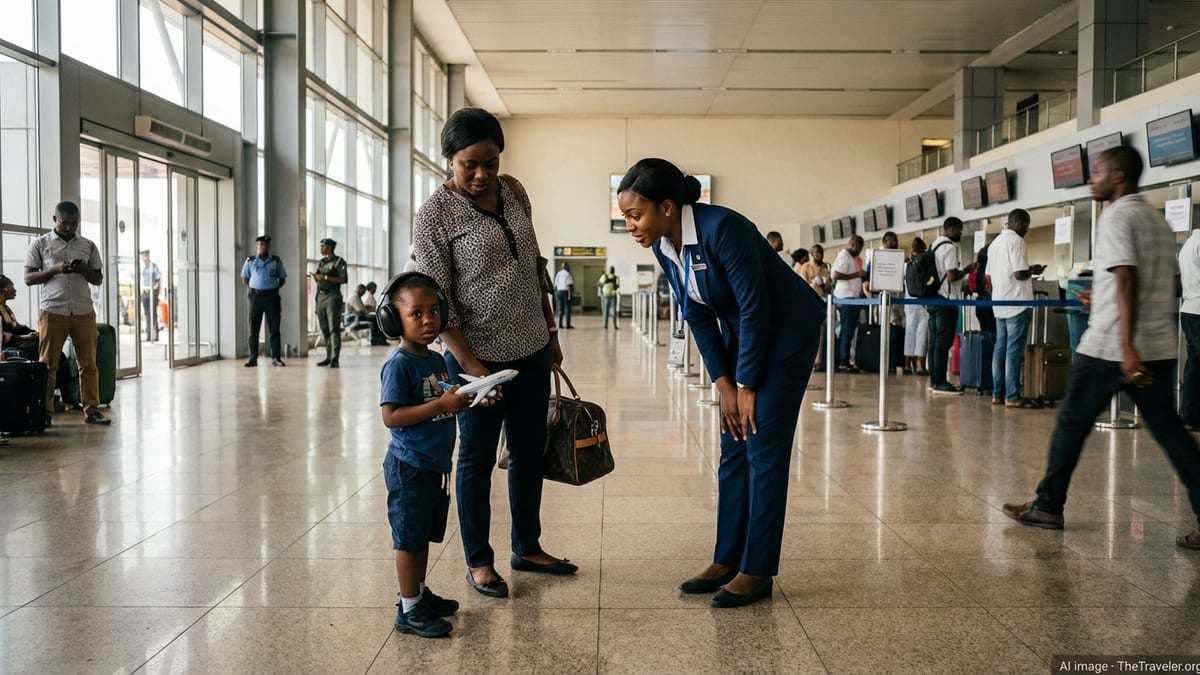
Africa’s Busiest Domestic Terminal Targets Neuroinclusive Travel
The autism sensitisation initiative, rolled out this week at MMA2, focuses on staff who have the most direct contact with travellers, from check-in and customer service counters to security points and boarding gates. The goal is to help employees recognise and respond appropriately to the needs of passengers on the autism spectrum, a group whose challenges are often hidden in crowded, noisy airport environments.
Bi-Courtney Aviation Services Limited, which runs MMA2 under a long-term concession with the Nigerian government, frames the move as part of a wider strategy to improve passenger experience and operational standards at one of West Africa’s key domestic gateways. Company executives say inclusive travel is emerging as a competitive differentiator for airports that want to be seen as modern, passenger-first facilities.
The training arrives as global attention to neurodivergent travellers grows, with airports in North America, Europe and parts of Asia rolling out “sensory maps,” rehearsal visits and quiet rooms tailored to autistic passengers. By formally introducing autism-focused training into its internal curriculum, MMA2 joins a small but expanding group of African terminals experimenting with similar support structures.
For Nigeria, where official data on autism prevalence remain patchy and public understanding of neurodevelopmental conditions is still evolving, the programme signals an effort to bring aviation service standards in line with international expectations around accessibility and non-discrimination.
Inside the New Autism Sensitisation Programme at MMA2
The autism support training at MMA2 is being delivered in partnership with Cradle Lounge Special Needs Initiative, a Lagos-based organisation that focuses on practical, family-centred support for children with developmental differences. Sessions are led by the group’s founder and executive director, Solape Azazi, a World Health Organization-certified caregiver skills trainer, who brings both technical expertise and lived experience as a parent advocate.
According to details released about the programme, airport staff are introduced to the fundamentals of autism, including the wide spectrum of communication styles, sensory sensitivities and behaviour patterns that autistic travellers may display. Particular emphasis is placed on the fact that autism has no physical marker, meaning many passengers who need support will not be immediately identifiable without careful, respectful observation.
Interactive modules guide participants through scenarios common at busy terminals: long queues, public address announcements, security checks and boarding calls. Staff practise identifying signs of sensory overload, such as visible distress, covering of ears, repetitive movements or sudden withdrawal, and are coached on how to respond in ways that de-escalate rather than inflame tense situations.
In addition to recognising distress, the course introduces practical communication strategies, including using simple, concrete language, allowing extra processing time, checking for understanding without patronising, and engaging caregivers as partners in problem-solving. Trainers encourage teams to think beyond scripted customer-service responses and instead adopt a mindset that prioritises dignity, predictability and emotional safety for anxious travellers.
BASL Management Pitches Inclusion as Core to Service Excellence
Senior executives at Bi-Courtney describe the autism initiative as part of a long-running effort to reposition MMA2 as a benchmark for private-sector airport management in Nigeria. Acting Chief Operating Officer and Head of Space and Premises Management, Kola Bamigboye, has framed the training as a natural extension of the terminal’s focus on comfort and safety, noting that air travel can be uniquely overwhelming for autistic passengers because of noise, crowds, bright lighting and unfamiliar procedures.
For the company, the business case is straightforward. By equipping front-of-house teams with specific skills to support neurodivergent travellers, BASL expects to reduce the number of stressful incidents at checkpoints and boarding gates, shorten resolution times when issues arise and build loyalty among families who often plan journeys around which airports feel safest and most predictable.
Head of Human Resources and Administration, Feyikemi Fadeyibi, has linked the training to a broader philosophy that “people are at the heart of the passenger experience.” In internal communications, she has argued that technical competence alone is no longer enough for staff working in high-volume passenger terminals, where emotional intelligence and empathy can directly influence operational outcomes, from on-time performance to customer satisfaction scores.
The company’s Training Academy, established in 2019 and accredited by the Nigerian Civil Aviation Authority as an aviation security training provider, already delivers a roster of safety, security and customer-care courses to staff and external clients. Management says the autism module will be woven into this existing structure, signalling that inclusive service skills are as integral to the job as X-ray screening, first aid or emergency response.
From Security-First Culture to Holistic Passenger Wellbeing
MMA2 has spent much of the past decade building a reputation for tight security and orderly operations, frequently highlighting investments in closed-circuit cameras, body-worn devices for guards and strict protocols for protocol agents and concessionaires. Public statements from Bi-Courtney have repeatedly stressed a zero-tolerance stance toward unruly behaviour, touting and any conduct that threatens safety or disrupts airport activities.
The new autism support initiative does not dilute that security-first posture; rather, it expands the definition of safety to include emotional and sensory wellbeing. Where earlier messages focused on deterring misconduct, current training materials encourage staff to distinguish between deliberate non-compliance and behaviour rooted in anxiety, confusion or sensory overload, particularly in children and young adults.
Security officers and aviation safety teams are being asked to see themselves not only as enforcers of regulations but also as guardians of a psychologically safer environment. That includes recognising when a firm, public confrontation may escalate a situation for an autistic traveller, and when a quieter, more private approach, possibly involving a caregiver, might be more effective.
BASL managers argue that this shift is consistent with global aviation trends, where regulators increasingly expect airports to address hidden disabilities, including autism, dementia and mental health conditions, through tailored services and staff training. For MMA2, layering autism awareness onto its existing safety and security framework is presented as a way to protect both passengers and staff while reducing the risk of misunderstandings that can spiral into conflicts.
Global Momentum Toward Autism-Friendly Airports
The Lagos initiative arrives amid a wave of autism and neurodiversity programmes at airports worldwide. In recent years, hubs from Portland and Phoenix to Dublin, Manchester and Singapore have experimented with rehearsal days that allow families to “practise” flying, airport scavenger hunts that familiarise autistic children with security lanes and boarding gates, and sensory rooms that offer a calm retreat from terminal noise.
Airlines and airport authorities have also collaborated with autism advocacy groups to produce visual guides, social stories and step-by-step videos that demystify the journey from check-in to baggage claim. Specialist training sessions for security agents and ground-handling staff have been rolled out in partnership with autism societies, often framed as part of broader disability inclusion or “hidden disabilities” campaigns.
Advocates say such efforts remain scattered and uneven, but the direction of travel is clear. As more families feel comfortable seeking diagnoses and pushing for accommodations, airports are being challenged to translate high-level commitments to accessibility into specific practices, from queue-jump options and quiet boarding to alternative screening procedures for travellers who cannot tolerate certain equipment.
By launching a structured training programme with an external specialist, MMA2 is aligning itself with this international movement while adapting it to local realities. The hope, according to people involved in the initiative, is that Nigeria’s other major terminals will watch closely and eventually adopt similar models, creating a more consistent experience for neurodivergent travellers across the country’s aviation network.
What Autistic Travellers and Families Can Expect at MMA2
While the autism training at MMA2 is still at an early stage, airport managers say passengers should gradually notice changes in how staff respond to visible distress or unusual behaviour. Check-in agents, customer-service representatives and security officers who have completed the course are expected to slow down interactions when necessary, offer concise explanations of upcoming steps and look for ways to reduce sensory triggers, such as moving a family to a quieter corner of a waiting area.
Families travelling with autistic children may find staff more open to requests for flexibility, including additional time at security checkpoints, advance explanation of procedures, or discreet assistance in navigating crowds during peak travel periods. The training encourages employees to treat caregivers as experts on the individual child or adult, rather than as bystanders, and to ask simple, respectful questions about what might help in a difficult moment.
Although no major infrastructure changes have been announced alongside the training, the programme does touch on how existing spaces can be used more inclusively. Staff are urged to identify relatively calm zones within the terminal, manage lighting where possible and minimise sudden loud stimuli within their control. As the initiative evolves, airport planners are expected to review whether future refurbishments or new lounges can incorporate designated quiet areas or clearer wayfinding for travellers who struggle with complex signage.
Autism advocates note that the most meaningful improvements often come from cumulative small adjustments rather than dramatic new facilities. If consistently applied, shifts in tone, pacing and empathy from airport staff can significantly reduce the strain of flying for neurodivergent passengers, even in terminals that remain busy and acoustically harsh.
Training Academy as a Platform for Wider Inclusion
MMA2’s in-house Training Academy gives BASL a ready-made platform to embed autism awareness into everyday professional development rather than treating it as a one-off campaign. Located within the terminal complex and equipped with classrooms, virtual training capabilities and accessibility features, the academy already hosts courses on aviation security, fire safety, emergency management and behavioural skills such as leadership and emotional intelligence.
By collaborating with Cradle Lounge Special Needs Initiative, the academy can integrate practical case studies drawn from Nigerian families and real interactions at Lagos airports, making the content more relevant to staff than generic international templates. Trainers say the aim is to normalise conversations about neurodiversity in the workplace, encouraging employees to share experiences and ask questions without fear of saying the wrong thing.
BASL has indicated that the autism module may eventually be offered to airline partners, concessionaires and other stakeholders operating at MMA2, from restaurant staff to ground handlers and retail workers. If that happens, a larger share of the terminal community would be working from the same playbook when it comes to recognising and supporting autistic travellers, closing gaps that can currently appear as passengers move between different service providers.
Over time, management hopes to collect feedback from passengers, staff and advocacy groups to refine the curriculum, measure impact and decide which additional elements of inclusive travel training should be prioritised next, whether that is dementia awareness, support for travellers with intellectual disabilities or better assistance for people with anxiety disorders.
Setting a Benchmark for Inclusive Aviation in Nigeria
Industry observers say MMA2’s autism support initiative could help shape emerging standards for inclusive aviation in Nigeria, particularly as regulators, airlines and private operators grapple with how to interpret international obligations on accessibility in a local context. While the country has signed on to global disability rights frameworks, practical implementation in transport hubs has often lagged behind policy rhetoric.
If the programme proves effective, it may influence how future terminal concessions and upgrades are evaluated, with emphasis not only on commercial feasibility and security, but also on inclusive design and customer-service innovation. Airports that can demonstrate credible plans for serving passengers with hidden disabilities may find it easier to attract airline partners, international recognition and, potentially, development financing.
For travellers, especially families living with autism, the impact will be measured less in policy documents and more in everyday interactions: how staff respond when a child melts down at security, whether a teenager overwhelmed by noise is offered a place to regroup, or how quickly misunderstandings are resolved when communication breaks down. Those moments, often invisible in official statistics, can determine whether a journey feels survivable or impossible to attempt again.
By placing autism awareness on the training agenda for its frontline staff, MMA2 is wagering that a more empathetic, informed workforce is not just good ethics but good business. In a region where air travel demand is growing and competition among hubs is intensifying, the Lagos terminal is betting that inclusive travel will be part of what defines the next generation of successful airports.