

Colorado is a dream destination for road trippers, hikers, and powder chasers, but its dramatic mountains and wide-open plains can be tough on mobile reception. Travelers who arrive expecting flawless 5G from Denver to the most remote trailhead are likely to be disappointed. Coverage is generally strong where people live and work, but once you head into high country or across sparsely populated plateaus, blank spots on the map appear quickly. Understanding how coverage works here, and what the major networks realistically deliver, can help you plan smarter and stay connected where it matters most.
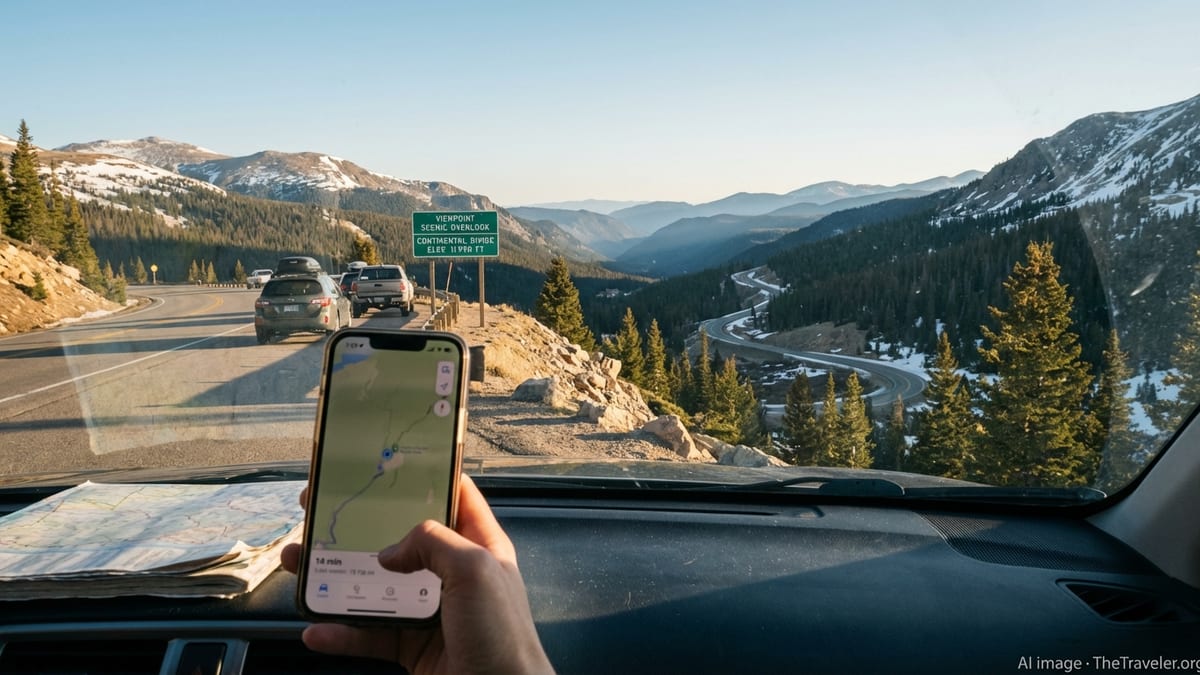
The Big Picture: How Good Is Colorado’s Mobile Coverage?
Across Colorado as a whole, mobile coverage is relatively strong, but it is not as seamless as in many coastal or more densely populated states. Independent analyses of state-wide service consistently find that the three national networks cover a high percentage of populated areas, with Verizon and AT&T typically neck and neck for overall reach and T-Mobile close behind. One recent estimate puts average statewide coverage among the major networks at roughly the high 70s to low 90s percent range, depending on the provider and whether you include both 4G LTE and 5G service. This translates to solid reliability in cities, suburbs, ski towns, and along interstates, but still leaves sizable pockets with weak or no signal.
Rankings that compare all 50 states and several territories usually place Colorado in the middle of the pack for reception quality. Some reports rank it in the low to mid 30s out of the states for overall cell reception, while others place it in the 40s when mobile and broadband access are evaluated together. In practice, this means Colorado is not a connectivity backwater, but its rugged geography and large rural areas create more gaps than travelers might encounter in, say, the Northeast or parts of the Midwest.
The most important nuance for visitors is that coverage is not evenly distributed. The Front Range corridor from Fort Collins through Denver to Colorado Springs is dense with towers and frequently upgraded, with extensive 5G rollouts already in place. Popular resort valleys, including the areas around Vail, Breckenridge, Aspen, and Steamboat Springs, also have comparatively strong coverage given their remote settings. In contrast, vast portions of the Western Slope, San Luis Valley, and high mountain basins remain spotty, especially away from main roads. Travelers need to think less in terms of statewide percentages and more in terms of specific routes and destinations.
For many visitors, the key takeaway is that your phone will probably work well in and between major towns, but you should fully expect stretches of limited or non-existent coverage as soon as you drive into narrow canyons, cross remote passes, or hike away from ski area bases and trailhead parking lots. Planning around those dead zones, rather than assuming complete coverage, is essential to a smooth Colorado trip.
How the Major Carriers Perform in Colorado
All three national carriers have invested heavily in Colorado, but they excel in slightly different ways. Surveys that blend government data, crowdsourced signal reports, and carrier disclosures generally show Verizon and AT&T with the broadest statewide coverage footprint, followed very closely by T-Mobile. One analysis that focuses on geographic reach puts Verizon’s overall presence in Colorado just above 90 percent of the state, with AT&T essentially tied and T-Mobile only a few percentage points behind. The differences often matter less in cities and more in marginal areas where one network may reach a particular valley or town better than the others.
When it comes to 4G LTE coverage, independent testing and mapping still tend to favor Verizon and AT&T, especially in rural and mountainous regions. Their legacy low-band spectrum and longer history of building out remote sites mean that highway corridors, small farming communities, and energy towns often see stronger LTE service on these networks. T-Mobile’s LTE footprint has grown significantly in recent years and performs well in most population centers, but it can lag in far-flung corners of the state where all carriers still rely on older infrastructure.
The 5G story is more nuanced. T-Mobile has aggressively rolled out wide-area 5G using lower-band spectrum, and some assessments give it the largest 5G footprint by land area in Colorado. AT&T has been expanding its 5G presence too, particularly around major cities and travel hubs, while Verizon’s ultra-fast 5G is heavily concentrated in dense urban cores and specific venues, with more limited reach in rural settings for now. For travelers, these differences matter most if you rely on high-bandwidth tasks such as tethering laptops, uploading media on the go, or working remotely from the road.
Ultimately, visitors should not choose a carrier for a Colorado trip solely on statewide percentages or 5G marketing. Local performance can be highly specific. A mountain town may favor one network due to tower placement, while a neighboring valley performs better on another. Before a trip, it is wise to plug the exact towns and zip codes on your itinerary into independent coverage map tools, compare several carriers, and, if possible, ask recent visitors or local businesses which network tends to work best in that area.
Cities, Ski Towns, and Highways: Where Coverage Is Strongest
Travelers who stick primarily to Colorado’s main population centers will experience some of the state’s best mobile performance. Along the Front Range, roughly from Fort Collins through the Denver metro area to Colorado Springs and Pueblo, all three major carriers offer dense coverage, including extensive 5G overlays. Urban and suburban neighborhoods, shopping districts, stadiums, and major attractions typically have strong signals and high data speeds, even during busy events. Visitors using their phones for navigation, rideshare apps, restaurant searches, and video calls will rarely encounter serious issues in these corridors.
Colorado’s marquee ski and resort towns are also comparatively well connected, particularly around their central villages and lodging areas. The hubs of Vail and Beaver Creek, Breckenridge, Keystone, Winter Park, Steamboat Springs, Aspen and Snowmass, and Telluride have been prioritized by carriers because they attract seasonal waves of high-spending visitors who expect reliable service. Around base areas, in-town lodging, and along primary access roads, you can generally count on at least a usable LTE signal from one or more carriers and often have access to mid-band or low-band 5G.
Major highway corridors form another backbone of reliable coverage. Interstates 25 and 70 are heavily served, particularly near cities and well-traveled stretches between them. Important US highways, including routes like US 36 between Denver and Boulder and US 285 and US 50 through mountain valleys and high plateaus, also tend to have reasonable coverage in their busier sections. Long-distance road trippers can normally rely on their phones for navigation, fuel and lodging searches, and basic messaging as long as they remain on these main roads.
That said, even on interstates, coverage is not absolutely continuous. Sections of I 70 that burrow through the Rockies, including areas around deep canyons and tunnels, can exhibit brief or extended signal drops, particularly in winter when conditions are harsh and traffic is heavy. On two-lane mountain highways that serve ski areas, passes, and recreation spots, coverage often fluctuates between full bars and dead zones mile by mile. Drivers should use offline maps as a backup and avoid assuming that emergency calls or navigation will always be available in real time.
Mountains, Canyons, and Parks: Where Coverage Fades
Colorado’s marquee natural landscapes are precisely where mobile coverage becomes unreliable. Steep mountain walls, tight canyons, and high alpine ridges can block line-of-sight to cell towers, while low population density limits the economic incentive to build new sites. Even where carriers claim nominal coverage on a state-level map, real-world service inside deep valleys or behind ridgelines will often be intermittent or absent. For travelers who prioritize wilderness, this is one of the most important realities to understand before heading out.
Rocky Mountain National Park is a clear example. The National Park Service explicitly warns visitors not to rely on mobile phones inside the park and notes that many locations have no service at all. While some signals may be available near major entrances and visitor centers, large portions of the high country, including alpine passes along Trail Ridge Road and remote trail corridors, remain effectively off the grid for standard consumer networks. Similar conditions prevail in other high-elevation parks and wilderness areas scattered across the state.
Down on the Western Slope and in the canyon country of western Colorado, terrain can be just as challenging for signals. River canyons, sandstone walls, and remote mesas along scenic byways create pockets where even a powerful tower may not penetrate. Popular destinations such as sections of the Colorado National Monument, Black Canyon of the Gunnison National Park, and remote Bureau of Land Management lands often see little to no reliable mobile coverage once you leave the main highway or visitor parking lots. Hiking, mountain biking, rafting, and off-road routes in these regions should all be planned with the assumption that you may be out of contact for hours at a time.
Southern and central mountain landscapes present similar patterns. In the San Juan Mountains around Ouray, Silverton, and Lake City, coverage is generally fair in town centers but quickly disappears along backcountry jeep roads and high passes. The San Luis Valley and other wide basins may show nominal coverage on maps but still experience patchy performance due to long distances between towers and atmospheric conditions. In these environments, even a short drive off the main route can change reception from usable to nonexistent in a matter of minutes.
5G, Rural Broadband Efforts, and What They Mean for Travelers
Colorado has seen rapid expansion of 5G networks in recent years, particularly in major cities and along transportation corridors. T-Mobile, AT&T, and Verizon have all deployed some mix of low-band, mid-band, and high-band 5G across the Front Range and in select resort towns, often layering new technology on top of existing LTE. For many travelers, this means faster downloads and more reliable tethering in places such as downtown Denver, the Denver International Airport vicinity, Colorado Springs, and some of the larger resort hubs during peak season.
At the same time, travelers should temper expectations about 5G in rural or high-mountain areas. Independent mapping suggests that, while a growing percentage of Colorado’s land area now has formal 5G coverage, the most robust service is still concentrated in and near population centers. Expansive rural areas may appear as 5G on carrier marketing maps but in practice may behave more like enhanced LTE, with speeds and reliability varying substantially. The sheer size of Colorado, combined with the cost of adding new rural towers, means that the full benefits of next-generation networks will take years to reach many remote destinations.
Complementing commercial 5G rollouts, various federal and state programs are pushing to improve mobile and broadband access in underserved Colorado communities. Data from the Federal Communications Commission’s broadband collection and derivative mapping tools show incremental gains in coverage across the state, often due to new sites in smaller towns and along secondary roads. These projects are narrowing some of the worst connectivity gaps and improving service in communities that serve as gateways to outdoor recreation, such as small ranching towns and former mining communities that now host trailheads and river access points.
However, it is important to understand that these improvements are designed primarily for year-round residents and local economies rather than as a blanket safety net for backcountry travelers. New towers may bring solid 4G or 5G to a town center, but they do not necessarily extend deep into nearby wilderness or canyon systems. Even as coverage improves, visitors should continue to plan for areas of no service whenever they leave pavement or drive beyond the last mailbox on a rural road.
Safety, Navigation, and Staying Connected Off the Grid
Because mobile coverage in Colorado is highly variable, trip safety and communication planning should assume that your phone may not work when you most need it. This is particularly true for solo travelers, winter visitors, and anyone venturing onto unpaved forest roads or hiking into the backcountry. The absence of signal is not just an inconvenience for social media. It can complicate everything from basic navigation to calling for help in an emergency.
For navigation, travelers are wise to download offline maps from their preferred app before leaving a coverage area. Many navigation platforms allow users to store entire regions for use without data, enabling turn-by-turn guidance even when the network drops. Paper maps or printed directions remain valuable backups in areas with complex forest road networks or multiple unmarked junctions. Because GPS itself does not depend on mobile data, your phone can still show your approximate position on a pre-downloaded map even in flight mode, which can be invaluable in fog, snow, or on featureless plateaus.
Those who plan extensive off-grid travel, such as multi-day backpacking trips, long overland journeys, or remote ski tours, should consider carrying a dedicated satellite communication device. Lightweight satellite messengers and emergency beacons can send basic text messages and SOS alerts from almost anywhere with a view of the sky, independent of cell towers. In many parts of Colorado, especially in national parks and designated wilderness, land managers strongly encourage visitors to carry such devices or at least leave detailed itineraries with a trusted contact who will alert authorities if you do not return as planned.
Even in areas with sporadic coverage, small behavior changes can improve your chances of staying connected. Making calls or sending key messages while you are still in towns or at known coverage points, rather than waiting until you reach a trailhead, can ensure critical information goes out. Keeping phone batteries warm and conserving power in cold conditions by using low-power modes and minimizing screen time helps avoid dead devices during long days outdoors. Treat mobile service in remote Colorado less as a guarantee and more as a bonus when it appears.
Emergency Services, FirstNet, and What Visitors Should Know
Behind the scenes, Colorado’s first responders increasingly rely on a dedicated public safety broadband platform known as FirstNet, which operates in partnership with AT&T. In recent years, FirstNet coverage in Colorado has expanded significantly, with officials describing growth of the dedicated network footprint by roughly half since its initial deployment. New sites in rural and mountain communities have been built in direct response to feedback from local agencies about where communication gaps most affect search and rescue, wildfire response, and law enforcement.
This expansion is important context for visitors, but it does not mean that regular consumer phones will have the same level of connectivity as emergency crews. FirstNet provides priority and, when necessary, preemptive access to network resources for authorized public safety users. In practical terms, that helps keep police, fire, and medical communications functioning during major incidents, large events, or natural disasters when regular consumer networks might be overloaded or partially down. In some rural counties, FirstNet-specific portable systems have been deployed to restore connectivity temporarily during planned power outages or emergencies.
For travelers, the practical takeaway is that the 911 system in Colorado is robust, but not infallible. If you are in an area with no signal on any carrier, your phone will not be able to place a call, regardless of emergency priority. In marginal areas, a 911 call may be able to roam onto any available network, even if it is not your home carrier, which increases the odds of connecting. However, in very remote backcountry or deep canyon settings, there may simply be no cellular coverage at all. This reality reinforces the value of satellite devices and conservative trip planning.
Visitors should also be aware that some mountain communities rely on volunteer or part-time emergency responders who cover large territories with limited resources. A delayed or failed call due to lack of coverage can have outsized consequences in such areas. Checking with local visitor centers, ranger stations, or sheriff offices about known dead zones along your planned route, as well as posted emergency procedures in parks and recreation areas, can provide a clearer picture of what to expect.
Practical Tips for Travelers Choosing a Plan for Colorado
For most travelers, the best strategy is less about switching carriers and more about understanding how your existing plan is likely to perform in Colorado. If you already use one of the major national networks, you can expect solid service in cities, major towns, and along interstates. Before your trip, use your carrier’s coverage map and at least one independent crowdsource-based map to check specific areas like national parks, ski resorts, or scenic byways on your itinerary. Where maps show weak or absent coverage, plan for offline navigation and limited connectivity.
Short-term visitors who are particularly concerned about coverage might consider a temporary or backup option, such as an eSIM from a different carrier that is known to perform well in the areas they plan to visit. Dual-SIM phones allow you to keep your home number active while benefiting from local network strengths. This can be especially useful for remote workers or content creators who need redundancy to stay online in key locations, such as while passing through Denver or spending several days in a well-connected resort town.
It is also worth checking the fine print of your plan regarding roaming, hotspot allowances, and throttling thresholds. In parts of Colorado near state borders or tribal lands, phones may occasionally connect to partner networks or small regional carriers, and using your phone as a hotspot for laptops or tablets can quickly eat through high-speed data allocations. Understanding when your speeds might be reduced, or whether roaming is capped, helps avoid surprises while you are far from home.
Finally, remember that sometimes the best plan is simply to embrace being offline. Many of Colorado’s most memorable experiences unfold in places where bars on your phone are sparse or nonexistent. Letting friends and family know ahead of time when you expect to be out of contact, scheduling check-in times around known coverage points, and preparing for analog navigation can turn potential connectivity frustrations into a more relaxed and intentional travel rhythm.
The Takeaway
Mobile coverage in Colorado reflects the state itself: modern, growing, and well-connected in its bustling front-range cities and resort hubs, but rugged and unpredictable once you head into the mountains or across high plains. The major carriers all provide extensive 4G LTE and growing 5G service in populated areas, yet there are still many pockets where terrain and low population density leave travelers without a signal. No network can provide truly seamless coverage from downtown Denver to the most remote trail in the San Juan Mountains.
For travelers, the smartest approach is to plan around this reality rather than fight it. Use coverage maps for specific destinations, download offline navigation, consider satellite backup if your adventures will take you far from paved roads, and communicate your plans to others before entering known dead zones. In doing so, you can enjoy the best of both worlds: the convenience of high-speed mobile connectivity where it exists and the freedom that comes from accepting pockets of disconnection in some of the most beautiful landscapes in the American West.
FAQ
Q1. Will my phone work everywhere I travel in Colorado?
In cities, larger towns, and along major highways, your phone will almost always work. In mountain passes, deep canyons, national parks, and remote backroads, you should expect areas with weak or no signal, regardless of carrier.
Q2. Which carrier has the best overall coverage in Colorado?
Independent analyses typically show Verizon and AT&T with slightly broader overall reach, with T-Mobile close behind and leading in some 5G metrics. Local performance is highly location-specific, so the best carrier can vary from one valley or town to the next.
Q3. Is 5G widely available for travelers in Colorado?
5G is increasingly common in Front Range cities and some resort towns, and along certain highway corridors. In rural areas and high mountain regions, travelers are still more likely to rely on 4G LTE or experience no service at all.
Q4. Can I rely on my phone for navigation in the mountains?
You can often use mobile navigation on major routes and near towns, but service can drop suddenly in remote areas. Download offline maps and carry paper backups for longer drives or backcountry trips to avoid getting stranded without directions.
Q5. Will I be able to call 911 if I do not have service with my carrier?
If any carrier’s signal is present, your phone may connect to 911 via another network, even if it is not your provider. In many remote areas, however, there is simply no cellular coverage at all, so a call may not go through.
Q6. How is coverage inside Rocky Mountain National Park?
Coverage in Rocky Mountain National Park is limited and highly variable. Some entrances and visitor centers may have a signal, but large portions of the park, including high alpine areas and many trails, have little to no service.
Q7. Do ski resorts in Colorado have reliable mobile coverage?
Most major ski resorts have good coverage in base areas, villages, and nearby towns, and often some service on main lifts. Once you move into sidecountry, back bowls, or surrounding national forest terrain, coverage can deteriorate or disappear.
Q8. Should I bring a satellite communicator for my Colorado trip?
If you plan to backpack, overland on remote forest roads, ski tour away from resorts, or spend significant time far from towns, a satellite messenger or emergency beacon is a smart safety investment. For city-focused or highway-based trips, it is less essential but still useful if you value redundancy.
Q9. How can I check coverage for specific towns or routes before I go?
Use your carrier’s official coverage map and supplement it with at least one independent, crowdsourced map. Enter exact towns, parks, and highways on your route to see where gaps are likely, and ask recent visitors or local businesses about real-world performance.
Q10. Will coverage in Colorado continue to improve?
Yes. Carriers and public programs are steadily adding new sites and expanding 5G, especially in growing towns and along busy travel routes. However, the most remote mountains, canyons, and wilderness areas are likely to remain largely off the grid for the foreseeable future, so travelers should continue to plan for limited connectivity in those places.