

Landing in Hong Kong today, you step into one of the most advanced payment ecosystems in Asia. Contactless cards, mobile wallets and local apps dominate everyday transactions, yet cash still matters in traditional markets, smaller eateries and some transport links. Knowing when to reach for cash, when to tap your card and how to avoid unnecessary fees will make your time in the city smoother and often cheaper.
The Big Picture: How Hong Kong Handles Money Now
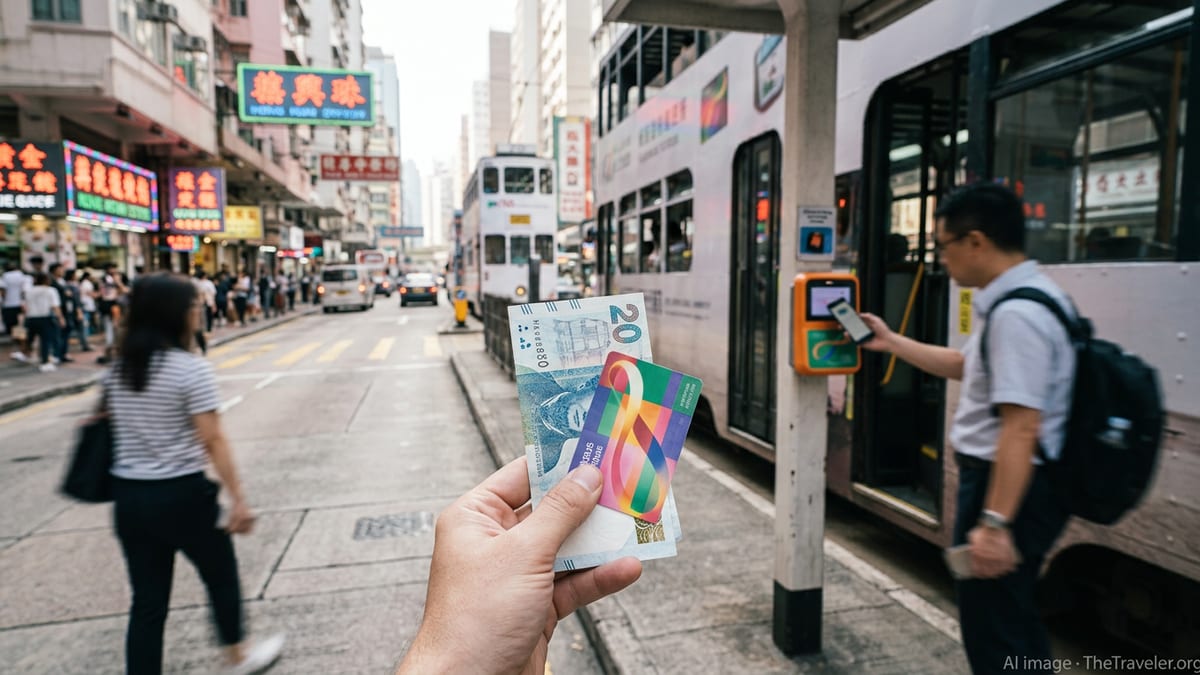
Hong Kong has long been a financial hub, and that sophistication is increasingly visible at street level. Locals routinely pay by tapping an Octopus stored-value card, using QR-code wallets such as AlipayHK and WeChat Pay, or swiping international credit cards in malls and hotels. At the same time, cash remains familiar and widely accepted, especially in traditional neighborhoods, street markets and small, family-run restaurants. For visitors, this blend can be confusing at first glance.
In practice, most tourists find they can rely primarily on cards and digital payments for larger or more formal purchases, while keeping a modest amount of Hong Kong dollars for cash-only situations. The city’s banking sector is dense, with plentiful ATMs connected to global networks and a well-regulated currency regime that keeps the Hong Kong dollar closely tied to the US dollar. This means exchange rates tend to move within a narrow band, and currency conversion is usually straightforward for major currencies.
The main adjustment for many travelers is understanding where international cards work seamlessly and where local systems such as Octopus still offer a faster or more reliable experience. Because Hong Kong is upgrading its transport and retail infrastructure rapidly, information that was true before the pandemic may no longer reflect reality. Recent years have seen expanded acceptance of contactless bank cards on the MTR metro system and buses, and more small merchants experimenting with QR and tap-on-phone acceptance, even if cash and Octopus remain their default.
With a bit of planning, you can arrive with one or two fee-friendly cards, set up access to ATMs, and decide how much cash to hold based on your travel style. From there, everyday decisions about paying for noodles, museum tickets or a tram ride to Victoria Peak become more about convenience than necessity.
Hong Kong Dollars and the Exchange Rate
The local currency is the Hong Kong dollar, commonly abbreviated as HKD or HK$. Banknotes are issued in denominations from HK$10 up to HK$1,000, with coins covering the smaller values. Unusually, three commercial banks, rather than the government alone, issue banknotes, so designs differ slightly. This can surprise first-time visitors, but all notes that say “Hong Kong Dollars” from the major note-issuing banks are interchangeable and legal tender.
Hong Kong operates a long-standing currency link to the US dollar. The exchange rate is kept within a narrow band, historically around 7.75 to 7.85 Hong Kong dollars to 1 US dollar, via a formal linked exchange rate system. In practical terms, this means the HKD is a relatively stable currency for short trips. You are unlikely to face sudden, dramatic swings during a one- or two-week stay, and posted exchange rates across reputable providers tend to cluster quite closely.
For travelers, the peg simplifies mental arithmetic. If you are used to US dollars, you can think of HK$80 as a little over US$10 and HK$800 as a bit over US$100. Visitors from other regions can often convert first to US dollars mentally, then to Hong Kong dollars using that rough ratio. Because rate fluctuations are modest, the bigger impact on how much you actually pay often comes from bank fees and currency markups rather than interbank exchange-rate movements.
That said, not every provider treats the peg alike. Airport currency counters, hotel front desks and dynamic currency conversion at card terminals may quote much worse effective rates than banks or specialized exchange shops. Rather than obsess over the daily rate, it is usually more useful to focus on avoiding obvious fees and bad deals, such as marked-up tourist counters or overpriced convenience kiosks.
Cash versus Cards: What Really Works on the Ground
On a typical day in Hong Kong, you could feasibly avoid cash altogether if you stayed within shopping malls, major attractions and international hotel districts. Many larger restaurants, chain coffee shops, supermarkets and fashion stores now accept international credit and debit cards, especially those from Visa and Mastercard. Contactless tapping is widely supported and often preferred for speed. Some transport systems, including parts of the MTR, also accept direct contactless payments using these cards or mobile wallets linked to them.
However, Hong Kong’s charm also lies in its dense, street-level life: dai pai dong open-air food stalls, wet markets, tiny noodle shops and neighborhood bakeries. In these places, cash and Octopus dominate. The bill may be small, the turnover rapid and margins tight, so owners are reluctant to pay card processing fees. Some may display QR codes for local wallets linked to Hong Kong bank accounts, which are not accessible to most tourists. If you plan to eat like a local, ride older trams and ferries, or explore residential neighborhoods, having some cash is still extremely helpful.
As a rule of thumb, many visitors aim to cover at least a day or two of small expenses in cash, from public transport to simple meals and incidentals, and use cards for anything over a certain threshold like hotel stays, upscale dining or higher-value shopping. This balances convenience, acceptance and security: your card handles the big-ticket items, while your wallet carries the change you will need for an abrupt craving for egg waffles or a last-minute minibus fare.
There is also a psychological element. Hong Kong can feel fast-paced and crowded, particularly during peak hours on public transport. Fumbling with unfamiliar apps or scanning QR codes that expect a local wallet can create unnecessary stress. Being able to tap an Octopus card or hand over a HK$50 note can be the simplest solution, even if you pay with cards most of the time elsewhere.
Octopus and Local Digital Payments for Visitors
Any serious discussion of money in Hong Kong must include Octopus, the city’s iconic stored-value card. Launched in the 1990s for transport fares, it has grown into a universal everyday wallet accepted at convenience stores, fast-food chains, supermarkets, car parks and many small outlets. For locals, it remains one of the quickest ways to pay, as readers process transactions in a fraction of a second. For visitors, it can dramatically simplify moving around the city and paying for small purchases.
Today, travelers can choose between a physical Octopus card and various mobile versions on compatible phones and watches. The physical card works reliably for almost everyone and can be bought at designated service counters, transport customer service centers and some retailers. You pay a refundable deposit plus an initial stored value, then top up with cash at MTR stations, convenience stores and top-up machines. Many experienced travelers still recommend carrying a physical card as a simple, robust option that does not depend on battery life or app glitches.
More recent developments include app-based Octopus solutions targeted at tourists. These allow you to create a virtual card on your device and top up using certain overseas credit or debit cards. They can be convenient if you are comfortable managing everything digitally and want to avoid carrying too many physical cards. However, user experiences are mixed, and some app setups may require particular device models, region settings or wallet configurations. For short visits, the time spent troubleshooting an app can outweigh the benefits, particularly if you arrive tired after a long flight.
In parallel, Hong Kong residents increasingly use QR-based wallets such as AlipayHK and WeChat Pay linked to local bank accounts, along with peer-to-peer payment services. While these tools are integral to everyday life for many locals, tourists usually face hurdles in registering accounts without a Hong Kong phone number or bank relationship. International versions of apps like Alipay and WeChat Pay sometimes offer partial functionality, but acceptance patterns vary. As a visitor, it is safer to treat Octopus, plus your own bank cards, as your primary payment stack and view local wallets as optional extras rather than critical infrastructure.
Paying for Transport: MTR, Buses, Trams and Taxis
Transport is where the choice between cash, cards and Octopus is most visible. The MTR, Hong Kong’s metro system, has long supported Octopus. In recent years, it has also added contactless bank card acceptance on many gates, especially at stations popular with tourists. At these gates, you can simply tap a contactless Visa or Mastercard, or a phone or watch wallet linked to those cards, to enter and exit, with your fare calculated automatically. This option is particularly convenient for travelers who do not want to manage a separate stored-value balance.
Nevertheless, Octopus still offers advantages on public transport. It is accepted at every MTR gate, all Light Rail platforms, most franchised buses, ferries and many minibuses. Fare structures can be intricate, with discounts, promotions and interchanges that are easiest to capture via Octopus. Gate signage and announcements also tend to assume Octopus usage first, then bank cards and QR codes. For frequent rides, having a card dedicated to Hong Kong transport helps avoid confusing your daily spending records back home with dozens of small transit transactions.
Other modes of transport show a similar blend. Classic double-decker trams on Hong Kong Island traditionally required exact cash, but many services now allow Octopus taps as a quicker alternative. Ferries, including the famous Star Ferry, typically accept Octopus and sometimes cash, while bank card acceptance remains limited. Taxis historically operated on cash only, but an increasing number now display small card terminals or QR stickers. Still, many taxi drivers prefer cash or Octopus and may be reluctant to accept foreign cards for short trips, especially late at night or in peak traffic.
For most visitors, a practical strategy is to plan on using Octopus for everyday public transport and keep a small reserve of cash for taxis and legacy services that have not yet embraced full card acceptance. If you see a card terminal or QR code in a taxi, it is reasonable to ask politely whether non-local cards are accepted before setting off. Having alternatives already in your pocket means you do not need to worry if the technology decides to misbehave as you arrive at your stop.
Using ATMs in Hong Kong Safely and Cheaply
ATMs are plentiful in Hong Kong and form a core part of many visitors’ money strategies. Machines are clustered in MTR stations, major shopping malls, bank branches and commercial districts such as Central, Tsim Sha Tsui and Causeway Bay. They generally operate with good uptime and support for international networks such as Visa Plus, Mastercard Cirrus and UnionPay. For most travelers with mainstream bank cards, withdrawing Hong Kong dollars on arrival is straightforward.
Fees, however, can add up despite the convenience. There are two types of costs to consider. First, your home bank may charge a flat fee per international withdrawal, a percentage surcharge on the withdrawn amount, or both. Second, the ATM operator in Hong Kong may impose its own service fee, particularly if you are using a machine outside your bank’s global alliance or partner network. Some international banks participate in shared ATM alliances that reduce or waive local access fees, so it is worth checking whether your bank has such arrangements before you depart.
Within Hong Kong, ATMs belong to different networks, broadly divided between those operated by large international banks and those of local or regional institutions. Using the machine of a major, recognizable bank can offer more predictable service and greater peace of mind. When the ATM screen offers to convert the withdrawal to your home currency on the spot, this is usually a form of dynamic currency conversion that applies a poor exchange rate. In most cases, you will get a better deal by declining conversion and letting your own bank handle the rate.
Security practices are similar to other global cities. Inspect machines for obvious tampering, particularly at standalone sites or in very touristy areas. Use indoor ATMs inside bank lobbies or major malls if possible, shield your PIN, and avoid large late-night withdrawals in deserted streets. Given the compact nature of Hong Kong, you rarely need to carry a huge amount of cash at once. Taking out modest sums more frequently can limit your exposure if your wallet is lost or stolen, though you should balance this against any per-withdrawal fees your bank charges.
Currency Exchange: Where and How to Swap Your Money
Travelers arriving with foreign cash can convert it to Hong Kong dollars through several channels, each with its own mix of rates and convenience. Airport exchange counters are well signposted and easy to use immediately after landing, but they tend to offer less favorable rates and sometimes additional service charges compared with options in the city center. If you value speed and simplicity, changing a small amount at the airport to cover transport into town and your first meal can make sense, while planning to handle larger exchanges later in the trip.
In town, dedicated money changers in busy commercial districts usually provide more competitive rates. Neighborhoods such as Tsim Sha Tsui and Causeway Bay host clusters of licensed exchange shops, many with clear rate boards in their windows. These outfits typically specialize in common international currencies and turn over large volumes, enabling them to quote tighter spreads than banks or hotels. Even so, it is prudent to compare two or three providers on the same street before committing to a large exchange, as small variations in posted rates can make a noticeable difference on bigger sums.
Banks in Hong Kong also offer foreign exchange services, though they may require more formalities, longer queues or account-holder status for better rates. Some visitors prefer banks for perceived security and transparency, even if the rate is not the absolute best available. Hotels and shopping-mall counters, by contrast, usually charge the most for the least favorable rates, catering mainly to travelers who value extreme convenience over cost. If your itinerary allows, avoiding last-minute, high-pressure exchanges at such locations is generally a smart move.
Whichever route you choose, inspect receipts before leaving the counter and count your cash discreetly. Hong Kong has a robust regulatory environment, and outright scams at licensed exchange booths are rare, but misunderstandings about commission, service fees or rate types can still occur. Asking clearly whether the quoted rate already includes all charges can prevent disappointment later. If you are exchanging money near closing time or in a very crowded area, take extra care with your belongings as you step back onto the street.
Practical Tips to Minimize Fees and Hassle
With so many payment options at your disposal, the key challenge is not access to money but controlling costs and complexity. Before you depart, consider bringing at least two payment cards from different providers or networks. This redundancy helps if one card is flagged for security, a network experiences an outage or a particular merchant only accepts a certain brand. Where possible, choose cards known for low or zero foreign transaction fees, as these can save a noticeable percentage on every purchase.
Once in Hong Kong, use cash strategically. Because even small purchases can be paid with Octopus or, in some places, with bank cards, you might not need as much physical currency as you would in more cash-heavy destinations. Withdrawing moderate amounts at a time from ATMs with fair fee structures, then using digital options for most spending, can strike the right balance. Keeping large wads of cash in a hotel safe while carrying only what you need for a day’s expenses is a straightforward way to limit risk.
At payment terminals in shops and restaurants, pay attention to prompts related to currency choice. If a merchant or machine offers to charge your card in your home currency rather than in Hong Kong dollars, the convenience often comes at the cost of a worse exchange rate baked into the transaction. Choosing to be billed in HKD and letting your home bank handle the conversion is typically cheaper. If a staff member seems unsure, it is reasonable to politely insist on being charged in local currency.
For record-keeping, it can help to group your spending types: Octopus for daily transport and small street snacks, one credit or debit card for mid-sized shopping and restaurant bills, and another reserved for hotel deposits, car rentals or emergencies. This informal system lets you spot unusual activity more easily when you review statements later and may simplify any dispute process if a charge looks unfamiliar.
The Takeaway
Money in Hong Kong today is defined by choice rather than scarcity of options. Cash, international cards, local stored-value systems and app-based wallets all coexist, with different strengths in different corners of the city. For most visitors, a combination of a low-fee international card, a physical Octopus card and a modest stash of Hong Kong dollars proves sufficient for everything from airport transfers to late-night dim sum.
The city’s stable currency regime and dense banking network mean you rarely need to worry about runaway exchange rates or lack of access to ATMs. Instead, your focus can shift to avoiding unnecessary charges, steering clear of poor-value exchanges and learning a few local habits that keep payment lines moving quickly. Planning your payment mix before arrival lets you spend your time in Hong Kong enjoying harbor views, street food and hidden alleys, rather than queuing at counters or phoning your bank.
Above all, flexibility is your friend. If one method fails, another is almost always available within a few steps, whether that is an ATM in an MTR station, an Octopus reader at a kiosk or a card terminal in a shopping mall. With a little preparation and an understanding of how locals navigate their financial landscape, you can move through Hong Kong with the same confidence as someone who calls the city home.
FAQ
Q1. Do I still need cash in Hong Kong if I have contactless cards?
Yes. You can pay many larger expenses with contactless cards, but small eateries, traditional markets, some taxis and older transport routes still prefer cash or Octopus.
Q2. Is it worth getting an Octopus card as a short-term visitor?
For most visitors, yes. Octopus makes paying for transport and small purchases very quick and is widely accepted in convenience stores, fast food outlets and many local shops.
Q3. Are ATMs in Hong Kong safe and easy to use with foreign cards?
Generally yes. ATMs are widespread, well maintained and connected to major international networks. Stick to machines from recognizable banks and decline dynamic currency conversion for better rates.
Q4. Should I exchange cash at the airport or wait until I reach the city?
Airport counters are convenient but often more expensive. Many travelers change a small amount on arrival for immediate needs, then use city money changers or ATMs for better value.
Q5. Can I pay on the MTR and buses with my foreign contactless card instead of Octopus?
On many routes and stations you can tap a contactless Visa or Mastercard, or a compatible phone wallet, but Octopus remains the most universally accepted and reliable option.
Q6. What is the best way to avoid high bank fees when withdrawing cash?
Use a card with low foreign ATM and transaction fees, withdraw from major-bank ATMs, and avoid frequent small withdrawals if your bank charges a flat fee per transaction.
Q7. Is it better to pay in my home currency or Hong Kong dollars when using a card?
Choose to pay in Hong Kong dollars. Being charged in your home currency usually involves dynamic currency conversion, which often applies a poorer exchange rate.
Q8. Are mobile payment apps like Alipay and WeChat Pay useful for tourists?
They are very popular with locals, but tourists may face registration hurdles. Treat them as optional extras and rely on cards, cash and Octopus as your main tools.
Q9. How much cash should I carry each day in Hong Kong?
Many visitors carry enough for one day’s small expenses, such as a few meals, snacks and minor transport costs, while using cards or Octopus for the rest.
Q10. Are money changers in tourist areas trustworthy?
Licensed money changers in busy districts are generally reliable, but rates vary. Compare a few nearby shops, confirm any fees in advance and count your cash carefully before leaving.