

Chicago is a world-class city with world-class ways to separate you from your money. Between layered sales taxes, American tipping culture and a growing mix of cashless and contactless payment options, it pays to understand how money works here before you arrive. This guide walks you through everyday spending in Chicago and the rest of Illinois, so you can budget confidently, avoid surprises on your bill and choose the smartest ways to pay.
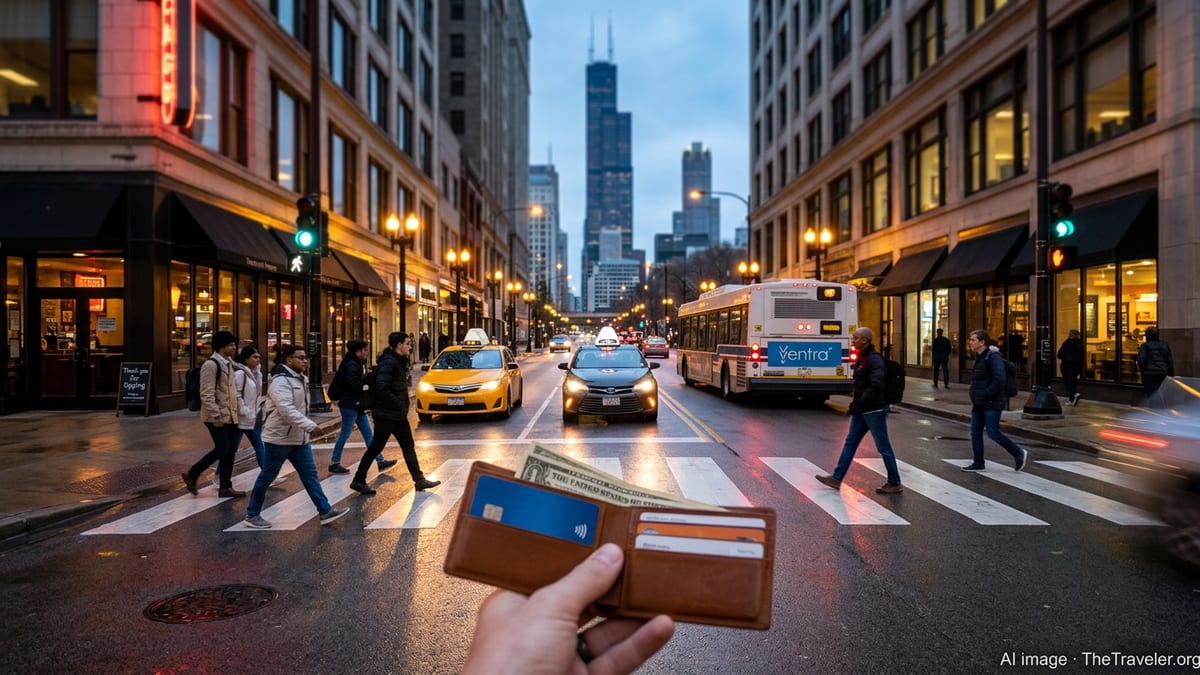
Big Picture: How Money Works in Illinois and Chicago
Illinois is known for having relatively high consumer taxes by US standards, and Chicago adds its own local surcharges on top. For most everyday purchases, the key figure to remember is that Illinois charges a state sales tax of about 6.25 percent on general merchandise, with additional county and city rates stacked on top. In Chicago, that combined rate typically lands in the high single digits for many purchases, and some categories such as hotel rooms, alcohol and car rentals can be taxed more heavily than others.
Sales tax is almost always added at the register rather than included in the sticker price. That means the price you see on the shelf will be lower than what you actually pay. If you are visiting from countries where tax-inclusive pricing is standard, this can be jarring at first. For a quick mental check, many travelers simply round up by around 10 percent in the city to allow for sales tax on general goods.
Illinois has also made a recent change that benefits everyday shoppers: the state-level 1 percent tax on most groceries ended on January 1, 2026. Local governments can still tax food, so your grocery bill in Chicago will not be entirely tax free, but that statewide reduction can make a noticeable difference on a full cart. The upshot for travelers is that self-catering and snacks from supermarkets have become a better-value option than eating out for every meal.
On top of sales taxes, Chicago has a wide range of targeted consumer taxes that visitors may notice only when the check arrives. Hotel stays, restaurant meals with alcohol, ride share journeys, theater tickets and even some take-home liquor purchases can carry special local surcharges. You do not need to memorize every rate, but it helps to expect that anything related to hospitality, entertainment or driving will likely cost a bit more than the list price once taxes and fees show up on the receipt.
Sales Tax in Illinois: What Visitors Actually Pay
The backbone of consumer taxation in Illinois is the state sales tax of 6.25 percent on most general merchandise. To that base, counties, cities and special districts add their own local percentages. In practice, this means your total rate depends on where you are standing when you make the purchase, not where you live. For visitors, that destination-based approach matters if you are shopping in different neighborhoods or taking day trips outside Chicago.
Within Chicago, combined sales tax rates on general merchandise are among the higher big-city levels in the United States. Exact figures can shift slightly with local changes, but it is safe to plan for a total near the high single digits on clothes, souvenirs, electronics and other non-grocery items bought in the city. Nearby suburbs may be fractionally lower or higher depending on their own local levies. Because the system is layered, something as simple as crossing a municipal boundary can change the tax you pay on the same item.
Food and drink are taxed differently from general merchandise. As of 2026, Illinois no longer applies its 1 percent state sales tax on qualifying groceries, which generally covers staple food items meant for home consumption. Local governments, including Chicago, can and often do still impose their own charges on groceries, so you should still expect to pay some tax at the supermarket checkout. Prepared food, restaurant meals and alcohol are usually taxed at higher specialized rates that stack city and county surcharges on top of basic sales tax.
Several niche categories can catch travelers off guard. Chicago introduced a percentage tax on off-premise liquor sales in March 2026, so wine or spirits bought at a shop to take away now attract an extra city levy. Tobacco and nicotine products already faced some of the highest combined tax burdens in the country after recent state-level increases. Gasoline in Illinois is also heavily taxed compared with many states, contributing to higher pump prices. While these details matter less for a short city break, they are worth bearing in mind if you plan a road trip, stock up on drinks for a rental apartment or buy cigarettes during your stay.
Tipping Culture in Chicago: When It Is Expected
Tipping is deeply woven into service culture across the United States, and Chicago is no exception. In many hospitality and personal-service jobs, base wages are set on the understanding that tips will make up a substantial share of income. For visitors, that means tipping in certain situations is effectively part of the price rather than a purely optional extra. Leaving nothing in contexts where a gratuity is expected is likely to be seen as a statement about poor service rather than a neutral choice.
The most important places to budget for tipping in Chicago are sit-down restaurants, bars, taxis and ride shares, hotels and personal services such as haircuts, spa treatments and guided tours. In each of these settings, you are dealing with workers who rely heavily on tips. Skipping a gratuity entirely, unless service was genuinely unacceptable, is out of step with local norms. Even in quick-service cafes or counter-only spots, you will often see digital tip prompts, though expectations there are more flexible.
One nuance worth knowing is the difference between tips and service fees. A true tip is discretionary and given directly to staff, while a mandatory service charge is imposed by the establishment. In Illinois, genuine gratuities for staff are generally not subject to sales tax, while service fees can be. Some Chicago restaurants have experimented with automatic service charges in place of traditional tipping, particularly for large tables. You should always read your bill carefully to see whether a percentage has already been added before deciding on an extra amount.
As a traveler, you also have room to use tipping to reward standout service. Servers in busy downtown restaurants, bartenders crafting complex cocktails, bell staff who help with heavy luggage or concierges who secure hard-to-get reservations all appreciate generous recognition when they go above and beyond. Chicagoans are used to tipping culture and generally see a thoughtful gratuity as an expression of politeness and respect, not as a show of wealth.
How Much to Tip: Practical Guidelines by Situation
For full-service sit-down restaurants in Chicago, a tip of around 18 to 20 percent of the pre-tax bill is widely considered standard for satisfactory service. Locals often round that up to 20 percent at midrange and upscale places, particularly in the city center and popular dining neighborhoods. If service is exceptional, 22 to 25 percent is common. For noticeably poor service, some diners scale back to 15 percent, though leaving nothing at all is generally reserved for extreme situations.
At bars, a familiar rule of thumb is around 1 to 2 dollars per standard drink, or roughly 18 to 20 percent of the tab on a larger order. For craft cocktail bars where drinks take more time and skill to prepare, leaning toward the upper end of that range is customary. If you are running a tab rather than paying as you go, you can simply tip on the total when you close out, using similar percentages to a restaurant bill.
For taxis and ride-share services such as Uber and Lyft, tipping around 15 to 20 percent of the fare is typical in Chicago. Many apps now suggest preset amounts or percentages; choosing a midrange option usually aligns with local practice. Round up slightly if your driver helps with bags, waits while you make a brief stop or navigates heavy traffic to get you to the airport on time. For short rides where the percentage calculation produces a very small number, locals sometimes default to a flat 2 to 5 dollar tip depending on the distance and hassle involved.
In hotels, you will find a patchwork of unwritten rules. Housekeeping staff commonly receive 2 to 5 dollars per occupied night, left daily rather than at checkout to ensure that whoever actually cleaned the room benefits. Bell staff might receive 2 to 5 dollars per bag, more if items are especially heavy or awkward. For valet parking, a couple of dollars when your car is returned is normal. At spas and salons, tips usually fall between 18 and 22 percent of the service cost, and tour guides often receive 10 to 20 dollars per person depending on the length and quality of the experience.
Smart Ways to Pay in Chicago: Cards, Cash and Contactless
Chicago is increasingly a card-first and phone-first city. Major credit and debit cards are accepted almost everywhere, including in taxis, large chain stores, museums and most independent restaurants and cafes. Contactless tap-to-pay options through physical cards, Apple Pay, Google Pay and similar wallets are now standard on public transit, in many shops and at ticket barriers. Carrying a widely recognized card network such as Visa or Mastercard is the easiest way to avoid payment hiccups, especially for visitors from overseas.
Cash is still accepted in many places, but a growing number of venues are either cashless or strongly prefer cards for speed and security reasons. Some downtown cafes, concert venues and sports arenas have moved entirely to electronic payment. That said, keeping a modest amount of cash on hand is still useful for smaller tips, occasional cash-only food stands, street performers or neighborhood bars that have not fully embraced card payments. ATMs are plentiful across the city, but withdrawing in larger, less frequent amounts can help minimize foreign transaction and withdrawal fees from your home bank.
Using a credit card that does not charge foreign transaction fees can significantly reduce the cost of your trip if you are visiting from abroad. Many travel-oriented cards also offer stronger currency conversion rates than basic debit cards, plus added purchase protection and rewards. If a store or restaurant terminal asks whether you want to be charged in your home currency or in US dollars, selecting US dollars and letting your card issuer handle the conversion is typically better value than dynamic currency conversion at the point of sale.
Mobile wallets are particularly convenient in Chicago because they integrate so smoothly with the city’s transit system and many retail terminals. With a single tap of your phone or watch, you can board a train, buy a coffee and pay your museum admission without reaching for your wallet. Just remember that battery life becomes your lifeline when you rely heavily on your devices to pay, so keep a portable charger handy and consider carrying at least one physical card as a backup in case of technical glitches.
Paying for Transit, Attractions and Everyday Purchases
Chicago’s public transit system, including the L trains and buses, uses an electronic fare system called Ventra. For visitors, the simplest approach is often to tap any contactless bank card or mobile wallet directly at the gate or farebox. The system reads each tap as a ride and charges you accordingly, often with automatic transfer benefits if you continue your journey within a set time frame using the same card or device. This open-loop approach means you can move around the city without ever buying a dedicated transit card, though Ventra-branded cards and passes remain available and can be good value for heavy transit use.
If you plan to take many rides per day, consider the cost of passes versus pay-as-you-go taps. Multi-day and unlimited-ride passes loaded onto a Ventra card or compatible device can work out cheaper than paying for individual journeys, especially when you factor in the convenience of free or discounted transfers. Machines at major stations sell physical Ventra cards and tickets, which you can reload as needed with cash or card. The Ventra app allows you to manage fares digitally, check balances and, in some cases, integrate your transit card with mobile wallets for tap-and-go access.
At major attractions such as museums, observation decks and sports venues, card payments are the norm, and many places are close to fully cashless. Timed tickets purchased online with a card are common, and some attractions use QR codes on your phone as proof of payment. Souvenir shops and food concessions inside these venues usually accept contactless cards and mobile wallets as well, creating an almost frictionless loop of spending. Keep an eye on your daily budget, as it can be easy to lose track when everything is just a tap away.
For markets, neighborhood festivals and outdoor events, payment options can vary more. Many independent vendors now use smartphone card readers that accept chip and contactless payments, but a few still rely on cash. Having a small stash of low-denomination bills gives you more flexibility for buying snacks, crafts or secondhand finds. Where card readers are available, they sometimes add a small convenience fee to cover processing costs, especially for very small purchases, so you may prefer to pay cash in those cases if you want to avoid extra charges.
Saving on Fees and Getting Better Value
The right payment strategy in Chicago can save you a noticeable amount over the course of a trip. If you are traveling from abroad, start by checking whether your primary bank card adds a markup to each foreign-currency transaction. If it does, applying for a low-fee travel card before you go can pay for itself quickly in a high-cost destination. Even for domestic visitors, some credit cards charge extra for transactions processed outside your home country, so reading the fine print matters.
Dynamic currency conversion is one area where it often pays to say no. Some payment terminals in tourist-heavy spots, hotel front desks or airport shops may offer to charge your card in your home currency. The exchange rate used for this service is typically less favorable than what your card issuer would apply, and there may be an extra service fee baked in. Opting to pay in US dollars instead keeps you within your bank’s standard rate structure and usually leads to a lower cost once the transaction posts.
Another smart step is to use contactless payments for transit and small purchases instead of withdrawing large amounts of cash and carrying it around. While ATM withdrawals may feel reassuring, they can trigger multiple layers of fees: a charge from your home bank, a fee from the ATM operator and possibly a less generous exchange rate. Using cards and mobile wallets whenever possible minimizes these cumulative costs and reduces the risk of loss or theft of physical cash.
For bigger-ticket items, such as hotel bills, rental cars, designer shopping or high-end dining, paying with a credit card that offers travel protections can be a financial safety net. Features such as trip delay coverage, purchase protection or rental-car damage waivers can save you substantial money if something goes wrong. Just remember that some types of spending in Chicago, especially on alcohol, entertainment or last-minute add-ons, may be subject to extra city surcharges. Balancing the convenience of card payments with an occasional review of your statements during the trip will help keep your budget on track.
The Takeaway
Spending money in Chicago and across Illinois is straightforward once you understand a few core principles. Sales tax is added at the register and can be relatively high in the city, especially on restaurant meals, hotel stays, alcohol and certain other targeted categories. The end of the state-level grocery tax in 2026 makes supermarket shopping more attractive, but local taxes still apply and prepared foods remain more heavily taxed.
Tipping, meanwhile, is part of the social contract in most service settings. Planning for around 18 to 20 percent in restaurants and similar ranges elsewhere will keep you aligned with local expectations, and reading your bill carefully for included service charges will help you avoid both double tipping and awkward shortfalls. The people who serve you often depend on these gratuities, and thoughtful tipping is appreciated across the city.
From a payment perspective, Chicago is well suited to travelers who rely on cards and mobile wallets. You can ride transit, visit attractions and pay for everyday purchases with a simple tap, while keeping a small amount of cash for tips and occasional cash-only vendors. Choosing low-fee cards, paying in US dollars instead of your home currency and using contactless transit options are simple ways to stretch your budget further.
Armed with an understanding of local taxes, tipping customs and modern payment tools, you can focus less on decoding bills and more on enjoying Chicago’s architecture, food, music and lakefront views. A bit of preparation before you arrive will help your money go further so you can savor the city with fewer financial surprises.
FAQ
Q1. What is the typical sales tax rate I will pay in Chicago?
In Chicago, most general merchandise purchases face a combined state and local sales tax in the high single digits, once all layers of state, county and city taxes are included.
Q2. Are groceries taxed in Illinois and Chicago?
As of January 1, 2026, Illinois no longer charges a 1 percent state tax on most groceries, but local governments, including Chicago, can still tax food, so expect some tax on supermarket purchases.
Q3. How much should I tip at restaurants in Chicago?
At full-service sit-down restaurants, around 18 to 20 percent of the pre-tax bill is considered standard for good service, with more for exceptional experiences and slightly less only if service is clearly poor.
Q4. Do I need to tip for counter service or takeout?
Tip prompts are common at cafes and takeout counters, but expectations are lower; small change, rounding up or a modest percentage is appreciated rather than required, unless staff provide extensive extra service.
Q5. Can I rely on cards and mobile payments, or do I need cash?
You can use credit and debit cards, including contactless and mobile wallets, for most spending in Chicago, though it is still wise to carry a small amount of cash for tips, markets and occasional cash-only spots.
Q6. How do I pay for public transit in Chicago?
The city’s Ventra system lets you tap a contactless bank card, phone or watch directly at train gates and bus fareboxes, or you can buy a Ventra card or ticket and load value or passes onto it.
Q7. Are service charges the same as tips on my bill?
No, a discretionary tip is separate from a mandatory service charge; some restaurants add a service fee, especially for large groups, so check your bill to avoid either double tipping or unintentionally undertipping.
Q8. What is the best way to avoid extra bank and currency fees?
Using a card with low or no foreign transaction fees, paying in US dollars instead of your home currency and limiting ATM withdrawals can all help reduce hidden costs.
Q9. Are alcohol and cigarettes more heavily taxed in Chicago?
Yes, alcohol and tobacco products in Chicago face extra local and state taxes, and recent changes have increased the burden on some items, so expect these goods to be comparatively expensive.
Q10. Is it rude not to tip if I receive bad service?
In Chicago, completely skipping a tip is usually seen as a strong statement that service was unacceptable; for merely average or slightly disappointing service, most locals still leave a reduced but nonzero gratuity.