

India is one of the world’s most exciting destinations, and its money landscape is changing just as fast as its cities. The Indian rupee remains king, but cards, digital wallets and QR-code payments are now part of everyday life from Delhi to small hill towns. For visitors, that mix can be confusing. This guide explains how money works in India today, how to get rupees safely, and how to combine cash, cards and digital payments for a smooth trip.
Understanding the Indian Rupee
The official currency of India is the Indian rupee, abbreviated as INR and commonly represented by the symbol ₹. Banknotes come in several denominations, typically including ₹10, ₹20, ₹50, ₹100, ₹200, ₹500 and ₹2,000, although the exact mix of notes in circulation can shift over time as older series are withdrawn and newer designs are introduced. Coins are usually available in smaller values such as ₹1, ₹2, ₹5 and ₹10, and you will encounter them frequently for small purchases like local transport, tea and snacks.
As a foreign visitor you cannot normally pay for everyday expenses in foreign currency such as US dollars or euros. Hotels, some travel agencies and a few luxury shops may quote prices in foreign currency for convenience, but legally the vast majority of transactions in India are settled in rupees. That means you will need a plan for obtaining local cash and understanding how far it will go in day to day spending.
The value of the rupee against major currencies like the US dollar or euro fluctuates regularly. Exchange rates offered by banks, ATMs and money changers can differ by a noticeable margin, and there may be additional fees hidden in the rate or charged as a separate commission. It is wise to check an independent rate indicator before changing money, then treat any better rate as a bonus and any worse rate as the cost of convenience.
In practice, most visitors rely on a combination of ATM withdrawals, card payments and some form of prepaid or digital wallet to access rupees. Carrying a modest amount of cash on arrival is helpful for taxis, tips and small merchants, but you do not need to arrive with all of the rupees you will use on your trip.
Getting Rupees: ATMs, Banks and Money Changers
ATMs are the primary way many tourists access rupees. Major Indian cities and popular tourist hubs have dense ATM networks linked to global systems such as Visa and Mastercard, and your foreign debit or credit card will usually work if it is enabled for international withdrawals. Daily withdrawal limits are often set both by your home bank and by the Indian ATM operator, so the maximum you can take per transaction or per day may be lower than you are used to at home.
Most Indian banks charge a fixed fee or percentage for using a foreign card, and your home bank may add its own fee and currency conversion markup on top. The total cost can vary widely. In addition, many ATMs and some payment terminals now offer “dynamic currency conversion,” where you are invited to be charged in your home currency instead of rupees. This almost always involves a poorer exchange rate. For the best value, choose to be charged in rupees and let your own bank handle the conversion.
Bank branches and licensed money changers are another route for obtaining cash, especially if your card fails or you are uncomfortable with ATM fees. To exchange foreign currency, you will normally need your passport and entry stamp or visa. Airport exchange counters are convenient on arrival but often offer weaker rates and higher margins than city-centre banks or established money changers. For larger amounts, it can be worth waiting until you reach town, provided you have enough cash or a working card for the journey.
Informal or street currency dealers may quote rates that appear better than banks, but they can involve counterfeit risk, pressure tactics or sudden changes in the agreed rate. For peace of mind, most visitors stick with bank ATMs, reputable money changers recommended by hotels or local operators, and card payments where possible. Retain your exchange receipts, as you may be asked for documentation if you later want to reconvert rupees back to foreign currency when leaving India.
Using Cards in India: Credit, Debit and Forex Cards
Card acceptance in India has grown rapidly, especially in cities, airports, larger hotels, chain restaurants and modern retail stores. International Visa and Mastercard branded credit and debit cards are widely accepted at these types of merchants, with American Express and other networks accepted more selectively. In smaller towns or at family-run guesthouses and street markets, you will still find cash preferred, so do not rely on cards alone outside major tourist corridors.
When you pay by card, most Indian banks and payment processors levy a foreign transaction markup on purchases made in rupees with overseas cards. This percentage is in addition to any fee charged by your own bank at home. While exact rates vary, these markups can noticeably increase the cost of your trip if you charge everything to a card with high international fees. Before you travel, check your bank’s current foreign transaction and cash withdrawal fees and, if possible, bring at least one card that advertises low or zero foreign transaction charges.
Prepaid travel or “forex” cards, loaded with rupees or major foreign currencies, are another option. Many banks and global fintechs issue these cards, which you can top up from your home account and then use in India much like a regular debit card. Their appeal is the ability to lock in an exchange rate at the time of loading and to avoid the surprise of shifting bank markups on every transaction. However, they may charge issuance fees, reload fees or inactivity fees, so it is important to read the small print.
Card networks and regulators have paid more attention in recent years to the way merchants present dynamic currency conversion. Although standards require that you are clearly given a choice of currencies and informed of costs, in practice some terminals default to your home currency or pressure you to accept it. Always ask to pay in rupees, check the amount on the terminal, and keep or photograph your receipt in case of later disputes. If your card is unexpectedly declined, it is often due to an automatic fraud block by your home bank, so contact them quickly and have a backup card ready.
Digital Payments, UPI and New Tourist Wallets
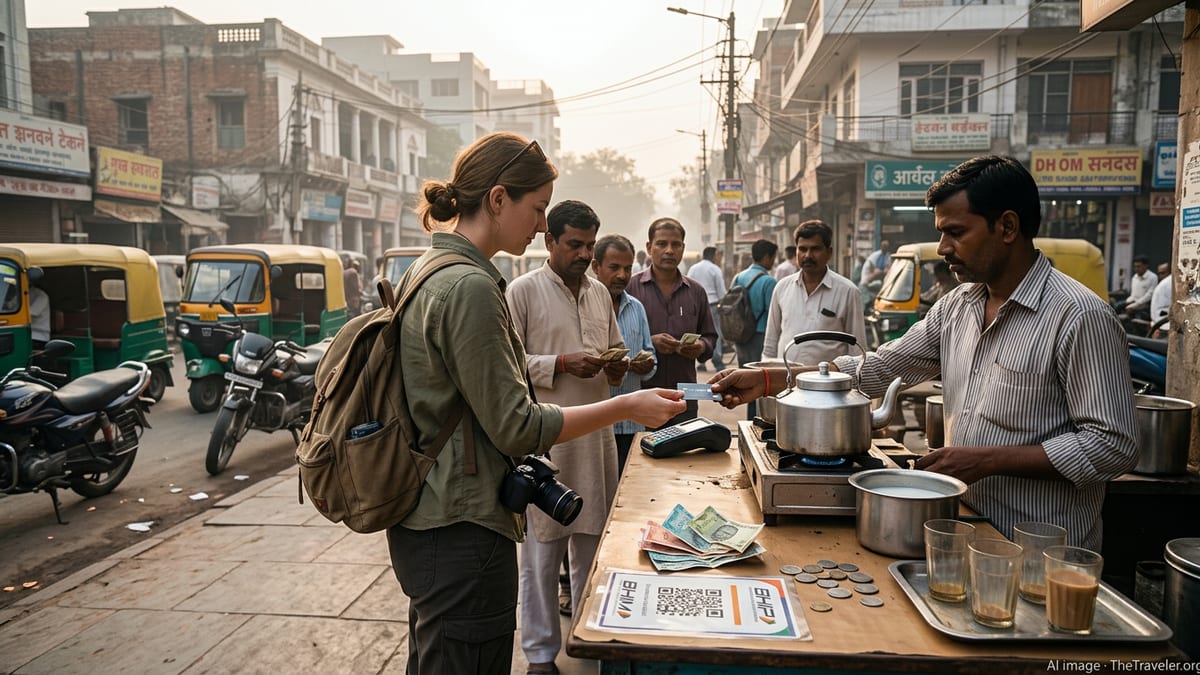
India has become a global example of rapid digital payment adoption. In daily life, residents commonly pay by scanning QR codes through apps linked to a system known as UPI, which moves money instantly between bank accounts and wallets. As a visitor, you will see UPI logos on shop counters, in autorickshaws and even at small roadside stalls, alongside card terminals and cash boxes.
Until recently, most foreign tourists could not use UPI directly because it required an Indian bank account and an Indian mobile number. In response, Indian authorities and payment operators have been piloting solutions that allow international visitors to access UPI via prepaid rupee wallets. These “tourist UPI” products work by letting you load a rupee balance using an international card, then pay Indian merchants by scanning their QR codes. Some events and conferences have already used such wallets to let foreign delegates pay in India without opening local accounts, and similar offerings are gradually appearing in more destinations.
Availability of tourist-focused UPI wallets is still evolving and may be limited to certain airports, partner banks or regions at any given moment. Conditions such as minimum and maximum load amounts, identity checks and refund procedures are shaped by India’s foreign exchange regulations and will continue to change over time. If you are interested in using UPI on your trip, check current options closer to your travel date and plan to combine any wallet with other payment methods rather than relying on it exclusively.
Beyond tourist wallets, global trends in digital currencies and central bank digital money are also being tested in India. Some pilots involve small groups of users making everyday payments through central bank issued digital rupees, often accessed via existing banking apps. These experiments may be visible in the news, but for now they remain niche. As a short term visitor, you should expect to pay primarily with regular rupees in cash, with cards, and where available with QR-based wallets designed for foreign users.
How Much Cash to Carry, and When You Need It
The right balance between cash and electronic payments in India depends on your itinerary and travel style. In major cities such as Delhi, Mumbai, Bengaluru and Hyderabad, as well as in many state capitals and well known tourist areas, you can often pay for hotels, domestic flights, intercity trains booked in advance, and meals in popular restaurants by card. Ride hailing apps and some metro systems also accept digital payments. In these environments, you may only need moderate amounts of cash each day for small purchases, tips and occasional cash only services.
In smaller towns, rural areas and parts of the Himalayas, Northeast or interior regions, cash remains far more important. Guesthouses, local buses, small eateries and market stalls may take only cash even if they display QR codes, either because their systems are unreliable or they prefer cash for simplicity. Power cuts and patchy data coverage can also interrupt digital transactions. If your journey includes these areas, plan to withdraw or exchange enough rupees in the nearest major town beforehand rather than assuming you can find a functioning ATM on arrival.
As a rough approach, many visitors are comfortable carrying the equivalent of one to three days’ average spending in cash for each person, topping up from ATMs or exchanges when they pass through cities. Carrying significantly more can increase the consequences of loss or theft, especially in busy transit hubs, though serious crime against tourists remains relatively rare. Split your cash between a secure main wallet and a smaller pocket wallet for everyday transactions, and leave some reserve notes in a hidden money belt or locker.
Remember that some common expenses in India are easier to manage in smaller denominations. Taxi drivers, chai vendors and small shops may struggle to provide change for large notes, particularly early in the day. When you withdraw from an ATM or change money at a bank, request a mix of notes if possible, and break large notes at supermarkets, metro counters or larger restaurants whenever you can.
Costs, Fees and Protecting Yourself from Hidden Charges
The face value of prices in India can be very appealing for visitors from higher income countries, but payment related fees can silently erode those savings if you are not careful. The key drivers of cost are exchange rates, foreign transaction markups, withdrawal fees and any surcharges imposed by merchants or payment processors. Each bank sets its own tariffs, and in recent years some have adjusted fees on cross currency transactions and dynamic currency conversion to reflect regulatory changes and competitive pressure.
For ATM withdrawals, you may face a flat fee per transaction from your home bank, an access fee from the Indian bank operating the machine, and an implicit markup in the exchange rate. To reduce the impact, withdraw slightly larger amounts less often rather than many small transactions, but avoid carrying more cash than you feel safe managing. Some digital banks and travel focused financial services now reimburse or waive ATM fees up to a certain limit each month, so consider whether opening such an account before your trip makes sense for your travel habits.
For card purchases at merchants, the main risk is dynamic currency conversion combined with foreign transaction fees. When asked whether you want to pay in your home currency or in rupees, choosing your home currency usually means the merchant or their payment partner sets the exchange rate and may add a generous margin. If you decline this and pay in rupees, your card network and bank handle the conversion at an often more competitive wholesale rate plus your usual markup. In general, choose rupees on the terminal, and if a receipt shows an unwanted currency conversion, keep documentation and raise the issue with your card provider later.
There are also policy related costs to consider, such as tax collection at source on certain high value foreign remittances and card transactions made by Indian residents when they spend abroad. While these rules do not directly affect most foreign tourists, they illustrate how quickly the regulatory environment around cross border money movements can shift. For you as a visitor, the practical lesson is to check your card statements regularly during and after the trip, use banks that clearly disclose their international fees, and question any unexpected charges as soon as they appear.
Practical Money Safety Tips for Travelers in India
Managing your money safely in India is largely about applying the same common sense you would use in any busy, high energy country. Crowded bazaars, train stations and festival sites are places where pickpocketing can occur, so keep wallets and phones in front pockets or secure bags, and avoid displaying thick bundles of cash when paying. Many travelers find it useful to carry a basic wallet with limited cash and one card for day use, while keeping backup cards and most of their cash locked in a hotel safe or well concealed pouch.
Before departure, tell your bank and card issuer that you will be traveling in India, and confirm that your cards are enabled for international transactions and ATM withdrawals. Save your bank’s emergency contact numbers in a secure offline note or printed copy in case your phone is lost. If your card is swallowed by an ATM or you suspect skimming, report it immediately. Choosing ATMs attached to major bank branches or inside malls and airports can reduce risk compared with isolated machines.
Be cautious if strangers offer unsolicited “help” at ATMs, ticket counters or currency exchange counters, particularly if they attempt to handle your cards or cash directly. In legitimate exchanges, staff may ask to see your passport and will issue an official receipt. For transport and tours, using pre-paid taxi counters, reputable ride hailing apps or operators recommended by your hotel can reduce disputes over payment and change. If a merchant claims that a card transaction failed, ask for a printed error slip or message and check your banking app before authorising a second attempt.
Digital hygiene matters as much as physical security. Avoid using public or unsecured Wi-Fi networks for online banking or card management, and log out of apps after sensitive operations. Use strong screen locks and, where available, biometric authentication for payment apps. If your phone is lost or stolen, contact your bank quickly to block linked cards and wallets. Keeping photocopies or scanned versions of your passport, visa and card fronts in a secure cloud folder can help with replacement and reporting, but never store full card numbers and security codes in plain text.
The Takeaway
India’s payment landscape in 2026 offers visitors more choice than ever before. Cash in the form of rupees remains essential, especially away from big cities, yet cards and QR based digital payments are now central to daily commerce. For most travelers, the most resilient strategy is a blend of methods: one or two low fee cards, a modest reserve of cash, and, where available, access to a tourist friendly digital wallet or UPI based service.
By understanding how rupees work, where to find reliable ATMs and exchanges, and how to avoid common fee traps such as dynamic currency conversion, you can keep your costs predictable and your stress levels low. Combine that financial preparation with sensible security habits, and you will be well placed to enjoy everything from street food and local markets to boutique hotels and domestic flights without worrying about how to pay. Money should enable your journey, not complicate it, and a little planning before you arrive in India goes a long way toward making that a reality.
FAQ
Q1. Do I need to bring rupees from home, or can I get cash on arrival in India?
You can usually get cash on arrival using ATMs at major Indian airports or by visiting a bank or licensed money changer in town. Bringing a small amount of rupees in advance can be convenient, but it is not essential if your cards are enabled for international withdrawals and you are arriving at a major gateway city.
Q2. Are credit and debit cards widely accepted in India?
Cards are widely accepted in big cities, airports, upscale hotels, chain restaurants and large shops, but cash is still common in smaller towns, rural areas and at local markets. It is best to assume you will use a mix of cards and cash, leaning more on cash the further you travel from major urban centres.
Q3. Can foreign tourists use UPI payment apps in India?
Traditional UPI apps were designed for users with Indian bank accounts and mobile numbers, but new prepaid tourist wallets linked to UPI are gradually being rolled out in selected locations. Availability changes over time, so check current options before your trip and treat any tourist UPI wallet as a helpful addition rather than your only payment method.
Q4. How much cash should I carry day to day in India?
Many visitors find that carrying the equivalent of one to three days of typical spending in cash works well, topping up as needed from ATMs or exchange counters. In big cities you may need less cash because cards and digital payments are common, while in rural or remote areas you will want a larger cash buffer because ATMs and card terminals may be scarce.
Q5. Is it better to use ATMs or currency exchange counters for rupees?
ATMs offer convenience and usually reasonable rates, especially when you decline dynamic currency conversion and allow your bank to convert at its standard rate. Currency exchange counters, particularly at airports, can be more expensive, although some city based money changers offer competitive rates. Many travelers use ATMs for most needs and turn to reputable money changers only when cards are not working or when they want to exchange leftover cash.
Q6. What is dynamic currency conversion and should I accept it?
Dynamic currency conversion is a service where an ATM or card terminal offers to charge you in your home currency instead of rupees. This usually involves a poorer exchange rate and higher overall cost. In almost all cases you will be better off choosing to pay in rupees and letting your own bank handle the conversion.
Q7. Are prepaid travel or forex cards a good idea for India?
Prepaid travel cards can be useful if they offer transparent fees and allow you to lock in a competitive exchange rate before you travel. They are often accepted wherever regular debit cards are accepted in India. However, they may come with issuance, reload or inactivity fees, so they work best for travellers who plan to spend a reasonable amount and who are comfortable managing another card.
Q8. How safe are ATMs in India for foreign cards?
ATMs linked to major banks and located inside branches, malls or airports are generally considered safer and more reliable than isolated machines. Problems such as card skimming or devices that capture card details are not unique to India, so the same precautions apply as elsewhere: cover the keypad when entering your PIN, avoid machines that look tampered with, and check your statements regularly for any suspicious activity.
Q9. Will small shops and street vendors accept large rupee notes?
Small shops and street vendors may struggle to provide change for large denomination notes, especially early in the day. It is helpful to keep a supply of smaller notes for everyday purchases and to break larger notes at supermarkets, metro counters or larger restaurants where change is easier to obtain.
Q10. What should I do if my card is lost, stolen or blocked in India?
If your card is lost, stolen or unexpectedly blocked, contact your bank or card issuer immediately using their 24 hour emergency number. Ask them to cancel or temporarily freeze the card and to advise on any emergency cash services they offer. Having at least one backup card stored separately and some reserve cash will make it much easier to manage until the issue is resolved.