

Planning a trip to Mexico means thinking not just about beaches and tacos, but also about how you will actually pay for everything once you land. Mexico is largely a cash-based society outside major tourist zones, yet card and mobile payments are expanding quickly. Understanding how the Mexican peso works, where to get it at a fair rate, and when cards or cash make more sense will save you money and frustration throughout your trip.
The Basics: Mexican Peso, Exchange Rates and Using US Dollars
Mexico’s official currency is the Mexican peso, usually written as MXN or simply with the $ symbol on price tags and menus. Banknotes commonly run from 20 to 1,000 pesos, and coins from 1 to 20 pesos. Notes and coins change design periodically, so do not worry if bills you receive look slightly different from pictures you saw online, as long as they are modern issues from Banco de México. Exchange rates float daily, but the peso typically trades at a double digit rate against the US dollar, so most visitors find prices feel lower than at home, especially away from the most popular resorts.
Although US dollars are widely understood, they are not Mexico’s official legal tender. In tourist hot spots such as Cancun, Los Cabos and parts of the Riviera Maya, some hotels, tour desks and souvenir shops will quote prices directly in US dollars and may accept cash dollars. The convenience comes at a cost. Vendors usually use their own informal rate that can work out significantly worse than the market rate, and you often receive change in pesos at an even less favorable rate.
For that reason, it is almost always better value to pay in pesos, whether in cash or by card. Think of US dollars as a backup rather than a primary way to pay. Bring a modest amount of clean, newer US bills if you like, but plan to convert most of your spending into pesos using ATMs or, second best, reputable exchange offices. This approach keeps your budgeting simple and helps avoid misunderstandings over conversion rates at the counter.
Exchange rates shown on news outlets and finance apps reflect the interbank or mid-market rate that banks use with each other. Tourists never quite get that rate, but you can come reasonably close by withdrawing pesos directly from a bank ATM and letting your own bank do the currency conversion. Airport kiosks and hotel front desks, in contrast, generally offer poor rates and higher commissions.
Getting Pesos: ATMs, Banks and Exchange Offices
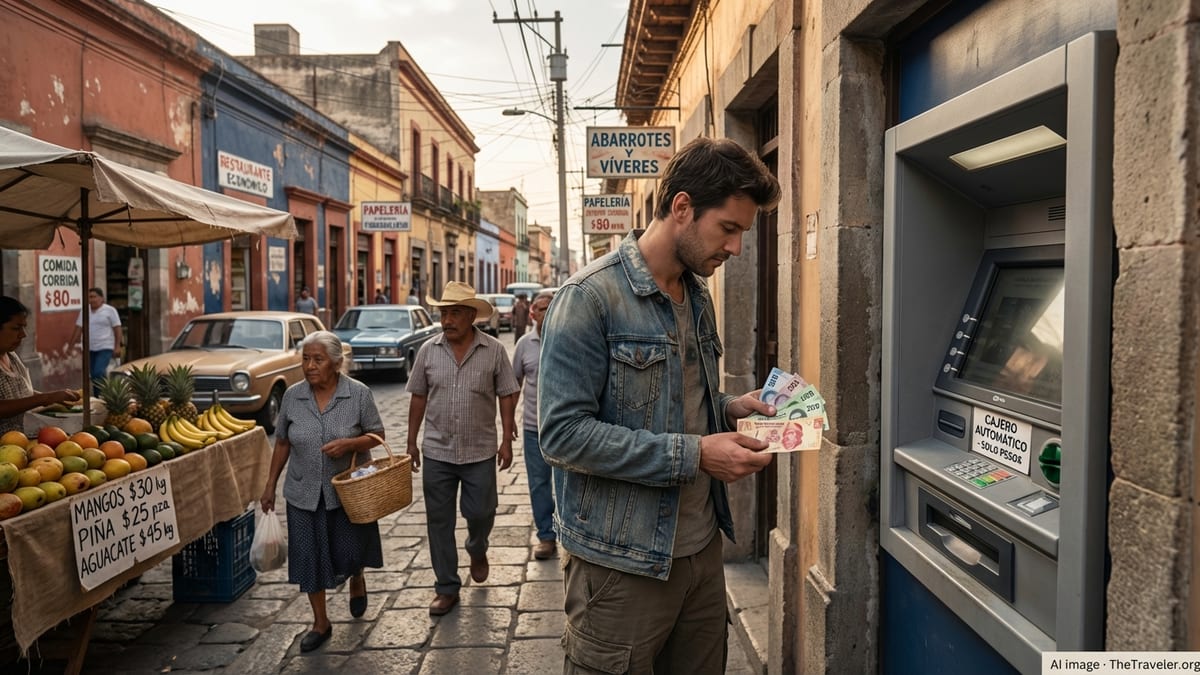
For most travelers, the easiest and usually cheapest way to get pesos is to withdraw them from an ATM using a debit card. Mexico has a dense network of bank-operated machines in cities, resorts and even many smaller towns. ATMs tied to big national or international banks tend to be the most reliable. When you insert your card, the screen will display any local ATM fee before you confirm the transaction so you can cancel if it looks excessive.
Expect Mexican banks to charge a flat fee per withdrawal rather than a percentage, and your home bank may also add its own foreign ATM or foreign transaction fee. Because of the fixed cost per transaction, it is usually more efficient to take out a larger amount less often, rather than making many small withdrawals each day. Carry only what you need day to day and keep the rest locked in your accommodation safe or hidden in your luggage.
Bank-attached ATMs are generally safer and more transparent than standalone machines in convenience stores, bars or random tourist shops. Airport ATMs can be convenient for a first small withdrawal when you land, though they sometimes have higher fees or conservative withdrawal limits. If you prefer to change physical cash, head to a bank branch or a casa de cambio, the specialized exchange offices you find in city centers and tourist districts. They usually post their buy and sell rates clearly; ask about any commission before handing over your money.
Changing money at hotels, street kiosks without clear signage, or through touts who approach you directly is not recommended. Rates are often much worse, and in the worst case you risk receiving outdated or counterfeit notes. If you arrive with euros, Canadian dollars or other major currencies, you can generally exchange them in large cities and resort areas, but the rate may be less competitive than simply withdrawing pesos from an ATM with a debit card linked to your home account.
Using ATMs in Mexico Safely and Cheaply
Before you travel, contact your bank to let them know the dates and locations of your trip, or set a travel notice in your banking app if available. This helps prevent your card from being blocked when the first foreign transaction appears. At the same time, ask about your daily withdrawal limit abroad, any foreign ATM fees, and whether they partner with any Mexican banks to reduce costs. Some banks in the United States, Canada and Europe refund ATM fees or waive them at specific networks, which can make a noticeable difference on a longer trip.
At the ATM, take a moment to choose the machine and environment carefully. Opt for machines inside bank branches, shopping centers or supermarkets where possible, ideally during business hours. These locations are better lit, usually monitored and less prone to card skimming devices. Avoid using ATMs that look damaged or have loose card slots or keypads. Shield the keypad while entering your PIN, decline any offer of help from strangers and keep your cash and card out of sight as soon as your transaction is complete.
One important screen to watch for is the one that asks if you want to be charged in your home currency, such as US dollars, instead of pesos. This is a service called Dynamic Currency Conversion, and the rate offered on that screen is usually much worse than the rate your own bank would use if you simply chose to be charged in pesos. For the best value, always choose to complete the transaction in Mexican pesos and let your own bank handle the conversion on the back end.
Fees and limits vary widely, so it helps to test an ATM with a modest first withdrawal and then adjust. Keep a backup card stored separately from your main wallet in case one is lost, compromised or captured by a machine. Many travelers like to keep a debit card for cash withdrawals and a separate credit card for purchases, so that a problem with one card does not leave them stranded without access to funds.
Cards, Contactless Payments and Mobile Wallets
Credit and debit cards are widely accepted across Mexico in mid range and high end hotels, chain restaurants, large supermarkets, car rental agencies and tourist-oriented businesses. Visa and Mastercard are the most commonly accepted networks. American Express works well in some upmarket hotels, fine dining spots and airport locations, but it is declined more often at smaller shops or independent tour operators, so it should not be your only card.
Card terminals in Mexico increasingly support chip and PIN as well as contactless tap payments. In busy urban centers and major resort corridors, you will find many places that accept Apple Pay, Google Pay and similar mobile wallets, although coverage is still far from universal once you move into smaller cities or rural areas. When paying by card, staff may bring a portable terminal to your table or the counter. Check the amount on screen carefully, ask for the bill in pesos, and again decline any option to be charged in your home currency.
A credit card with no foreign transaction fees is often the most cost effective way to pay for hotels, flights, rental cars and larger restaurant bills. Such cards typically use exchange rates close to the market rate and avoid the extra percentage fee that standard cards add to every foreign purchase. If you do not have a dedicated travel card without foreign fees, you can still use your regular card; just factor in that extra cost when budgeting.
Despite growing card use, cash remains important for everyday life in Mexico. Small family run restaurants, street food stalls, local markets, colectivos and many taxis accept only cash. Even where cards are accepted, payment terminals sometimes go offline due to network issues or power cuts, especially during storms. Keeping a reasonable cash cushion in pesos means you can still pay for essentials if the card system is temporarily unavailable in a town or neighborhood.
Cash Culture: Tipping, Small Purchases and Rural Travel
Tipping is a normal part of service culture in Mexico and is often an important part of workers’ income. In sit down restaurants and bars, it is customary to leave a gratuity of around 10 to 15 percent of the bill, more for exceptional service. In some tourist heavy venues, a service charge may already be added, usually noted as servicio or propina included; in that case, an additional tip is optional. Hotel staff, housekeeping, bellhops, spa therapists and tour guides also commonly receive small tips in pesos.
For taxis hailed on the street, rounding up the fare to the nearest convenient amount is common rather than adding a formal percentage. For rides arranged through apps, the tipping function built into the app is widely used in larger cities, though cash is also appreciated. Other people you may wish to tip include grocery baggers, gas station attendants who clean your windshield or check your tires, and musicians performing at your restaurant table. Small coins and low denomination notes are useful for this, so try to break larger bills at supermarkets or chain convenience stores when you can.
Outside major cities and resort enclaves, daily life is even more cash oriented. In rural villages, archaeological sites away from the main highways, small beach towns and remote eco lodges, card networks may be patchy or nonexistent. Merchants prefer or sometimes insist on cash and may not have change for high denomination notes. Before heading into a more remote area, withdraw enough pesos from an ATM in the last larger town and keep a mix of smaller bills to make paying and tipping smoother.
While it is important to carry cash in Mexico, it is equally important not to flash it. Keep only a day’s worth in your wallet, with the rest hidden in a money belt, neck pouch or hotel safe. In crowded markets and public transportation, be discreet when paying and avoid counting large wads of notes in public. Such simple habits reduce the risk of pickpocketing and help you feel more at ease when traveling off the beaten path.
Budgeting, Safety and Avoiding Common Money Pitfalls
Mexico offers a wide range of price levels depending on destination and travel style. Popular resort zones, upscale neighborhoods in big cities and heavily touristed archaeological sites often charge prices similar to mid range US or European cities, especially in peak season and during major holidays. Smaller inland towns, local markets and simple eateries, by contrast, can feel much cheaper. When planning your budget, consider not only accommodation and transport but also how you will access your money and what fees your bank may impose each time.
One common mistake is relying on a single card for everything. If that card is lost, swallowed by an ATM or frozen for suspected fraud, sorting it out from abroad can take time. A safer plan is to bring at least two cards from different banks, ideally one debit and one credit, and keep them in separate places. Make photocopies or digital scans of the front and back of your cards and passports, and note down emergency contact numbers for your banks before you travel so you can call quickly if there is a problem.
Monitor your accounts every few days through your banking app or online banking while traveling. Card skimming and overcharging can happen anywhere in the world, and catching unusual transactions early makes it easier for your bank to reverse them. If you see something suspicious, report it immediately and ask for the card to be blocked. In Mexico, as in many countries, police reports are sometimes required for formal disputes, so keep receipts where possible and note locations and dates if something seems off.
Finally, be wary of offers that seem too generous. Street currency dealers, unsolicited financial services and unofficial guides offering to “change your money at a better rate” all create unnecessary risk. Sticking to bank branches, recognizable ATMs and established businesses will not always deliver the absolute rock bottom rate on each transaction, but it will keep your trip smoother and safer overall.
Special Situations: Car Rentals, Tours, Hotels and Online Payments
Certain travel services in Mexico involve specific payment quirks worth understanding in advance. Car rental agencies almost always require a credit card in the driver’s name, and they typically pre authorize a security deposit that can be substantial relative to your rental cost. That amount is not charged as a completed transaction but will reduce your available credit until the hold is released after you return the vehicle. Using a credit card rather than a debit card for rentals can prevent that hold from tying up funds in your checking account.
Hotels and vacation rentals often charge a deposit at booking and the remainder on arrival or checkout. Major chains in resort areas frequently quote and charge in US dollars, but many independent hotels list rates in pesos. If you prefer to lock in costs, you may choose prepaid rates in your home currency when booking through large reservation platforms, though flexibility is limited if your plans change. Always confirm whether taxes and resort fees are included in quoted prices, as these can add a noticeable amount at checkout.
For organized tours, adventure activities and dive shops, payment practices vary. Some operators accept cards and even online payments before the trip, while others insist on cash on the day. It is wise to ask clearly in advance which methods are accepted, especially if you are traveling to a remote pickup point where ATMs are scarce. In popular tourist hubs, it is common for tour desks to offer small discounts for cash payments, reflecting the fact that they avoid card processing fees and delays in receiving funds.
When booking domestic flights, intercity buses and certain attractions online from abroad, you may be able to pay with your usual credit card in your home currency or in pesos. Choosing pesos and letting your bank apply the exchange rate usually yields better value. Some foreign cards occasionally fail when used on Mexican airline or coach websites due to security filters. If that happens, you may need to call your bank to approve the transaction or book through a reputable travel agency instead.
FAQ
Q1. Do I need to bring cash to Mexico if I have credit and debit cards?
Yes. Cards work well in cities and resorts, but many smaller businesses, markets, taxis and rural areas still operate on a cash first basis, so pesos are important.
Q2. Is it better to get pesos before I leave home or after I arrive in Mexico?
Many travelers find it best to withdraw pesos from Mexican ATMs on arrival, which often provides a more competitive rate than exchanging cash at home or at airport kiosks.
Q3. Can I use US dollars to pay everywhere in Mexico?
No. Some tourist oriented places accept cash dollars, but many supermarkets, pharmacies, local restaurants and government services accept only pesos, and dollar rates are usually poor.
Q4. Should I accept the ATM’s offer to charge me in my home currency instead of pesos?
Generally no. That option uses Dynamic Currency Conversion, which almost always gives a worse exchange rate. Choose to be charged in pesos instead.
Q5. Are credit cards safe to use in Mexico?
In established hotels, restaurants and shops, card payments are routine and generally safe. As everywhere, check amounts carefully, keep receipts and monitor your statements for unusual charges.
Q6. What kind of card should I bring to Mexico?
Ideally bring at least one debit card for ATM withdrawals and one credit card, preferably one with no foreign transaction fees, plus a backup card stored separately.
Q7. How much should I tip in Mexico and should tips be in pesos or dollars?
In restaurants, 10 to 15 percent in pesos is typical. Tips for hotel staff, guides and drivers are also best in pesos, which are immediately useful for local expenses.
Q8. Are there withdrawal limits at Mexican ATMs?
Yes. ATMs often have their own per transaction limits, and your home bank sets daily limits as well. You may need to make more than one withdrawal for large amounts.
Q9. What should I do if an ATM in Mexico keeps my card?
If a machine retains your card, stay calm and contact your bank immediately using the number on the back of the card or your banking app, then follow their instructions for a replacement.
Q10. Is it safe to carry large amounts of cash while traveling in Mexico?
It is safer to carry only what you need for a day or two and keep the rest locked in a hotel safe or hidden in your luggage, avoiding displays of large sums in public.