

More news on this day
Just days after peak spring break travel, a fast-intensifying wildfire pattern stretching from Montana to Florida is reshaping expectations for late-spring trips across large swaths of the United States, as emerging blazes and unusually dry landscapes point to an early, volatile fire season in traditional shoulder-season destinations.
Get the latest news straight to your inbox!
From Late Winter Snow Drought to Early Fire Fears in Montana
Montana is entering spring 2026 with a combination of lingering snow drought in parts of the state and rapid drying across the plains, a mix that wildfire analysts describe as a classic setup for an early fire season. Drought monitoring updates from federal climate agencies indicate that while some mountain basins have seen recent improvement, precipitation deficits and record warmth have left lower-elevation landscapes vulnerable to fast-drying fuels as temperatures rise.
Recent assessments of snow conditions across the West show below-average snowpack and mounting precipitation deficits in portions of Montana’s plains and adjacent states. Publicly available fire-weather planning information notes that as warmer, drier air moves in through March, cured grasses and brush on the eastern slopes and plains are expected to respond quickly, elevating fire danger even before the traditional summer season.
Local discussions among residents and travelers in Montana highlight growing concern that a warm, dry spring could compress the transition from winter storms to wildfire smoke in popular outdoor areas. While major tourism gateways such as Glacier and Yellowstone region towns are not yet reporting large, long-duration fires, regional outlooks point to a high likelihood that any new ignition in grassland or foothill areas could spread rapidly under gusty winds in the weeks ahead.
For travelers planning late-spring road trips or national park itineraries, this shifting backdrop in Montana suggests that wildfire risk is no longer limited to the height of summer. Instead, it is emerging as a factor to monitor from March onward, particularly for camping, hiking, and backcountry travel that depend on clear air and open forest or grassland access.
Nebraska’s Record-Blaze Wake-Up Call for the Great Plains
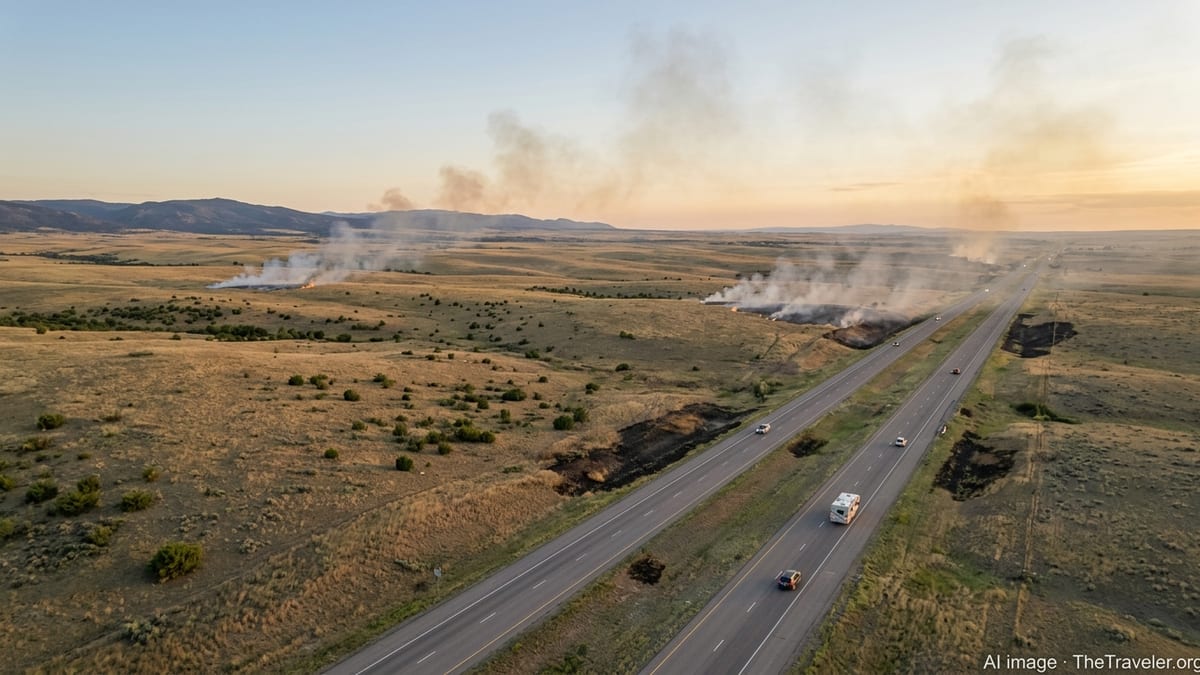
The most dramatic signal of the 2026 wildfire season so far has come from Nebraska, where a cluster of wind-driven grass fires, including the Morrill Fire, has burned hundreds of thousands of acres in mid-March. Public incident summaries and widely shared aerial imagery describe the Morrill Fire as the largest wildfire in modern Nebraska history, part of an outbreak that has scorched more than 600,000 acres of predominantly rangeland and cropland.
The fires erupted in a landscape already stressed by months of limited snow and rain across the central Plains. Recent climate analyses note that a “snow drought” has gripped large portions of Colorado, Wyoming, western Nebraska, and parts of Montana, leaving soils and grasses exposed to strong winds and unseasonable warmth. As a result, fine fuels across the High Plains are primed to ignite and spread under any spark, whether from machinery, power lines, or human activity.
Smoke from the Nebraska fires has periodically degraded air quality across parts of Nebraska, northern Colorado, and northwestern Kansas, according to regional reporting and satellite-based smoke tracking. The reach of that smoke plume underscores how quickly a large grassfire can affect communities and travelers far beyond the immediate burn zone, disrupting visibility for drivers and complicating plans for outdoor recreation and photography-focused trips.
For the Great Plains as a whole, Nebraska’s experience is being viewed as an early-season warning rather than an isolated event. Fire outlooks issued in February already highlighted central and southern Plains states as areas of concern through spring, citing ongoing drought, strong winds, and cured vegetation. The scale of the Nebraska fires confirms that conditions are capable of supporting unusually large, fast-moving events even before summer heat sets in.
Colorado and Texas Face Heightened Spring Wildfire Threat
Colorado and Texas, two of the country’s most popular states for road trips and outdoor tourism, are also entering what forecasters describe as a higher-risk spring fire window. Long-range fire outlooks have emphasized exposed and dry fine fuels along Colorado’s Front Range and eastern plains, where patchy snowfall and persistent warmth have left grasslands vulnerable to any period of low humidity and strong winds.
In Texas, land-management briefings issued earlier in 2026 pointed to a buildup of grass and brush following wet periods in 2025, then a sharp turn toward warmer and drier-than-normal conditions under a La Niña pattern. Analysts note that this combination often leads to an active dormant-season fire period, especially in late winter and early spring when cold fronts bring strong, dry winds across already cured rangelands.
Recent coverage of wildfire outbreaks across the southern Plains, including life-threatening fire behavior in parts of Oklahoma and Kansas, has highlighted how rapidly fires can expand in these conditions. Though these events are centered outside Texas’s major coastal and urban tourism hubs, the same pattern of dry fuels and frequent wind events is present across large stretches of the state’s interior travel corridors and ranch country.
For visitors, this means that March and April trips involving long rural drives, scenic byways, or stays in cabins and guest ranches now come with a greater need to track local fire weather advisories. Restrictions on campfires, outdoor burning, or certain off-road activities can appear with little lead time when fire danger spikes, reshaping how travelers can safely enjoy state parks, national grasslands, and remote desert landscapes.
North Carolina, Florida and the Southeast Enter Peak Risk Window
While wildfire risk is often associated with the West, climate and fire specialists have repeatedly highlighted the Southeast, including Florida and the Carolinas, as another emerging hotspot this spring. A recent analysis by a major private forecasting company described Florida and parts of the Southeast as facing some of the highest wildfire risk in early 2026, citing ongoing drought and a climatological tendency for dry stretches ahead of the region’s summer rainy season.
In Florida, publicly available incident data already shows significant wildfire activity in Collier County, where a large blaze in early March burned more than 30,000 acres of wildland. The fire, which spread through a mix of forests and scrub near key transportation routes, prompted smoke impacts and temporary disruptions to daily life in nearby communities, underscoring how quickly conditions in the state’s interior can deteriorate when temperatures rise and humidity drops.
Across North Carolina and neighboring Southeastern states, state and federal reports indicate expanding pockets of dryness and above-average temperatures, creating more frequent windows for fast-moving fires in pine forests and wildland-urban interface areas. While many spring break travelers focus on the beaches, the inland forests, piedmont trails, and scenic byways that support hiking, cycling, and cabin tourism can be more directly affected by burn bans and occasional smoke episodes.
This southeastern pattern is part of a broader national trend in which wildfire is no longer only a Western or late-summer concern. As fuels dry out earlier in the year and rainfall timing becomes more erratic, travel planners across the region are increasingly advised to treat fire risk and air quality as variable conditions to monitor alongside severe storms and hurricanes.
What This New Pattern Means for Spring and Summer Travel
The convergence of early-season fires in Nebraska and Florida, mounting concern over snow drought and drying fuels in Montana and Colorado, and elevated risk across Texas and the Southeast is shifting how travelers and the tourism sector think about spring. Published seasonal outlooks from national and private forecasting centers point to expanding drought coverage across more than 40 percent of the United States, suggesting that wildfire potential will remain above average across multiple regions as spring progresses.
For travelers who have just returned from spring break or are planning late-spring or early-summer trips, the key change is timing. Wildfire and smoke, once thought of as mid-summer to early autumn threats in select Western states, are now emerging as March and April considerations in destinations ranging from the Great Plains to the Gulf Coast. This can affect everything from scenic-flight visibility and photography conditions to the availability of popular hiking routes or campgrounds.
Travel experts increasingly recommend checking regional fire outlooks and local fire-weather discussions alongside standard weather forecasts, especially for itineraries that rely on long-haul driving, national forest access, or backcountry camping. Air quality dashboards and state forestry updates can offer early clues about emerging burns or planned prescribed fires, helping visitors avoid smoke-affected areas without canceling a trip altogether.
For tourism businesses, the evolving wildfire landscape highlights the importance of flexible policies and clear communication with guests. Lodging providers near fire-prone areas are beginning to emphasize contingency plans, such as alternative activities or routes if smoke intrudes, while destination marketing organizations are working to balance realistic risk messaging with reassurance that most trips will proceed with only minor adjustments. As 2026’s spring fire season gathers momentum, Montana’s inclusion alongside Nebraska, Colorado, Texas, North Carolina, Florida, and other states in wildfire discussions signals that this is no longer a localized issue, but a national travel factor that can change plans in a matter of days.