

More news on this day
Montenegro is intensifying efforts to attract more UK visitors by rolling out a nationwide tourism quality label for hotels, attractions and tour operators, aligning higher service standards with new trade initiatives aimed at the British market.
Get the latest news straight to your inbox!
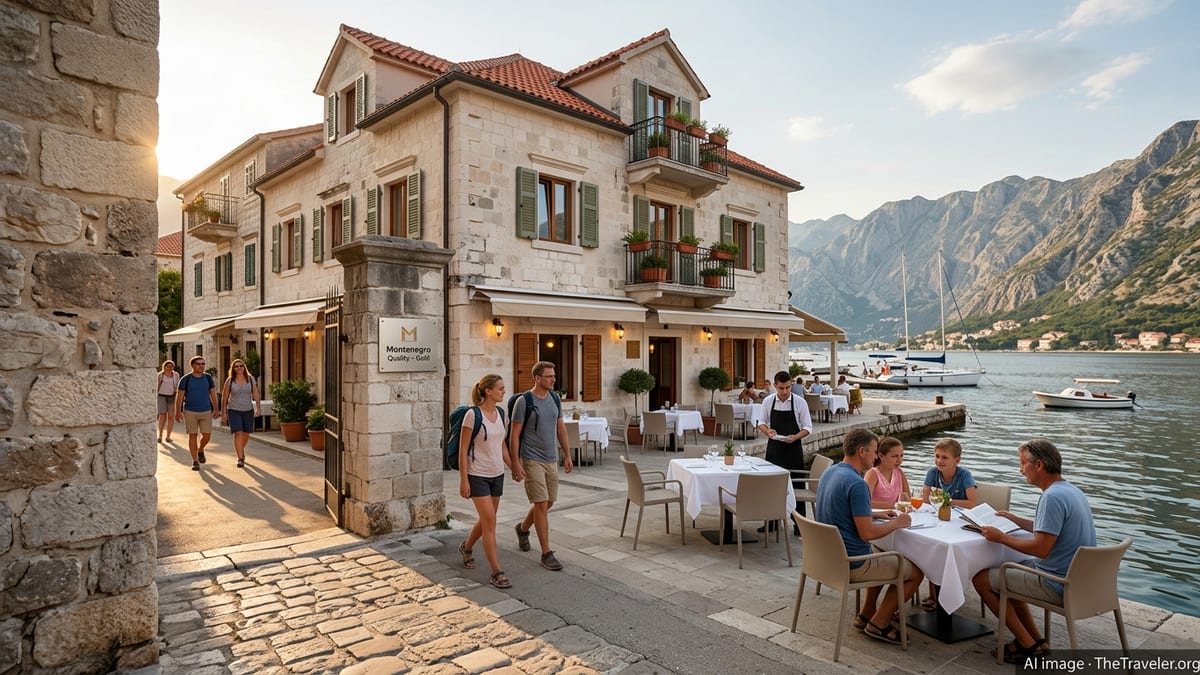
A national quality mark moves from strategy to reality
Publicly available information from the National Tourism Organisation of Montenegro shows that the country’s new “Montenegro Quality” label is central to a broader drive to professionalise and differentiate its tourism offer. The initiative grew out of the government’s tourism development strategy to 2025, which called for a national brand that would guarantee responsible behaviour and high standards across hospitality and visitor services.
The quality mark has been designed as a tiered certification for a wide range of operators, from city hotels and boutique properties to rural households, adventure providers and flagship attractions. Reports indicate that assessments combine service criteria with guest satisfaction indicators, in order to highlight those businesses that consistently deliver positive experiences.
According to published coverage of recent award rounds, dozens of entities have now secured the label, including international hotel brands, small coastal hotels and well-known restaurants. National icons such as cave attractions and mountain cable cars have also been recognised, signalling that the scheme is intended to cover the full spectrum of what visitors encounter, rather than a narrow slice of the accommodation market.
Tourism analysts note that by turning a strategic concept into an operational label supported by data and clear criteria, Montenegro is seeking to build trust with key outbound markets where quality assurances and recognisable standards heavily influence booking decisions.
Data-driven certification targets consistency and trust
The Montenegro Quality initiative is presented by tourism authorities as an impartial and evidence-based system. Reports from national media describe a methodology that analyses large volumes of online reviews from major travel platforms, alongside structured evaluations of facilities, staff professionalism, sustainability efforts and value for money.
Public information suggests that businesses are grouped into gold, silver and bronze tiers, offering consumers an easy way to compare quality benchmarks within the destination. Higher rankings tend to be associated with strong reputations, investment in staff training, and a track record of positive feedback across multiple seasons.
By making extensive use of guest-generated reviews, the scheme aligns with how UK travellers already research trips, effectively translating informal ratings into an official national label. Industry observers argue that this approach can help reduce the gap between marketing promises and on-the-ground delivery, an issue frequently raised in online discussions about fast-growing Mediterranean destinations.
The certification drive also complements Montenegro’s support for international eco-labels such as Travelife and the EU Ecolabel, which are promoted as tools for improving environmental performance in hotels and other tourism businesses. Together, these programmes position quality and sustainability as twin pillars of the country’s tourism brand.
Strengthening ties with the UK market
Montenegro has been actively building its profile in the UK, one of Europe’s most important outbound markets. Trade press coverage highlights dedicated campaigns, themed promotions and representation by a London-based communications agency as part of efforts to increase awareness beyond early adopters and niche travellers.
Tourism fairs in the UK, particularly World Travel Market in London, have confirmed growing interest in Montenegro’s mix of Adriatic beaches, historic towns and national parks. Information from recent editions of the show points to rising enquiries from British tour operators and airlines, supported by an expanding network of seasonal flights from multiple UK airports.
As competition intensifies across southern Europe, Montenegro appears to be positioning its quality label as a reassurance tool for British partners evaluating new programmes or expanding capacity. The certification helps tour operators identify reliable hotels and excursions that match UK expectations on safety, comfort and service, while also signalling that the destination is investing in long-term standards rather than short-term volume.
Industry reports suggest that the UK is seen as a priority market for year-round and higher-spending travel segments, including walking and nature holidays, cultural touring and premium beach stays, all of which tend to place strong emphasis on quality and authenticity.
New partnership schemes with tour operators and agencies
Alongside the quality mark, Montenegro has introduced a series of partnership programmes designed to deepen cooperation with overseas intermediaries. A public call for joint promotion with tour operators and travel agencies, issued in 2025, explicitly lists UK-based companies as eligible partners for co-funded marketing and product development.
The schemes typically provide financial incentives for campaigns that feature Montenegro in catalogues, digital advertising and targeted consumer promotions. Support is also available for familiarisation trips, trade trainings and joint participation in international fairs, creating multiple touchpoints with British travel sellers.
Observers note that these measures are intended to reward operators who commit to building sustainable, quality-focused programmes rather than short bursts of capacity. Preference in some cases is given to partners featuring certified Montenegro Quality properties or experiences, linking public funding to the wider national strategy on standards.
For UK travellers, this behind-the-scenes collaboration can translate into a broader choice of itineraries that combine coast and mountains, as well as more curated experiences with vetted local guides, activity providers and rural hosts that have passed through the certification process.
Implications for attractions and hospitality providers
For local businesses, the new label and strengthened UK partnerships create both opportunities and competitive pressure. Certified operators benefit from national and international promotion, visibility in official channels and trade materials, and heightened trust among tour operators and independent travellers comparing options online.
At the same time, the existence of a clear benchmark means that hotels, guesthouses, restaurants and attractions that do not meet the criteria may find it harder to secure premium contracts or feature in flagship campaigns. Industry commentary within Montenegro points to a growing expectation that serious market players will either obtain the label or demonstrate equivalent standards through other recognised certifications.
The focus on quality is particularly significant for attractions, which are often the defining element of a visitor’s impression. Positive examples highlighted in local reporting include heritage sites, national park experiences and adventure activities that have achieved strong review scores and certification, helping to counterbalance concerns about rapid development and uneven service in some coastal areas.
As Montenegro prepares for another busy summer, the combination of a visible quality seal, eco-certification support and targeted outreach to the UK market signals a strategic shift toward fewer compromises on standards. For British travellers weighing a first trip or a return visit, the emerging Montenegro Quality label may increasingly serve as a shorthand for reliable stays and well-managed experiences across the country.