

More news on this day
Montreal–Trudeau International Airport is feeling the ripple effects of escalating conflict in the Middle East, as missile strikes, sudden airspace closures and shifting airline schedules disrupt flights to Tel Aviv and onward connections across the region.
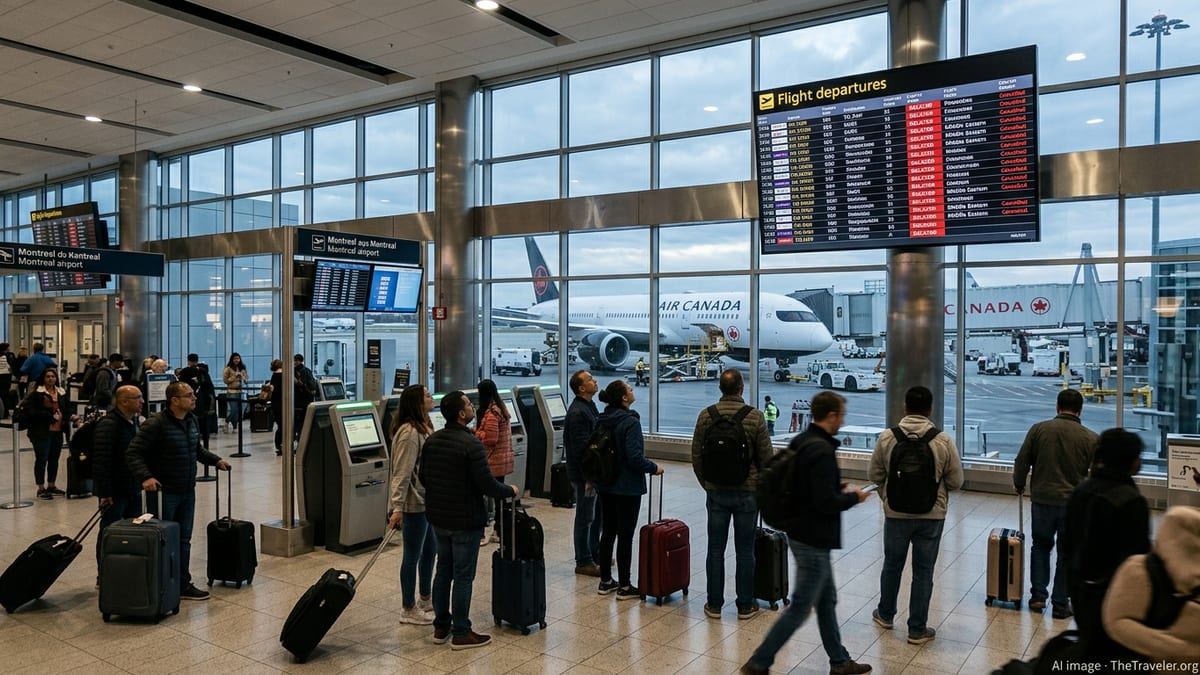
Middle East Airspace Crisis Sends Shockwaves to Montreal
The latest round of missile strikes in the Middle East has triggered widespread airspace closures from Iran and Iraq to Israel and the Gulf, forcing airlines worldwide to cancel or reroute services. While Montreal has no Gulf megahub of its own, its growing role as a transatlantic gateway means travelers at YUL are being swept up in the wider disruption.
Canadian and European carriers are avoiding large swaths of Middle Eastern skies, threading long-haul flights through narrow alternative corridors between Europe and Asia. Aviation analysts say this has led to longer flight times, higher fuel burn and schedule knock-on effects that are now being felt in North American hubs, including Montreal.
For passengers originating in Quebec and Atlantic Canada, the turmoil is particularly acute on journeys that rely on connections through Tel Aviv or Gulf hubs to reach destinations in Israel, India and Southeast Asia. Even when a Montreal departure operates on time, the uncertainty around onward sectors in the region is triggering last-minute itinerary changes and extended layovers.
Travel agents in the city report a surge in calls from anxious customers seeking clarity on whether upcoming trips will proceed, with many being offered rerouting via Europe or alternative dates as airlines try to keep people moving while prioritizing safety.
Air Canada’s Tel Aviv Plans Overshadowed by Renewed Volatility
The disruption comes just months after Air Canada mapped out an ambitious return to the Israel market, including seasonal nonstop service between Montreal and Tel Aviv operated by Boeing 787 Dreamliners. The carrier positioned the route as a key link for Quebec’s business, tech and diaspora travel, complementing its year-round Toronto–Tel Aviv operation.
However, a volatile security backdrop has repeatedly forced Air Canada to adjust its Israel schedules in recent years, alternating between tentative resumptions and pauses as conditions on the ground deteriorated. Industry schedule data and airline statements show that while Toronto–Tel Aviv remains the anchor of the network, Montreal’s service has been more vulnerable to suspension when demand softens or risk levels rise.
The latest Middle East strikes have again put the spotlight on that seasonal Montreal connection. Even travelers with tickets months in advance are being advised to monitor their bookings closely, as further changes to flight timings, frequencies or start dates remain possible if airspace restrictions persist or expand.
For now, passengers from Montreal headed to Israel are most frequently being funneled through Toronto or major European hubs, adding an extra leg to journeys that had briefly enjoyed the convenience of a nonstop option from Quebec.
Montreal–Delhi Suspensions Leave a Gap for India-Bound Travelers
The turmoil in Middle Eastern skies is colliding with another structural change for YUL: Air Canada’s decision to suspend its Montreal–Delhi route for the peak summer 2026 season. The airline has cited commercial reasons, but the combination of longer routings to avoid Russian and Middle Eastern airspace and softer seasonal demand has made the flight challenging to sustain.
Under current plans, Montreal–Delhi is set to run only during the cooler months, with service ending in late April and not resuming until late October. That leaves a five-month gap in nonstop connectivity between Quebec and India, just as instability in the Middle East makes traditional one-stop options through Gulf hubs less reliable.
For travelers, the practical effect is reduced flexibility and longer journeys. Many Montreal passengers bound for India are being rebooked via Toronto, where Air Canada intends to maintain daily Delhi service, or sent through European gateways such as London, Frankfurt or Paris. While these routings preserve access, they add hours in transit and expose itineraries to further disruption if airspace restrictions widen.
Community groups representing Montreal’s sizable Indian diaspora warn that the seasonal suspension, combined with the present Middle East crisis, could translate into higher fares and tighter seat availability during key travel peaks, including school holidays and wedding season.
Global Rerouting and Rising Costs Reach YUL Check-in Counters
Behind the scenes, airlines serving Montreal are grappling with the same operational headaches now confronting carriers worldwide. With Russian skies already closed to most Western airlines, the effective loss or restriction of key Middle Eastern corridors is forcing long-haul flights between Europe and Asia onto longer, more southerly or northerly paths.
Industry reports indicate that some routes are now detouring hundreds of additional nautical miles, pushing up fuel consumption at a time when oil prices are already elevated on fears about shipments through the Strait of Hormuz. Those added costs filter into airline balance sheets and, eventually, ticket prices, a trend that will not spare Montreal-originating passengers.
Even when Montreal is not the origin or destination of a disrupted flight, delays and aircraft rotations elsewhere in an airline’s global network can cascade back to YUL. Aircraft scheduled to operate overnight Middle East or South Asia segments may arrive late into European hubs, compressing turnaround times for transatlantic departures bound for Canada.
Airport staff in Montreal report more frequent instances of minor delays on inbound flights from Europe, particularly those carrying a high proportion of connecting passengers whose previous legs were affected by the Middle East situation. While these schedule slips are often measured in minutes, they have added to congestion at immigration and connections desks during peak hours.
What Montreal Travelers Should Do as the Situation Evolves
With airspace restrictions and airline responses changing by the day, travel advisers say flexibility and vigilance are the best tools for Montreal passengers headed anywhere near the Middle East or using the region as a connecting point. They recommend checking flight status repeatedly in the 24 to 48 hours before departure and enabling airline notifications to catch sudden schedule changes.
Passengers with summer plans involving Tel Aviv or India are being urged to read the fare rules on their tickets carefully and to consider options that allow free or low-cost changes if the security environment worsens. Some carriers are already issuing travel waivers for the region, permitting itinerary changes or refunds for affected departures.
For itineraries that still depend on Gulf or Levantine hubs, experts suggest allowing extra connection time, avoiding tight layovers that could be jeopardized by airspace reroutes or temporary ground stops. Where possible, they also advise consolidating complex trips through a single ticket or alliance partner, which can simplify rebooking if one segment fails.
At Montreal–Trudeau itself, authorities say operations remain stable, but they are closely tracking developments overseas and are in regular contact with airlines. For travelers, the message is clear: while the runways and terminals at YUL may look calm, events thousands of kilometers away are once again reshaping how, and how reliably, they can reach the Middle East and beyond.