

More news on this day
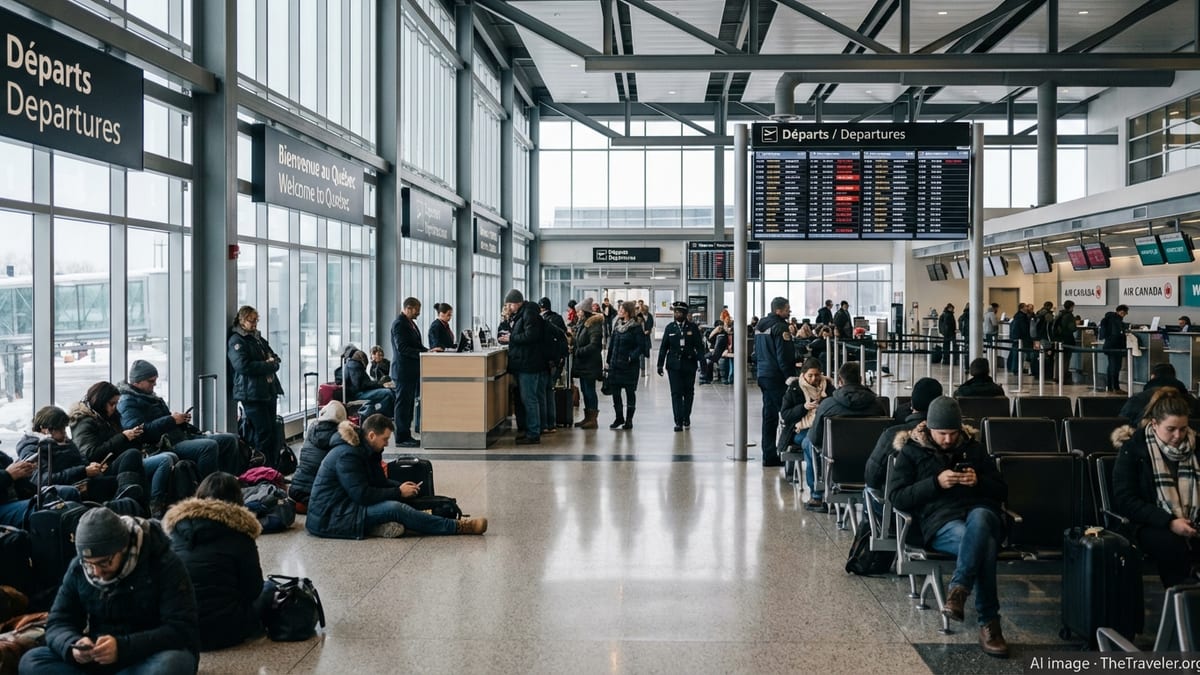
Hundreds of passengers were left in limbo at Montreal-Pierre Elliott Trudeau International Airport on Saturday as a fresh wave of disruption rippled through the schedules of Air Canada, WestJet, American Airlines and Air France, with at least 77 delays and 11 cancellations affecting key routes to Toronto, New York, Paris and London.
Disruptions Mount Across Key Transatlantic and North American Routes
The latest operational turbulence at Montreal-Trudeau unfolded across some of the airport’s busiest corridors, with short haul hops to Toronto and New York bearing the brunt of delays while long haul links to Paris and London also came under pressure. Arrivals and departures information screens showed a growing tally of late-running services throughout the morning, gradually extending into the afternoon as turnaround times tightened and congestion increased.
Domestic shuttles between Montreal and Toronto Pearson, normally among the most frequent and resilient routes in Canada, experienced repeated pushbacks as ground operations and air traffic flow management struggled to keep services on schedule. Passengers reported incremental delays of 30 to 90 minutes on multiple departures, often revised several times before boarding began. The impact was amplified for travelers relying on tight connections onward to Western Canada, the United States and Europe.
Cross border services to New York area airports faced a similar pattern of disruption. Flights bound for John F. Kennedy International and LaGuardia departed behind schedule as crews and aircraft arrived late from elsewhere in the network. For many travelers, the knock on effects meant missed evening connections, rebookings into the following day and unexpected overnight stays in either Montreal or New York.
On the transatlantic side, Air France and Air Canada’s joint operations to Paris, together with London services operated or codeshared by the affected carriers, saw schedule revisions that rippled through corporate travel and winter-break holiday plans. Even modest delays on overnight flights to Europe can disrupt early morning arrival slots, ground transfers and regional connections, leaving both leisure and business passengers scrambling to adjust.
Air Canada at the Center of the Turmoil
As Montreal-Trudeau’s largest carrier and hub operator, Air Canada once again found itself at the center of the disruption. The airline is still working its way through an exceptionally difficult winter, marked by repeated bouts of severe weather across North America and Europe and a network that has been operating with little slack. Earlier in February, the carrier contended with days of elevated cancellations and delays at major Canadian hubs as winter systems rolled through the country, putting sustained pressure on crews, aircraft availability and customer service capacity.
Saturday’s issues at Montreal added to those strains. Short haul services on the Montreal Toronto shuttle and core U.S. routes such as New York, Newark and Boston are critical feeders for the airline’s long haul transatlantic bank, and any misalignment in those flows has an outsized effect. Passengers who had booked through itineraries from regional Canadian cities via Montreal to Paris or London found themselves stuck partway through their journey when initial legs ran late or were canceled outright.
Air Canada has in recent weeks been forced to juggle winter-weather recovery with broader strategic adjustments to its North American network, including scaling back some U.S. services and tightening capacity on underperforming routes. That has left less room to maneuver when operational disruptions occur. With aircraft utilization already high and spare planes limited, even a handful of extended ground delays can quickly cascade into dozens of affected flights on busy days.
Customer frustration has been fueled by the cumulative effect of repeated incidents rather than any single event. Travelers interviewed at Montreal-Trudeau described a sense of fatigue with winter operations, citing previous episodes in January and early February where early-morning or late-evening flights were delayed, rerouted or canceled, often with limited advance warning and long queues at service desks.
WestJet, American Airlines and Air France Also Hit
While Air Canada accounted for a significant share of the disrupted schedule, WestJet, American Airlines and Air France each faced their own operational headaches as the day progressed. WestJet, which has already trimmed part of its transborder network in response to softer demand and a more challenging commercial environment, saw several of its Toronto and Western Canada connections from Montreal depart late. For passengers relying on Montreal as a link between Atlantic Canada or Quebec and the rest of the WestJet network, the ripple effects included missed same day arrivals and last minute rebookings.
American Airlines, a key partner for Montreal based passengers flying into its U.S. hubs, was particularly affected on services to New York and other Northeast gateways. Even relatively short delays out of Montreal can break carefully timed cross border itineraries, causing travelers to lose onward flights from large U.S. hubs. Some passengers faced the prospect of spending the night in transit as popular connections into the U.S. Midwest and South filled up quickly once rebooking began.
Across the Atlantic, Air France operations between Montreal and Paris also came under pressure. The service, normally a dependable overnight link connecting Canadian travelers to the carrier’s vast European and African network, encountered schedule adjustments that left customers concerned about onward morning connections beyond Charles de Gaulle. In a hub environment where banked connections are meticulously timed, a late arrival from Montreal can mean hours of additional waiting or even a forced overnight stay in Paris for some itineraries.
Although London flights are split among several carriers, including codeshare partners, the combined effect of delays and cancellations at Montreal-Trudeau weighed on capacity for travelers heading to the United Kingdom’s busiest gateway. Business travelers aiming to start the workweek in London, as well as students and tourists returning from winter holidays, faced uncertain departure times and reduced seat availability on alternative services.
Weather, Congestion and a Fragile Winter Network
The immediate causes of Saturday’s disruptions were a familiar mix for February in Eastern Canada. Montreal itself awoke to winter conditions that were manageable but far from ideal, with below-freezing temperatures, brisk winds and periods of low clouds slowing some ground operations and adding constraints to de-icing procedures. More significantly, conditions across the broader North American and North Atlantic network added friction at multiple points, from congested airspace over the U.S. Northeast to weather impacts at Toronto and New York area airports.
As airlines consolidate schedules and run tighter, more efficient operations, networks become more sensitive to localized weather or air traffic problems. A ground stop or runway slowdown at one U.S. hub can quickly spill over into Canadian airports when inbound aircraft arrive late or crews run up against duty time limits. For Montreal-Trudeau, which relies heavily on feed from other Canadian and U.S. airports to fill its long haul services, any disruption upstream can quickly translate into a queue of late departures downstream.
Recent weeks have underscored just how fragile winter operations can be across Canada. Storm systems and cold snaps earlier in February led to widespread cancellations and delays at major airports nationwide, including Montreal, Toronto and Calgary. Those events forced airlines to burn through their operational buffers, dipping into spare crews and back-up aircraft and leaving them with less resilience for subsequent disruptions such as those experienced on Saturday.
Aviation analysts note that while safety remains the overriding priority, the industry’s growing reliance on high utilization and lean staffing can compound passenger disruption when problems arise. Once a wave of delays passes a certain threshold in the middle of the day, it becomes increasingly difficult for operations teams to recover the schedule before late evening departures, particularly on international routes that cannot easily be cut without stranding passengers far from home.
Passengers Stranded, Rebooked and Rerouted
Inside Montreal-Trudeau’s terminal, passengers navigated lines at airline counters, customer service desks and automated kiosks as they attempted to salvage their travel plans. Families with young children sat on the floor near gate areas, surrounded by luggage and carry-ons, while business travelers refreshed mobile apps for updated departure times and emailed colleagues to rearrange meetings at their destinations.
For many, the most immediate frustration was a lack of clarity in the early stages of the disruption. Departure boards initially showed modest delays that were later extended, leading travelers to stay close to the gate area rather than seeking out rest, food or alternative arrangements. Several passengers described being called to board only to be held at the jet bridge while final paperwork, de-icing slots or connecting passengers were accounted for, stretching journeys by another half hour or more.
Others faced the more serious blow of outright cancellation. With 11 flights scrapped from the schedule, rebooking quickly became competitive, particularly on the most popular routes where remaining departures were already heavily booked. Some travelers accepted routings through alternative hubs, adding hours to already long travel days in order to reach Toronto, New York, Paris or London before the end of the weekend.
Airport staff and airline agents bore the brunt of passenger frustration as they tried to manage expectations and find seats on remaining flights. While many travelers acknowledged that winter weather and air traffic constraints were beyond the control of frontline employees, long waits on customer service phone lines and limited compensation options added to the sense of being left grounded without clear support.
Airlines Offer Waivers and Limited Relief
In response to the disruption, affected carriers moved to offer a mix of rebooking flexibility and, in some cases, partial refunds or travel credits. Air Canada and its partners encouraged passengers with non-urgent travel to voluntarily move their journeys to later dates where possible, freeing up seats for those with essential commitments or tightly constrained schedules. In some instances, change fees were waived and fare differences reduced or eliminated for near term rebookings.
WestJet and American Airlines also advised customers traveling through Montreal-Trudeau to monitor their flight status closely and consider alternate routings if their plans were flexible. With operations still recovering from previous winter events and the network stretched thin, airlines emphasized that same day reaccommodation could not be guaranteed, particularly on transatlantic services where aircraft rotations are complex and heavily regulated.
Air France, operating a cornerstone link between Montreal and Paris, worked to preserve its overnight departures where possible while adjusting departure times to reflect air traffic restrictions over the North Atlantic. For passengers with missed onward connections in Europe, the carrier offered rebooking on later flights and, where mandated or contractually required, hotel accommodation and meal vouchers to bridge extended layovers.
Despite these measures, many passengers at Montreal-Trudeau expressed disappointment at what they perceived as inconsistent communication about their rights and options. Some travelers reported receiving push notifications or emails only after they had already arrived at the airport, while others said airline apps and departure boards were slow to reflect real time changes. The patchwork of policies between carriers also created confusion for those flying on codeshare itineraries that involved more than one airline.
Broader Strains on Canada’s Air Travel System
The turmoil at Montreal-Trudeau comes amid broader strains on Canada’s aviation network as airlines adjust to evolving demand patterns, labor pressures and a politically charged cross border environment. In recent weeks, several Canadian carriers have announced cuts or suspensions on U.S. routes, reflecting both softer demand for southbound travel and heightened operational and cost challenges. At the same time, airports and airlines have been grappling with the tail end of a difficult winter season that has tested infrastructure and staffing levels.
Montreal’s role as both a domestic hub and an international gateway magnifies these stresses. The airport handles approximately 400 flights per day in normal conditions, connecting regional centers across Quebec and Atlantic Canada with major hubs in Toronto, Western Canada, the United States and Europe. When disruptions hit, the combination of local origin and connecting passengers makes recovery particularly complex, as airlines must account not only for point to point travelers but also for those in transit from other regions.
Industry observers point to a convergence of factors behind the recurring disruption pattern, including persistent crew shortages in some parts of the system, high aircraft utilization and the lingering impact of earlier operational crises. While airlines have added capacity and restored many routes since the depths of the pandemic, they are still refining schedules and adjusting to new travel behaviors, with demand concentrated at peak times and on certain leisure heavy routes.
Regulatory and consumer advocates, meanwhile, continue to press for stronger passenger protections and more robust contingency planning, arguing that the frequency and scale of recent disruptions underline systemic vulnerabilities. Montreal-Trudeau’s latest wave of delays and cancellations is likely to add fresh urgency to those debates as affected travelers share their experiences and seek recourse through compensation schemes and complaints processes.
What Travelers Can Do if Their Flight Is Affected
For passengers still planning to travel through Montreal-Trudeau in the coming days, airlines and airport officials emphasize the importance of preparation and flexibility. Checking flight status repeatedly in the 24 hours before departure, using both airline apps and airport information channels, can provide at least some early warning of potential changes. Where schedules allow, opting for earlier flights in the day can slightly reduce exposure to cascading delays that tend to worsen in the afternoon and evening peaks.
Travel experts recommend that passengers with critical connections, particularly onto long haul transatlantic services to Paris and London, build in additional buffer time between flights or consider overnight stops to reduce the risk of missed onward journeys. Booking all segments on a single ticket, ideally with a single airline or alliance, can also improve rebooking options when disruptions occur, as carriers are generally more willing and able to assist passengers within their own networks.
At the airport, travelers faced with a delay or cancellation are advised to act quickly and use multiple channels simultaneously. While queues may form at customer service desks, online tools and call centers can sometimes offer faster access to rebooking options, especially in the early stages of a disruption. Having alternative routings in mind, such as connecting through different hubs or flying into secondary airports near the intended destination, can help when negotiating new arrangements.
Ultimately, Saturday’s disruption at Montreal-Trudeau serves as another reminder of the heightened unpredictability of winter air travel in Canada and across the North Atlantic. With 77 delays and 11 cancellations affecting marquee routes to Toronto, New York, Paris and London, travelers and airlines alike are once again being forced to adapt on the fly to a season where even routine journeys can quickly turn into extended ordeals.