

More news on this day
Travelers flying through Manila’s Ninoy Aquino International Airport are set to move faster from curb to gate as more airlines join the airport’s expanding biometric check in and boarding program.
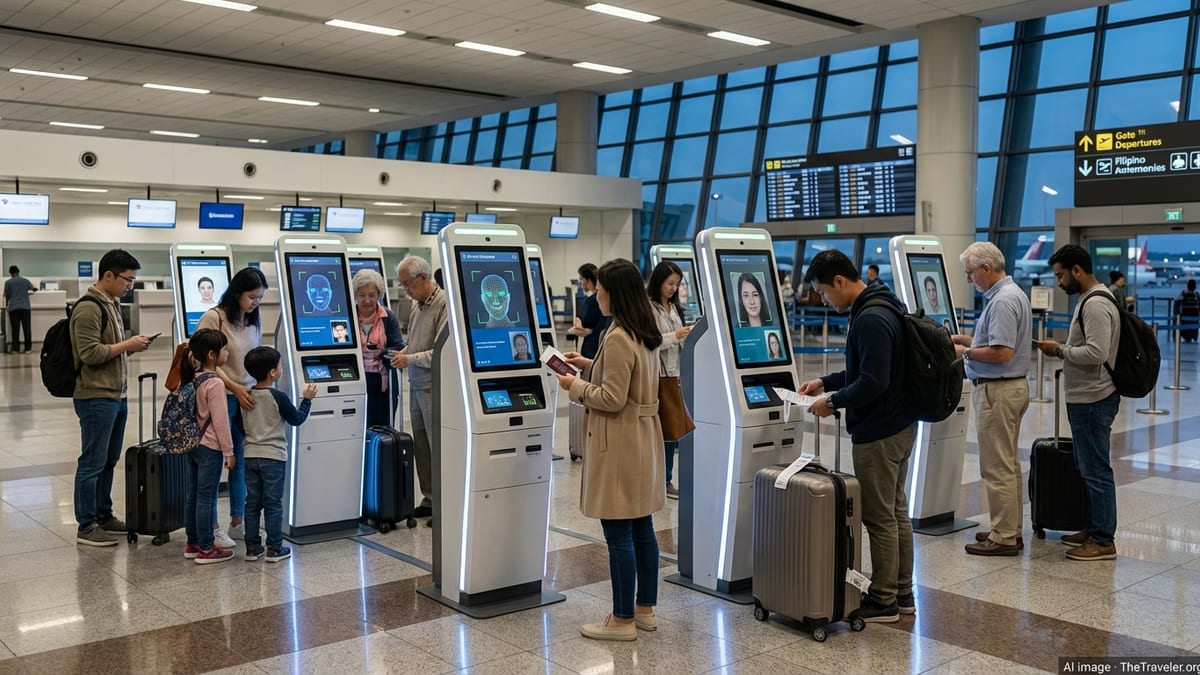
NAIA Scales Up Digital Passenger Processing
Ninoy Aquino International Airport’s private operator, New NAIA Infra Corp., has confirmed that biometric self-service options are now live across Terminals 1, 2, and 3 for a growing list of carriers. The rollout allows eligible passengers to check in, print boarding passes and bag tags, drop luggage, clear initial security and board using facial recognition instead of traditional document checks.
Airport officials say the expansion is designed to cut queuing times at one of Southeast Asia’s busiest gateways and to ease chronic congestion at staffed counters. The initiative is part of a broader multiyear upgrade program intended to bring Manila’s main airport in line with digital standards already common at major hubs in Asia, the Middle East and North America.
The biometric touchpoints are integrated with Amadeus-powered systems, which underpin both the new e-gates at immigration and the automated lanes at check in, security and boarding. The goal is to create a single biometric token for each eligible passenger that can be used repeatedly on the day of travel without showing a passport or boarding pass at every step.
New NAIA Infra Corp. has emphasized that the systems are fully operational for participating airlines, with additional carriers expected to join in phases as technical integration is completed. A phased activation of automated bag drop is also under way, allowing the operator to scale up capacity as usage grows.
Which Airlines Now Offer Biometric Check In and Boarding
The expanded program now covers a mix of Philippine and foreign carriers across NAIA’s three main passenger terminals. At Terminal 1, biometric-enabled check in and boarding are available for Philippine Airlines passengers on most international routes, excluding selected Middle East and Japan services, as well as for Asiana Airlines on eligible flights for Korean nationals and travelers not requiring visas.
Terminal 2, a key hub for domestic operations, has seen full adoption among the country’s three largest local carriers. Philippine Airlines, Cebu Pacific and AirAsia are now using the self-service kiosks and biometric touchpoints for their entire domestic networks departing from the terminal, a move that is expected to significantly reduce peak-hour lines for local travelers.
At Terminal 3, the integration is more extensive and includes both local and international airlines. Cebu Pacific has enabled biometric processing for all domestic and international departures, while AirAsia uses the system for its international flights. Among foreign airlines, United Airlines has joined for passengers who do not require destination visas, and full biometric check in and boarding are available on Qatar Airways and Air Canada services.
Authorities say more airlines and routes will be added in the coming months as back-end connections are completed. The airport is also coordinating with carriers that are scheduled to shift terminals in late March and early April to ensure their biometric capabilities follow them to their new locations without disrupting travelers.
How the Biometric Journey Works for Passengers
For travelers, the new system begins at self-service kiosks placed near the check in areas of each terminal. Passengers on eligible flights are instructed to scan their passports, complete a one-time facial registration and confirm their booking details. Once verified, the kiosk prints boarding passes and bag tags, which the passenger attaches to checked luggage.
After tagging bags, travelers can proceed either to staffed bag drop counters or to the automated bag drop lanes as they are activated. At these touchpoints, the system links the tagged baggage to the passenger’s biometric profile, allowing it to be accepted without an additional manual check of travel documents.
At security and selected boarding gates, cameras compare a live facial image with the biometric record created at check in. If the match is confirmed, passengers can move through the lane or board the aircraft without presenting a passport or paper boarding pass. Airport officials note that this one-time setup per journey can be reused throughout the departure process on that day.
NAIA’s operator is advising passengers to arrive with valid travel documents and to follow on-screen instructions carefully at the kiosks to avoid delays. While biometric systems are promoted as a convenience feature, travelers are still expected to carry passports and, where required, physical visas, as immigration and airline staff may conduct additional checks when necessary.
Capacity Relief and Security in a Record-Busy Year
The wider rollout of biometric processing comes as NAIA experiences record passenger volumes. In January 2026, the airport handled nearly five million passengers, its highest monthly total on record, following a strong holiday travel period. Reducing manual checks at counters and gates is seen as critical to managing this growth without major new terminal construction in the short term.
By shifting routine transactions such as check in, bag tagging and boarding to automated lanes, New NAIA Infra Corp. aims to free staff to focus on complex cases, disruptions and customer assistance. The operator argues that the technology will not only shorten queues but also make operations more predictable, helping airlines turn flights around more quickly.
Security agencies have also backed the digital drive, highlighting the consistency of biometric checks compared with visual inspections of documents. The new Amadeus e-gates at immigration, which are being brought online in stages, are designed to dovetail with the front-of-house biometric journey, creating an end-to-end digital pathway from terminal entrance to departure gate.
Authorities maintain that data protection safeguards are built into the system, with biometric records stored and processed in line with national and international standards. They add that traditional staffed counters will remain available, particularly for passengers with additional documentation needs, mobility challenges or those who prefer in-person processing.
What Travelers Should Do Before Heading to NAIA
With multiple airlines now live on the biometric platform and further terminal changes scheduled from late March, passengers are being urged to double-check both their terminal and their eligibility for self-service before traveling to NAIA. Airlines and airport officials alike are advising travelers to monitor pre-flight emails and mobile app notifications for the latest check in instructions.
Passengers whose flights are included in the biometric program are encouraged to use the self check in kiosks as soon as they arrive at the terminal, rather than queuing immediately for staffed counters. Officials say this simple step can shave considerable time off the airport experience, especially during early morning and late evening peaks.
Travelers who are not yet eligible for biometric processing, or who are traveling on routes subject to additional document checks, should still allow extra time for manual procedures at the airline counters. NAIA’s management continues to stress that while digital systems are expanding quickly, the transition remains gradual and mixed, with both automated and traditional options in operation side by side.
For now, the message to passengers is clear: at Manila’s main airport, looking into a camera instead of handing over a passport is becoming an increasingly common part of the pre-flight routine, and the list of airlines offering that experience is growing by the week.