

More news on this day
Travelers in Türkiye are facing a fresh wave of disruption as Qatar Airways, Flydubai and other carriers cancel nearly a dozen additional flights across Istanbul, Antalya and İzmir, further complicating already strained connections to Bahrain, Dubai, Doha, Algiers and other key Middle Eastern and North African hubs.
Get the latest news straight to your inbox!
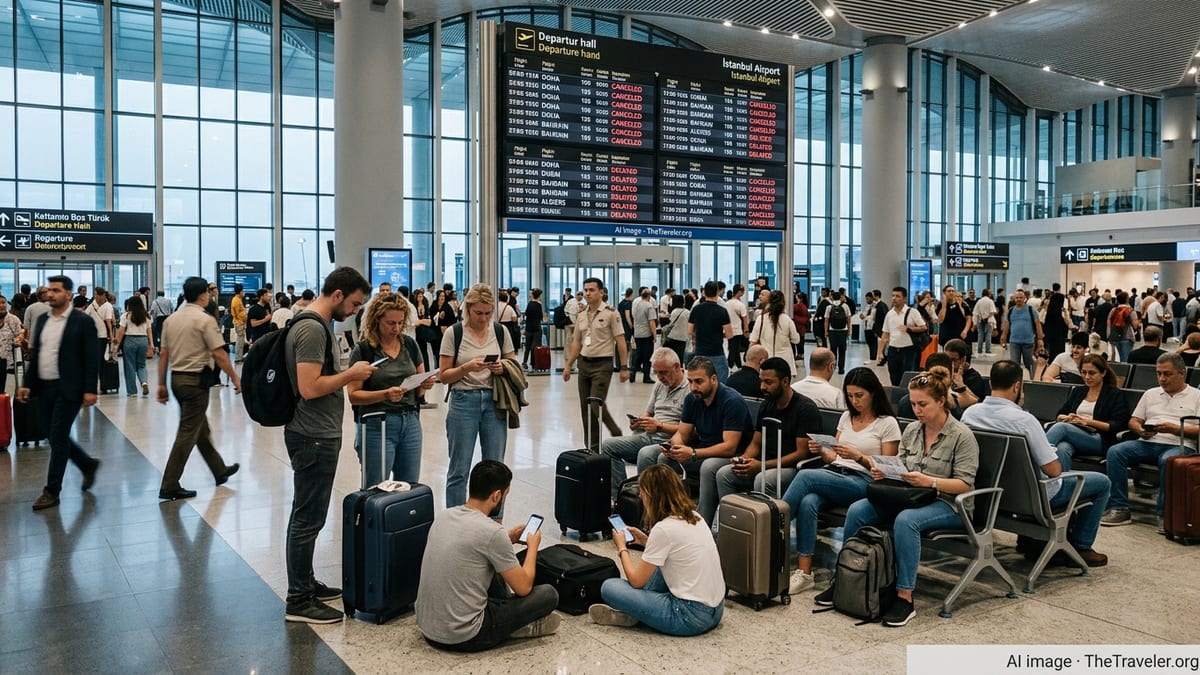
New Round of Cancellations Hits Major Turkish Gateways
According to publicly available flight-tracking data and airline schedule updates reviewed on March 24, a new series of cancellations has been registered on routes linking Türkiye to Gulf and North African cities. The latest changes include nearly a dozen additional flights dropped from timetables at Istanbul, Antalya and İzmir airports, primarily on services operating to Bahrain, Dubai, Doha and Algiers.
Qatar Airways has already been operating a sharply reduced schedule after severe disruption to flights in and out of Doha earlier in March. Recent timetable adjustments show further cancellations on selected services routed via Istanbul, removing options for travelers who had been rebooked through Türkiye after earlier disruptions in the Gulf region.
Flydubai, which has been gradually rebuilding its network as regional airspace restrictions evolve, has also trimmed departures touching Turkish airports, affecting passengers traveling between Dubai and coastal Turkish destinations that had become alternative gateways for onward long-haul travel. Other regional and European carriers have adjusted their operations as well, leading to a patchwork of last-minute changes.
Published coverage of the wider Middle East aviation disruption indicates that ongoing airspace limitations and shifting operational risk assessments remain key factors behind the flight cuts, even as some routes resume on a limited basis.
Knock-On Effects for Routes to Bahrain, Dubai, Doha and Algiers
The latest cancellations are having an outsized impact on passengers connecting between Türkiye and major hubs such as Bahrain, Dubai and Doha. With Qatar Airways, Flydubai and several other carriers curtailing operations, travelers are reporting fewer available same-day connections and longer total journey times as they are rerouted through secondary airports or on multi-stop itineraries.
Connections to Bahrain and Doha have been particularly constrained, as many itineraries relied on tight transfer windows through Gulf hubs now operating under reduced capacity. In some cases, flights that had been used as relief or rerouting options earlier in March are now being withdrawn, leaving travelers with limited alternatives from Turkish cities.
Services linking Turkish airports with Algiers and other North African destinations are also feeling the strain. Adjusted schedules show cuts on select rotations where aircraft and crew are being redeployed to more in-demand or less operationally complex routes, affecting both point-to-point travelers and those transiting through Istanbul or Antalya on multi-leg trips.
Travel forums and social media posts in recent days describe passengers facing repeated rebookings, with some itineraries shifting from direct or one-stop journeys to more complex routings via European or alternative Middle Eastern gateways in order to avoid congested corridors.
Passengers Grapple With Rebookings, Long Delays and Limited Options
Recent first-hand accounts shared on public travel boards indicate that some passengers who were initially rerouted through Türkiye after earlier Gulf cancellations are now seeing those Turkish segments canceled as well. Travelers describe itineraries that were moved from Doha to Istanbul, only to have the new Istanbul departures later removed from schedules, forcing yet another round of changes.
Reports suggest that customer service channels at several affected airlines remain heavily congested, with lengthy wait times for call centers and live chat support. Some travelers note that while automated systems offer rebooking on the next available service from Turkish airports, those flights are sometimes several days away or themselves subject to subsequent schedule changes.
In a number of cases, travelers have turned to third-party options from Turkish Airlines and European carriers to secure earlier departures from Istanbul, Antalya or İzmir, often at higher last-minute fares. Others have opted for refunds where available, choosing to postpone or cancel trips entirely rather than navigate further uncertainty.
Publicly shared experiences also highlight confusion around changing policies for fee waivers, vouchers and alternative routing, as airlines update their conditions in response to evolving operational constraints and fluctuating demand across the region.
Operational and Regional Context Behind the Disruptions
The latest cancellations across Turkish airports come against the backdrop of broader regional instability affecting airspace and hub operations. Open-source reporting on the situation in Qatar and neighboring states in early March described temporary closures, restricted navigation corridors and a phased, capacity-limited reopening of Doha’s airspace for select evacuation and cargo flights.
As these restrictions have shifted, airlines including Qatar Airways and Flydubai have repeatedly redrawn their schedules to balance safety, regulatory requirements and limited slots along available routes. Türkiye’s position as a major transit crossroads between Europe, the Middle East, North Africa and Asia has made Istanbul, Antalya and İzmir especially sensitive to upstream changes in Gulf hub operations.
Industry analyses published in recent weeks note that carriers are likely to continue flexing capacity on short notice as operational risk assessments evolve. This can leave passengers exposed to rolling waves of schedule changes, particularly on multi-leg journeys involving Gulf and Turkish connections.
While some long-haul and regional routes are gradually resuming, published timetables and advisory notices show that the situation remains fluid, with airlines cautioning that further adjustments may be necessary as conditions change.
Advice for Travelers Departing from or Connecting via Türkiye
Public travel advisories and airline statements emphasize the importance of closely monitoring bookings for anyone scheduled to fly into or out of Istanbul, Antalya or İzmir over the coming days. Given the pattern of late-breaking changes, passengers are being encouraged to check their reservation status repeatedly rather than relying solely on earlier confirmations.
Travel experts quoted in recent coverage recommend building extra time into itineraries involving Gulf and North African connections, and where possible favoring flexible tickets that allow for date or routing changes without significant penalties. For those with urgent travel needs, some commentators suggest considering alternative routings through European hubs less affected by Middle Eastern airspace constraints.
Travelers are also being advised to keep digital and printed copies of all booking confirmations, cancellation notices and receipts for additional expenses, as documentation can be important when seeking refunds, vouchers or insurance claims in the wake of repeated schedule disruptions.
With nearly a dozen more flights now removed from schedules at major Turkish gateways and further changes still possible, passengers planning to transit Türkiye to Bahrain, Dubai, Doha, Algiers and other regional destinations may face continued uncertainty as airlines navigate a highly dynamic operating environment.