

More news on this day
More than 2,000 flight cancellations and delays across the United States are disrupting weekend travel plans, as storms sweeping through key regions collide with already stretched airline operations and crowded spring schedules.
Get the latest news straight to your inbox!
Nationwide Disruptions Hit Major Hubs
Publicly available flight-tracking data and industry summaries for April 11 and 12 indicate that U.S. travelers are facing another wave of widespread disruptions, with more than 2,000 flights canceled or significantly delayed over the two-day period. Reports from aviation-focused outlets describe a pattern of moderate cancellation volumes combined with heavy delays, a combination that leaves aircraft and crews in circulation but increasingly out of position across the national network.
Coverage compiled from multiple travel and aviation news sources points to concentrated problems at some of the country’s busiest hubs. Chicago O’Hare, Atlanta’s Hartsfield Jackson, Newark Liberty, Los Angeles International, Houston George Bush Intercontinental and Dallas Fort Worth have all reported triple-digit delay counts or notable clusters of cancellations in recent days. These hubs handle vast connecting flows, so even a relatively small share of canceled departures can quickly ripple outward to dozens of secondary airports.
In parallel, several leisure and regional gateways have experienced smaller but still disruptive waves of delays and cancellations. Orlando International, Las Vegas’ Harry Reid International and San Francisco International have all appeared in recent tracking summaries for elevated disruption levels, with late‑running arrivals compounding throughout the day and spilling into subsequent rotations.
Travel outlets note that this latest disruption follows a broader pattern seen throughout early 2026, in which routine weather systems and localized operational challenges can translate into thousands of late flights across the country in a single day or short period.
Weather Systems Intersect With a Fragile Spring Schedule
The current round of disruption is unfolding against a backdrop of unsettled spring weather across large parts of the United States. Recent storm systems moving through the Midwest, South and East have triggered low visibility, thunderstorms and high winds at various points along key air corridors. Aviation and meteorological summaries indicate that these conditions have required temporary ground stops, reduced arrival and departure rates, and rerouted traffic on several days in early April.
Analyses from weather and aviation data providers consistently show that weather remains a leading driver of delay minutes in the U.S. system. Even when outright cancellations remain below the most extreme winter storm levels, scattered thunderstorms and fast-moving fronts can force controllers to space out aircraft, shut down certain approach paths or hold departures on the ground, rapidly building queues at major hubs.
However, published coverage also emphasizes that weather alone does not fully explain the scale of the latest disruptions. Airlines are running tightly timed spring schedules built around strong demand, with high load factors leaving little spare capacity to absorb irregular operations. When a bank of flights is slowed by storms, limited spare aircraft and crew availability can make it difficult to recover before the next round of departures.
In practice, that means that a weather event affecting one or two regions can still generate delays at airports far from any storm activity, as late aircraft arrive out of sequence and crew duty-time limits restrict how long staff can remain on duty.
Airlines and Airports Struggle With Knock-On Effects
Publicly available information from airline operational summaries and government transportation data shows that the U.S. system has become increasingly vulnerable to so-called knock-on or cascading delays. Once a flight departs late, the same aircraft and crew are more likely to operate subsequent legs behind schedule, especially at hub airports where each plane may be scheduled for multiple turnarounds per day.
On high-traffic days, relatively modest disruption at a few large hubs can force airlines to cancel select flights outright in order to regain control of their schedules. According to recent reporting on similar events, carriers sometimes prioritize preserving long-haul and high-demand routes, while trimming some shorter domestic segments to free up aircraft and crews. This can leave regional travelers facing cancellations even when their local weather appears stable.
Airport operations teams have also reported sustained pressure on gates, ramp space and staffing during recent delay-heavy days. When arrivals bank up due to air traffic control programs or weather holds, aircraft can be left waiting for available gates, which in turn stalls boarding for outbound flights. Ground handling, baggage and maintenance staff then contend with compressed turnaround windows and shifting flight priorities.
Travel industry analysis suggests that structural constraints, including air traffic controller staffing shortfalls in some regions and the long lead times required to train and certify new personnel, mean that these bottlenecks are likely to persist, particularly during peak spring and summer travel periods.
Passengers Face Long Lines and Limited Options
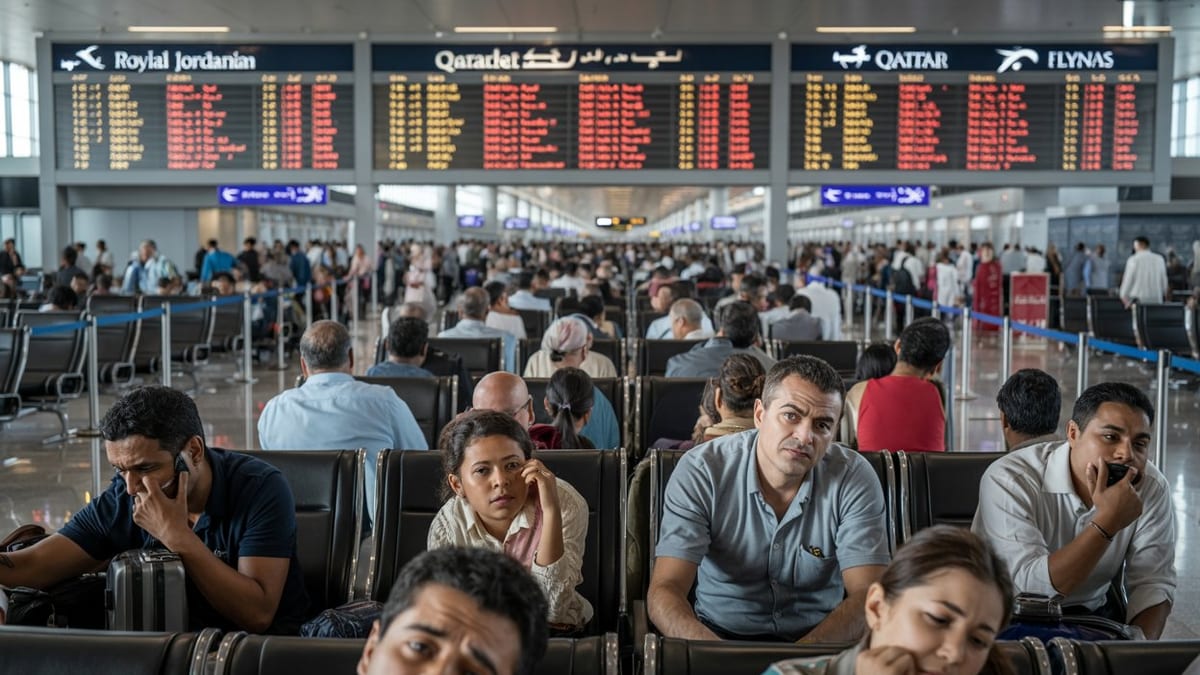
For travelers caught in the latest wave of disruptions, the impact is most visible in crowded terminals, long customer-service queues and rebooking challenges. Recent travel coverage from multiple outlets has highlighted scenes of passengers lining up at ticket counters and gate podiums at major hubs, as families attempt to secure new connections or overnight accommodation after missed flights.
Consumer information from passenger rights organizations and federal transportation summaries notes that, in the United States, airlines generally retain significant discretion over how they respond to weather-related disruptions. While carriers typically provide rebooking at no additional fare in such cases, compensation policies for delays and cancellations vary by airline and are more limited when the disruption is categorized as outside the carrier’s control.
Guidance from travel experts encourages passengers to act quickly when cancellations hit, using airline mobile apps and websites to request alternative routings before seats on remaining flights disappear. Travelers are also advised to monitor flight status closely in the 24 hours before departure, as schedule changes may occur in multiple steps rather than in a single update.
For those already at the airport, publicly available advice from government and consumer resources suggests that understanding the reason code for a delay or cancellation can help set expectations about rebooking options and potential eligibility for refunds. In practice, however, distinguishing between weather-driven disruptions and those tied to airline operations can be difficult for individual passengers in real time.
What the Latest Turbulence Signals for Summer Travel
The latest tally of more than 2,000 disrupted flights over a short window in April is being viewed by travel analysts as another stress test for the U.S. aviation system ahead of the busy summer season. Demand forecasts from airline and industry groups indicate that domestic travel volumes in 2026 are tracking above pre-pandemic baselines, with carriers planning robust summer schedules and minimal slack.
Transportation statistics and regulatory filings reviewed in recent months show that overall cancellation rates have improved compared with the most turbulent phases of the pandemic recovery, yet the system continues to experience clusters of severe disruption when weather and operational constraints intersect. High-profile events, such as major winter storms earlier in the year that led to thousands of cancellations in a single day, remain fresh in the minds of frequent travelers.
Analysts cited in recent coverage argue that reducing the frequency and severity of disruption days will require a combination of investments and policy changes, including additional air traffic control staffing, more resilient scheduling practices, and continued modernization of navigation and weather-avoidance technologies. These changes are expected to unfold gradually rather than immediately.
For now, the experience of travelers facing this latest round of more than 2,000 cancellations and delays underlines the importance of contingency planning, flexible itineraries and proactive communication with airlines. As spring storms continue and summer demand builds, passengers may find that staying informed and building extra time into their plans is one of the few practical defenses against a system that remains prone to sudden bouts of turbulence.