

More news on this day
Thousands of airline passengers across the United States faced last minute itinerary changes as more than 100 flights were canceled and over 3,300 were delayed, disrupting weekend travel at major hubs and leisure gateways from New York to Miami and San Francisco.
Get the latest news straight to your inbox!
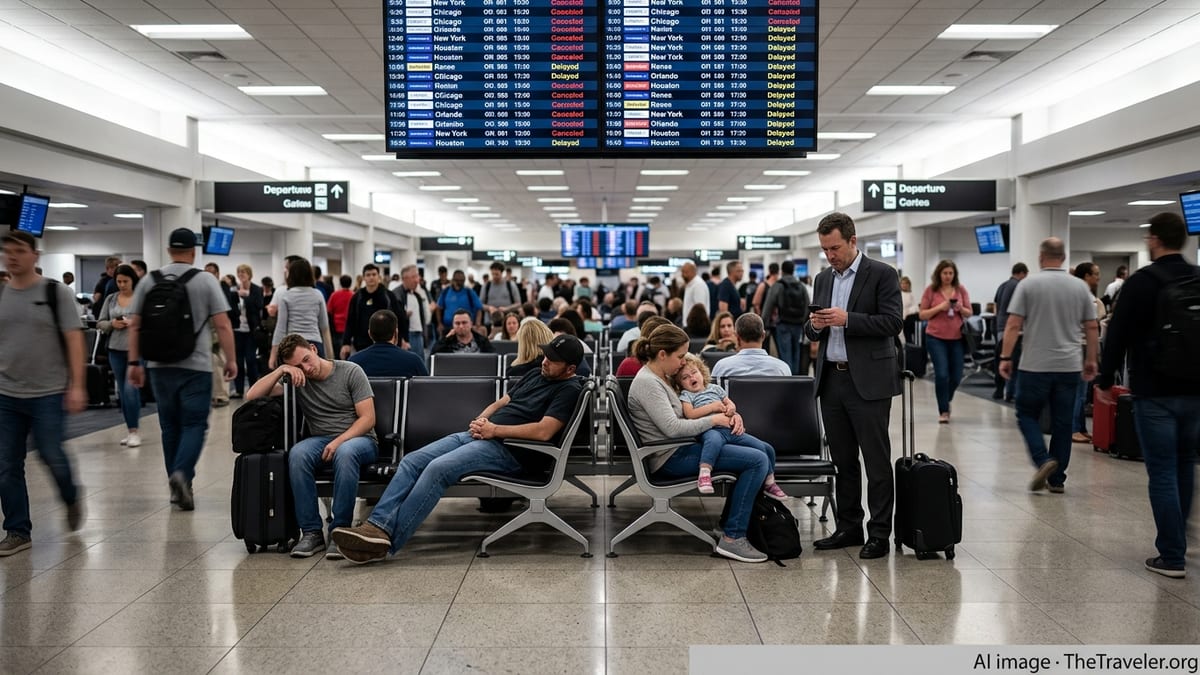
Image by Travel And Tour World
Wide-Ranging Disruptions Hit Major U.S. Airports
Publicly available flight-tracking data for Sunday, March 29, indicates that at least 101 flights within, into or out of the United States were canceled, while roughly 3,309 experienced delays. The disruption affected a broad mix of carriers, including large network airlines, low-cost operators and regional affiliates that fly under major-brand banners.
The impact was most visible at high-traffic airports such as New York’s LaGuardia and John F. Kennedy, Miami International, Fort Lauderdale-Hollywood, Orlando International and San Francisco International. Secondary airports feeding those hubs also reported rolling delays as late departures in one part of the network cascaded into missed slots and crew scheduling challenges elsewhere.
While the total number of outright cancellations remained relatively modest compared with some historic meltdown events, the volume of delays created longer-than-normal connection times and forced many travelers to spend unplanned hours in terminals or rebook for later in the day.
Airlines involved in the day’s disruption included Delta Air Lines, Spirit Airlines, Hawaiian Airlines, and regional operators such as Republic Airways and PSA Airlines, alongside other large U.S. carriers operating in the same airspace. Operations data shows that no single airline accounted for a majority of the delays, underscoring how network issues and weather can ripple across multiple brands at once.
Delta, Spirit, Hawaiian and Regionals Under Pressure
Operational statistics for Sunday show mainline carriers sharing the burden with their regional and low-cost counterparts. Delta, which typically ranks near the top of U.S. on-time performance tables, reported a mix of delays across key hubs, including New York and Atlanta, that spilled into its Northeast and Florida routes.
Spirit, a major player at Fort Lauderdale and Orlando and a growing presence in other East Coast markets, saw a cluster of delayed departures on heavily trafficked leisure corridors. Industry observers often note that ultra-low-cost carriers can have fewer spare aircraft and crew on standby, so even minor disruptions may translate into longer recovery times when schedules are tight.
Hawaiian Airlines, though smaller in the continental U.S. market, was also listed among carriers with cancellations and delays. Any operational snags on long-haul services between Hawaii and the mainland can have an outsized effect on travelers, since frequency on those routes is lower and alternatives during peak periods are limited.
Regional airlines such as Republic and PSA, which operate flights on behalf of larger network brands, featured in the disruption statistics as well. Because those carriers feed traffic from smaller cities into major hubs, delays on regional legs can cause passengers to miss onward connections, amplifying the overall scale of the disruption even when individual flights are relatively short.
Weather, Congestion and Tight Scheduling Drive Ripple Effects
Preliminary information from aviation tracking services points to a familiar combination of weather-related delays, airspace congestion and tight scheduling as key drivers of the day’s problems. Spring weather systems affecting portions of the East Coast and Midwest contributed to ground stops, flow-control programs and increased spacing between aircraft in busy sectors, all of which slow operations.
Once early flights are delayed, crews can approach federally mandated duty limits, leaving airlines with fewer qualified staff available for later departures unless replacements can be positioned in time. This dynamic is particularly challenging for regional operators and smaller carriers with leaner staffing models, where a single out-of-position crew can result in a cancellation instead of a late departure.
At the same time, demand for leisure and family travel remains strong at airports such as Orlando, Fort Lauderdale and Miami, where a high proportion of flights operate near full capacity. When disruptions occur on those routes, opportunities to rebook passengers on the next available departure may be limited, forcing some travelers to accept longer layovers, overnight stays, or rerouting through distant hubs.
Operational data from recent months has also shown that recovery from even moderate weather events can spill into following days, as aircraft and crews return to their normal rotations. Airlines have been adjusting schedules, trimming marginal frequencies and building in additional buffers to reduce the risk of prolonged knock-on effects, but industry analysts note that days with widespread thunderstorms or coastal storms can still produce nationwide waves of delays.
Passengers Confront Long Lines, Rebooking Challenges
The surge in delayed flights on Sunday translated into long lines at check-in counters, gate podiums and customer service desks at the most affected airports. Travelers reported on social media that they were given new departure times multiple times in a single day as airlines attempted to work around congestion and crew-rest constraints.
At New York airports, rolling delays on shuttle-style flights to and from business and political centers such as Washington and Boston led to crowding in already constrained terminal spaces. In Florida, where many passengers were either ending or beginning cruises and resort stays, late arrivals created logistical headaches for ground transportation and hotel check-in windows.
Information platforms used by travelers, including airline apps and third-party flight-tracking services, were heavily relied upon throughout the day to monitor shifting departure and arrival times. Reports indicate that some passengers were able to rebook themselves onto earlier or more reliable connections using digital tools, while others had to queue to speak with staff when itineraries became complex or involved multiple airlines.
For those whose flights were canceled outright, options depended on the carrier and type of ticket purchased. Some passengers were placed on the next available flights with the same airline, while others were offered vouchers or credit for future travel when same-day alternatives could not be secured. Published guidance from consumer advocates continues to emphasize the importance of understanding fare rules and keeping receipts for any out-of-pocket expenses incurred during disruptions.
Growing Focus on Passenger Rights and Planning Ahead
The latest day of widespread delays adds to a broader discussion about passenger protections in the United States. Federal rules require airlines to refund travelers when flights are canceled or significantly changed and the passenger chooses not to travel, but compensation for delays, meals, or hotels is largely governed by each carrier’s individual policies.
Recent public information campaigns by consumer groups and transportation agencies have encouraged passengers to review airline commitments on issues such as hotel accommodations, ground transportation and meal vouchers before booking. Some carriers have created online dashboards that spell out their obligations in various disruption scenarios, making it easier for travelers to compare policies.
Travel planners recommend building additional buffer time into itineraries that involve important events, cruises or international connections, particularly during seasons prone to storms or air-traffic congestion. Booking earlier departures, avoiding tight connections and considering travel insurance are among the strategies frequently cited to reduce the risk of being stranded when operational issues arise.
As airlines continue to refine schedules and staffing plans ahead of the busy spring and summer periods, analysts will be watching whether the industry can keep the number of cancellations low while also reducing the scale of rolling delays that leave thousands of passengers waiting for takeoff on days like Sunday.