

More news on this day
Air travel across Asia and the Gulf endured another punishing operational day as publicly available data showed 514 flights cancelled and about 5,262 delayed in a single 24 hour period, disrupting schedules in South Korea, China, Japan, India, the United Arab Emirates and other markets, and hitting carriers from All Nippon Airways and China Eastern to Batik Air and FlyDubai at major hubs including Beijing, Jakarta, Delhi and Dubai.
Get the latest news straight to your inbox!
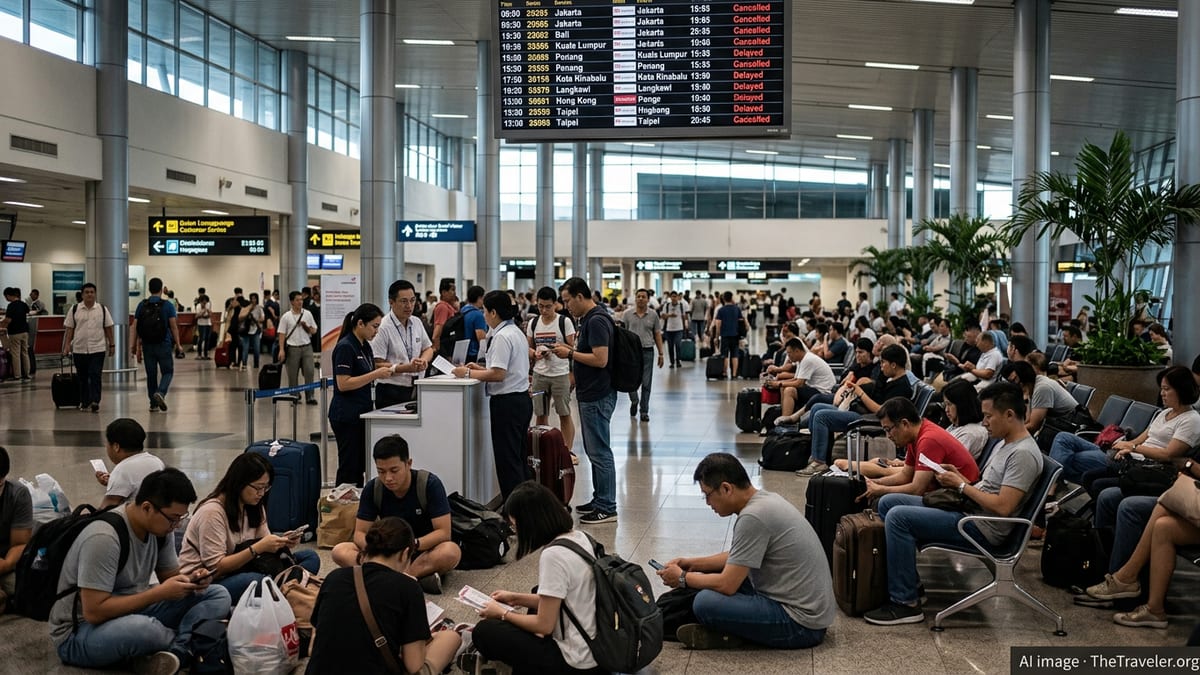
Fresh Wave of Disruptions Hits Key Asian and Gulf Hubs
Figures compiled from multiple flight tracking platforms and airport departure boards indicate that the latest disruption peaked over a concentrated operational window in early April, coinciding with already heavy spring traffic. The combined tally of 514 cancellations and more than 5,200 delays spans domestic and international services, with knock on effects extending to connections in Europe, North America and Oceania.
Tokyo, Beijing, Seoul, Jakarta, Delhi and Dubai emerged among the hardest hit locations, with images and local reports pointing to crowded terminals, rolling delay announcements and long lines at check in, security and rebooking counters. In several hubs, the disruption compounded earlier schedule instability linked to airspace constraints and capacity reductions on certain Asia to Middle East and Asia to Europe routes.
Publicly available coverage from aviation and travel outlets notes that the day’s figures rank among the most severe for the region so far this year, following a series of high disruption days logged since late March. Analysts tracking the data highlight that while the underlying causes vary by market, the aggregate result is an increasingly fragile network that leaves little room to absorb weather, technical or geopolitical shocks.
The pattern mirrors broader volatility seen since late February on routes connecting Asia with the Gulf and onward to Europe, where thousands of flights have already been withdrawn from schedules due to conflict related airspace closures and precautionary route adjustments. Each new cluster of cancellations and long delays adds fresh strain to carriers, airports and passengers trying to navigate an already constrained environment.
Major Airlines and Routes Under Pressure
The disruption has affected a wide spread of carriers, but publicly available operational data shows particular concentration among Asia based and Gulf based airlines that rely heavily on regional hubs. All Nippon Airways services touching Tokyo, China Eastern departures from Chinese mainland gateways, and FlyDubai operations through Dubai recorded notable numbers of late running or cancelled flights over the affected window.
Indonesia’s Batik Air, a frequent feature in delay roundups for Jakarta and other Indonesian airports, has again appeared prominently in the latest tallies. Reports focusing on Soekarno Hatta International highlight repeated late departures and rolling schedule changes, underscoring the challenges of maintaining on time performance across a dense domestic and regional network when upstream sectors are disrupted.
In China, large state backed carriers have been juggling normal seasonal peaks with lingering schedule adjustments tied to diplomatic tensions and evolving demand patterns on international routes, especially to Japan. Earlier measures that reduced capacity between the two countries narrowed options for travelers and left fewer spare seats in the system, making it harder to re accommodate passengers when fresh irregular operations occur.
Indian carriers are navigating a separate set of constraints, including rerouting around closed or restricted airspace on Westbound sectors and tight aircraft utilization patterns on busy domestic corridors. In recent weeks, public updates from Indian airlines have pointed to selective suspension or thinning of services to Gulf destinations alongside added flying on alternative routes, a combination that reduces flexibility when a fresh wave of disruptions hits multiple hubs at once.
Geopolitical Tensions and Weather Add to Operational Strain
Published aviation analysis links the latest Asia wide disruption to a mix of operational and geopolitical factors that have been building through late winter and into early spring. In the Gulf and surrounding region, ongoing conflict has already removed tens of thousands of flights from schedules, especially through Dubai, Doha and Abu Dhabi, three of the largest connecting hubs for Asia to Europe traffic.
These structural cuts have pushed more passengers onto remaining services through alternative hubs in East and Southeast Asia, raising load factors and compressing turnaround buffers at airports such as Tokyo, Seoul, Beijing, Singapore and Jakarta. When weather or technical issues strike in this environment, delays can propagate quickly across the network, turning a local outage into a multi country disruption.
In parts of East Asia, seasonal weather patterns have also played a role, with periodic storm systems affecting coastal airports and triggering temporary air traffic restrictions. Even modest flow control measures can translate into dozens of late arrivals and departures at the busiest hubs, which then ripple into missed connections and aircraft and crew imbalances across an airline’s system.
Industry commentary further notes that airlines are contending with higher operating costs and lingering supply chain issues for aircraft and spare parts, limiting their ability to keep additional planes and crews on standby. The result is a system that operates close to its limits on peak days, leaving passengers more exposed to cascading disruptions when multiple stress factors align.
Passenger Impact: Long Queues, Missed Connections and Rising Costs
For travelers, the visible face of the disruption has been long queues at check in, security and boarding gates, together with crowded customer service desks as passengers seek rebooking options. Social media posts and local news coverage from Beijing, Jakarta, Delhi and Dubai describe travelers waiting hours for information about delayed flights or standing in lines that stretch across terminal halls as schedules shift in real time.
Missed connections have been a particular problem for those traveling between secondary Asian cities and long haul destinations in Europe and North America. When an initial leg is delayed or cancelled, limited spare capacity on onward flights can turn what would normally be a short layover into an overnight or multi day wait, especially at already congested hubs.
Financially, passengers face a growing risk of out of pocket costs for hotels, meals and replacement tickets when disruptions push trips beyond their planned window. Travel insurance coverage varies by policy and jurisdiction, and recent reporting from consumer outlets has highlighted disputes over whether cascading effects from conflicts or airspace closures qualify for reimbursement. In some cases, travelers have had to shoulder significant additional expenses to secure alternative routes home.
The broader travel ecosystem is also feeling the strain. Tour operators and corporate travel managers increasingly report difficulty in guaranteeing itineraries and connection times, while airport service providers must flex staffing and resources at short notice to cope with surges of stranded passengers. Each fresh wave of disruption further complicates planning for the busy northern summer season now only weeks away.
What Disruption Means for Spring and Summer Travel Plans
Looking ahead, aviation analysts and travel industry commentators suggest that the latest figures of 514 cancellations and more than 5,200 delays are unlikely to remain isolated. Instead, they may signal a more volatile baseline for flight reliability across Asia and the Gulf as long as airspace constraints, geopolitical uncertainty and tight capacity persist.
Publicly available schedule data already shows a patchwork of reductions, suspensions and reroutings on key corridors linking Asia with the Middle East and Europe, alongside efforts by some carriers to add capacity on alternative paths through Southeast Asian hubs. This reconfiguration can help maintain connectivity but also concentrates risk, as more itineraries depend on a smaller number of chokepoints.
For travelers, industry guidance emphasizes the importance of building extra time into itineraries, especially where trips involve multiple carriers or tight connections through major hubs such as Beijing, Tokyo, Delhi, Jakarta or Dubai. Flexible tickets, careful review of travel insurance terms and close monitoring of flight status in the days and hours before departure are increasingly framed as essential measures rather than optional precautions.
Airports and airlines, meanwhile, face mounting pressure to improve communication channels, from real time app notifications to clearer in terminal signage and staffing at customer service points. While many of the root causes of disruption lie beyond the control of individual operators, the scale of the latest cancellations and delays across Asia highlights the degree to which timely information and contingency planning can shape the passenger experience when schedules unravel.