

More news on this day
More than 70 flights have been canceled at Fort Lauderdale-Hollywood International Airport, leaving hundreds of passengers facing unexpected overnight stays, missed connections and rebookings as operations struggle to recover.
Get the latest news straight to your inbox!
What Happened at Fort Lauderdale-Hollywood International Airport
Flight-tracking data and local media coverage indicate that Fort Lauderdale-Hollywood International Airport (FLL) has seen over 70 cancellations within a short window, alongside additional delays, severely disrupting normal operations. The disruption has affected both domestic and international routes, with some services scrubbed outright and others facing rolling delays throughout the day.
The cancellations appear to be concentrated among a handful of major carriers that use Fort Lauderdale as a key gateway for Florida, Caribbean and Latin American travel. Published reports show that weather in South Florida, together with wider operational constraints across airline networks, contributed to the schedule cuts, with some aircraft and crew unable to reach Fort Lauderdale on time.
With FLL handling millions of passengers annually and serving as a major low-cost carrier hub, even a relatively limited wave of cancellations can quickly ripple through connecting itineraries. Travelers arriving from or departing to other U.S. hubs, island destinations and Latin American cities have reported missed cruises, tours and onward flights as they attempt to rebook.
As is common in such disruptions, recovery is not instantaneous. Even after weather or technical triggers ease, schedules often remain fragile for several cycles as airlines reposition planes and crew, meaning additional delays or isolated cancellations may continue into the following day.
Impact on Travelers: Crowded Terminals and Limited Options
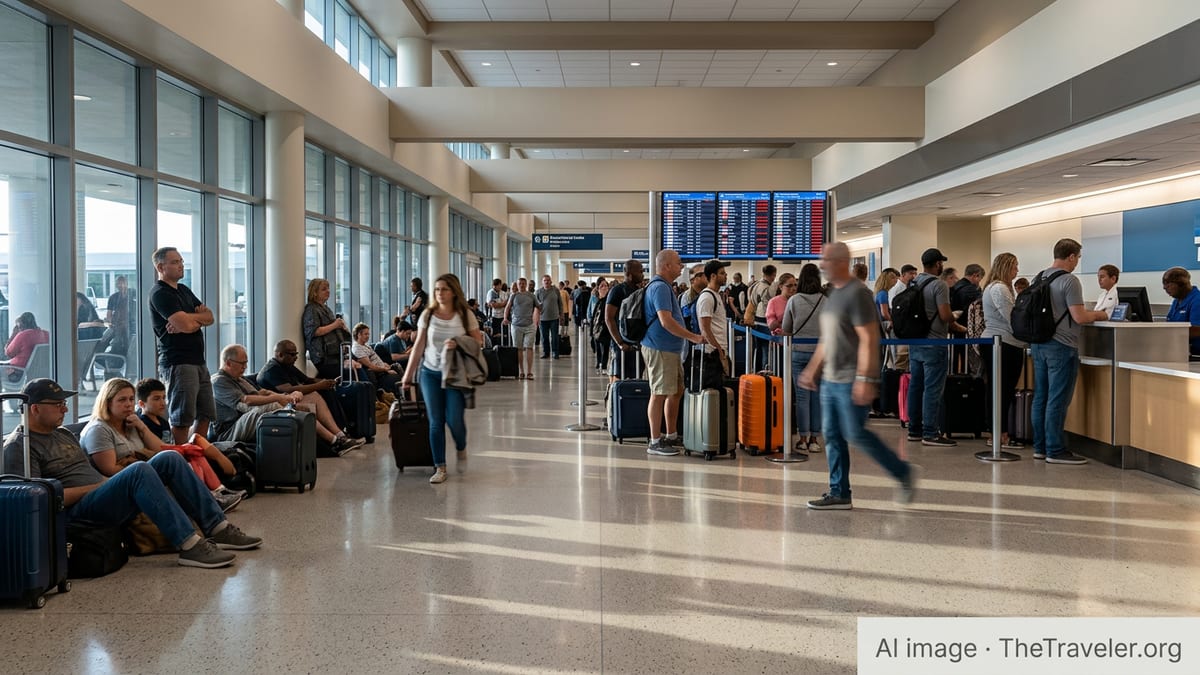
Passengers caught up in the Fort Lauderdale disruption have described crowded gate areas, long customer-service lines and difficulty reaching airline call centers. When dozens of flights are canceled in the same time frame, available seats on remaining departures can quickly sell out, forcing some travelers to wait until the next day or even longer for confirmed space.
Publicly available information from previous disruption events in South Florida shows that hotel availability near the airport can tighten rapidly when large numbers of travelers are stranded. Rates at nearby properties often surge, particularly in peak travel periods, leaving some passengers with the choice of expensive last-minute rooms or spending the night in the terminal.
Families traveling with children, older passengers and those with special mobility or medical needs can be especially affected when cancellations stack up. Limited access to quiet areas, charging points, and food options late at night add to the strain, turning what should have been a straightforward travel day into an extended, often exhausting ordeal.
Because Fort Lauderdale is a gateway to cruises and beach destinations, disruptions at FLL can also spill over to the tourism industry. Missed embarkations, shortened vacations and rearranged tours are common side effects whenever a wave of cancellations hits the region’s airports.
Your Immediate Rights When a Flight Is Canceled
U.S. Department of Transportation rules state that if an airline cancels a flight for any reason and a passenger chooses not to travel, that traveler is generally entitled to a refund of the unused portion of the ticket, even for nonrefundable fares. This typically includes any unused optional services, such as seat selection fees, associated with the canceled flight.
However, compensation beyond a refund, such as hotel vouchers or meal credits, depends on airline policy and the cause of the disruption. Published carrier customer-service plans indicate that some airlines offer more generous assistance when cancellations are within the airline’s control, such as crew scheduling or mechanical issues, and more limited support when cancellations stem from severe weather or air-traffic constraints.
Passengers are usually allowed to request rebooking on the next available flight operated by the same airline at no additional fare. In major disruption events, same-day confirmed seats may not be available, so travelers may need to accept alternate routings, longer layovers or even departures from nearby airports such as Miami or West Palm Beach.
To preserve options, travelers should keep digital copies or screenshots of their original itinerary, cancellation notices and any receipts for out-of-pocket expenses. These records can be important when submitting claims to airlines, travel insurers or credit-card benefit providers in the days following the disruption.
Practical Steps for Stranded Passengers at FLL
For those already at Fort Lauderdale-Hollywood International Airport, the first step is to confirm the real-time status of your flight via the airline’s mobile app or website rather than relying solely on terminal screens, which sometimes update more slowly during major disruptions. If your flight is listed as canceled, use the app or website to request rebooking while simultaneously queuing at an airport service desk to maximize your chances of a faster solution.
Travelers should also monitor departures from nearby airports in South Florida. In some cases, airlines may have more seats available from Miami International Airport or Palm Beach International Airport, and ground transportation between these airports can be faster than waiting many hours for a limited Fort Lauderdale departure.
When seeking accommodation, it can be more efficient to search and book rooms via hotel apps or aggregator platforms while still in the terminal, as nearby properties may fill quickly. Some airlines publish guidelines explaining when they will provide hotel or meal vouchers; checking these policies on a phone can clarify whether you should expect assistance or plan to cover costs yourself and seek reimbursement later.
For travelers whose trips involve cruises or package tours, contacting the cruise line or tour operator as soon as a cancellation is confirmed can help minimize penalties or secure alternate options. Many operators have specific procedures for guests affected by airline disruptions and may adjust embarkation times, arrange alternative transport from later-arriving flights or offer partial credits.
How to Prepare for Ongoing Disruption in South Florida Travel
The Fort Lauderdale cancellations highlight how quickly travel plans can be upended when Florida’s busy air corridors experience adverse weather or network strains. Travelers with upcoming trips to or through South Florida can reduce their exposure by scheduling flights earlier in the day, when possible, as morning departures are generally less vulnerable to knock-on delays from earlier disruptions.
Booking with slightly longer connection times, especially when connecting to international flights or cruises, provides a buffer against moderate delays. When itineraries are tight, even minor schedule changes can cascade into missed onward travel and unexpected overnight stays.
Travel insurance and credit-card travel protections can also play an important role. Policies that cover trip interruption, extra accommodation costs and missed connections may offer financial relief when cancellations occur. Travelers are encouraged to review the fine print before departure, since coverage often varies depending on the reason for the disruption and the type of ticket purchased.
Finally, maintaining flexible expectations and having a backup plan can make a major difference in how stressful a disruption becomes. Saving offline copies of boarding passes, carrying essential medications and a change of clothes in hand luggage, and identifying alternative routes or airports in advance can all help travelers navigate sudden cancellations more confidently when they occur at Fort Lauderdale-Hollywood International Airport or elsewhere.