

More news on this day
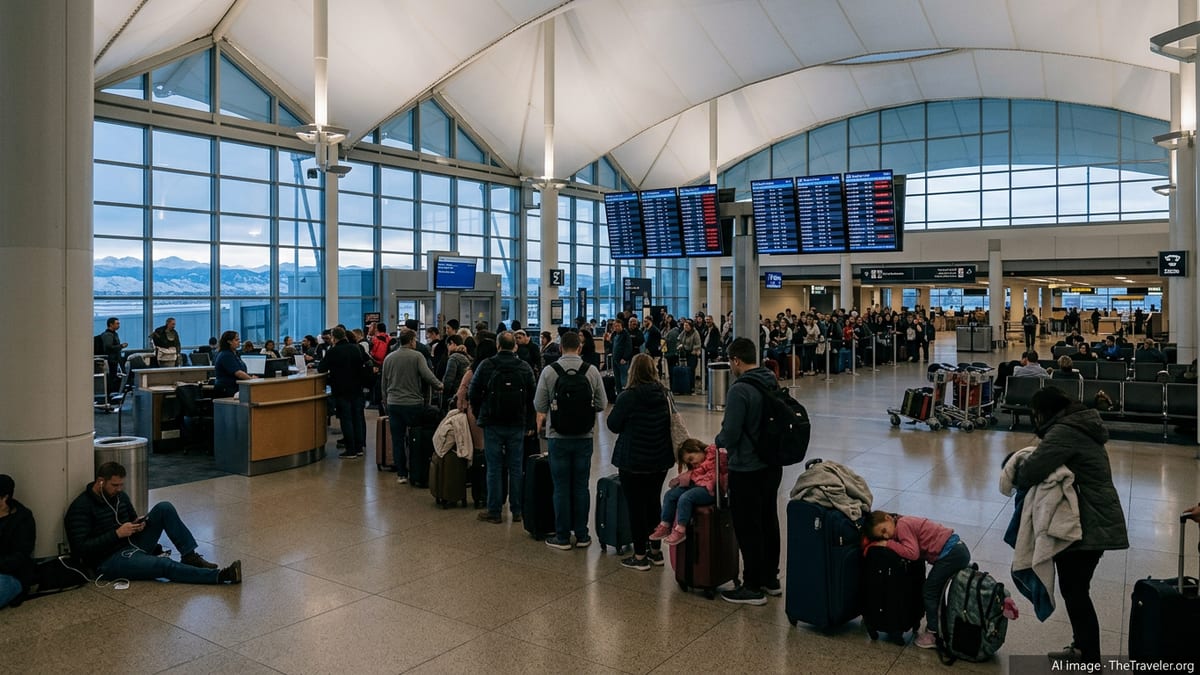
Hundreds of travelers were left sleeping on terminal floors and queuing at customer-service desks after more than 70 flights were canceled at Denver International Airport, causing a fresh wave of disruption across North American air routes.
Get the latest news straight to your inbox!
What Happened at Denver International Airport
Denver International Airport, one of the busiest hubs in North America, saw more than 70 departures and arrivals canceled in a single day, alongside a far larger number of delays. The disruption followed a week of already fragile operations in US air travel, with Denver repeatedly ranking among the country’s most delay-prone major airports in recent months.
Tracking data from flight-monitoring services showed that by late evening, cancellations at Denver had climbed past the 70 mark while delays ran into the hundreds. For many passengers, that meant missed connections to destinations across the United States and Canada and an abrupt end to tightly timed business trips, ski holidays and spring break itineraries.
The cancellations hit a mix of domestic and regional routes, with shorter flights bearing the brunt. Airlines operating large hub-to-hub and international services sought to protect those key connections, a strategy that left travelers on secondary and short-haul routes with fewer alternatives and longer waits for rebooking.
Colorado’s unpredictable late-winter weather and ongoing pressure across the national network both played a role. In recent days, Denver has already contended with a major snowstorm that brought more than a thousand delays and well over 100 cancellations, and aviation analysts say the airport is still working through the resulting operational backlog.
Weather, Staffing and System Strain Behind the Disruptions
Denver’s high-elevation location on the Front Range makes it especially vulnerable to sudden snow, wind and low-visibility conditions that can slow runway operations and force airlines to trim schedules. A recent winter storm dumped heavy snow across the region, with more than 1,300 delays and roughly 170 cancellations recorded at the airport on one of the worst days, and airlines are still repositioning aircraft and crews.
Those local challenges are colliding with wider strains across North American aviation. This month has already seen hundreds of cancellations and thousands of delays nationwide in the United States as carriers juggle winter weather, tight staffing, and the knock-on effects of international airspace restrictions that have forced some long-haul flights to detour or be scrubbed entirely.
Aviation experts note that Denver’s role as a major hub means any schedule cuts there quickly ripple outward. When flights into Denver are delayed or canceled, aircraft and crew fail to arrive on time for later departures, leading to rolling disruptions throughout the day. Once cancellations surpass a certain threshold, it can take days rather than hours to fully restore normal operations.
Staffing remains another pressure point. Periodic shortages among ground handlers, de-icing teams and security personnel can slow the flow of passengers and aircraft, compounding the impact of bad weather. While airport officials say they have bolstered hiring ahead of the busy spring break period, sharp surges in demand are still testing capacity.
Impact on Passengers Across North America
The immediate impact at Denver has been visible in crowds of stranded travelers stretched along concourses and clustered at check-in desks. Families with young children, international visitors and solo travelers on tight itineraries have been among the hardest hit, as seats on later flights quickly filled and hotel rooms near the airport became scarce.
Because Denver serves as a key connecting point between the US coasts, Canada, and destinations in Mexico and the mountain west, the wave of cancellations affected passengers far beyond Colorado. Missed onward flights have led to disrupted vacations in resort towns, canceled business meetings in major cities, and an uptick in last-minute changes to travel plans across the continent.
Some travelers have reported waiting in line for hours to speak with airline representatives, only to find that the next available flight is days away. Others have opted to rent cars and complete their journeys by road, particularly on shorter regional routes where winter driving conditions permit.
Airlines say they are prioritizing rebooking stranded passengers, but limited spare aircraft and high seasonal demand mean options can be constrained. Larger carriers have added a small number of extra sections on key routes and are encouraging customers whose plans are flexible to move travel to off-peak days, easing pressure on the system.
What Affected Travelers Should Do Now
Passengers scheduled to fly into or out of Denver in the coming days are being urged to check their flight status frequently and to avoid heading to the airport until their departure is confirmed. Airline mobile apps and text alerts typically update more quickly than departure boards inside terminals and can sometimes offer self-service rebooking tools that save time in line.
Travelers whose flights have been canceled should first look for rebooking options offered directly by the airline. Many carriers enable customers to move to the next available flight at no additional fare, or to switch to alternate airports within a defined radius if seats are open. For those who booked through online travel agencies, it may be necessary to coordinate changes with both the airline and the intermediary.
Experts also advise documenting all out-of-pocket expenses incurred as a result of the disruption, such as meals, ground transportation or unexpected hotel stays. While US regulations do not guarantee automatic compensation for weather-related cancellations, individual airlines have their own policies on providing meal vouchers, hotel accommodations or travel credits when passengers are stranded for extended periods.
Travel insurance can offer additional protection, particularly policies that include trip interruption coverage. In the case of widespread cancellation events, some insurers will reimburse nonrefundable expenses and added costs, though travelers generally need to keep receipts and obtain proof of disruption from their carrier.
How to Plan Around Ongoing Travel Volatility
With Denver heading into its busy spring break period and the broader North American network still dealing with recurring weather and airspace challenges, aviation analysts say travelers should brace for more volatility in the weeks ahead. That means building extra time into itineraries, especially when a connection in Denver is involved, and avoiding tight layovers that leave little margin for disruption.
Booking the first flight of the day can reduce the risk of cascading delays, since early departures typically benefit from better aircraft and crew availability. Nonstop flights, while often more expensive, also eliminate the additional failure points introduced by connections at busy hubs.
For those yet to buy tickets, flexibility remains a powerful tool. Choosing fares that allow changes without heavy penalties and considering alternative airports within driving distance can make it easier to pivot if Denver or another hub experiences a fresh wave of cancellations. Travelers heading to or from mountain destinations may want to weigh smaller regional airports against Denver’s more robust rebooking options and amenities.
Industry observers say that while the current cluster of disruptions is acute, it reflects a broader pattern in which extreme weather, tight staffing and geopolitical tensions are placing sustained pressure on global aviation. For passengers, the practical response is to stay informed, allow more buffer time and be prepared with backup plans when flying through key hubs like Denver.