

More news on this day
Travel plans across Botswana’s Okavango Delta are facing continued disruption as the full reopening of Moremi Game Reserve is delayed, with road access still restricted after severe flooding earlier in March.
Get the latest news straight to your inbox!
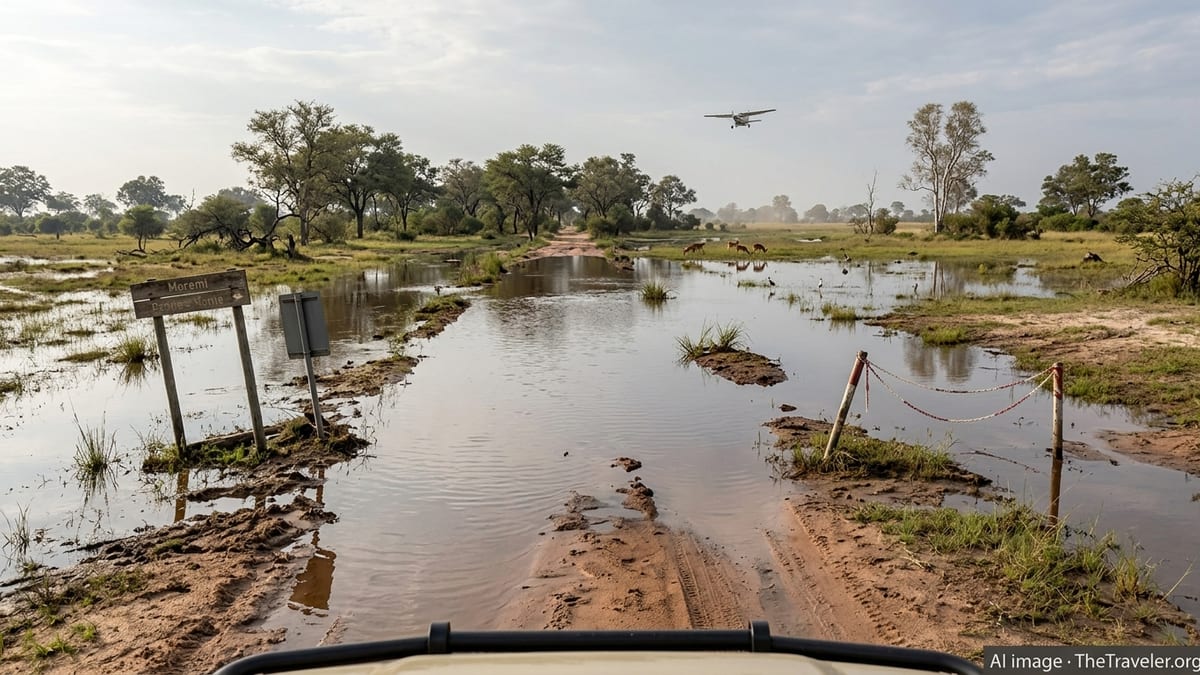
Image by Global Travel Alerts, Advisories, International Travel Alerts
Road Closure Extends Beyond Initial March Timeline
Moremi Game Reserve, a flagship wilderness area on the eastern fringe of the Okavango Delta, has been operating under restricted access since early March after heavy rains inundated key approach routes and internal tracks. Public notices from Botswana’s tourism authorities outlined a three-week closure of road access from 5 to 26 March 2026, but ground conditions have remained challenging, slowing efforts to restore normal overland travel.
Recent coverage from regional travel and business outlets describes waterlogged roads, damaged sections of track and persistent standing water in low-lying areas. While some earlier updates anticipated a resumption of road-based access from late March as floodwaters began to recede, follow-up reports indicate that maintenance teams have needed more time to assess damage and complete basic repairs, effectively delaying the practical reopening for many self-drive visitors.
The temporary shutdown initially focused on safety, as several arteries used by safari vehicles were reported to be impassable. Even where water levels have begun to drop, soft ground and eroded surfaces are still hampering movement and prompting authorities and operators to keep road access tightly controlled rather than fully reopening on the originally signalled date.
As a result, the reserve remains in a transition phase: technically moving toward reopening, but with meaningful restrictions that continue to affect travellers relying on 4x4 access from Maun and surrounding gateways.
Safari Itineraries Reworked Across Northern Botswana
The delayed return to normal operations has had a ripple effect on safari logistics, particularly for overland circuits that combine Moremi with Khwai, Savuti, Chobe and the Central Kalahari. Trade publications tracking the situation report that many tour operators have reworked itineraries, shifting nights into alternative wildlife areas while road links into Moremi remain uncertain.
Mobile safari companies and scheduled camping safaris that usually traverse the reserve by road have been among the most affected. Some have reportedly rerouted trips around the wetter eastern sections of the Okavango, substituted Makgadikgadi Pans or Central Kalahari camps, or adjusted dates to later in the season when ground conditions are more predictable. This has helped keep departures running but has reduced immediate access to one of Botswana’s most sought-after wildlife destinations.
Travel industry commentary from Africa-focused news services notes that these adjustments are adding complexity for international agents and travellers who booked long in advance. Reconfirmation of routes, reissued vouchers and revised transfer timings have become common as operators adapt day by day to changing ground reports from drivers and camp managers in the field.
For independent self-drive visitors, the uncertainty has been even more pronounced. Several specialist travel blogs and advisory platforms continue to urge travellers to seek up-to-date confirmation from their accommodation providers before attempting to enter the reserve by road, highlighting the risk of last-minute route closures and detours.
Fly-In Lodges Soften the Blow for High-End Tourism
While road-based tourism has been heavily constrained, reports from Botswana tourism channels emphasize that many high-end lodges and tented camps inside Moremi have remained accessible via air throughout the disruption. The original closure notices specified that restrictions applied to road access only, and that facilities served by charter flights and airstrips could continue welcoming guests.
That distinction has helped sustain part of the region’s tourism economy. Travel trade coverage indicates that fly-in safaris have operated close to normal schedules, with charter companies adjusting flight paths and timings where needed but maintaining links between Maun and key airstrips in the delta. For travellers already booked on fly-in packages, the impact has largely been limited to advisory messages about flooded areas rather than full trip cancellations.
Even so, some operators have reported operational challenges, including the need to coordinate luggage limits, manage contingency plans for weather-related delays and ensure that guests do not attempt to mix road and air access without clear guidance. Despite these complications, industry commentary portrays fly-in tourism as an important stabilizing factor during the extended disruption.
The split between restricted road access and relatively resilient air access has also highlighted the structural differences within Botswana’s safari market, where higher-end fly-in products are more insulated from infrastructure shocks than self-drive or budget overland travel.
Environmental Dynamics Complicate Reopening Efforts
The flooding at Moremi is closely linked to the seasonal hydrology of the Okavango Delta, where river inflows and local rainfall periodically transform dry tracks into flooded channels. Conservation-focused reports describe the 2026 rains as particularly intense in parts of northern Botswana, amplifying a natural cycle that both sustains wildlife habitats and complicates human access.
Analysts following the region note that these environmental conditions make reopening dates inherently fluid. Even when surface water appears to recede, residual moisture can continue to undermine roadbeds, causing vehicles to bog down or tracks to collapse at weak points. This has prompted a cautious approach to lifting restrictions, with public information emphasizing safety and infrastructure protection rather than rushing to meet earlier target dates.
Tourism and conservation documents on the Okavango Delta’s management model underline that Botswana prioritizes low-impact, controlled tourism in key reserves such as Moremi. In practice, this can mean accepting short-term access limitations in order to avoid more serious damage to sensitive ecosystems and the limited road network that crosses them.
As climate variability brings more erratic rainfall patterns across southern Africa, some regional observers are also raising questions about how often similar disruptions could occur in future wet seasons, and whether investment in raised causeways or alternative access routes will be needed to maintain reliable visitor access.
Advice for Travellers Holding 2026 and 2027 Bookings
With the reopening now effectively staggered and highly dependent on local conditions, travellers with upcoming safaris that include Moremi Game Reserve are being urged by travel advisories and specialist media to maintain close contact with their tour operators or lodge representatives. Publicly available guidance stresses the importance of flexibility on routing, accommodation choices and dates, especially for trips scheduled during the tail end of the rainy season.
Travel industry commentary suggests that those planning self-drive itineraries through Moremi in the coming weeks should be prepared for last-minute changes, including possible diversions via drier areas such as Makgadikgadi Pans or the Central Kalahari Game Reserve. Comprehensive 4x4 preparation, including recovery gear and contingency fuel and water, is also widely recommended for anyone attempting remote routes once they partially reopen.
For visitors booked on fly-in packages later in 2026 and into 2027, current reporting points to a lower risk of cancellation, though minor schedule adjustments around charter flights remain possible whenever storms affect visibility or airstrip conditions. Travellers are also being encouraged to review travel insurance policies to ensure coverage for weather-related disruptions and itinerary changes.
As Moremi transitions from closure toward phased reopening, Botswana’s broader safari industry is drawing on experience from previous flood cycles to keep tourism flowing, even if overland journeys into one of Africa’s best-known reserves remain more complicated than usual for the time being.