

More news on this day
Travel plans across Botswana’s famed Okavango Delta face renewed uncertainty as the full reopening of Moremi Game Reserve is pushed back, with road access still curtailed by exceptional seasonal flooding.
Get the latest news straight to your inbox!
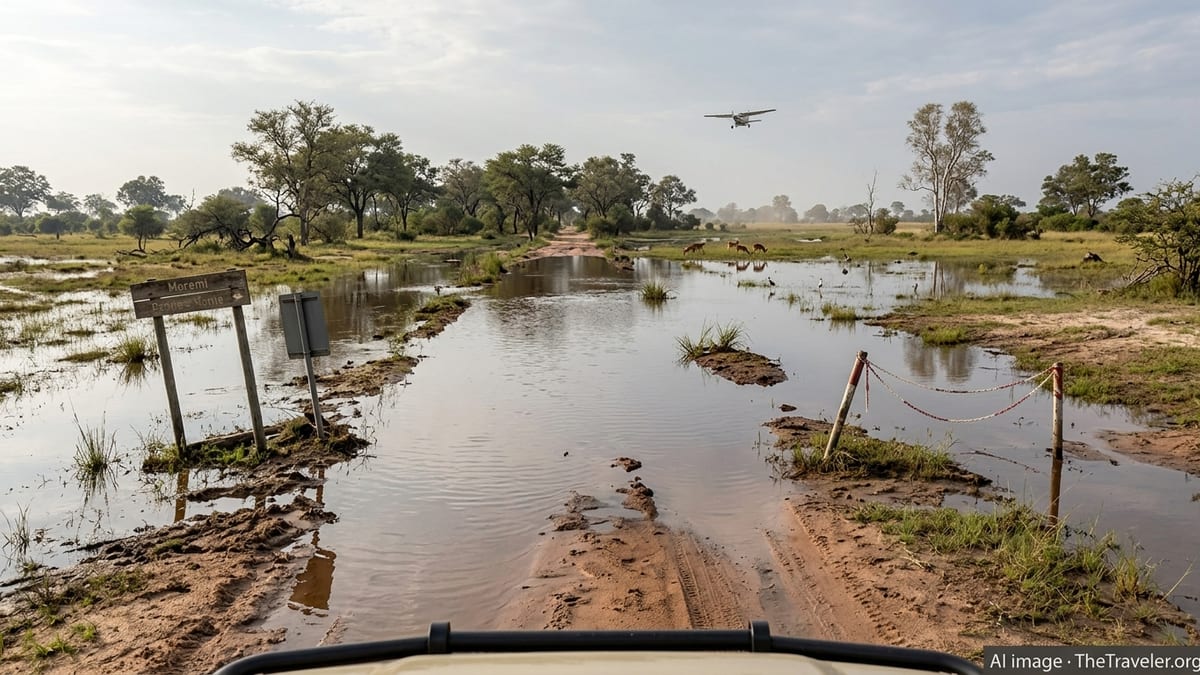
Reopening Date Slips as Floodwaters Linger
Moremi Game Reserve was originally scheduled to reopen to self-drive and road-based visitors on 26 March 2026, following a three-week closure triggered by heavy rains and extensive flooding earlier in the month. Public notices from Botswana’s tourism authorities and subsequent industry coverage set expectations that road access would resume once safety checks and basic repairs were completed.
As water levels in parts of the Okavango Delta remain high, however, travel industry reports now indicate that a full reopening for road traffic is being delayed beyond the anticipated date. While some lodge-linked transfer routes have become passable, a number of internal tracks and access roads used by self-drive travelers and mobile safari operators continue to be affected by standing water, deep mud and damaged surfaces.
The extension of restrictions means that, for many visitors, overland access to one of Botswana’s most sought-after wildlife destinations remains limited at the start of the crucial late-summer travel window. Tour planners who had been working toward the late March target are now revising itineraries for guests due to arrive in the coming weeks.
According to publicly available information, authorities are maintaining a cautious stance, prioritizing route inspections and infrastructure protection over speed of reopening, as the 2026 flood season continues to be described in regional coverage as one of the more intense in recent years.
Air Transfers Keep High-End Tourism Moving
Despite the disruption on the ground, Moremi has not been completely cut off from tourism throughout the closure period. Government notices and destination marketing updates emphasize that the initial restrictions applied specifically to road access, allowing lodges and camps served by air transfers to continue welcoming guests.
Charter flights from Maun and other regional hubs have remained the primary lifeline for high-end safari properties on islands and concessions within or adjacent to the reserve. Travel-industry outlets report that these operations have largely continued with adjusted routing, giving international visitors who planned fly-in stays a measure of continuity even as self-drive safaris were put on hold.
For many tour operators, this split reality has required a careful balancing act. Packages built around a mix of lodge stays and independent driving have had to be restructured, sometimes at short notice, to rely more heavily on flights or to re-route guests to alternative reserves with better road conditions. Industry commentary suggests that, while occupancy at fly-in camps has held up reasonably well, the disruption has been more acute for budget and midrange itineraries that depend on overland access.
Travel advisors across key source markets in Europe and North America are using airline connectivity into Maun and Kasane to keep Botswana on the map for upcoming trips, but they continue to flag the fluid situation in Moremi to clients considering late-summer or early dry-season departures.
Knock-On Effects for Safari Operators and Itineraries
The delayed reopening is rippling through a wide cross-section of Botswana’s safari economy. Regional travel trade publications describe mobile safari operators and self-drive specialists as particularly exposed, since their business models rely on predictable access to campsites and public tracks in and around Moremi.
Many overland itineraries thread through the reserve as part of longer circuits that can include Khwai, Savuti, Chobe and the Central Kalahari. With Moremi’s internal roads still under review, companies are now adjusting seasonal schedules, repositioning vehicles and reallocating guides to routes less affected by flooding. Some are temporarily favoring private concessions and community-managed areas where management teams can respond more quickly with localized track maintenance.
For travelers already in the region, the changes may mean extra nights in gateway towns such as Maun, detours around impassable stretches, or last-minute switches to lodges outside the reserve boundaries. Reports from safari planners suggest that flexibility has become an essential ingredient in 2026 Botswana itineraries, with guests advised to be prepared for altered routes or longer-than-expected transfer times as operators navigate detours around waterlogged sections.
Early booking patterns for late 2026 and into 2027 have not yet shown a significant decline, according to industry commentary, but there is growing recognition that climate-linked variability could make contingency planning a permanent feature of Okavango travel logistics.
Exceptional Rains Highlight Climate Vulnerability
The challenges at Moremi are unfolding against a broader backdrop of unusually strong seasonal rains across northern Botswana. Regional climate and tourism analyses note that the 2026 rainy season has been supported by a weak La Niña pattern, associated with wetter conditions in parts of southern Africa. As a result, rivers feeding the Okavango system have delivered high volumes of water into the delta, amplifying the annual flood pulse that already defines this landscape.
Flood-related adjustments are not new to operators in and around Moremi, where seasonal variations in water levels routinely dictate which tracks are viable and which river crossings can be attempted. This year, however, several outlets covering African safari conditions describe the combination of prolonged rains and elevated floodwaters as among the most disruptive in recent memory for road-based access.
The situation has renewed attention on how protected areas such as Moremi, celebrated for their dynamic wetland ecosystems, are also vulnerable to shifting climate patterns. Conservation-focused reporting points to the need for ongoing investment in resilient infrastructure, adaptive management of visitor routes and clearer communication channels to ensure travelers receive timely, accurate information about access restrictions.
At the same time, some destination marketing narratives emphasize that the intense flood has ecological upsides, replenishing grazing areas, sustaining aquatic habitats and ultimately enhancing wildlife viewing once conditions stabilize and roads can safely reopen.
What Travelers With Upcoming Trips Should Expect
With the full reopening of Moremi’s road network now delayed, travelers holding bookings for the coming weeks are being urged by tour operators and travel media to review their plans proactively. Publicly available advisories suggest that anyone relying on self-drive access or road-based transfers should stay in close contact with their providers for the latest route assessments and potential rerouting options.
Guests booked into fly-in lodges are, in many cases, still able to proceed with their itineraries, though small-craft flight schedules and luggage restrictions may be adjusted in line with demand and operational constraints. Safari specialists are recommending that visitors build additional time buffers into their travel days, particularly when connecting to international flights.
Prospective visitors still planning 2026 trips are being advised, in destination briefings and tour brochures, to consider the timing of their travel within the flood cycle, to secure flexible booking conditions where possible and to remain open to itinerary changes. Many operators highlight that, once road conditions improve, the post-flood landscape in Moremi can deliver exceptional wildlife viewing with lush vegetation and abundant water attracting high concentrations of animals.
For now, the delayed reopening underscores how tightly Botswana’s tourism fortunes are intertwined with the rhythms of its wild landscapes. As Moremi’s roads await clearance for regular traffic, travelers and operators alike are watching water levels and weather patterns closely, hoping for a safe, phased return to one of Africa’s most iconic safari settings.