

More news on this day
Fresh tourism data across Africa points to a powerful core of destinations, with Morocco now firmly joining South Africa, Kenya, Egypt and Mauritius as the continent’s leading travel powerhouses anchored in record arrivals and rapidly diversifying experiences.
Get the latest news straight to your inbox!
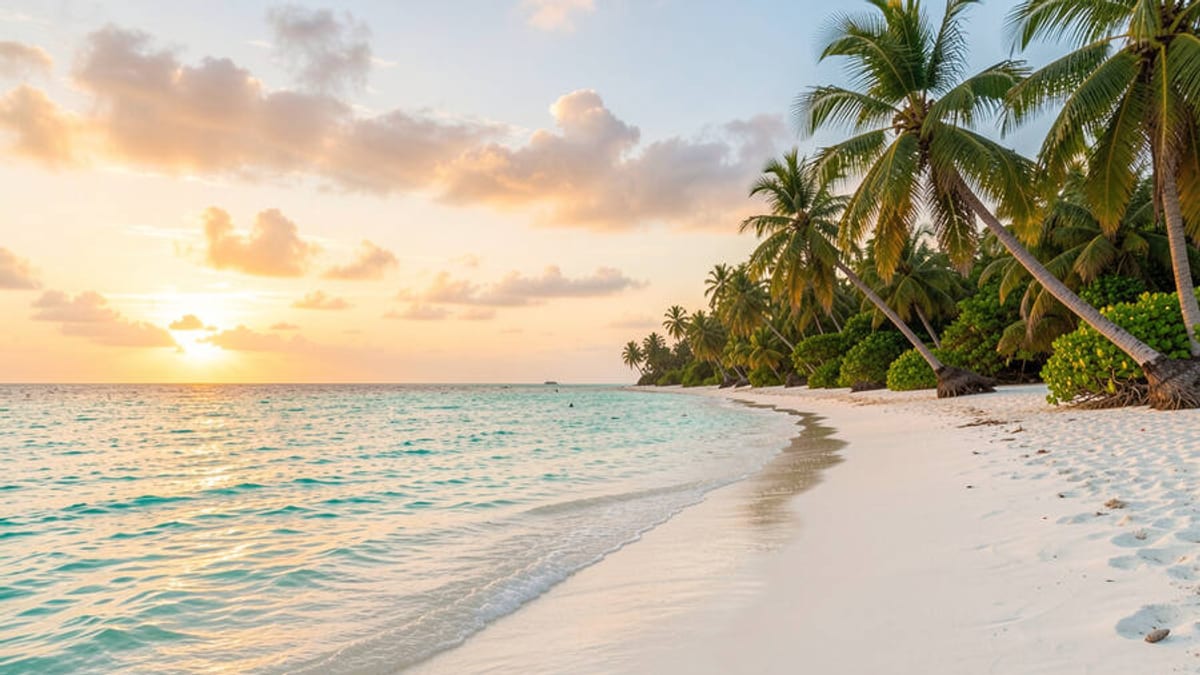
Image by Travel And Tour World
Record Arrivals Redraw Africa’s Tourism Map
Recent figures from Morocco’s Ministry of Tourism indicate the country welcomed around 17.4 million visitors in 2024, a record that underscored its rise to the top tier of African destinations and marked a gain of roughly 20 percent on the previous year. This performance followed sustained investment in air connectivity, marketing and infrastructure, positioning the North African kingdom among the most visited countries in the wider Mediterranean basin.
In Egypt, publicly available statistics compiled by international agencies show a similarly strong trajectory. The country attracted a record 14.9 million international tourists in 2023 and an estimated 15.7 million in 2024, surpassing pre‑pandemic benchmarks and reinforcing tourism as a critical source of foreign currency. Analysts note that expansion in resort capacity on the Red Sea and a renewed focus on cultural tourism along the Nile have been pivotal drivers.
Further south, South Africa has been rebuilding steadily from the pandemic shock. Official data summarised in recent government and industry reports place 2023 international arrivals at more than 8 million, recovering to over four fifths of 2019 levels, with 2024 continuing that upward curve. Long‑haul traffic from Europe and North America is improving, while regional travel from Southern African neighbours remains the bedrock of demand.
Kenya and Mauritius, though smaller in absolute visitor numbers, are registering record performances relative to their size. Kenya’s tourism authorities reported about 2.4 million arrivals in 2024 and record sector earnings, while Mauritius passed the one‑million‑visitor mark in 2023 and is tracking higher, driven by gains from key European, African and Asian markets. Taken together, these five destinations are emerging as a core cluster of African tourism engines.
Morocco’s Desert Dunes and Atlantic Cities Take Center Stage
For Morocco, the latest numbers confirm a long‑term bet on tourism built around coastal cities, historic medinas and desert landscapes. Industry coverage highlights how Marrakech and Fez, long known for their maze‑like souks and riads, are increasingly paired with desert adventures into the dunes of Merzouga and Zagora, where luxury camps, 4x4 expeditions and star‑gazing experiences are drawing high‑spending visitors.
The Atlantic and Mediterranean coasts are experiencing parallel growth. Casablanca and Rabat are attracting business and cultural travellers, while Tangier and Agadir are positioning themselves as beach and water‑sports hubs connected to European source markets by a dense web of short‑haul flights. Observers note that the reopening of cruise calls and the expansion of marina infrastructure are helping Morocco capture more nautical tourism.
Policy documents and public statements from Moroccan planners describe tourism as a strategic pillar of economic transformation, with investment directed at new resorts, digital marketing and training. Recent reports also underline an emphasis on spreading visitor flows beyond the traditional “imperial city” circuit to emerging destinations in the Atlas Mountains and Atlantic hinterland, aimed at boosting rural incomes and encouraging longer stays.
At the same time, sector commentators point to the need for resilience planning after the 2023 Atlas earthquake, which briefly disrupted travel to parts of the High Atlas. Rapid reopening of key routes and accommodations, combined with flexible booking policies, helped limit long‑term impacts and reinforced Morocco’s reputation as a dependable gateway for North African travel.
Egypt’s Nile Journeys and New Cultural Flagships
Across the eastern flank of the continent, Egypt is turning record visitor numbers into an opportunity to refresh its tourism narrative. Traditional Nile cruises linking Luxor and Aswan are again operating near capacity during peak months, supported by renewed interest in multi‑day itineraries that combine temple visits, desert excursions and extended stays at Red Sea resorts such as Hurghada and Sharm el‑Sheikh.
Coverage from international media outlets has focused on the long‑awaited opening of the Grand Egyptian Museum near the Giza Plateau, described as a centrepiece of Egypt’s tourism strategy. Designed to showcase tens of thousands of artefacts in a single complex, the museum is expected to anchor new cultural circuits that begin at Cairo’s international gateway and extend along the Nile Valley.
Government and industry reports indicate that Egypt is also investing heavily in transport links, including the Sphinx International Airport near Giza and upgraded highways and rail lines serving key resort corridors. These projects are presented as essential to meeting ambitious medium‑term targets that envision the country welcoming up to 30 million visitors annually later in the decade.
At the same time, there is increasing attention to diversification beyond antiquities, with expanded promotion of eco‑tourism in oases, diving and kite‑surfing along the Red Sea, and city‑break experiences in Alexandria and Cairo. Analysts suggest this broader mix is helping Egypt appeal to younger and repeat visitors seeking experiences that combine heritage with contemporary culture.
Safari Heartlands and Coastal Escapes in Sub‑Saharan Africa
In sub‑Saharan Africa, South Africa and Kenya remain leading brands for wildlife and nature‑based travel while also broadening their appeal through urban, wine and coastal offerings. Recent South African tourism reports highlight the continued popularity of Kruger National Park and private game reserves, supported by strong demand for Cape Town and the Cape Winelands, where food, design and cultural festivals enhance the traditional safari‑plus‑city itinerary.
South Africa’s coastline, spanning the Garden Route, Wild Coast and KwaZulu‑Natal, is increasingly central to regional and domestic tourism, with beach towns, surf spots and marine reserves attracting visitors year‑round. Publicly available planning documents reference ongoing efforts to improve safety, streamline visas for selected markets and expand air links to West and East Africa, moves that analysts expect will strengthen the country’s status as a continental hub.
Kenya’s latest tourism results, featuring record arrivals and sector earnings in 2024, reflect a similar combination of established strengths and new products. Safari circuits in the Maasai Mara, Amboseli and Tsavo continue to draw global interest, especially around the annual wildebeest migration, while Nairobi has emerged as a regional conference and innovation centre that feeds business and leisure travel.
On the coast, destination reports point to renewed investment in hotels and cruise facilities in Mombasa and along the northern and southern beaches. The introduction of simplified e‑visa systems and, more recently, moves towards visa‑free entry for many nationalities have been cited in local coverage as catalysts for growth, alongside targeted marketing in high‑potential markets in the Middle East, Europe and within Africa itself.
Mauritius and the Rise of High‑End Island Retreats
In the Indian Ocean, Mauritius has carved out a distinct niche as a luxury island retreat competing with global destinations in the Maldives and Seychelles. Statistics released by Statistics Mauritius and international tourism bodies show arrivals passing one million visitors annually, a significant figure given the country’s small population, with Europe, South Africa and India listed as key source markets.
Travel industry analyses describe Mauritius as a destination built on all‑inclusive beach resorts, turquoise lagoons and reef‑sheltered waters that appeal to honeymooners and families. Over the past few years, however, the island has been promoting experiences beyond the shoreline, including hiking in the island’s forested interior, visits to historic sugar estates and explorations of multicultural neighbourhoods in Port Louis.
Hotel development trends signal a move up the value chain, with more branded luxury properties and villa offerings entering the market, often paired with golf courses, wellness centres and marinas. Observers note that environmental safeguards, including marine conservation zones and restrictions on coastal construction, are increasingly central to policy debates as the island seeks to protect the natural assets on which its tourism depends.
Regional analysts also highlight Mauritius’s role as a training and aviation hub, with frequent air connections linking Southern Africa, Europe and Asia. This positioning allows the island to benefit from multi‑destination itineraries that combine safari experiences in Africa with beach stays in the Indian Ocean, a model that is gaining traction among high‑spending travellers.
Competition, Connectivity and the Push for Sustainable Growth
The emergence of Morocco alongside South Africa, Kenya, Egypt and Mauritius as a clearly defined group of African tourism powerhouses is reshaping regional competition and collaboration. Industry briefings and market intelligence reports suggest these destinations are now benchmarked against each other on metrics such as connectivity, visitor spend, length of stay and digital readiness.
Air links are a particular focus. New routes between North and sub‑Saharan Africa, as well as increased frequencies from Gulf and European carriers, are enabling more complex itineraries that might combine desert dunes in Morocco, Nile journeys in Egypt, safari experiences in Kenya or South Africa, and a final stopover on Mauritius’s beaches. Travel advisors indicate that such multi‑country trips are already visible in premium and group segments.
At the same time, sustainability has moved to the forefront of policy and investment debates. From coastal erosion in Mauritius and South Africa to water stress in parts of Morocco and Egypt, environmental pressures are prompting calls for stricter building codes, diversification beyond peak seasons and stronger support for community‑based tourism. Reports from regional tourism bodies emphasise that long‑term growth will depend on protecting ecosystems and ensuring local communities benefit from visitor spending.
For now, the numbers show a clear trend: Africa’s tourism recovery has not been uniform, but a cluster of destinations stretching from the Atlantic and Mediterranean coasts through the Nile Valley to the Indian Ocean is pulling ahead. As Morocco’s latest records confirm, the race to attract global travellers is intensifying, and the continent’s emerging tourism powerhouses are setting the pace.