

More news on this day
Air travel across Moscow was heavily disrupted on March 2 as at least 175 flights were delayed and 37 cancelled at the city’s main airports, snarling services operated by Aeroflot, Emirates, Qatar Airways and other carriers on high-demand routes to Dubai, London and major global hubs.
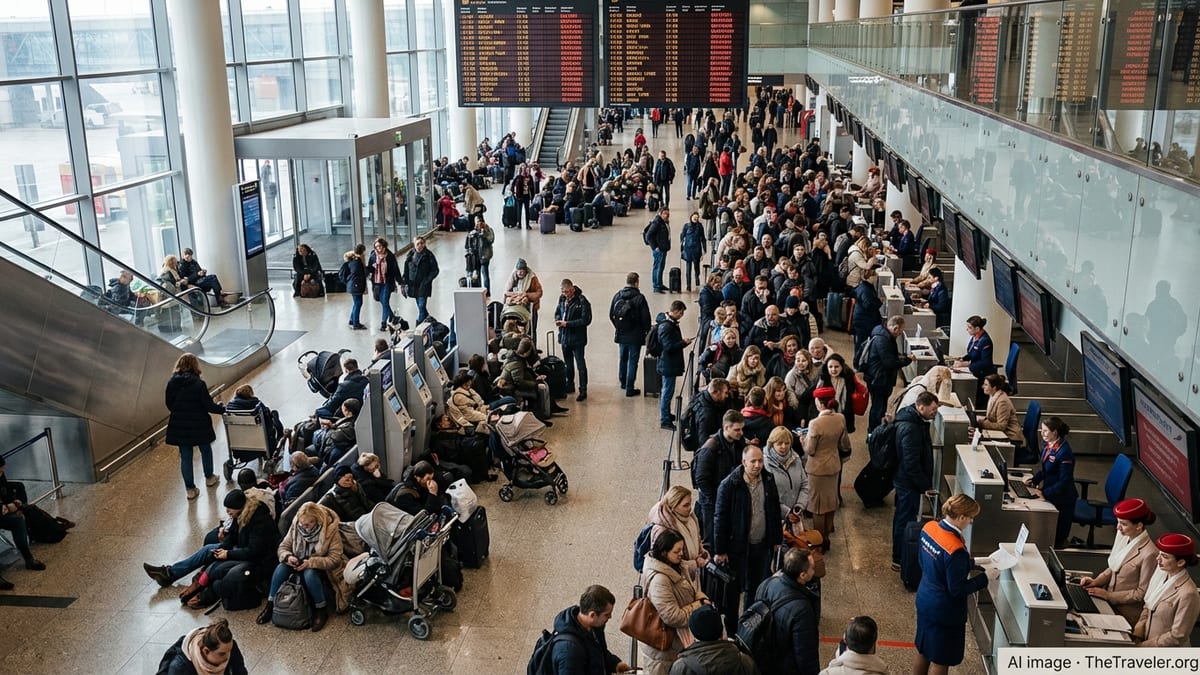
Delays Mount Across Moscow’s Major Airports
Operational disruption spread across Moscow’s Sheremetyevo, Domodedovo and Vnukovo airports through Monday, as a tight airline operating environment ran into cascading schedule problems. By late afternoon, aggregated airport and flight-tracking data showed at least 175 departures and arrivals running late and 37 flights cancelled outright, affecting both domestic and international passengers.
At Sheremetyevo, Aeroflot’s primary base and one of Russia’s busiest international gateways, long-haul departures to Dubai and other Gulf hubs were among the most affected. Passengers reported repeated gate changes and rolling delay estimates as airlines struggled to reposition aircraft and crews already knocked off schedule by wider regional disruption linked to Middle East airspace closures.
Domodedovo and Vnukovo, which handle a mix of full-service and low-cost carriers, also reported clusters of delayed flights throughout the day, particularly during the mid-morning and evening peaks. While outright cancellations remained limited compared with the total number of scheduled operations, the concentration on key trunk routes magnified the impact for travelers with onward connections.
Airport authorities said essential operations, including security screening and baggage handling, continued to function, but acknowledged heavy crowding around check-in and customer service desks as passengers sought rebooking options and compensation information.
Global Ripple Effects From Middle East Airspace Closures
The disruption in Moscow is the latest visible sign of a wider global aviation shock triggered by sweeping airspace closures across the Middle East since February 28. With skies over several countries in the region either fully or partially shut, major hubs such as Dubai, Abu Dhabi and Doha have seen extensive cancellations, forcing airlines to cut services or pursue lengthy reroutes that add hours to flight times.
For Moscow, this has translated into severe schedule strain on routes to and from the Gulf and beyond. Flights linking Sheremetyevo and Domodedovo with Dubai, a key connection point for traffic to Asia, Africa and Australasia, faced repeated delays as airlines navigated reduced capacity at Dubai International and the broader challenges posed by restricted airspace corridors.
Services to London and other European gateways have also been affected, as carriers adjust flight plans to avoid sensitive airspace and cope with aircraft and crew stuck out of position. While many flights were still able to operate, the knock-on effect of earlier delays elsewhere meant that aircraft often departed Moscow hours behind schedule, with some rotations cancelled entirely.
Aviation analysts said Moscow’s experience underscores how quickly a regional airspace crisis can spread to distant markets, particularly when it involves major transfer hubs that sit at the crossroads of long-haul networks. Even flights that do not overfly the Middle East can be disrupted when aircraft and crews are tied up operating heavily delayed or diverted services.
Passengers Face Long Queues, Limited Information
For travelers on the ground in Moscow, the statistics translated into a day of frustration and uncertainty. Departure halls at Sheremetyevo and Domodedovo filled with passengers crowding departure boards that showed multiple flights marked as delayed, while others abruptly flipped to cancelled as airlines reassessed their operations in real time.
Queues stretched across terminal floors at airline service counters as passengers tried to secure new itineraries, hotel vouchers and meal allowances. While some carriers proactively rebooked travelers onto later flights or alternative routings via Istanbul and other hubs, many customers reported difficulty reaching call centers and slow turnaround times for digital rebooking tools during the morning surge.
Families traveling at the end of school holidays and business travelers bound for financial centers such as London and Dubai were among those most affected. With hotel capacity around the airports tightening as the day wore on, some passengers prepared for overnight stays in terminals as they awaited updated departure times or new tickets.
Airline staff on site urged travelers to monitor official channels for the latest flight status updates and warned that departure times were subject to change until aircraft were fully boarded and cleared to push back from the gate.
Aeroflot, Emirates and Qatar Airways Under Pressure
Flag carrier Aeroflot bore a significant share of Monday’s disruption, given its dominant presence at Sheremetyevo and its network of connections between Moscow and destinations across Europe, Asia and the Middle East. Several of its services to Dubai and other Gulf gateways operated with extended delays, while selected rotations were cancelled to free up aircraft and crew capacity.
Emirates and Qatar Airways, both heavily exposed to the ongoing shutdown of key Middle Eastern airspace and the resulting strain on their Gulf hubs, also adjusted their Moscow schedules. Flights between Moscow and Dubai, as well as Moscow and Doha with onward links to London and other European capitals, saw delays ranging from modest timetable slips to multi-hour hold-ups.
Industry observers noted that these carriers are balancing their Moscow operations against intense pressure on long-haul networks elsewhere, including busy transcontinental corridors linking Europe, Asia and Australasia. As a result, they are likely to prioritize flights with the highest concentration of connecting passengers, leaving some point-to-point routes, including certain Moscow services, more vulnerable to late changes.
Other international airlines serving Moscow, including European and regional carriers, implemented a mix of schedule adjustments and equipment changes to maintain as much connectivity as possible while working within the constraints of altered air corridors and airport capacity limits in the Gulf.
Outlook: Further Disruption Likely as Airspace Crisis Continues
Aviation experts warned that travelers using Moscow’s airports over the coming days should brace for continued disruption, particularly on routes that intersect with Gulf hubs or rely on aircraft arriving from affected regions. With Middle Eastern airspace restrictions still in force and major hubs such as Dubai and Doha operating under severe constraint, airlines face limited flexibility to restore full schedules.
Carriers have begun implementing contingency plans that include temporary reductions in flight frequencies, extended block times to account for rerouting around closed airspace, and the use of larger aircraft on select services to consolidate demand. While these measures may gradually stabilize operations, they are also likely to result in lingering delays and occasional cancellations as networks are rebalanced.
For passengers, travel advisers recommend building additional buffer time into itineraries, avoiding tight connections whenever possible, and closely monitoring airline communications for last-minute changes. Travelers with nonessential trips in the coming days are being urged to consider voluntary rebooking or flexible options where available.
Until a clearer timeline emerges for the full reopening of affected airspace and the restoration of normal operations at Gulf hubs, Moscow’s role as a major transit point between Europe, Asia and the Middle East means its airports will remain highly sensitive to developments far beyond Russian airspace.