

Every summer, thousands of visitors land in Anchorage with bucket lists full of glacier cruises, Denali views, and rental car road trips. Yet just a few blocks from downtown hotels, a quiet early-morning departure slips away along the shoreline of Turnagain Arm, bound for Seward. Locals know it as the Coastal Classic, and many consider it the most scenic stretch of track on the entire Alaska Railroad. For reasons of timing, habits, and simple lack of awareness, most visitors never ride it at all.
The Scenic Gem Hiding in Plain Sight
The Alaska Railroad’s Coastal Classic operates seasonally between Anchorage and Seward, following roughly 114 miles of track through Southcentral Alaska. It runs from mid May to mid September, with an early morning departure from Anchorage and an evening return from Seward. That schedule gives travelers a full day at the coast, yet the ride itself is what many Alaskans praise most. Between snowcapped mountains, tidal flats that mirror the sky, and backcountry valleys unreachable by road, this is a rare window into wild Alaska from the comfort of a train seat.
While the railroad’s Denali-bound trains attract the bulk of international visitors, the Coastal Classic remains more of a local favorite. Travel planners tend to funnel first timers toward Denali National Park or straight to cruise ships, leaving the Anchorage to Seward rail segment cast as a simple transfer, if it is mentioned at all. In practice, it is an experience rich enough to justify a dedicated day or more, even for travelers who are short on time.
A key part of the appeal is the contrast to the parallel Seward Highway. The highway is deservedly famous and designated as a scenic byway in its own right, but the Coastal Classic peels away from the pavement for long stretches. It slips into valleys and over mountain passes that drivers never see, turning a well known route into an entirely different journey.
Because many visitors rent cars for flexibility, the train’s seats often hold a mix of Alaskans, repeat visitors, and a smaller group of curious first timers. That relative quiet can make the experience feel surprisingly peaceful, especially early in the season or on shoulder dates when crowds elsewhere in Alaska swell.
From Turnagain Arm to Roadless Backcountry
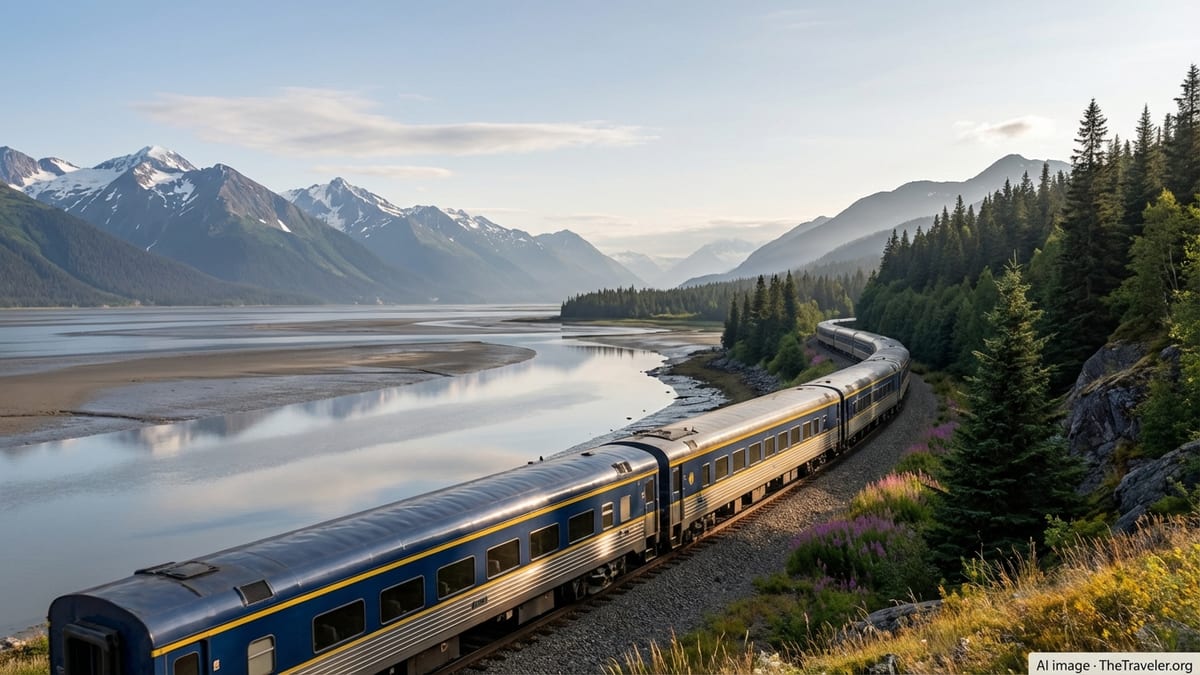
The drama begins minutes after the train pulls out of downtown Anchorage. For nearly 50 miles, the tracks hug the edge of Turnagain Arm, a long, silty fjord off Cook Inlet celebrated for its steep mountains and extreme tides. Out one window is open water, pale gray or deep blue depending on light and tide; out the other, rocky cliffs rise almost straight from the rail bed. Riders scan the slopes for white dots that turn into Dall sheep and watch the tidal flats for bald eagles and, with luck, small pods of beluga whales.
Turnagain Arm is also known for its bore tide, a wall of water that can surge up the inlet on certain tidal cycles. While timing must line up almost perfectly to see it from the train, the conductor and onboard guides often point out the arm’s unusual tidal patterns and explain why surfers sometimes ride a single wave for miles along these same flats. Even without a bore tide, the interplay of shifting sandbars, rippling water, and changing light keeps cameras busy through this entire first leg.
South of the resort town of Girdwood and the junction near Portage, the character of the journey changes. Here the train leaves the highway corridor and enters a section of track that is essentially inaccessible by road. Dense forest, river valleys, and mountains close in. It is in this stretch that passengers begin to understand why so many Alaskans rank the Coastal Classic above every other rail route in the state.
Glaciers appear in quick succession as the train climbs toward the high country. Spencer Glacier comes into view first, followed by Bartlett Glacier and others set back in U shaped valleys. Summer brings streaks of wildflowers and bright green meadows to the foreground, with enormous walls of blue ice anchoring the distance. Visitors accustomed to seeing glaciers only from cruise ships often remark that this is the first time they have appreciated how glaciers shape the entire landscape, carving passes and feeding milky rivers that run beside the tracks.
Grandview Pass and the Hidden Heart of the Route
The quiet star of the Coastal Classic is Grandview, a 1,063 foot mountain pass that many riders remember as the highlight of the trip. The Alaska Railroad specifically notes this upper stretch as some of the most breathtaking scenery on its entire system, and for good reason. The train climbs through alpine meadows and past tumbling waterfalls, threading between rugged peaks before beginning its descent toward the Kenai Peninsula’s coastal side.
Because there is no highway through this part of the Kenai Mountains, Grandview is essentially a rail only experience. The isolation is immediately noticeable. Cell signals fade, cabins thin out, and for long stretches there is nothing but forest, rock, water, and the ribbon of track. On clear days, the views open to layered ridges stretching to the horizon. Even in cloudy or rainy weather, the mood can be spectacular, with low clouds snagged on ridgelines and mist drifting in and out of the trees.
In summer, daylight lingers for hours, and travelers have time to watch subtle shifts in the high country. Snowfields recede upslope week by week, revealing flower filled grass and the bright white braids of meltwater creeks. The train’s open or domed viewing cars, depending on class of service, amplify the sense of immersion. Passengers drift from side to side, trading tips about which curves reveal the best upcoming vistas.
Wildlife sightings here feel like bonuses rather than guarantees. Conductors and guides encourage riders to look for black bears near berry patches, moose in marshy areas, and occasional mountain goats or sheep on crags. The real star, however, is the landscape itself. Grandview can pass in what feels like a moment unless you are ready for it, which is another reason travelers who understand the route often plan the journey as a destination rather than a simple transfer.
Why So Many Visitors Miss the Coastal Classic
Given its beauty, it is natural to assume the Coastal Classic would be on every Alaska itinerary. Yet it often is not, for surprisingly practical reasons. Many package tours and first time visitors are built around Denali National Park or Glacier Bay, both marketed heavily overseas. Seniors and families frequently arrive on large cruise ships that start or end in Seward or Whittier, bypassing Anchorage rail departures entirely. Others prioritize rental cars for perceived freedom, deciding almost by default that the highway will be enough.
Marketing patterns also matter. The Anchorage to Denali leg of the Alaska Railroad runs to one of the world’s most famous national parks, complete with iconic mountain views when the weather cooperates. As a result, the word "Denali" tends to overshadow everything else in brochures and advertisements. Travelers may glance over a route map and see "Coastal Classic" as one of several options, without realizing that many Alaskans consider it the most photogenic of them all.
There is also a simple timing issue. The Coastal Classic departs Anchorage early in the morning, typically around 6:45 a.m., and returns late in the evening. For visitors who flew in the night before or who have children who struggle with early starts, that schedule can feel demanding. Some opt to drive instead, not recognizing that the train’s relaxed pace and lack of road responsibilities can make the long summer day far less tiring.
Finally, visitors sometimes underestimate how different the train and highway experiences feel, even when they roughly parallel one another. From behind the wheel, eyes are divided between scenery, curves, and traffic. Onboard the train, every passenger can settle into a window seat or move to a dome or open air platform, drink coffee, and simply watch the landscape unfold. For many, that shift alone justifies building the Coastal Classic into an otherwise packed itinerary.
Anchorage to Seward: A Perfect Day Trip
For travelers based in Anchorage, the Coastal Classic works exceptionally well as a long but rewarding day trip. The morning train arrives in Seward late morning, typically around 11:20 a.m. That leaves roughly seven hours to explore this compact port town before the evening departure back to Anchorage around 6 p.m. In a state where distances usually require overnight stops, that is a rare opportunity to experience both a rail journey and a coastal community in a single day.
Once you step off the train, Seward’s small boat harbor lies just across the street, buzzing with fishing charters, wildlife cruises, and kayaking excursions. Many visitors connect directly to day cruises into Kenai Fjords National Park, where tidewater glaciers calve into the sea and humpback whales, puffins, and sea lions are common sights. Others choose to stay on land, walking the waterfront path, visiting the Alaska SeaLife Center, or heading up the steep trail to the base of Exit Glacier just outside town.
Seward’s setting at the head of Resurrection Bay is dramatic even without excursions. Mountains rise on nearly all sides, snow lingering on higher slopes well into summer. Fishing boats line the docks, and on clear days the water shifts from muted slate tones to bright blues and greens. Cafes and seafood restaurants cluster near the harbor and in the historic downtown core, giving day trippers enough options for a relaxed midday meal before the return ride.
Travelers with more time can easily turn the day trip into an overnight or multi night stay. The railroad allows one way tickets, and it is common to combine a southbound train ride with a northbound coach transfer the following day or vice versa. Staying longer in Seward opens time for hiking, glacier kayaking, fishing, or simply soaking up the slower pace of a small Alaskan harbor town when the day cruise crowds have thinned.
Choosing Between Adventure Class and GoldStar Service
The Coastal Classic offers at least two main tiers of service that shape the onboard experience: Adventure Class and the higher end GoldStar Service. Both share the same route and the same access to Alaska’s scenery, but they differ in seating, dining, and amenities. Understanding those differences helps travelers pick the right fit rather than simply defaulting to the most expensive or the cheapest option.
Adventure Class is the base standard and a comfortable choice for many travelers. Seats are reserved and generally forward facing, with large picture windows that frame the views. Passengers in this class typically have access to a shared dome or viewing car and a cafe style dining car, often called the Wilderness Café or something similar, with hot and cold items available for purchase. The atmosphere is casual, with travelers free to move between cars, linger over coffee, or stake out time in the dome as space allows.
GoldStar Service, by contrast, is designed as a more premium, all inclusive experience. Riders sit in glass domed cars on an upper level, with nearly panoramic windows and, on many trainsets, small open air platforms at one end. Meals are typically included and served in a dedicated dining area below the dome, and tickets usually come with a couple of complimentary beverages from a private bar. Priority boarding, baggage handling, and dedicated narration by onboard guides round out the experience, creating a kind of moving lounge with some of the best sightlines on the train.
Neither class is objectively "better" for every traveler. Those who plan to spend most of the journey with camera in hand, moving from side to side, may find Adventure Class perfectly adequate and more budget friendly. Travelers who value comfort, included dining, and guaranteed access to dome seating throughout the journey often feel that GoldStar is worth the premium, especially during peak summer weeks when trains can feel busier. What matters most is reserving early, since summer departures on particularly popular dates can and do sell out.
When to Ride and How to Make the Most of It
The Coastal Classic operates only in the summer months, typically from mid May to mid September, aligning with Alaska’s main visitor season. Within that window, the experience can vary quite a bit. Early season rides in May and early June can bring lingering snow on the peaks and uncrowded cars, with cooler temperatures and the possibility of more changeable weather. Wildflowers begin to appear by mid June, and daylight hours stretch far into the evening, especially around the solstice.
July and early August are often the warmest and busiest weeks, with lush greenery in the valleys and long stretches of blue sky by Alaskan standards. These months tend to coincide with peak cruise ship traffic and family vacations, which means more fellow travelers onboard but also a vibrant energy. Late August and early September rides can feel quieter again, with fall colors starting to creep into the hillsides and the high country dusted with fresh snow on colder nights.
Whichever month you choose, a few practical habits can help you make the most of the journey. Booking tickets well in advance is wise, especially for GoldStar Service. Wearing layers is essential, since temperatures near open viewing platforms and station stops can swing quickly from warm sun to chilly wind. A camera with a moderate zoom lens captures wildlife and distant glaciers better than a phone alone, though phone cameras handle the sweeping landscapes surprisingly well.
Perhaps most importantly, travelers should think of the Coastal Classic as a primary experience, not an afterthought. Plan to be fully present on the train, not catching up on sleep or treating the ride as mere transportation. Grab breakfast onboard rather than rushing through a hurried meal in town. Spend time in the dome or on open air platforms. Listen to the commentary from local guides, who often point out historical tidbits, indigenous place names, and small details in the landscape that might otherwise go unnoticed.
The Takeaway
In a state famous for its superlatives, it is easy for even extraordinary experiences to slip under the radar. The Coastal Classic between Anchorage and Seward is one of those quiet standouts: a relatively short, easily accessible rail journey that delivers an outsized sense of Alaska’s wildness. Its blend of tidal coastline, roadless backcountry, glacier views, and a mountain pass only reachable by train makes it, in the eyes of many locals, the single most scenic route on the Alaska Railroad.
Most visitors will continue to chase Denali views, line up for popular cruises, and log long hours on the highway. There is nothing wrong with that, but it means that seats on the Coastal Classic remain surprisingly obtainable, especially for travelers who plan ahead and look beyond the standard tour templates. For those willing to set an early alarm in Anchorage or linger in Seward until evening, the reward is a day framed by some of the most memorable vistas in the state.
If your Alaska itinerary already includes time in Anchorage and the Kenai Peninsula, ask not just how you will get from one to the other, but what kind of experience you want in between. A car will always be an option. So will a bus. Yet only one route glides along tidal flats, ducks into remote valleys, climbs to Grandview, and returns you gently to the harbor or the city without a single mile of driving. That, more than any brochure slogan, is why skipping Alaska’s most scenic train route may be the biggest quiet mistake many visitors make.
FAQ
Q1. What is the Coastal Classic train route in Alaska?
The Coastal Classic is a seasonal Alaska Railroad route that runs between Anchorage and Seward, following a scenic 114 mile corridor along Turnagain Arm and through the Kenai Mountains.
Q2. Why is this route considered Alaska’s most scenic train ride?
Many Alaskans favor it because it combines coastal scenery, glacier views, and a rail only mountain pass at Grandview that is inaccessible by road, all within a relatively short journey.
Q3. When does the Coastal Classic operate each year?
The train typically operates from about mid May through mid September, aligning with Alaska’s main visitor season and the period of long summer daylight.
Q4. How long does the trip from Anchorage to Seward take?
The one way journey takes just over four hours, with a morning departure from Anchorage that arrives in Seward late morning and an evening return to Anchorage.
Q5. Is the Coastal Classic suitable as a day trip from Anchorage?
Yes. The schedule usually allows roughly seven hours in Seward, giving time for a wildlife cruise, a visit to the Alaska SeaLife Center, or a relaxed exploration of town before returning by rail.
Q6. What is the difference between Adventure Class and GoldStar Service?
Adventure Class offers reserved seats with large windows and access to a cafe and shared dome car, while GoldStar adds glass domed upper level seating, included meals, drinks, and extra amenities.
Q7. Do I need to book Coastal Classic tickets in advance?
Advance reservations are strongly recommended, especially in July and August or if you want GoldStar Service, as popular dates and classes can sell out during peak season.
Q8. Can I combine the train with a cruise or other tours in Seward?
Yes. Many travelers pair the train with Kenai Fjords National Park day cruises, fishing trips, or overnight stays in Seward, using one way rail tickets or mixed rail and coach itineraries.
Q9. What kind of wildlife might I see from the train?
Common sightings include Dall sheep on the cliffs above Turnagain Arm, bald eagles, and occasionally moose, bears, or beluga whales, though wildlife can never be guaranteed.
Q10. Is the Coastal Classic accessible for travelers with limited mobility?
The Alaska Railroad notes that its passenger cars, including the Coastal Classic, are designed with accessible seating areas and ramps at boarding locations, but travelers should confirm specific needs when booking.