

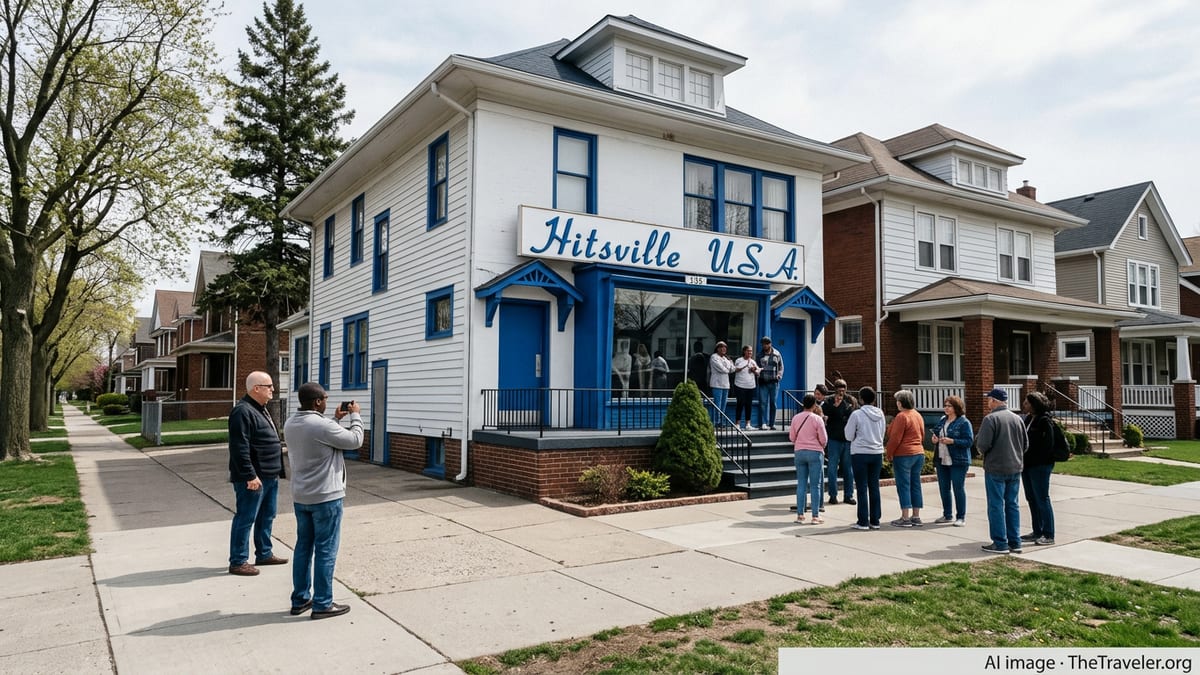
On a quiet stretch of West Grand Boulevard in Detroit, an ordinary white house with blue trim still vibrates with some of the most famous music of the 20th century. This is Hitsville U.S.A., the original headquarters of Motown Records and today home to the Motown Museum. Inside its modest rooms, Berry Gordy and a tight-knit team of writers, producers, and artists created a sound that conquered global charts and reshaped popular culture. Visiting the museum is less like touring a historic house and more like stepping directly into the control room of a musical revolution. This guide explains what to expect inside the legendary studio, how to plan your visit, and how to make the most of your time at one of Detroit’s most essential stops.
Understanding Hitsville U.S.A. and the Motown Story
The Motown Museum occupies 2648 West Grand Boulevard, the small two-story house that Berry Gordy bought in 1959 and soon christened “Hitsville U.S.A.” From this site, Gordy built Motown Records, a company that produced chart-topping hits for artists such as The Supremes, Marvin Gaye, The Temptations, Stevie Wonder, The Four Tops, and The Jackson 5. For visitors, the power of the museum is how close you get to the real spaces where that music was written, recorded, and mixed, often on overnight sessions fueled by coffee, tight budgets, and huge ambition.
Rather than a sprawling, high-tech attraction, Hitsville U.S.A. still feels like a working studio frozen in time around 1972, when Motown shifted its main base of operations to Los Angeles. Many of the floors, stairways, doors, and even handwritten signs in the building are original, which means you are walking the same route that Diana Ross, Smokey Robinson, and Marvin Gaye once took on their way to the mic. For many visitors, there is a palpable sense of being in a living archive rather than a recreated set.
The museum experience today centers on guided tours through the original house, supported by curated exhibits of photographs, costumes, and artifacts that illustrate Motown’s rise from a local Detroit startup to an international powerhouse. The forthcoming expansion of the museum campus, which has been in active development, aims to add a larger visitor center, performance spaces, and expanded exhibitions, but the heart of any visit remains the historic house and Studio A.
Detroit’s broader music scene, from jazz clubs in Paradise Valley to techno innovators of the 1980s, helps explain why Motown took root here. Many travelers pair a visit to the Motown Museum with stops at other Detroit cultural landmarks like the Detroit Institute of Arts, the Charles H. Wright Museum of African American History, and the nearby New Center and Midtown neighborhoods. Motown gives you one chapter of the city’s story, but it is one of the most influential.
What You Will See Inside: From Front Office to Studio A
The standard Motown Museum tour follows a set path through the house, guided by staff who combine historical detail with performance energy. You typically begin in the front reception area, where the modest scale of the operation quickly becomes clear. Original office furniture, rotary phones, and typewriters show how a small, family-run company handled business, promotion, and artist management long before email and social media campaigns.
From there, tours move through Berry Gordy’s former living quarters, which were converted into offices as the label grew. You might step into the room that once served as the company’s administrative hub, complete with file cabinets and gold records on the walls. Guides often point out anecdotes here, such as how Motown’s famous “quality control” meetings happened in cramped spaces where new tracks were ruthlessly evaluated late at night to decide if they were worthy of release.
The emotional centerpiece for many visitors is Studio A. After descending a short set of stairs, you enter the relatively small recording room where countless hits were cut between 1959 and 1972. Much of the original equipment layout is preserved, including the drum riser, isolation booths, and the worn wooden floor. Many tours invite visitors to stand around the microphone area where groups like The Temptations and Martha and the Vandellas once recorded, and some guides encourage a brief sing-along to classics such as “My Girl” or “Dancing in the Street.”
Adjacent to the studio, the control room showcases vintage mixing boards, tape machines, and other analog equipment that gave Motown its distinctive sound. Even if you are not an audio engineer, seeing the physical machinery behind the music helps demystify the production process. Explaining that a track like Marvin Gaye’s “What’s Going On” depended on splicing, overdubs, and precise mixing decisions becomes far more concrete when you are looking directly at the faders and reels that made it possible.
Key Exhibits, Artifacts, and Stories Not to Miss
While the guided tour focuses heavily on rooms and stories, there are also curated exhibits featuring artifacts that reward closer attention. Costumes worn by Motown artists, such as glamorous gowns associated with The Supremes or sharp stage suits from The Temptations, highlight how image and choreography were part of Berry Gordy’s carefully crafted “Motown machine.” For travelers who grew up with these acts or discovered them on streaming services, seeing the real outfits rather than photos is often a highlight.
Photographs lining the walls document everything from early recording sessions to candid office moments. Visitors might see images of a young Stevie Wonder playing harmonica in the studio, behind-the-scenes shots of songwriters like Holland-Dozier-Holland at work, or promotional portraits that once circulated to radio stations and record shops. These images help frame Motown not only as a record label but as a tight-knit creative community of musicians, writers, arrangers, and producers.
The museum also preserves documents that speak to Motown’s business side and its role in the civil rights era. Examples may include promotional materials, contracts, and marketing plans that show how the label positioned itself as “The Sound of Young America,” intentionally crossing racial lines in the early 1960s. Guides may reference how Motown artists often appeared on integrated television programs and toured the country at a time when segregation was still common, giving the label cultural influence beyond its chart performance.
One recurring theme throughout the exhibits is the importance of the Funk Brothers, Motown’s largely anonymous house band. Even if most casual visitors cannot name them, these session musicians played on a vast number of hits across the label’s roster. Instruments used by the band or similar period gear in the exhibits provide a tangible connection to the bass lines, drum grooves, and keyboard riffs that underpin songs still heard at weddings, sports events, and film soundtracks today.
Tours, Tickets, and Practical Planning Details
The Motown Museum operates primarily through timed, guided tours rather than self-guided wandering, which means advance planning is important. Ticket prices can change, but visitors should expect to pay a moderate entry fee comparable to other specialty museums in major U.S. cities. Families, students, and seniors may find discounted rates on certain days, and some travelers choose to become members if they anticipate repeat visits or want to support the ongoing expansion project.
Because tour capacity is limited, especially in small rooms like Studio A, it is wise to purchase tickets ahead of time through the museum’s official channels, particularly for weekends, summer travel, and major holiday periods. Same-day walk-up tickets may be available, but they can sell out during peak times, leaving late-arriving visitors with long waits or no access to a tour. Travelers who are building a tight Detroit itinerary often plan their Motown Museum visit as the anchor and schedule other activities around their confirmed tour slot.
Hours of operation can vary seasonally and around holidays, and the museum has occasionally closed for construction phases related to its multi-year expansion. Because of this, travelers should always double-check current opening times and any special closures as part of their pre-trip planning rather than relying on third-party listings that may lag behind real-time changes. If you are visiting Detroit during winter, it is also worth noting that severe weather can occasionally disrupt local transportation, so allowing some flexibility in your schedule is wise.
The museum’s expansion project, funded by a combination of public and private contributions, is designed to create a significantly larger campus with performance venues and expanded educational space. While some elements of this expansion may be under construction during 2025 and 2026, the historic Hitsville house remains at the center of the visitor experience. Travelers arriving during this period should be prepared for potential construction fencing or rerouted entrances, but those same conditions often come with the excitement of seeing a landmark in the middle of a significant transformation.
Location, Getting There, and Nearby Detroit Stops
The Motown Museum sits on West Grand Boulevard in northwest Detroit, in a largely residential stretch that can feel surprisingly quiet given the building’s global fame. Visitors arriving by car from downtown Detroit typically follow major arteries such as Woodward Avenue before cutting over to West Grand Boulevard, a drive that often takes around 10 to 15 minutes in normal traffic. Ride-hailing services commonly operate between downtown hotels and the museum, and many drivers know Hitsville U.S.A. as a standard destination.
Parking options have historically included a small lot and nearby street parking, though availability can vary depending on the time of day and whether special events are taking place. Travelers should allow extra time to park and walk, especially if they have a timed ticket for a specific tour block. As with any urban area, it is sensible to avoid leaving valuables visible in vehicles and to pay attention to posted parking restrictions on residential streets surrounding the museum.
For visitors staying downtown, combining Motown with other cultural attractions makes for an efficient day. The Detroit Institute of Arts, the Detroit Historical Museum, and the Charles H. Wright Museum of African American History are clustered around the Midtown Cultural Center, a short drive away. Some travelers start with an early-day Motown tour, then spend the afternoon at the DIA’s extensive art collections or exploring boutique shops and restaurants in the nearby New Center and Midtown corridors.
Those relying on public transportation can check Detroit bus routes that run along major nearby roads, though frequencies and connections may not be as convenient as in larger transit-heavy cities. Because many out-of-town visitors base themselves downtown and use rideshares, detailed public transit navigation is less common here than in destinations like Chicago or New York. That said, budget-conscious travelers who are comfortable with city bus systems can potentially reach the museum at a lower cost, as long as they build in generous transit time to avoid missing their scheduled tour.
How Long to Spend and How to Make the Most of Your Visit
A standard visit to the Motown Museum typically lasts around 60 to 90 minutes, depending on the specific tour format and how long you linger in the small exhibit spaces before and after Studio A. Travelers who are deeply interested in music history may want to budget closer to two hours, especially if they plan to spend time in the museum shop browsing vinyl reissues, commemorative merchandise, and Motown-themed gifts.
Because the tour is guided and moves through compact rooms, there is limited opportunity to backtrack. If something catches your eye, such as a specific photograph or costume, it is worth taking a closer look in the moment instead of assuming you will be able to circle back later. Guides often encourage questions, so asking about a favorite artist or song can lead to more personalized stories or recommendations for what to pay attention to as you move through the house.
Many visitors find that the emotional high point of their visit comes at the very end, standing on the studio floor where timeless tracks were recorded. Whether or not your guide leads a group sing-along, consider pausing in Studio A for a final quiet look around before exiting. The scuffed floors, modest sound baffles, and aging microphones stand in stark contrast to the stadium stages and streaming platforms where Motown music now lives, and that contrast can be powerful.
To deepen your experience, some travelers listen to a curated Motown playlist before or after their visit, either during the drive back downtown or later that evening. Hearing songs like “Ain’t No Mountain High Enough,” “I Heard It Through the Grapevine,” or “Heat Wave” with fresh visual memories of the house and studio often gives the music new texture. If you are traveling with friends or family members of different generations, sharing stories about when you first heard certain songs can turn the ride back into an informal, multigenerational music discussion.
Accessibility, Photography, and Visitor Etiquette
The Motown Museum is housed in a historic structure that was not originally designed as a public attraction, so accessibility is an important consideration. Over the years, the museum has worked to improve access, but the layout still includes narrow stairways and tight turns. Visitors with mobility challenges should reach out to the museum in advance to ask about current accommodations, alternative routes within the house, or any available assistance. The ongoing expansion is expected to improve accessibility further with modern infrastructure in the new buildings.
Photography policies can change, but many recent visitor reports note that photography inside some parts of the museum, particularly Studio A, may be restricted or limited to specific moments. Guides often explain when and where photos are allowed at the beginning of the tour. Even if you are permitted to take pictures, it is courteous to avoid blocking others or holding up the group for extended photo sessions in tight rooms. If capturing images of the space is important to you, consider arriving a bit early to photograph the exterior signage and the famous “Hitsville U.S.A.” facade before your tour time.
Because tours are conducted in relatively small groups, etiquette plays a noticeable role in everyone’s experience. Keeping conversations at a low volume, silencing mobile phones, and staying with your guide’s group help preserve the atmosphere, especially during moments when audio clips of historic recordings are played. Families visiting with young children often find that the mix of music, stories, and short walking segments keeps kids engaged, but it can help to prepare them for the idea that they will need to follow a guide and stay close in crowded rooms.
For visitors for whom Motown’s music is personally significant, the museum can be an emotional experience. It is not unusual to see guests quietly tearing up when a familiar song plays in Studio A, or when a guide describes how these records provided a soundtrack to major social changes in the 1960s. Giving others space to have that emotional response, and allowing time for your own, turns the tour from a simple checklist stop into a memorable travel moment.
The Future of the Motown Museum and Why It Matters
The Motown Museum is in the midst of a long-term expansion project that aims to transform the site into a significantly larger campus, while still preserving the intimacy and authenticity of the original Hitsville house. Plans publicly discussed by museum leaders include a new welcome center, expanded exhibition areas, educational studios, and a performance theater designed to host live music, community events, and youth programs. Construction milestones and projected opening dates have evolved as funding and building phases progress, with recent updates suggesting major new facilities will open in the middle of the decade.
For travelers, this means that visiting the museum over the next few years offers a dynamic snapshot of a landmark in transition. You might see construction equipment or newly finished exterior spaces adjacent to the small original house. Once the expanded campus is fully open, visitors can expect a more comprehensive narrative of Motown’s influence, including interactive exhibits, archival film clips, and programming that connects the label’s legacy to contemporary music and social issues.
Beyond bricks and mortar, the expansion reflects Motown’s ongoing role as a cultural touchstone. The label’s story intersects with African American entrepreneurship, the civil rights movement, Detroit’s economic history, and global pop culture. A larger, modernized campus can host school groups, community workshops, and traveling exhibitions that use Motown as an entry point into conversations about race, migration, and the arts. Travelers who care about the future of music education and historic preservation often see visiting the museum and supporting its programs as a way of investing in those broader causes.
Even as the museum grows, the importance of the original Hitsville U.S.A. building is unlikely to diminish. For most visitors, standing in Studio A and hearing a familiar bass line coming through the speakers is the moment when the story of Motown shifts from abstract history to something immediate and personal. Whether you visit before or after the expansions debut, that core experience remains the heart of the trip.
The Takeaway
A visit to Detroit’s Motown Museum is far more than a nostalgic walk through framed gold records. It is a tightly focused, story-rich experience that places you in the same rooms where some of the world’s most enduring music took shape. The modest scale of Hitsville U.S.A. forces you to rethink what is possible with limited space and resources, and the guided format ensures that even casual fans leave with a deeper understanding of how the “Motown sound” was crafted.
Planning ahead is essential, from securing timed tickets to allowing enough time to park and arrive before your tour. For travelers willing to build their day around the museum, the reward is an hour or two that feels surprisingly intimate and emotionally resonant, particularly when you step into Studio A and realize just how small the room is that helped shape global pop culture.
Detroit offers many compelling cultural attractions, but Motown is one of the few that cuts directly across generations. Grandparents, parents, and children can all recognize at least a few songs, whether from original radio play, movie soundtracks, or playlists. For that reason alone, adding the Motown Museum to your Detroit itinerary is a decision that pays off long after you have left West Grand Boulevard.
FAQ
Q1. How long does a typical tour of the Motown Museum take?
A standard guided tour usually lasts around 60 to 75 minutes, though many visitors spend closer to 90 minutes on site when you include time in the small exhibit areas and the museum shop.
Q2. Do I need to buy Motown Museum tickets in advance?
Advance purchase is strongly recommended, especially on weekends, during summer, and around holidays. Same-day tickets can sell out, and walk-ins may face long waits or limited time slots.
Q3. Can I visit Studio A as part of every tour?
Yes, Studio A is the highlight of the standard guided tour and is normally included on regular visits, though access can occasionally be affected by maintenance or special programming.
Q4. Is the Motown Museum suitable for children?
Many families bring children, and the mix of music, stories, and short walking segments generally keeps kids engaged. Parents should be prepared for guided, structured movement through small rooms and encourage kids to stay close to the group.
Q5. What is the best time of day to visit the Motown Museum?
Morning and early afternoon tours often feel less rushed, and starting early can give you more flexibility if you encounter traffic or parking delays. Late-day slots may book quickly on Fridays and weekends.
Q6. Is the Motown Museum accessible for visitors with mobility challenges?
The museum operates in a historic house with narrow stairways and compact rooms, so accessibility can be limited. Visitors with mobility needs should contact the museum in advance to ask about current accommodations and any alternative arrangements.
Q7. Are photos allowed inside the Motown Museum?
Photography rules can vary by room and over time. Guides usually explain current policies at the start of the tour. In some areas, photos may be allowed; in others, they may be restricted to protect artifacts and maintain the tour flow.
Q8. Is there parking at the Motown Museum?
Parking options typically include a small on-site or nearby lot and limited street parking. Availability can change, so it is wise to arrive early, follow posted signs, and avoid leaving valuables in plain sight.
Q9. How does the ongoing expansion affect a current visit?
During active construction phases, visitors may see fencing, equipment, or temporary entrances, but tours of the historic Hitsville house and Studio A usually continue. Checking current updates before your trip will help you understand what to expect.
Q10. Can I combine the Motown Museum with other Detroit attractions in one day?
Yes. Many travelers pair a Motown tour with visits to the Detroit Institute of Arts, the Charles H. Wright Museum of African American History, or the Detroit Historical Museum, which are all a short drive from West Grand Boulevard.